

Making sure their infant is fed safe, nourishing breast milk is a major concern for new parents. A baby’s immune system is strengthened, and healthy growth is supported by the vital nutrients, antibodies, and enzymes found in breast milk. However, improper storage might soon reduce its benefits. Improper storage can put your baby’s health at danger by causing spoiling, bacterial growth, or nutritional loss.
For parents who want to safely keep breast milk, especially in tiny areas like offices, nurseries, or flats, mini fridges have grown in popularity. These little refrigerators offer a practical and specialized space for maintaining milk’s ideal temperature, preserving its nutritional content and freshness. Mini fridges, as opposed to regular refrigerators, make it easier for parents to keep an eye on storage conditions, arrange milk supplies, and lower the possibility of cross-contamination with other foods.
Mini refrigerators are convenient, but they need to be used carefully while keeping breast milk. Parents need to follow precise standards for temperature management, correct container use, and labeling to prevent rotting and maintain safety. Even little mistakes, such as leaving milk near the fridge door or failing to monitor the temperature, might affect its quality.
Everything you need to know about securely storing breast milk in micro fridges will be covered in this post. You can keep your baby’s milk safe and fresh by following these instructions, which include everything from freezing, thawing, and cleaning procedures to choosing the proper containers and keeping constant temperatures. Knowing these best practices is crucial for managing everyday life and promoting your baby’s health, regardless of your level of experience as a caregiver or parent.
The Benefits of Using Mini Fridges to Store Breast Milk
For parents who require a specific area to securely keep breast milk, mini refrigerators have emerged as the preferred option. Parents can maintain a consistent storage environment without depending on a shared kitchen refrigerator thanks to their portability and modest size, which makes them perfect for small homes, nurseries, offices, or even travel. Mini refrigerators, as opposed to regular refrigerators, can be positioned close to a baby’s nursery, offering convenient and speedy access during feeding time.
Temperature control is one of the main advantages of utilizing a mini fridge for breast milk. To avoid bacteria and maintain its nutrients, breast milk must be kept at a constant temperature, preferably between 32°F and 39°F (0–4°C). With the help of the temperature settings on many mini fridges, parents can maintain ideal cooling conditions designed especially for storing milk.
A little fridge also makes it easier for parents to neatly arrange milk. It’s simple to organize milk by date or baby age with distinct shelves or compartments, guaranteeing that the oldest milk is consumed first. This also decreases the possibility of contamination from other food items in a shared refrigerator.
Additionally, mini refrigerators use less energy than full-sized refrigerators, which is especially helpful for parents who want a dedicated storage device without having to pay a lot more for electricity. Their practicality is not limited to the home; some types are sufficiently portable to be utilized at work or while traveling, enabling nursing moms to continue securely storing milk while on the go.
To sum up, small refrigerators provide a useful, practical, and secure way to store breast milk. They assist parents in making sure their baby’s milk stays fresh, nourishing, and available for use whenever needed by offering constant temperatures, improved organization, and convenient accessibility.
Tips for Safely Storing Breast Milk
Proper preservation of breast milk is vital to maintain its nutritional value and protect your baby’s safety. To avoid contamination and spoiling when utilizing a micro fridge, it is important to adhere to explicit requirements regarding temperature, container selection, and labeling.
First and foremost, breast milk should always be kept in sterile, BPA-free containers or specific storage bags made for freezing or refrigeration. The best bottles are made of glass or hard plastic and have tight-fitting lids to reduce the chance of contamination and stop leakage. Milk quality may be harmed by using throwaway bottles or standard plastic containers that aren’t meant for long-term preservation.
It is equally necessary to label every container. On each bottle or bag, record the time and date of expression using a permanent marker. This lowers the possibility of giving your infant milk that has been kept in storage for an extended period of time and guarantees that the oldest milk is utilized first.
Controlling the temperature is essential. Depending on the consistency of the refrigerator, freshly expressed breast milk can be safely kept for up to four days at 32–39°F (0–4°C) in a mini fridge. Freezing is advised if you do not intend to utilize the milk within this time frame. Avoid leaving milk at room temperature for extended periods, as this increases the probability of bacterial growth.
Additionally, milk should ideally be kept in the rear of the refrigerator rather than close to the door, where frequent openings cause temperature fluctuations. The refrigerator should not be overcrowded because enough airflow contributes to a stable atmosphere.
Parents may make sure their infant gets fresh, safe, and nourishing breast milk at every feeding by adhering to these storage recommendations, which include using the right containers, clearly labeling milk, and keeping milk at constant temperatures. These measures are basic yet necessary for optimal milk management in mini fridges.
Tips for Managing the Temperature in Mini Fridges
One of the most crucial elements of securely storing breast milk in a mini fridge is keeping it at the right temperature. In order to maintain its nutrients and inhibit bacterial growth, breast milk should be stored between 32 and 39°F (0 and 4°C). Regular monitoring is crucial since even little temperature changes can degrade milk quality.
The refrigerator thermometer is a useful tool. Since many micro fridges don’t show precise temperatures, you can precisely monitor the inside environment with a separate thermometer. Instead of placing the thermometer next to the door or vents, place it in the middle of the refrigerator, where milk is typically kept.
The milk’s location in the refrigerator is also important. Because opening and closing the refrigerator regularly causes temperature changes, store breast milk on the center or back shelf instead of close to the door. Avoid overflowing the fridge, since appropriate airflow is important to maintain a stable atmosphere throughout the compartment.
Try adjusting the temperature dial to get the ideal cooling level if your parents have mini fridges with movable settings. Depending on seasonal variations or the room temperature, some models can require minor modifications. When adding new milk containers, provide extra time because mini fridges frequently take longer to stabilize after being unplugged or opened. Check and clean the refrigerator frequently to avoid bacterial or mold growth, which can compromise the safety of the milk. Milk should not be kept close to raw foods or objects with strong smells in order to preserve cleanliness and avoid contamination.
Parents may make sure their small fridge offers a dependable, secure environment for breast milk by putting these temperature management suggestions into practice. Maintaining freshness, preserving nutrients, and providing comfort that your infant is getting safe and nutritious milk are all made possible by proper temperature management.
Cleaning and Upkeep for Mini Refrigerators
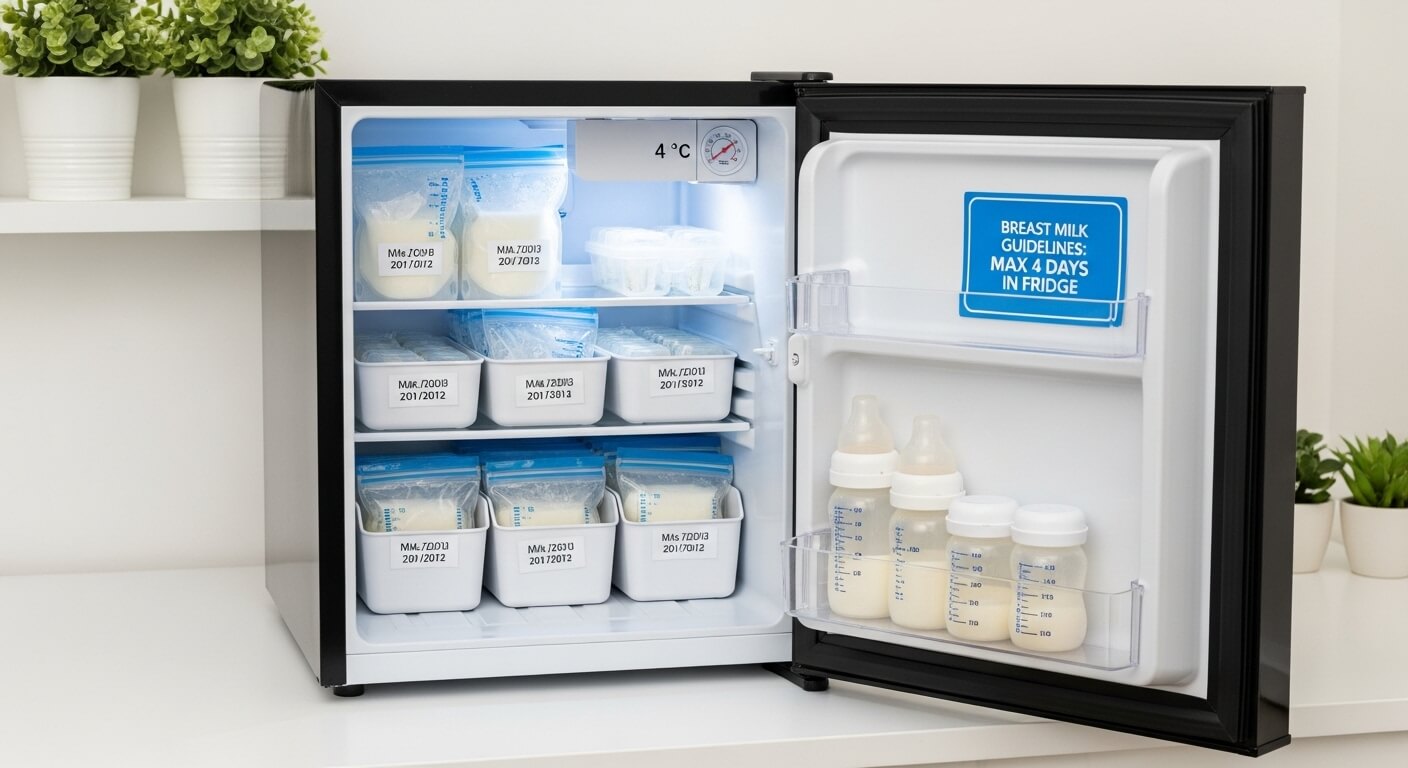
When keeping breast milk, your mini fridge needs to be properly cleaned and maintained. A clean refrigerator lowers the chance of contamination, stops bacteria from growing, and keeps your baby’s milk in a safe environment.
Begin by routinely cleaning the interior with a gentle soap or a white vinegar and water solution. Steer clear of harsh chemicals because their residues can be dangerous. Shelves, drawers, and the door seal should receive extra attention because they may eventually collect spills or moisture. To ensure complete cleaning, detachable shelves and drawers can be removed and cleaned independently.
Sanitizing storage bags and containers is also crucial before putting milk in the refrigerator. To get rid of any bacteria, use BPA-free containers and wash them with warm, soapy water or sterilize them. In addition to keeping the refrigerator clean, proper storage material hygiene keeps milk safe for human consumption.
If a mini fridge does not have an automated defrost mechanism, it should be frequently defrosted. Ice accumulation may impair milk quality by decreasing cooling effectiveness and causing temperature swings. As directed by the manufacturer, check for frost accumulation and remove it as necessary.
Keeping milk in the refrigerator also helps with upkeep. Store milk in specific places away from raw food, strong scents, or objects that may spill. Milk can be better organized and cross-contamination can be avoided by using liners or special bins.
Lastly, make sure the refrigerator temperature stays within the safe range of 32 to 39°F (0 to 4°C) by regularly checking it. Maintaining a consistent temperature, together with cleaning and organizing, guarantees that your small fridge will continue to be a dependable and sanitary place to store breast milk.
Parents may prevent contamination, preserve the nutrients in their baby’s milk, and guarantee that every feeding is nutritious, safe, and fresh by adhering to these cleaning and maintenance procedures.
Common Errors to Avoid in Breast Milk Storage
Inappropriate storage methods can jeopardize the safety and quality of breast milk, even with a mini fridge. Parents can maximize milk freshness and safeguard their baby’s health by being aware of common blunders.
Overcrowding the refrigerator is one common error. Airflow can be impeded by packing too many containers closely together, which could cause uneven cooling and spoiling. To guarantee constant temperatures, provide room around milk bottles or storage bags at all times.
Keeping milk close to the door is another common mistake. The milk’s shelf life may be shortened by the numerous temperature changes that occur everytime the door is opened. Containers should be placed on the middle or back shelves instead, where the temperature is more consistent.
It is also dangerous to keep milk at room temperature for long periods of time. Freshly expressed milk should ideally be refrigerated within two hours. Long-term exposure to heated temperatures promotes the growth of germs, which might render milk unhealthy for your infant.
An additional problem is the use of improper containers. Unsealed cups, non-BPA-free bottles, and thin plastic bags might leak, contaminate milk, or let air break down its nutrients. Always use bottles or bags made specifically for freezing and refrigeration for storing breast milk. When dates and times are not written on milk labels, it can cause misunderstanding and result in older milk being accidentally used. By ensuring that the oldest milk is utilized first, proper labeling preserves the milk’s safety and freshness.
Lastly, milk may be stored at dangerous levels if temperature monitoring is neglected. Check the refrigerator’s thermometer frequently to make sure it remains between 32 and 39°F (0 and 4°C).
By avoiding these mistakes, parents may guarantee that their mini fridge is used properly for breast milk storage, keeping milk nutritious, safe, and available for each feeding. Your baby’s health is greatly protected by careful handling and appropriate arrangement.
Conclusion
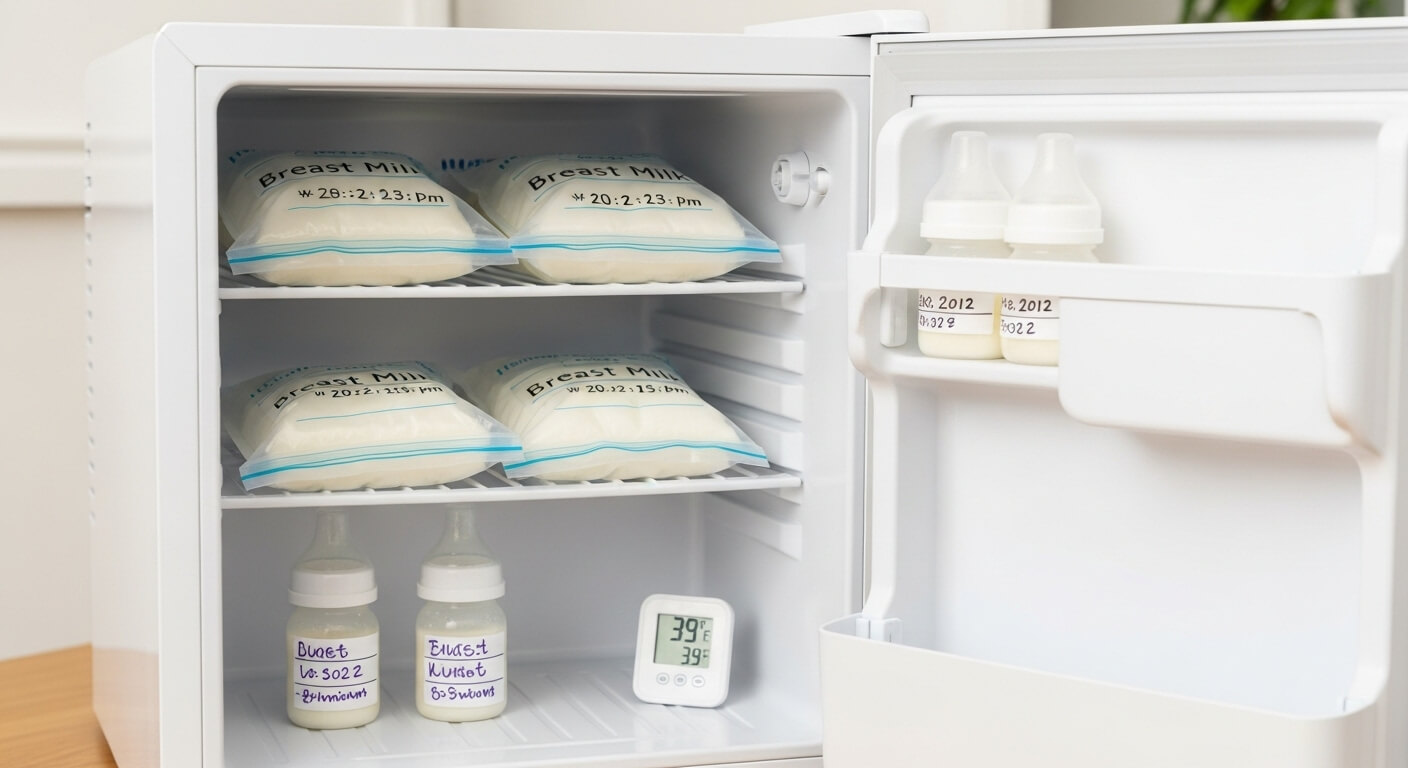
For your infant to receive the full nutritional benefits and protection from dangerous microorganisms, breast milk must be stored properly. For parents who require a specific, temperature-controlled area to keep milk fresh, whether at home, at work, or on the go, mini fridges provide a practical, portable solution.
In order to optimize safety and quality, always adhere to the following guidelines: Label milk with the date and time of expression, use BPA-free containers or special storage bags, and keep a regular check on the refrigerator’s temperature. Milk should be kept on the center or rear shelf to protect it from temperature changes, and it should not be packed too tightly to allow for airflow.
Procedures for freezing and thawing are equally crucial. When milk won’t be used in a few days, freeze it. Thaw it gradually in the refrigerator or a warm water bath, and never put it back in the freezer after it has thawed. To avoid contamination and keep your storage space hygienic, clean and sterilize your small fridge, shelves, and containers on a regular basis.
Parents may guarantee the freshness, safety, and nutritional value of their infant’s milk by avoiding frequent blunders and putting these best practices into practice. When used properly, mini fridges offer a dependable and efficient method of storing breast milk, allowing parents to rest easy while promoting the development and well-being of their infant.