

Are you using the appropriate equipment to get the most out of your workouts? In recent years, fitness technology has gained prominence and changed how people think about wellness and exercise. Today’s fitness devices, which range from heart-rate monitors to wearables that measure sleep, hydration, and recuperation, offer more than simply convenience; they give every workout a data-driven advantage. Wearable technology and smartphone exercise tools have made it easier for people to push boundaries, maintain accountability, and maximize performance—whether in the gym, on a trail, or at home.
The increasing need for individualized health insights and quantifiable progress has propelled the growth of fitness technology. Not just elite athletes can now use high-performance tracking thanks to companies like Apple, WHOOP, Fitbit, and Garmin. From simple pedometers to sophisticated instruments that can measure anything from stress levels to VO2 max, these devices have seen significant development. As more consumers realize the advantages of real-time data and sophisticated performance feedback, the global fitness technology industry keeps growing.
Why is performance tracking important, then? Because improvement results from measurement. Making better decisions is made possible by keeping an eye on important indicators like heart rate zones, steps walked, calories burnt, and sleep quality. Users can adjust their workouts based on real data rather than speculating about what works. An informed routine lowers the chance of burnout, injury, or stagnation since it is more effective and efficient.
Motivation is also increased by using fitness devices to track performance. Establishing objectives, monitoring advancement, and observing outcomes in numerical form fosters a sense of responsibility that sustains momentum. These days, a lot of gadgets have daily challenges, movement reminders, and even social capabilities that let users compete with peers. Over time, these tiny prods have a significant impact on maintaining fitness objectives.
Fitness devices do more than only promote activity; they also aid in stress management, recuperation guidance, and the development of comprehensive routines. Users may balance exercises with the recovery required to perform at their peak by integrating rest insights with activity data. It could be time to step up if you’ve been using your post-workout feelings as your only indicator of success. Every movement matters, and every outcome becomes more achievable with the correct exercise device.
What Are Fitness Gadgets?
Electronic devices known as fitness gadgets are made to assist people in tracking, monitoring, and enhancing their physical activity levels and general health. Users gain insight into a variety of parameters, including heart rate, steps taken, calories burned, distance travelled, and even sleep patterns, thanks to these devices’ real-time data collection. Fitness devices are becoming necessary tools for everyone who is serious about enhancing workout performance and upholding a better lifestyle, thanks to the growth of wearable technology and health-conscious living.
Although smartwatches, fitness trackers, and heart rate monitors are the most popular kinds of fitness devices, the market is still growing because of cutting-edge devices like smart rings, posture correctors, and intelligent hydration monitors. Every gadget is designed to meet a certain purpose, such as tracking daily steps or maximizing marathon training.
Fitness monitoring and smart features like music management, GPS, and notifications are all included in smartwatches like the Apple Watch, Samsung Galaxy Watch, and Garmin Forerunner. These gadgets provide thorough health information, such as blood oxygen levels, heart rate variability, and stress monitoring, in addition to activity tracking. A lot of smartwatches can also be integrated with fitness apps from third parties, which makes them adaptable to a variety of training regimens.
Fitness trackers that are more streamlined and concentrate on essential health metrics include Fitbit, Xiaomi, and Amazfit. They give customers an easy and targeted approach to keep track of their fitness objectives by tracking daily movement, sleep patterns, and calories burned. Fitness trackers are an excellent entry-level choice for novices because they are frequently less expensive than smartwatches.
Because of their accuracy during rigorous workouts, serious sportsmen prefer heart rate monitors, whether they are optical sensors integrated into armbands or chest straps like the Polar H10. By giving consumers real-time heart rate feedback, these devices assist users in preventing overtraining and maximising efficiency by keeping them within their appropriate training zones.
So, how do fitness devices operate? The majority detect and analyze biological and movement signals using built-in sensors. Motion, elevation, and direction are measured by altimeters, gyroscopes, and accelerometers. By illuminating the skin with light and identifying variations in blood flow, optical sensors measure heart rate. For outdoor activities like cycling or running, GPS modules record distance and location. To provide more in-depth health information, some sophisticated devices even make use of electrodermal activity monitors, skin temperature sensors, or ECG technologies.
Following collection, the data is synchronized with a web dashboard or mobile app and arranged into reports, trends, and visual summaries. This enables users to assess their performance, establish individualized objectives, and decide on training regimens with knowledge. Regular usage of fitness devices can eventually result in healthier behaviours, more effective exercises, and enhanced general health.
Fitness devices are getting easier to use, more individualized, and more widely available as technology develops. These tools provide strong assistance on the road to improved fitness, regardless of your degree of experience or desire to increase performance.
Benefits of Fitness Gadgets for Workout Performance
More than merely being convenient, fitness devices can improve workout performance by measuring progress, offering individualized insights, and raising motivation levels. With capabilities like AI-powered suggestions and real-time data tracking, these gadgets have emerged as indispensable resources for anybody looking to maximize their workouts.
Real-Time Data Tracking
The capacity to track activity in real time is one of the main advantages of fitness devices. Data like heart rate, steps taken, distance traveled, and calories burned are continuously collected by gadgets like fitness trackers and smartwatches. Users may make educated judgments during a workout, stay inside their desired training zones, and modify intensity as necessary thanks to this instant feedback. Every movement matters and every session is in line with certain fitness objectives thanks to real-time tracking.
Improved Goal Setting
Setting and achieving attainable goals is made simpler by fitness devices. These gadgets assist users in setting customized goals that represent their fitness levels and goals by examining their past personal activities. Devices provide quantifiable progress that helps users stay on track, whether they are walking 10,000 steps a day, burning a certain number of calories, or running at a particular pace. In addition to offering discipline, goal monitoring increases confidence as accomplishments are acknowledged and rewarded.
Motivation and Accountability
It can be difficult to stick to a training schedule, but fitness devices keep you accountable and motivate you. Numerous gadgets have functions that promote consistent movement, such as progress streaks, gamification components, and daily reminders. For users who are particularly motivated by material rewards or social interaction, badges, challenges, and leaderboards foster a pleasant and friendly competitive atmosphere. These characteristics lessen the chance of getting off course and make training interesting.
Enhanced Recovery and Rest Monitoring
Training intensity is only one factor in workout success; rest and recuperation are just as crucial. To help users prevent burnout, fitness devices frequently come with stress management features, sleep tracking, and recovery status updates. By keeping an eye on these factors, users can get a more complete picture of their physical health and modify their routines as needed. Performance can be maximized while lowering the chance of weariness or injury by understanding when to exert effort and when to take breaks.
Custom Workout Recommendations
Cutting-edge fitness devices go one step further by recommending personalized workouts based on user information and objectives. These AI-powered recommendations evaluate recovery statistics, trends, and historical performance to provide customized workouts based on present fitness levels. These suggestions offer direction that changes as you advance, whether you’re a novice trying to increase your endurance or an athlete preparing for a competition. This degree of customization boosts productivity and makes it possible to get better outcomes more quickly.
Popular Fitness Gadgets Worth Trying
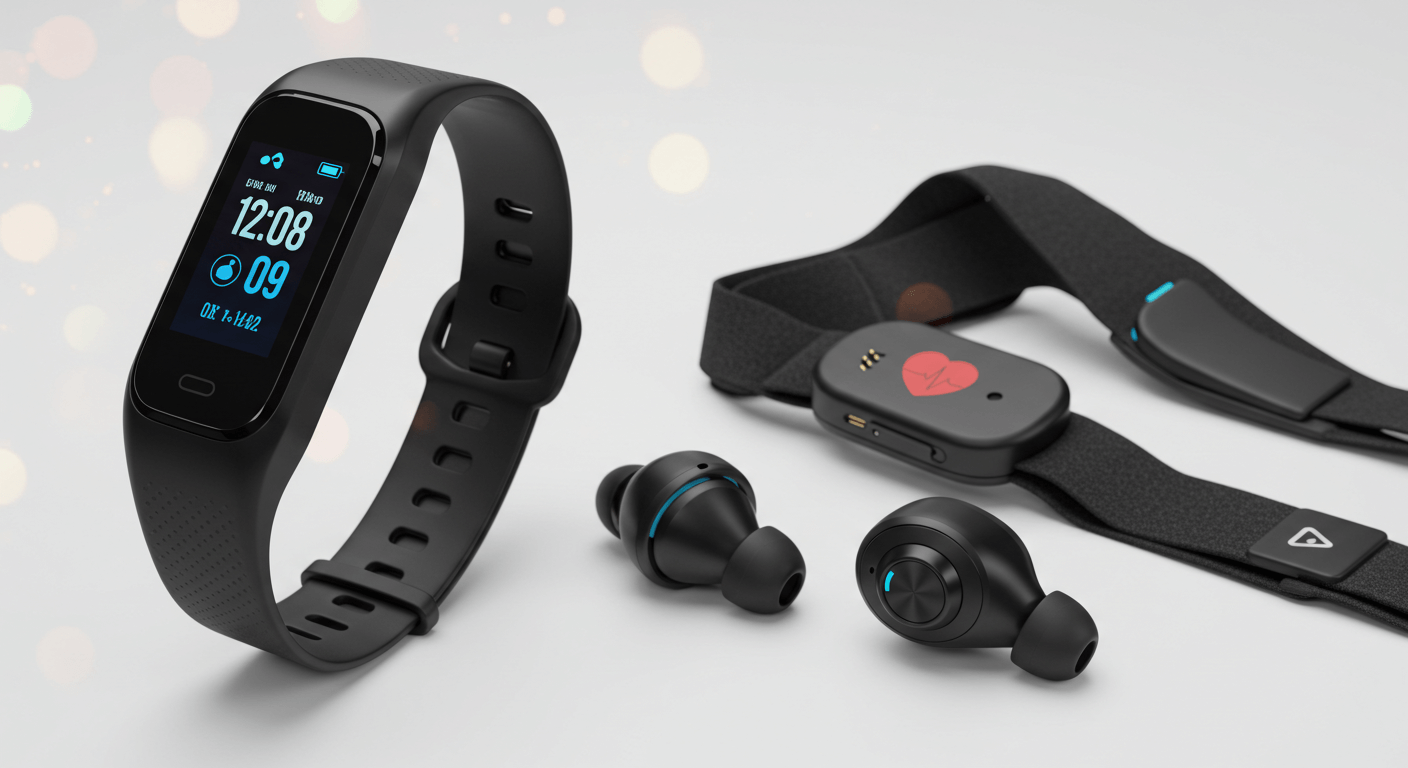
Fitness technology is becoming more and more popular, and a variety of devices now include capabilities catered to various requirements, objectives, and lifestyles. From sophisticated training insights to daily activity monitoring, these gadgets offer a technological advantage to support performance enhancement, accountability, and general well-being. These are some of the most well-liked fitness devices that are worth a try, along with the best features of each.
1. Apple Watch Series (SE, Series 8, Ultra)
One of the most well-known smartwatches available is the Apple Watch, which combines smart features, smooth iPhone interaction, and fitness monitoring. The most recent models, such as the Series 8 and Ultra, provide extensive health insights, including blood oxygen levels, heart rate monitoring, ECG capabilities, and sleep tracking.
What it does best:
- Smooth interaction with Apple Health and iOS apps
- Numerous exercise options, including HIIT, yoga, swimming, running, and more
- Safety features such as emergency SOS and fall detection
- Cutting-edge fitness and wellness tracking rings for everyday inspiration
The Apple Watch is a great option for iPhone owners looking for a gadget that strikes a mix between everyday features and comprehensive fitness statistics.
2. Fitbit Charge Series / Fitbit Versa Series
With its easy-to-use gadgets that emphasize general health and wellness, Fitbit has established a strong name in the fitness tracking industry. Due to their precise tracking, user-friendly interface, and extended battery life, the Charge 6 and Versa 4 models are particularly well-liked.
What it does best:
- Simple and reasonably priced fitness tracking
- Tools for stress management and sleep scoring
- GPS built in (on some models)
- Training and recuperation are guided by the Daily Readiness Score.
- Fitbit Premium integration for plans and workouts that are guided
For consumers who desire useful fitness tracking without the high price or complexity of high-end equipment, Fitbit is the perfect choice.
3. WHOOP Strap 4.0
WHOOP was created with performance optimization in mind, emphasizing sleep, strain, and recovery. WHOOP is perfect for consumers who like a minimalist design with maximum health intelligence because, unlike other devices, it doesn’t have a screen and instead provides all insights through its companion app.
What it does best:
- Comprehensive recovery monitoring based on sleep, resting heart rate, and heart rate variability (HRV)
- To maximize exercise intensity, use a strain coach.
- Performance reports are available on a weekly and monthly basis
- Cardiovascular load and sleep efficiency are continuously monitored.
Serious athletes and fitness enthusiasts who seek data-driven insights to balance training and recovery are the ideal candidates for WHOOP.
4. Garmin Forerunner Series / Garmin Venu Series
As a pioneer in GPS technology, Garmin has emerged as a popular option for endurance athletes, bikers, and runners. With features that go beyond simple step counting, devices such as the Forerunner 265, 955, and Venu 3 combine precise tracking with comprehensive performance insights.
What it does best:
- Precise GPS monitoring for outdoor exercises
- Advanced performance indicators such as training load, lactate threshold, and VO2 max
- Monitoring of heart rate, cadence, and pace in real time
- extended battery life, even when GPS is turned on
- An energy level tracking feature for the body battery
For endurance athletes, outdoor adventurers, and data-driven users who require accurate measurements throughout extended and demanding sessions, Garmin is ideal.
5. Oura Ring (Gen 3)
Prioritizing readiness, sleep, and recuperation, the Oura Ring is a stylish, screen-free wearable that is worn on the finger. For people who wish to check their health in-depth without wearing a heavy gadget on their wrist, this is perfect.
What it does best:
- Precise sleep monitoring with insights into the deep and REM cycles
- Using a readiness score to inform daily activity choices
- Continuous monitoring of temperature and heart rate
- Simple design with a battery life of up to seven days
The Oura Ring is a discreet form factor that is ideal for people who are interested in stress reduction, holistic wellness, and recovery monitoring.
6. Polar H10 Heart Rate Monitor
People who value accuracy continue to use chest strap heart rate monitors, such as the Polar H10. Athletes frequently like this gadget for endurance exercises and high-intensity training.
What it does best:
- The most accurate heart rate in the industry
- Fitness apps and gym equipment that are compatible with ANT+ and Bluetooth
- Swimming-safe waterproof design
- Exercise memory storage without phone pairing
The Polar H10 is a dependable choice for customers seeking the most accurate heart rate monitoring available, particularly during strength training or interval exercises.
7. Amazfit Band and Watch Series
Amazfit offers reasonably priced wearables that don’t compromise on functionality. At a fraction of the cost of high-end manufacturers, gadgets like the Amazfit Band 7 and GTR 4 offer a wide range of exercise and health tools.
What it does best:
- extended battery life (some variants can last up to 24 days)
- Monitoring of heart rate, SpO2, and stress throughout the day
- More than 100 exercise modes with intelligent identification
- Comfortable and lightweight design
For consumers on a tight budget seeking high-featured fitness devices with superior battery life, Amazfit products are perfect.
Choosing the Right Gadget for Your Needs
With so many options offering varying features, pricing ranges, and compatibility levels, selecting a fitness device can be challenging. Knowing your individual demands and exercise objectives is essential to selecting the best one.
Think about the goals you have for your workouts first. A simple fitness tracker might be sufficient for someone who wants to monitor their daily exercise and keep active. These gadgets are perfect for overall well-being because they count steps, calories burned, and mild activity. A more sophisticated device with GPS tracking, heart rate monitoring, and performance analytics, on the other hand, can be advantageous for athletes or anyone preparing for certain objectives, such as finishing a marathon. Devices like WHOOP or the Oura Ring, which track stress levels, sleep habits, and general preparedness, may be useful for users who are focused on their recovery.
Another crucial consideration when choosing the best device for you is your budget. For basic tracking without going over budget, entry-level Fitbit models or reasonably priced fitness trackers from companies like Amazfit are excellent options. Mid-range gadgets like the Fitbit Charge or Apple Watch SE provide a good balance between price and usefulness if you’re searching for something with more capabilities. You should budget extra for items like the Apple Watch Ultra, Garmin Forerunner series, or a WHOOP membership if you want high-end gadgets with recovery data, improved performance features, or longer battery life.
Additionally important is compatibility with your current devices. Because of its extensive iOS connectivity, the Apple Watch is a seamless option for iPhone owners. Devices from Fitbit and Garmin usually function well on both the iOS and Android operating systems. Despite using their own apps, WHOOP and Oura can sync with well-known platforms like Google Fit and Apple Health. Checking if the device’s app works with your phone and other fitness applications you currently use is crucial, particularly if you intend to compile all of your health data in one location.
Features are where devices start to stand out from the competition. Some trackers have built-in GPS, heart rate zones, VO2 max calculations, and sleep cycle analysis, although the majority just handle basic statistics like steps and calories. Others provide stress-reduction techniques, AI-powered recommendations, and guided exercise. Features like extra-long battery life, waterproof design for swimming, or daily readiness scores might have a significant impact, depending on your needs. To save money on services you won’t use, prioritize the things that are most important to your daily routine.
Every kind of device has its own advantages and disadvantages. Although fitness trackers are inexpensive and comfortable to wear, they frequently lack sophisticated functions and have small screens. Although they integrate with smartphones and offer a comprehensive toolkit, smartwatches can be heavy and need to be charged frequently. Although they often don’t have on-screen displays and may require a monthly subscription charge, recovery-focused bands and rings like WHOOP or Oura provide profound insights into sleep and recovery. The most accurate heart rate monitors are chest straps, like the Polar H10, but they aren’t made for casual, all-day wear.
In the end, selecting the best fitness device requires balancing your demands and goals with the one that best suits your lifestyle. Monitoring progress and enhancing performance is made lot simpler and more pleasurable with the correct tool.
Conclusion
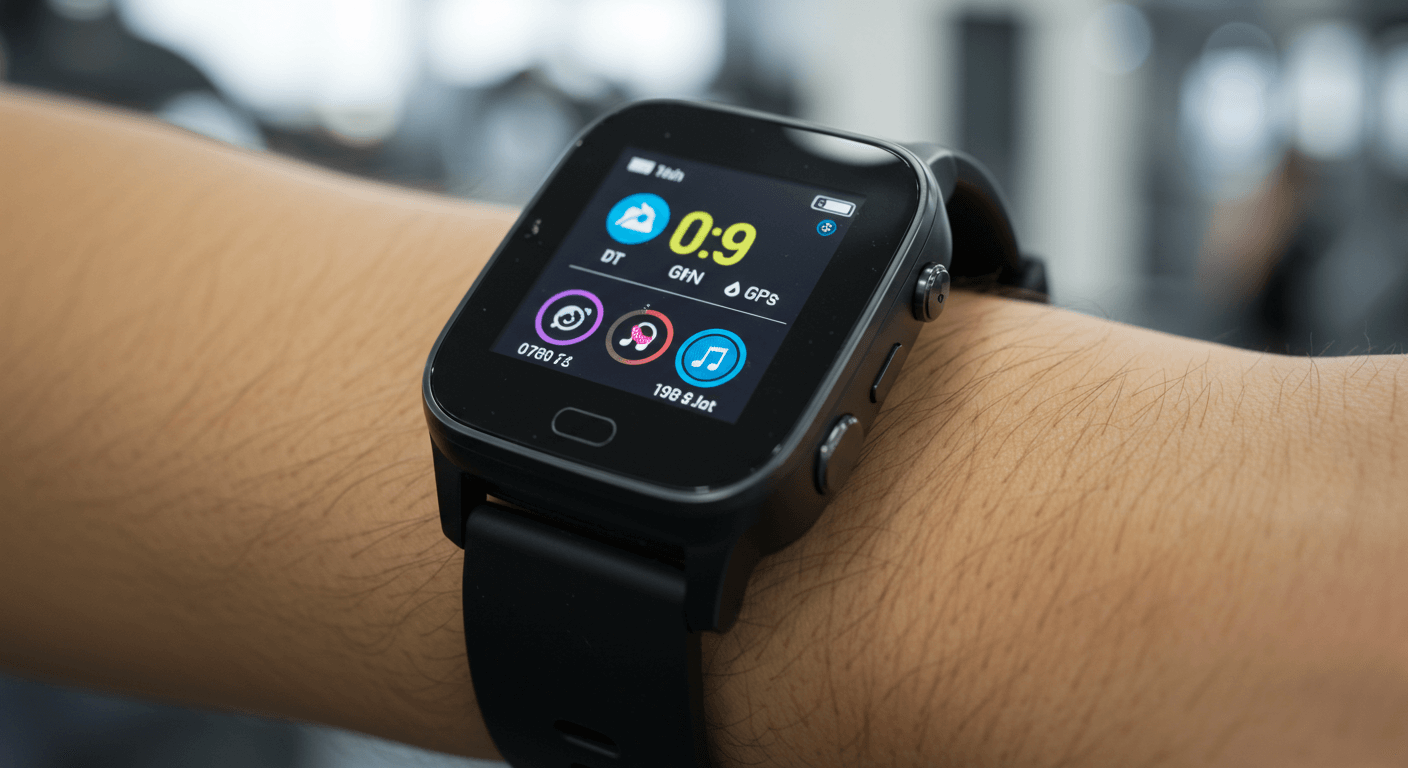
Fitness devices have changed how people think about exercise and health. These tools, which range from providing individualized workout recommendations to measuring performance in real time, offer insightful information that can enhance motivation, consistency, and outcomes. There is a gadget made to help you reach your objectives, whether they are general fitness, event preparation, or recuperation.
Individual needs determine which workout device is best. Take into account your spending limit, the features that complement your fitness goals, and the gadgets that fit your lifestyle and smartphone. While some devices provide all-in-one features, others focus on specific tasks like heart rate accuracy, recovery, or intelligent coaching.
The finest exercise device is ultimately the one that keeps you motivated and moving forward. It should support more intelligent exercise, provide helpful feedback, and blend in with your everyday schedule. You may take charge of your fitness journey with more assurance and accuracy if you have the appropriate gadget on your finger or wrist.
Are you prepared to improve your training? Examine your alternatives, select the one that best suits your needs, and begin optimizing your performance with technology that puts in just as much effort as you do.