

Millions of men and women throughout the world struggle with hair loss, which frequently causes them to feel frustrated and self-conscious and to look for trustworthy treatments. Even though conventional therapies like drugs, hair transplants, and topical treatments are still widely used, a growing number of people are choosing natural, non-invasive options. Red laser therapy (RLT), which uses low-level light wavelengths to stimulate cellular activity and encourage healthy hair development, is one of the most talked-about treatments available today.
Recent years have seen a rise in the use of red light treatment due to its wider range of health advantages, which include promoting wound healing, lowering inflammation, and enhancing skin tone. However, many who are dealing with thinning hair or early-stage hair loss have found it especially appealing due to its potential to restore hair density and thickness. RLT provides a milder method that is frequently performed in the convenience of one’s own home, in contrast to chemical-based therapies that may have adverse effects or invasive, expensive surgical procedures.
However, the key query is, to what extent does red light therapy promote hair growth? It’s not a one-size-fits-all answer, even though certain research and user experiences point to encouraging outcomes. Success depends on a number of factors, including the type of device, regularity of use, and the reason for hair loss.
We’ll go into great detail about what red light therapy is, how it affects hair follicles, its possible advantages, and the drawbacks you should be aware of in this post. In addition, we’ll detail clinical proof, contrast it with other popular hair restoration techniques, and talk about who stands to gain the most. You’ll know more clearly by the end whether red light therapy is the best course of action for your hair growth quest.
The Science Behind Red Light Therapy for Hair Growth
The way light interacts with cells at the scalp level is what makes red light treatment (RLT) so beneficial for hair growth. The “powerhouses” of our cells, mitochondria, absorb red and near-infrared light as it reaches the skin. Adenosine triphosphate (ATP), the energy currency that powers cellular functions, is produced in greater quantities as a result of this absorption. Cells can heal damage, regenerate more quickly, and operate more effectively when there is more energy available.
This procedure is very crucial for hair follicles. A common cause of hair thinning is the gradual shrinkage or inactive status of follicles. Red light therapy helps stimulate dormant follicles and extend the anagen (growth) phase of the hair cycle by promoting cellular activity. This can lead to stronger and thicker hair strands in addition to promoting new growth.
Better blood circulation is another important component. Red light promotes blood vessel dilatation around the scalp, improving the flow of nutrients and oxygen to hair follicles. In addition to eliminating waste items that can impede growth, healthy circulation guarantees that follicles receive the nutrients they require to flourish.
These results are corroborated by numerous clinical trials. According to research, people with androgenetic alopecia (pattern baldness) and other types of hair thinning can greatly improve their hair density and thickness by regularly using low-level light treatment. After several months of regular treatment, many participants reported noticeable improvements; however, outcomes vary.
It’s crucial to remember that red light treatment is most effective in the early stages of hair loss. Follicles that are damaged or totally dormant might not react as well. However, research indicates that RLT offers a safe and effective means of promoting the growth of natural hair for a large number of people.
Benefits of Red Light Therapy for Hair Growth
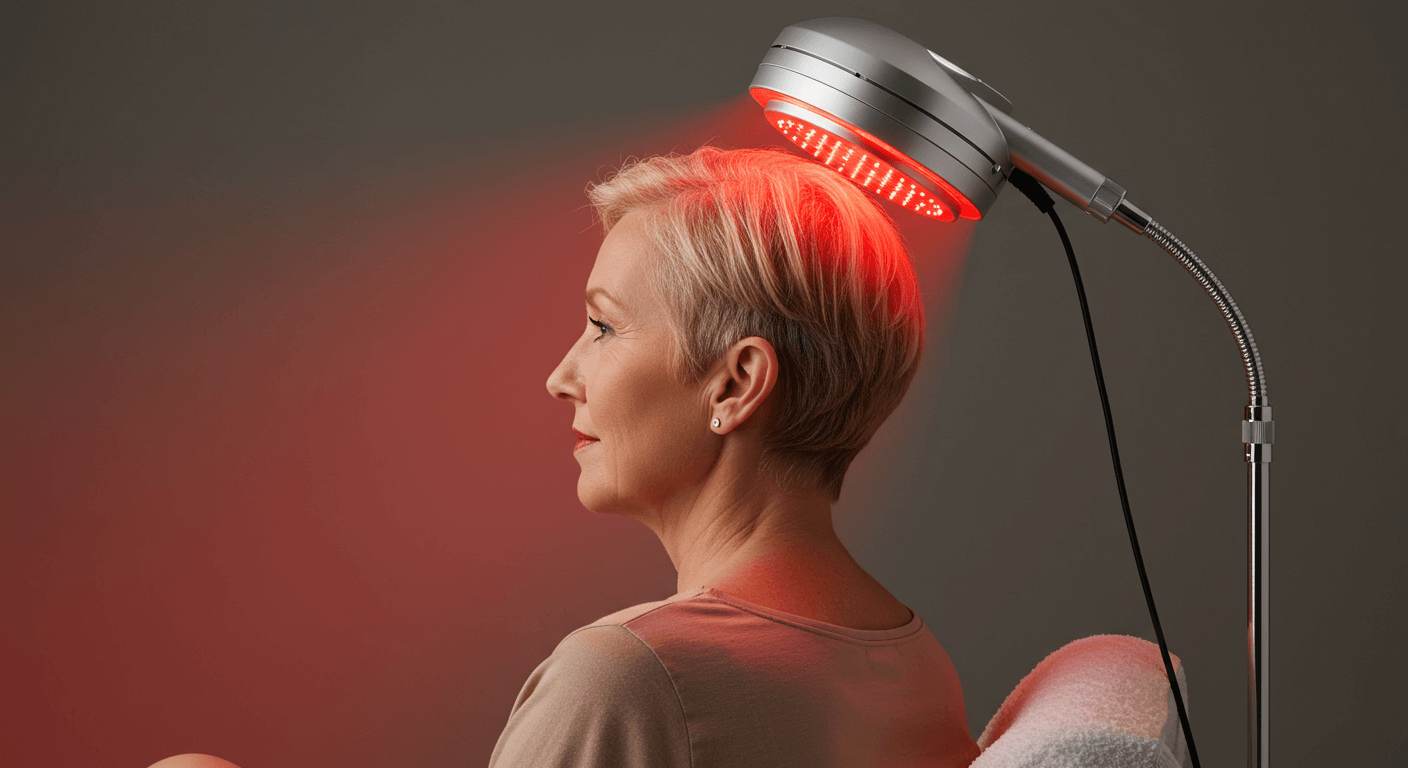
Because red light therapy (RLT) has so many potential advantages, it has grown in popularity as a natural remedy for thinning hair. RLT promotes healthy hair development by gently interacting with the body’s natural processes, as opposed to using drugs or invasive procedures.
Stimulating latent hair follicles is one of its greatest benefits. Red light treatment can gradually increase hair density and volume by reactivating follicles that have slowed down or ceased growing hair. In the early phases of hair loss, when intervention can stop further thinning, this is especially advantageous.
The encouragement of stronger and thicker strands is an additional important advantage. New hair typically grows healthier and more durable as a result of red light therapy’s improved blood circulation and nutrient supply to the scalp, which lowers breakage and improves texture overall.
Another benefit of RLT is its non-invasiveness and safety. Red light therapy is painless and usually has no negative side effects, unlike drugs that can induce hormonal changes or irritation of the scalp, or surgery that requires recovery time. Because of this, it is a good option for both men and women of all ages.
Red light therapy can also be used in conjunction with other therapies. For even greater effects, many people combine it with topical treatments like scalp massages, hair supplements, or minoxidil. It is a flexible component of a hair care regimen due to its compatibility with various techniques.
By lowering inflammation and enhancing circulation, the treatment promotes scalp health in addition to hair development. An optimal environment for long-term regeneration is produced by a healthy scalp.
Limitations and Considerations
Even though red light therapy (RLT) has a lot of potential advantages for hair development, it’s crucial to be aware of its drawbacks and usefulness before using it as your main treatment.
First, individual results may differ. The effectiveness of the treatment depends on a number of factors, including age, genetics, the underlying cause of hair loss, and general health. People with early-stage baldness, for instance, typically see greater results than those with severe baldness, where hair follicles may no longer be active.
Second, patience and consistency are necessary for red light treatment. According to the majority of research, individuals must dedicate themselves to numerous sessions each week for several months before any discernible progress is made. For people who are looking for immediate or dramatic results, this could be difficult. RLT is not an exception to the general rule that hair regrowth occurs gradually.
The price of equipment or expert care is another factor to take into account. Although at-home laser combs, helmets, and hats are convenient, their initial cost can be high. RLT is an expenditure that might not be within every budget because professional in-clinic sessions can add up over time. It’s also critical to understand that red light treatment is not a panacea. It is most effective for many people when used in conjunction with stress reduction, a balanced diet, and potentially additional treatments like topical serums or supplements.
Finally, even though RLT is generally safe, those who have specific medical conditions or are taking medications that make them more sensitive to light may not be able to use it. It is always advised to speak with a healthcare professional before beginning.
How to Use Red Light Therapy for Hair Growth
The effectiveness of red light treatment (RLT) for hair growth is mostly dependent on technique, device quality, and consistency. You will receive the finest outcomes if you know how to utilize it properly.
Devices for hair restoration come in a variety of forms. These include professional in-clinic equipment that emits higher-intensity light, handheld combs or brushes that provide more focused treatment, and laser hats and helmets that cover the entire scalp for uniform exposure. Because they are easy to use and don’t require appointments, at-home gadgets are the most widely used.
It is generally advised to use the product three to five times a week for ten to twenty minutes each time. It’s important to follow the manufacturer’s directions because excessive use may decrease effectiveness and doesn’t always result in faster results.
RLT should be applied to a dry, clean scalp to get the best results. This guarantees that there are no obstructions to the light’s effective penetration, such as extra oil or styling products. Results can be further supported by combining treatments with a healthy hair care regimen that includes gentle washing, scalp massages, and adequate nutrition.
It’s critical to keep in mind that outcomes require time. After three to six months of regular use, the majority of consumers start to notice increases in hair thickness or decreased shedding. Because quitting treatments could allow hair loss to resume, long-term dedication is necessary to sustain outcomes.
Lastly, red light therapy can be used as a supplemental method to increase overall effectiveness for people already receiving treatments like minoxidil, vitamins, or speciality shampoos.
Conclusion
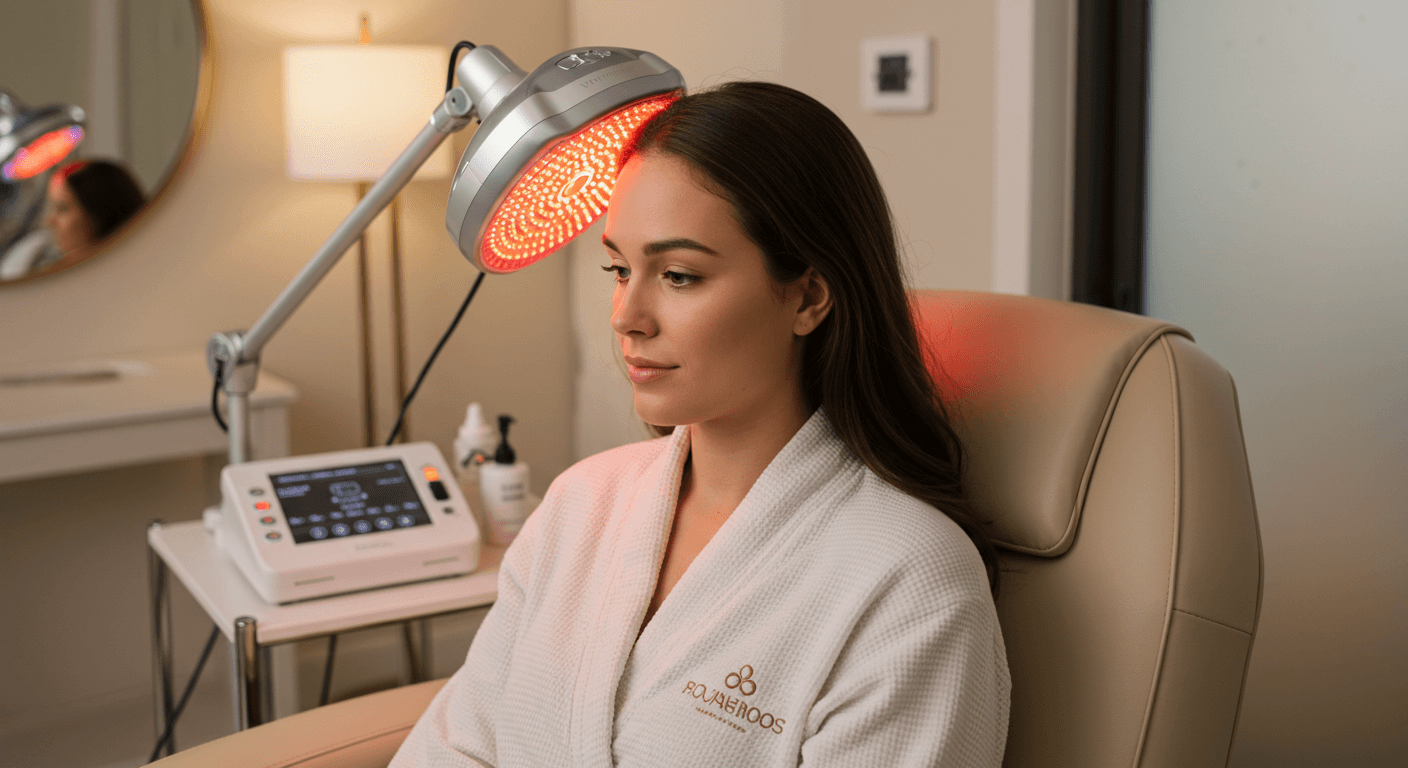
For people looking for non-invasive, natural remedies for early-stage hair loss and hair thinning, red light therapy (RLT) is showing promise. RLT fosters an environment that is conducive to hair development by increasing circulation, cellular activity, and the follicles’ ability to remain in the growth phase for longer. Clinical research and actual user experiences provide evidence that, when used consistently over time, it can result in thicker, stronger, and healthier hair, even though it is not a magic cure.
Red light therapy’s accessibility and safety are two of its greatest benefits. RLT is soft, painless, and safe for both men and women, in contrast to drugs that can have negative side effects or expensive, recuperation-intensive surgeries. Without the need for frequent clinic visits, it is also simple to include at-home devices like combs, helmets, and hats into a regular practice.
Having reasonable expectations is crucial when undergoing red light therapy. Age, genetics, and the underlying cause of hair loss all affect the outcome. Since noticeable gains usually take months rather than weeks, consistency and patience are essential. Many people find that using RLT in conjunction with Other healthful practices, including stress reduction, balanced eating, and regular scalp care, yields the best results.
In conclusion, red light treatment works well to encourage the growth of natural hair, especially for people whose hair is just starting to thin. It is a non-invasive, safe, and scientifically supported method of promoting healthier, fuller hair with consistent application.