

Muscle recovery technology has evolved dramatically, offering athletes and active individuals sophisticated tools to accelerate healing and reduce soreness. Compression leg massagers use pneumatic pressure to simulate massage techniques, while manual massage rollers rely on body weight and physical manipulation. Each approach promises faster recovery, reduced muscle tension, and improved circulation. This comprehensive comparison examines both technologies to help you choose the most effective recovery solution for your needs.
Understanding the Technologies
Compression Leg Massagers: Pneumatic Recovery
Compression leg massagers use inflatable chambers that sequentially inflate and deflate, creating waves of pressure that move up the legs. This pneumatic compression mimics the kneading and squeezing motions of manual massage while targeting circulation improvement through mechanical pressure.
Most compression systems include boots or sleeves that wrap around legs, connected to a control unit housing an air pump and electronics. The boots contain multiple chambers—typically 4 to 8 zones—that inflate in sequence from ankle to thigh. This sequential compression pushes blood and lymphatic fluid upward, combating the effects of gravity and enhancing circulation.
Pressure levels range from 30 to 120 mmHg depending on the device and setting. Lower pressures provide gentle massage suitable for recovery and relaxation, while higher pressures deliver therapeutic compression for serious athletes or medical applications. Most devices offer 3 to 6 pressure settings allowing customization based on sensitivity and recovery needs.
Session duration typically spans 20 to 60 minutes. The control unit manages inflation timing, pressure intensity, and cycle patterns. Premium devices include multiple massage modes—sequential compression, peristaltic wave patterns, or combination programs that vary pressure and timing for different effects.
The technology originates from medical applications treating lymphedema and deep vein thrombosis. Consumer recovery devices adapt medical-grade compression therapy for athletic recovery, making professional rehabilitation techniques accessible for home use.
Manual Massage Rollers: Mechanical Myofascial Release
Manual massage rollers encompass various tools including foam rollers, massage sticks, roller balls, and specialized devices that apply direct pressure to muscles through body weight or hand manipulation. The fundamental principle involves applying mechanical pressure to break up fascial adhesions, increase blood flow, and release muscle tension.
Foam rollers, the most common type, require you to position your body weight over the roller and move back and forth across muscle groups. The pressure depth depends on how much body weight you apply and the roller’s firmness. Densities range from soft foam suitable for beginners to ultra-firm rollers that penetrate deep into tissue.
Massage sticks feature rotating segments on a central bar, allowing you to apply targeted pressure with your hands while controlling depth and location precisely. This handheld design works well for calves, thighs, and areas where body-weight rolling proves awkward.
The effectiveness relies entirely on proper technique and user effort. You must position correctly, apply appropriate pressure, and spend adequate time on each muscle group. The learning curve can be steep, and improper technique may cause bruising or fail to provide therapeutic benefits.
Modern variations include vibrating foam rollers that add oscillation to static pressure, textured surfaces that provide different sensations, and specialized shapes targeting specific body areas. Despite variations, all manual rollers share the requirement for active user participation in the recovery process.
Recovery Effectiveness and Benefits
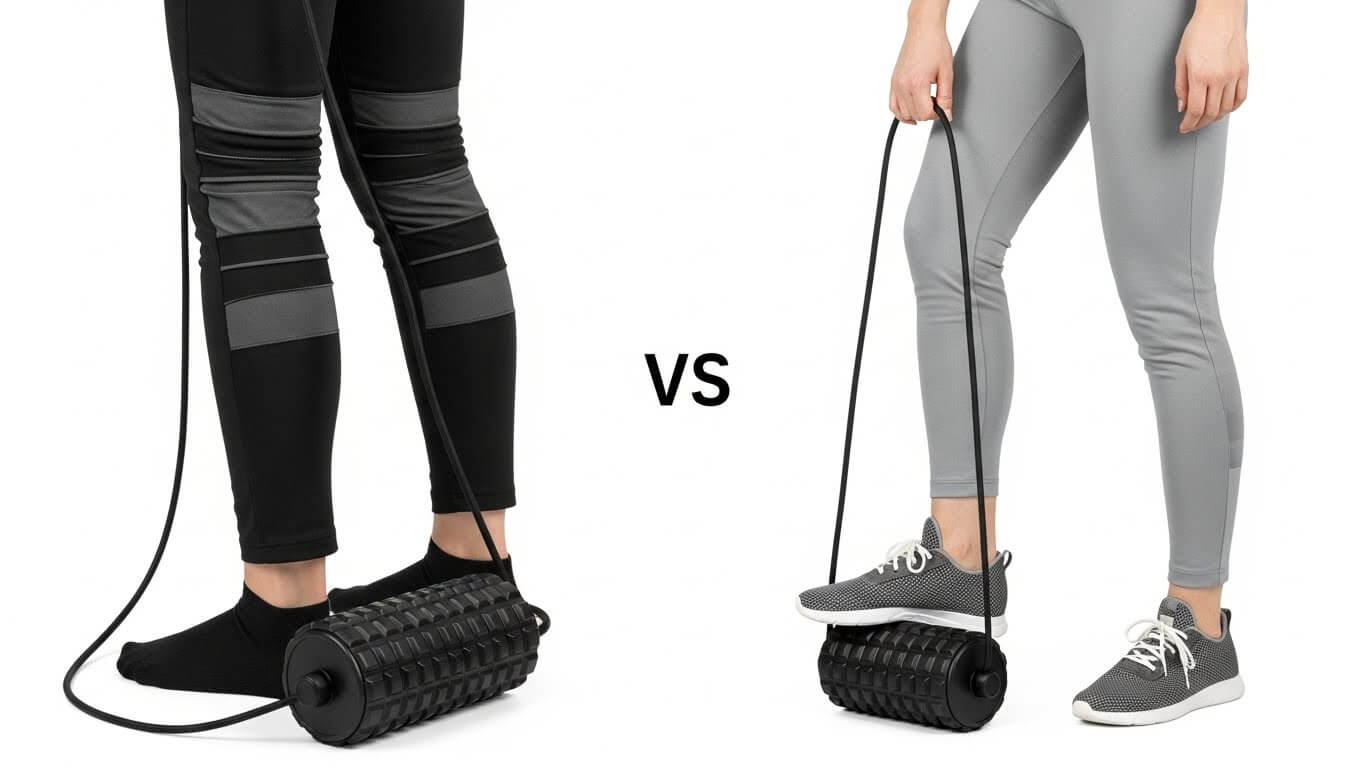
Compression Massager Recovery Science
Research on pneumatic compression shows measurable benefits for athletic recovery. A 2016 study in the International Journal of Sports Physiology and Performance found that compression therapy reduced muscle soreness and accelerated recovery markers following intense exercise. Athletes using compression devices reported lower perceived exertion in subsequent training sessions.
The sequential compression improves venous return, helping remove metabolic waste products like lactate from muscle tissue. This accelerated clearance may reduce the duration and intensity of delayed onset muscle soreness (DOMS). The improved circulation also delivers fresh oxygen and nutrients to recovering muscles.
Compression therapy provides passive recovery—you can relax, read, or watch TV while receiving treatment. This lack of required effort means you’re more likely to use the device consistently, particularly when fatigued from training. The consistent use translates to better overall recovery compared to techniques requiring active participation.
The massage effect reduces muscle tension through mechanical stimulation. The rhythmic compression and release helps muscles relax, potentially breaking up minor adhesions and reducing stiffness. While not as targeted as deep tissue massage, the broad coverage ensures comprehensive treatment of large muscle groups.
However, compression devices don’t directly address fascial adhesions or trigger points the way manual techniques can. The pressure is distributed across large areas rather than concentrated on specific problem spots. For localized issues like specific knots or tight areas, compression may provide incomplete relief.
Manual Roller Recovery Benefits
Manual rolling directly targets myofascial tissue through mechanical pressure and manipulation. Studies show foam rolling can improve range of motion without decreasing muscle strength, making it valuable for pre-workout preparation. A 2015 meta-analysis in the International Journal of Sports Physical Therapy confirmed foam rolling reduces DOMS and improves sprint performance.
The direct pressure breaks up fascial adhesions—areas where connective tissue has bonded abnormally, restricting movement and causing discomfort. By applying sustained pressure, you can release these adhesions, restoring normal tissue mobility. This targeted approach addresses specific problem areas that generalized compression might miss.
Manual rolling provides immediate feedback. You feel exactly where tension exists and can adjust pressure and duration accordingly. This proprioceptive awareness helps you understand your body’s condition and adapt recovery techniques to current needs. The hands-on nature creates mindfulness about muscle condition that passive compression cannot replicate.
The active engagement required for manual rolling means you’re working muscles through ranges of motion, potentially improving flexibility alongside recovery. The combination of pressure and movement provides neuromuscular benefits beyond simple massage, helping retrain movement patterns and improve body awareness.
The downside is effort requirement. After exhausting workouts, finding motivation to spend 15-20 minutes actively rolling can be challenging. The discomfort of rolling over tight muscles deters some users, particularly when fatigue reduces pain tolerance. This barrier to consistent use may limit long-term effectiveness despite superior theoretical benefits.
Convenience and Usability
Compression Massager Ease of Use
Compression devices offer supreme convenience—sit down, put on the boots, press start, and relax. The passive nature allows multitasking during recovery sessions. You can work on a laptop, watch television, or simply rest while receiving treatment. This convenience factor dramatically improves adherence to recovery protocols.
Setup takes 2-3 minutes to unpack boots, plug in the control unit, and secure the wraps around your legs. Most devices use simple velcro closures that accommodate various leg sizes. Once fitted, the device handles everything automatically for the programmed session duration.
The hands-free operation benefits athletes with limited mobility or those too fatigued for active recovery. After completing a marathon or intense training, the ability to receive recovery therapy while completely relaxed provides both physical and psychological benefits. The forced rest period may be as valuable as the compression itself.
However, compression devices lack portability. The boots and control unit occupy significant space, making travel challenging. Some compact models exist, but they still require packing bulky items and finding electrical outlets. This limits use to home or gym environments with adequate space and power.
The devices require electricity, either through wall outlets or rechargeable batteries. Battery-powered models offer some flexibility but need charging and have limited session capacity. Power requirements mean you can’t use compression devices outdoors, while traveling without power access, or in remote locations.
Manual Roller Practicality
Manual rollers excel at portability and accessibility. A foam roller weighs 1-2 pounds and fits in gym bags or luggage easily. Massage sticks collapse or disassemble for compact storage. You can roll anywhere—at the gym, in hotel rooms, at the office, or outdoors after trail runs. This universal accessibility supports consistent recovery regardless of location.
No power requirements mean complete independence from electrical infrastructure. Rolling works identically at home, camping, or traveling internationally. The simplicity eliminates technology barriers and ensures your recovery tool functions reliably without charging, batteries, or power adapters.
However, manual rolling requires space to lie down and move around. You need floor space and freedom to position your body over the roller. This limits use in confined spaces like airplanes, cars, or small hotel rooms. The physical space requirement exceeds what compression boots need for seated use.
The technique learning curve presents challenges for beginners. Proper rolling requires understanding which muscles to target, how much pressure to apply, and how long to spend on each area. Many people roll ineffectively for months before developing good technique. Online videos and coaching help, but self-teaching remains imperfect.
Physical effort and discomfort discourage some users. Rolling over tight muscles hurts, particularly initially when adhesions are severe. The combination of required effort and discomfort creates psychological barriers that reduce adherence. Many foam rollers gather dust after initial enthusiasm wanes.
Target Audience and Use Cases
Best Candidates for Compression Massagers
Endurance athletes training at high volumes benefit enormously from compression therapy. Cyclists, runners, and triathletes accumulating 10+ training hours weekly need efficient recovery that doesn’t require additional physical effort. The passive nature allows recovery without depleting already taxed energy reserves.
People with jobs requiring prolonged standing or sitting gain circulation benefits from compression. The devices counteract venous pooling that occurs during stationary periods, reducing swelling and discomfort. Flight attendants, nurses, retail workers, and office employees report reduced leg fatigue and swelling from regular compression use.
Individuals with limited mobility or recovering from injuries appreciate passive recovery options. Compression devices provide therapeutic benefits without requiring the flexibility, strength, or coordination needed for manual rolling. This makes them valuable during rehabilitation when active recovery proves difficult.
Athletes who struggle with recovery adherence find compression devices’ convenience improves consistency. The low barrier to use—just sit and relax—eliminates excuses. For people who know they should recover but rarely do, compression devices dramatically increase actual recovery frequency.
Those with generous budgets and dedicated recovery space can maximize compression benefits. The investment in quality devices and space for regular use delivers optimal results. If you have a home gym, dedicated recovery area, or therapy room, compression equipment fits naturally into the environment.
Ideal Users for Manual Rollers
Budget-conscious athletes and active individuals find manual rollers provide excellent value. A quality foam roller costs $20-$50, delivering effective recovery at a fraction of compression device prices. This accessibility allows everyone to incorporate recovery regardless of financial resources.
Travelers and minimalists benefit from rollers’ portability and simplicity. A massage stick or compact foam roller fits in carry-on luggage, ensuring recovery access anywhere. The independence from power and space requirements maintains consistency during travel when recovery matters most.
People who value targeted, specific muscle work prefer manual rolling’s precision. If you have particular problem areas, trigger points, or chronic tension spots, the ability to focus pressure exactly where needed provides superior results. Compression devices can’t match this targeted approach.
Athletes who enjoy active engagement in recovery appreciate manual rolling’s hands-on nature. Some people find passive recovery boring or unsatisfying. They prefer feeling muscles release under pressure and actively participating in recovery. The mindfulness and body awareness from manual work appeal to this group.
Individuals with limited space at home find rollers more practical than compression boots. Rollers store in closets, under beds, or in corners without occupying significant space. The small footprint suits apartment living or homes where dedicated recovery equipment can’t monopolize rooms.
Time Investment and Efficiency
Compression Session Duration
Typical compression sessions last 20-60 minutes depending on the program and desired intensity. Most users settle on 30-minute sessions as the sweet spot balancing effectiveness and time commitment. Some devices offer quick 15-minute programs for time-constrained recovery.
The passive nature means this time investment doesn’t feel burdensome. You’re simultaneously recovering and relaxing, reading, working, or entertaining yourself. The multitasking capability makes 30-minute sessions feel shorter than actively rolling for 15 minutes.
However, you must allocate dedicated time when the device is available. Unlike rollers you can grab spontaneously, compression requires being at home or gym with the device. This limits flexibility to use recovery windows throughout the day; you can’t compress during lunch breaks at work or immediately post-workout at the track.
Setup and teardown add 5 minutes to sessions. Unpacking boots, wrapping legs, and repacking afterward extends the total time commitment beyond the actual compression duration. This overhead is minimal but accumulates over frequent use.
Manual Rolling Time Requirements
Effective foam rolling typically requires 10-20 minutes for comprehensive full-body coverage. Focused sessions targeting specific muscle groups take 5-10 minutes. The variable duration allows adapting to available time; quick sessions when rushed, thorough sessions when time permits.
However, this time requires full attention and physical effort. You can’t multitask while rolling. The active engagement means 15 minutes of rolling feels longer than 30 minutes of passive compression. Mental fatigue and physical discomfort make the time investment feel more significant.
The spontaneous accessibility allows using brief time windows throughout the day. Five minutes before bed for calves, ten minutes after lunch for back tension, quick hip rolling after sitting. This flexibility to distribute recovery throughout the day rather than requiring dedicated blocks provides practical advantages.
Technique improvement accelerates efficiency over time. Experienced rollers work more effectively, achieving better results in less time. Beginners spend more time experimenting with positioning and pressure, but efficiency increases with practice. Compression devices provide consistent results regardless of user experience.
Cost Analysis and Value
Compression Massager
Quality compression leg massagers cost $300-$800 for consumer models. Entry-level devices start around $200 but often lack features, durability, or adequate pressure. Premium units from brands like Normatec, Therabody, and Air Relax approach or exceed $1,000 but deliver professional-grade performance.
The significant upfront cost creates a barrier for casual users. You must commit to recovery sufficiently to justify spending comparable amounts to quality exercise equipment. This investment makes sense for serious athletes but seems excessive for recreational activity.
Operating costs remain minimal—just electricity for charging or running the device. No consumables, replacement parts, or ongoing expenses beyond occasional cleaning. The cost is entirely upfront rather than distributed over time through recurring purchases.
Longevity varies by brand and quality. Premium devices last 5-7 years with regular use, potentially longer with careful maintenance. Budget models may fail within 1-2 years as pumps wear out or chambers develop leaks. Warranty coverage and brand reputation significantly impact long-term value.
The per-use cost decreases dramatically with frequent use. If you use compression daily, a $600 device costs less than $0.35 per session over five years. This rivals professional massage pricing after surprisingly few uses. The value proposition improves substantially for athletes who maximize usage.
Manual Roller Economics
Manual rollers represent minimal financial investment. Quality foam rollers cost $20-$50, massage sticks $25-$40, and even premium vibrating rollers stay under $150. This accessible pricing allows experimentation without significant financial risk.
The low cost enables owning multiple rollers for different purposes—a soft roller for sensitive areas, firm roller for deep tissue work, and textured roller for specific techniques. Building a comprehensive manual recovery toolkit costs less than a single compression device.
Rollers require no operating costs—no electricity, batteries, or consumables. Once purchased, they function indefinitely with zero ongoing expenses. This makes them ideal for budget-conscious athletes seeking sustainable recovery solutions.
Durability varies widely by quality. Premium foam rollers last 5+ years of daily use before showing significant compression or surface wear. Budget rollers may flatten or crack within a year. The modest replacement cost makes even short lifespans economically acceptable.
The value proposition works for all usage frequencies. Whether you roll daily or weekly, the minimal investment provides positive return. There’s no usage threshold required to justify the purchase, making rollers appropriate for everyone from elite athletes to occasional exercisers.
Effectiveness for Specific Conditions
Compression for Swelling and Circulation
Compression devices excel at reducing swelling and edema. The sequential pressure mechanically pushes fluid out of extremities, providing immediate relief from heavy, swollen legs. This makes them particularly effective for people who experience leg swelling from standing, sitting, or air travel.
For athletes, the improved circulation accelerates recovery by enhancing nutrient delivery and waste removal. The fresh blood flow supports muscle repair and reduces inflammation. Research shows measurable improvements in biomarkers of recovery following compression therapy sessions.
People with circulation issues, varicose veins, or lymphedema find compression devices therapeutic beyond athletic recovery. The medical origins of the technology mean it addresses genuine circulation pathology, not just athletic fatigue. This dual purpose increases value for users with medical conditions.
However, compression provides limited benefit for fascial adhesions or specific muscle knots. The broad, distributed pressure doesn’t concentrate enough force to release stubborn trigger points. Users with localized muscle problems may need supplemental manual techniques for complete relief.
Manual Rolling for Flexibility and Mobility
Manual rolling directly improves range of motion and flexibility. Studies consistently show immediate improvements in joint mobility following foam rolling sessions. The mechanical breakdown of fascial restrictions allows greater movement amplitude without decreasing muscle strength.
For athletes dealing with chronic tightness in specific areas, the targeted pressure of manual rolling provides superior results. You can spend extended time working problem spots, applying pressure variations and movement patterns that compression cannot replicate.
The active engagement helps identify and address emerging issues before they become serious problems. Regular rolling develops body awareness that alerts you to tension patterns requiring attention. This preventive benefit may reduce injury risk by catching problems early.
Manual rolling proves less effective for generalized fatigue or systemic recovery. While it helps specific muscles, it doesn’t provide the whole-body circulation benefits of compression. For comprehensive recovery from exhausting efforts, manual techniques require more time and effort to achieve similar systemic benefits.
Making Your Decision
Choose Compression Leg Massagers If:
You train at high volumes and need efficient recovery without additional physical effort. Compression provides maximum benefit for minimal energy expenditure, perfect when training already depletes your capacity.
You have specific circulation issues or medical conditions benefiting from compression therapy. The devices serve dual purposes—athletic recovery and medical treatment—justifying the investment through multiple applications.
Budget allows significant investment in recovery equipment and you have dedicated space. The upfront cost and space requirements are acceptable when you’re committed to optimizing recovery.
You struggle with recovery adherence and need the easiest possible option. The low barrier to use dramatically increases consistency compared to techniques requiring effort or discomfort.
You value relaxation and multitasking during recovery sessions. The passive nature aligns with your preference for efficient use of time and combining recovery with rest or entertainment.
Choose Manual Massage Rollers If:
Budget constraints make compression devices impractical. Manual rollers deliver effective recovery at accessible prices, ensuring everyone can incorporate recovery regardless of financial resources.
You travel frequently and need portable recovery tools. Rollers fit in luggage and work anywhere, maintaining consistency across varying environments and schedules.
You prefer targeted, specific muscle work over generalized treatment. The precision of manual techniques better addresses localized problems and allows customized pressure and duration.
You have limited space and cannot accommodate bulky compression equipment. Rollers store easily and require minimal dedicated space.
You enjoy active engagement in recovery and value the body awareness manual techniques develop. The hands-on approach appeals to your preference for direct involvement in all training and recovery aspects.
Consider Using Both:
Many serious athletes eventually incorporate both technologies, using each for its strengths. Compression for systemic recovery and circulation, manual rolling for targeted muscle work and flexibility. This combined approach provides comprehensive recovery addressing multiple physiological needs.
The hybrid strategy allows choosing tools based on current needs. Post-race exhaustion might call for passive compression, while addressing chronic IT band tightness requires focused manual work. Flexibility to select appropriate tools for specific situations optimizes recovery outcomes.
Frequently Asked Questions
Can compression devices replace sports massage?
Compression therapy provides some massage benefits but cannot fully replace skilled manual therapy. Professional massage therapists assess tissue condition, adjust techniques to individual needs, and address specific problems with precision compression cannot match. However, compression can reduce the frequency of professional massages needed, making them financially sustainable. Many athletes use compression for routine recovery and professional massage for addressing specific issues or monthly deep treatment.
How often should I use each recovery method?
Compression can be used daily, even multiple times daily if desired. Most athletes benefit from 3-5 sessions weekly, typically post-workout or before bed. Manual rolling works well daily for 10-20 minutes, or multiple brief sessions throughout the day targeting specific muscles. Both methods are safe for frequent use. Listen to your body—more isn’t always better, and recovery needs vary based on training intensity and individual response.
Do compression devices help with shin splints or plantar fasciitis?
Compression helps reduce inflammation and improve circulation, which may alleviate symptoms. However, these conditions often require targeted treatment that manual work provides more effectively. Combination approaches work best—compression for systemic inflammation reduction and circulation improvement, manual techniques for addressing specific tissue restrictions and trigger points contributing to the condition. Neither alone fully treats structural issues requiring professional medical attention.
Can I use foam rollers on my IT band?
You can roll the IT band, though recent understanding suggests rolling the muscles that attach to the IT band (glutes, TFL, vastus lateralis) may be more effective. The IT band itself is dense connective tissue that doesn’t release the way muscle does. Focus rolling on the muscles that create IT band tension rather than aggressively rolling the band itself. Moderate pressure along the outer thigh is fine, but excessive force on the IT band may cause more irritation than relief.
Are expensive compression devices worth the premium over budget models?
Premium devices offer better build quality, more powerful pumps, additional features, and longer warranties. Budget compression devices often use weaker pumps that provide insufficient pressure for larger or more muscular legs. The durability difference is significant—premium devices last years while budget models frequently fail within months. If you’ll use compression regularly, the premium investment pays through reliability and performance. For occasional use, mid-range options balance quality and cost effectively.
How long does it take to feel benefits from each method?
Compression provides immediate sensations of relief and reduced muscle tension. The circulation and recovery benefits accumulate over hours and days. Manual rolling often provides immediate range of motion improvements measurable within minutes. Long-term benefits from both methods require consistent use over weeks—expect noticeable reduction in chronic soreness and improved recovery after 2-4 weeks of regular use.
Can these recovery methods prevent injuries?
Both methods support injury prevention indirectly by maintaining tissue health, reducing chronic tension, and improving circulation. However, they don’t replace proper training progression, adequate rest, and addressing biomechanical issues. Recovery tools are components of injury prevention, not complete solutions. Combine recovery methods with appropriate training loads, adequate sleep, proper nutrition, and addressing any movement dysfunctions or imbalances.
Which option works better for runner’s legs versus cyclist’s legs?
Both runners and cyclists benefit from compression and manual rolling, though specific needs differ. Runners often develop tighter calves and IT bands that respond well to targeted manual work. Cyclists accumulate volume-related fatigue that compression addresses efficiently. The choice depends more on individual recovery preferences and specific problem areas than sport. Many endurance athletes in both sports use both methods strategically based on current needs.
Conclusion
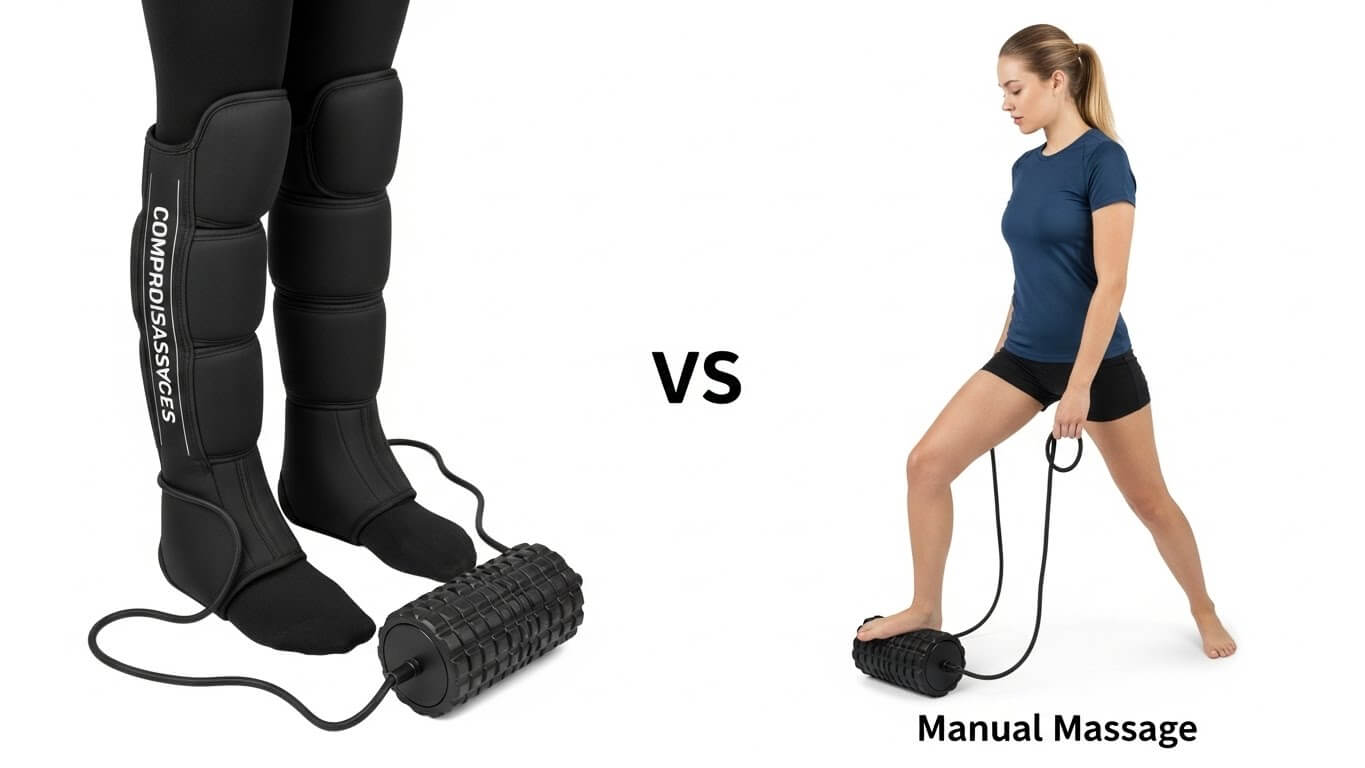
Compression leg massagers and manual massage rollers represent different philosophies in muscle recovery. Compression devices offer passive, convenient, whole-leg treatment that improves circulation and provides relaxation alongside recovery. They excel for time-efficiency, consistent use, and systemic recovery from high training volumes. The significant investment makes sense for serious athletes who will maximize usage and value convenience highly.
Manual rollers deliver targeted, cost-effective recovery requiring active participation and technique development. They provide superior precision for addressing specific muscle issues and offer unmatched portability for maintaining recovery consistency across varying circumstances. The accessible pricing and simple functionality suit everyone from elite athletes to recreational exercisers.
Neither technology is universally superior—they excel in different contexts and for different users. Compression devices optimize passive recovery and circulation for athletes with resources and space. Manual rollers maximize value, portability, and targeted work for those preferring hands-on techniques or operating within budget constraints.
The most comprehensive recovery approaches often incorporate both technologies strategically. Use compression for efficient whole-leg recovery after exhausting training sessions. Deploy manual techniques for addressing specific tightness, improving flexibility, and maintaining tissue quality through targeted work. This combined strategy leverages each method’s strengths while compensating for limitations.
Consider your training volume, budget, recovery priorities, and personal preferences when choosing. High-volume athletes training 10+ hours weekly with adequate budgets gain substantial benefits from compression investment. Recreational athletes, frequent travelers, or budget-conscious individuals find manual rollers provide excellent recovery at accessible prices. Both approaches effectively support recovery when used consistently—success depends on selecting the option you’ll actually use rather than which theoretically offers superior benefits.