

People are surrounded by electronic devices virtually all the time in today’s technologically advanced environment. Electromagnetic fields (EMFs) are necessary for the operation of smartphones, Wi-Fi routers, laptops, tablets, and smart home devices. Even though these fields are a normal result of contemporary technology, some people are concerned about possible long-term exposure. EMF protection devices, which promise to shield or neutralize the effects of electromagnetic radiation, have become more popular as a result of this increased awareness. However, their popularity raises a crucial question: could EMF protection devices affect the functionality of commonplace electronics?
Anyone who depends significantly on technology for a job, communication, or amusement has legitimate concerns about this. Imagine installing an EMF shield on your smartphone only to discover that your Bluetooth headphones or Wi-Fi connection are no longer functional. Many customers are reluctant to try these devices because they fear that they can interfere with or block important communications. It can be easier to distinguish fact from fiction if you know how EMF protection devices operate and whether they have an impact on electronics.
Cell phone stickers and plug-in devices for entire rooms are just two examples of the various types of EMF protection items available. While some offer to “harmonize” or neutralize frequencies without compromising operation, others assert that they may prevent electromagnetic radiation by forming a barrier. The truth is, not all EMF protection devices work the same way, and their influence on electronics differs depending on the technology underlying them.
The way that electromagnetic fields (EMFs) interact with electronics should also be taken into account. Electromagnetic impulses are the foundation of wireless communication technologies like Wi-Fi, Bluetooth, and mobile networks. Anything that actually blocks. Theoretically, EMFs could interfere with or attenuate these impulses. Many EMF protection systems, however, are made to change or reroute signals rather than completely block them in order to lessen human exposure. When assessing whether they impair device performance, this distinction is crucial.
This article will discuss how electromagnetic field (EMF) protection devices operate, what customers and experts say about their impacts, and whether they endanger the performance of your equipment. You’ll have a better idea at the end of whether these gadgets are worthwhile to use and if they can coexist with your necessary technology.
How Electronics Interact With EMFs
An unseen aspect of contemporary life is electromagnetic fields, or EMFs. When in operation, all electronic devices, from computers and smartphones to Wi-Fi routers and smart TVs, produce electromagnetic fields (EMFs) to varying degrees. The electrical currents and wireless signals that drive technology naturally produce these fields. It’s crucial to examine the interactions between EMFs and electronics in order to determine whether or not EMF protection devices interfere with electronics.
EMFs are fundamentally energy waves with both electric and magnetic components. They can be categorized as high-frequency (like Wi-Fi, Bluetooth, and cellular networks) or low-frequency (like those from home wiring and appliances). These frequencies are necessary for electronics to operate correctly. For instance, your microwave uses a different frequency to heat food than your smartphone, which uses high-frequency electromagnetic fields (EMFs) to transfer and receive data. Many contemporary comforts would simply not be possible without electromagnetic fields.
The majority of consumer devices are made to function only in particular frequency ranges. Because engineers consider the potential impact of electromagnetic fields (EMFs) from other devices on performance, regulatory agencies such as the Federal Communications Commission (FCC) in the United States and the ICNIRP in other countries impose limitations on exposure and emissions. This guarantees that gadgets won’t disrupt one another in normal settings. Nevertheless, when several devices vie for the same frequencies, electromagnetic interference (EMI) may result. For example, because both devices run at 2.4 GHz, using a microwave while streaming over Wi-Fi may result in buffering.
Electronics are designed to both produce and endure electromagnetic fields, which is another important consideration. Shielding is frequently incorporated into equipment to lessen external interference and stop excess radiation from escaping. Because of this, routers, computers, and smartphones can be placed next to one another without continuously disturbing one another. The topic of whether these shields or harmonizers could change the intended balance is brought up by the addition of third-party EMF protection equipment.
Generally speaking, if a product actually suppresses electromagnetic fields (EMFs), it may also interfere with wireless functions that rely on them. However, a lot of EMF protection gadgets on the market now promise to “neutralize” or “harmonize” signals rather than block them, so they shouldn’t have a direct impact on electronics. The science, or lack thereof, underlying each product’s operation makes a difference. Customers may assess whether EMF protection solutions are useful, secure, and efficient without sacrificing performance by knowing how electronics interact with EMFs.
Are Electronics Really Affected by EMF Protection Devices?
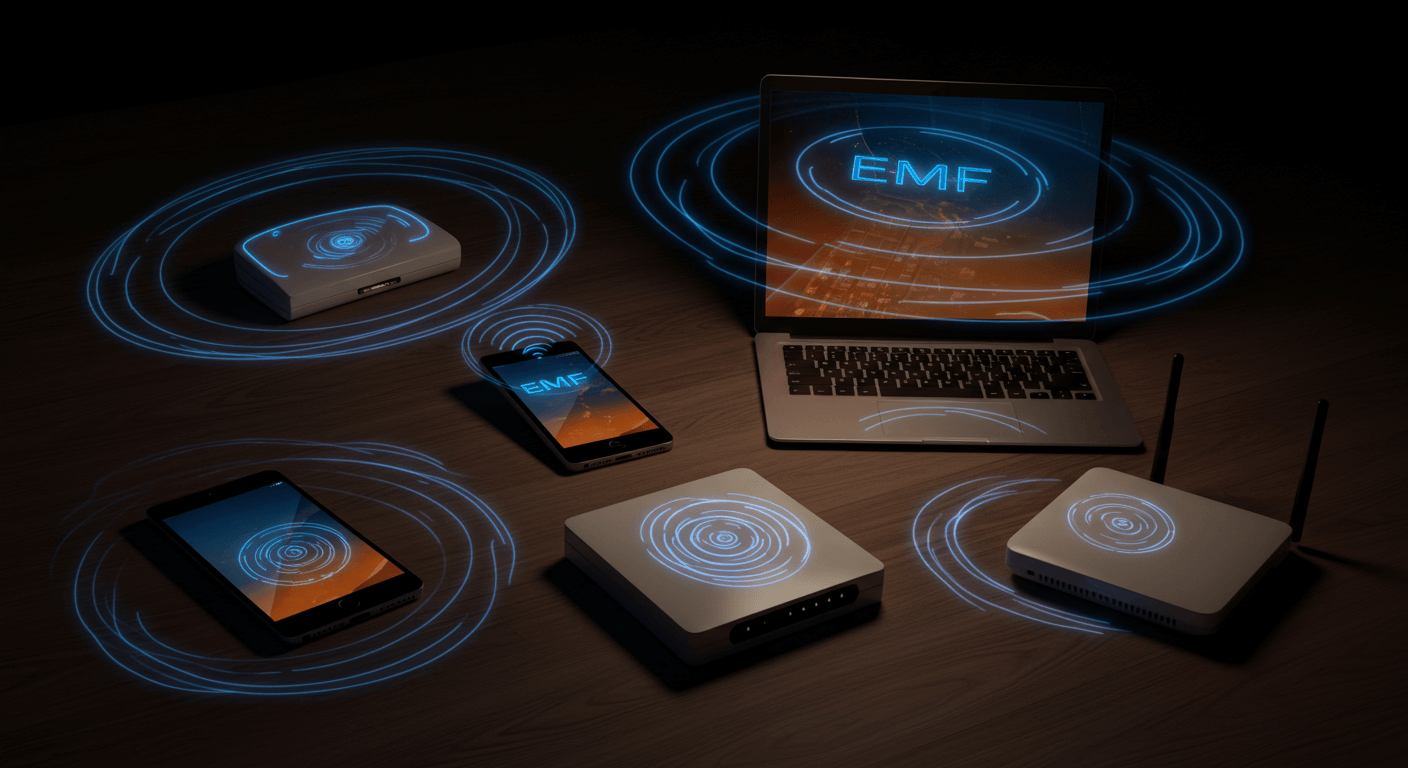
Whether EMF protection devices interfere with electronics is one of the most frequent questions regarding them. Since electromagnetic fields are necessary for the operation of laptops, cellphones, Wi-Fi routers, and smart home devices, many consumers are concerned that employing a protective device could interfere with functionality. In summary, it is dependent upon the kind of EMF protection equipment and its operation.
There are products on the market that promise to “block” electromagnetic fields entirely. Theoretically, if a gadget actually filters electromagnetic radiation, it might also stop your devices from working correctly. For instance, your laptop or phone would not be able to receive the wireless signal if you were to fully shield a Wi-Fi router. In a similar vein, you might encounter dropped calls, weakened connections, or slower internet speeds if your smartphone were covered by a full EMF-blocking case. A complete EMF block does interfere with electronics, as these scenarios show.
Nevertheless, the majority of consumer-sold EMF protection solutions don’t function by totally suppressing signals. Rather, they are frequently sold as “harmonizers” or “neutralizers.” Without compromising device performance, these items purport to alter the energy fields in a way that lessens possible biological stress. They usually don’t affect how electronics work because they don’t completely block the frequencies. From a usability standpoint, interference is typically not reported with these kinds of goods, but whether or not these claims have scientific validity is another thing.
It’s also important to remember that regulatory restrictions and shielding are built into electronic products. For example, smartphones are subject to SAR (specific absorption rate) regulations, which guarantee that emissions stay within acceptable bounds. Because the built-in components are made to continue operating normally even in the presence of surrounding electromagnetic fields, adding an external EMF sticker, pendant, or harmonizer seldom affects the electronics themselves.
Consumers who desire more protection sometimes resort to partial shielding goods like EMF-blocking textiles or phone cases with shielding layers. Because they physically restrict the amount of radiation that may enter or exit the device, they can result in observable performance variations, such as weakened Wi-Fi or a diminished mobile signal. Although they are successful in lowering exposure, they also draw attention to the compromise between convenience and protection.
To sum up, the majority of EMF protection gadgets that are sold for daily usage don’t interact with electronics. Device performance can only be affected by items that physically block or shield electromagnetic fields (EMFs); in contrast, neutralizers and harmonizers usually enable electronics to operate as intended.
Possible Advantages vs. Hazards
When it comes to EMF protection devices, users generally assess the potential benefits against the probable hazards. The demand for protective gear has increased as more people worry about the long-term consequences of continuous electromagnetic field exposure. Making an informed choice, however, requires knowing what these gadgets can and cannot do.
Possible Advantages
Peace of mind is one of the most frequently mentioned advantages of EMF protection equipment. Wearing a protective device can help those who are sensitive to electromagnetic fields (EMFs) feel less tired, have headaches, or have trouble falling asleep. Many users claim that utilizing devices like harmonizers, pendants, or EMF-blocking phone covers makes them feel better at ease and balanced, despite the lack of scientific agreement on “electromagnetic hypersensitivity.”
Partial shielding is another possible advantage. In certain situations, products like bed canopies, phone cases with protective flaps, or EMF-blocking textiles might lessen exposure. For instance, a canopy over a bed can decrease exposure to neighboring mobile towers or Wi-Fi at night, and a shielding phone cover can lessen direct contact radiation to the head during calls. In certain situations, there may be trade-offs, but the advantage is quantifiable.
Possible Hazards
Reliance on unsubstantiated claims rather than actual physical harm from EMF protection equipment is the primary risk. Some items on the market guarantee 100% protection without presenting convincing scientific evidence. Users may get a false sense of security from this, thinking they are protected from all electromagnetic fields (EMFs), even when their exposure levels are actually unaltered.
Interference with the operation of the device is another concern. Although they are good at lowering exposure, strong shielding products might impede Wi-Fi connections or decrease mobile signals. This can be a major annoyance for those who depend on reliable connectivity for business or emergency.
The financial risk must also be taken into account. The cost of EMF protection equipment varies greatly; some models can go into the hundreds of dollars. Customers can wind up spending more on perceived protection than real, quantifiable benefits if many of the promises are not backed by trustworthy, peer-reviewed research.
Balancing the Two
The objectives of the consumer greatly influence the possible advantages of EMF protection equipment. For people who want psychological comfort, neutralizers and harmonizers could be enough. Shielding devices might be somewhat useful for those seeking meaningful reduction, but at the expense of performance trade-offs. Making wiser purchases is ensured by being aware of these dangers and advantages.
Conclusion

Experts and regular customers alike are still debating EMF protection technologies. The need for solutions indicates that many people desire an extra layer of confidence in today’s tech-heavy society, even if research into the long-term consequences of electromagnetic fields is still ongoing.
Peace of mind and, occasionally, quantifiable protection from certain EMF sources are the main potential advantages of these items. Certain gadgets, like as bed canopies and phone cases, can lessen direct exposure in particular circumstances. Even the psychological reassurance that actions are being taken can have a good impact on stress levels and overall well-being for those who are sensitive to electromagnetic fields.
However, it is impossible to ignore the risks. Certain products are advertised with audacious claims but lack solid scientific support, which could lead to misguided trust and financial waste. Others may disrupt commonplace devices by reducing the strength of mobile or Wi-Fi signals, which can be inconvenient for modern life.
The decision to purchase EMF protection equipment ultimately boils down to individual priorities. They might be useful if mental tranquility is the aim. The best course of action is to approach with cautious curiosity if quantifiable scientific proof is the norm.