

The average person spends over seven hours daily looking at digital screens, leading to dry eyes, tension headaches, and that uncomfortable, gritty feeling by day’s end. Whether you’re working long hours at a computer, scrolling through your phone, or simply dealing with the natural effects of ageing on your eyes, finding effective relief for tired, strained eyes has never been more important.
Two popular at-home treatments have emerged: high-tech eye massagers promising comprehensive relief through heat, compression, and massage, and traditional warm compresses offering simple, proven therapeutic warmth. But which approach actually works better? Do the features and convenience of electric eye massagers justify their significantly higher cost, or do warm compresses provide equivalent relief at a fraction of the price?
In this comprehensive guide, we’ll examine the science behind eye care, compare both methods across effectiveness, convenience, and value, and help you determine which solution best addresses your specific eye concerns and lifestyle needs.
Understanding Eye Strain and Fatigue
Modern life creates perfect conditions for eye strain and related issues. Digital eye strain, also called computer vision syndrome, affects 50-90% of computer users. Symptoms include tired eyes, difficulty focusing, dry or irritated eyes, blurred vision, and headaches. The condition results from prolonged screen time, causing reduced blink rate (we blink 66% less when using screens), sustained close-focus causing eye muscle fatigue, and blue light exposure, potentially affecting eye comfort.
Dry eye syndrome occurs when the eyes don’t produce enough tears or when tears evaporate too quickly. The meibomian glands in the eyelids produce oils that prevent tear evaporation. When these glands become blocked, often from incomplete blinking during screen use, dry eye symptoms worsen. Environmental factors like air conditioning, heating, wind, and low humidity exacerbate dryness.
Eye muscle tension from hours of focusing at fixed distances causes the ciliary muscles controlling focus to become fatigued and tight. Sinus pressure and allergies create congestion around the eyes, contributing to discomfort and heaviness. Ageing naturally reduces tear production and affects meibomian gland function, making older adults more susceptible to eye discomfort.
Common Eye Complaints
People experiencing eye problems report various symptoms. Eye strain manifests as aching or tired feeling, difficulty keeping eyes open, and reduced concentration. Dryness includes gritty or sandy sensations, burning or stinging, and excessive tearing as eyes try to compensate. Puffiness and dark circles result from fluid retention, lack of sleep, or allergies.
Headaches often accompany eye strain, starting around the eyes or temples and sometimes radiating to the back of the head. Tension in the eye area includes tightness around the eyes, temple tension, and forehead pressure. Blurred vision or difficulty focusing, light sensitivity, and redness or irritation complete the common complaint list. These symptoms significantly impact quality of life, productivity, and comfort during daily activities.
Benefits of Eye Treatment
Proper eye care provides multiple benefits. Heat therapy improves meibomian gland function by melting blockages, enhances tear quality and reduces dry eye symptoms, increases blood flow to the eye area for healing, relaxes eye muscles and surrounding tissues, and soothes inflammation. Studies show warm compress therapy can significantly improve dry eye symptoms when used consistently.
Gentle massage and compression reduce fluid retention and puffiness, relieve eye muscle tension, improve circulation around the eyes, promote lymphatic drainage, reduce swelling, and provide relaxation extending beyond just the eyes. Regular eye care can prevent symptoms from worsening and improve overall eye comfort and function.
Warm Compresses: Details
What Are Warm Compresses?
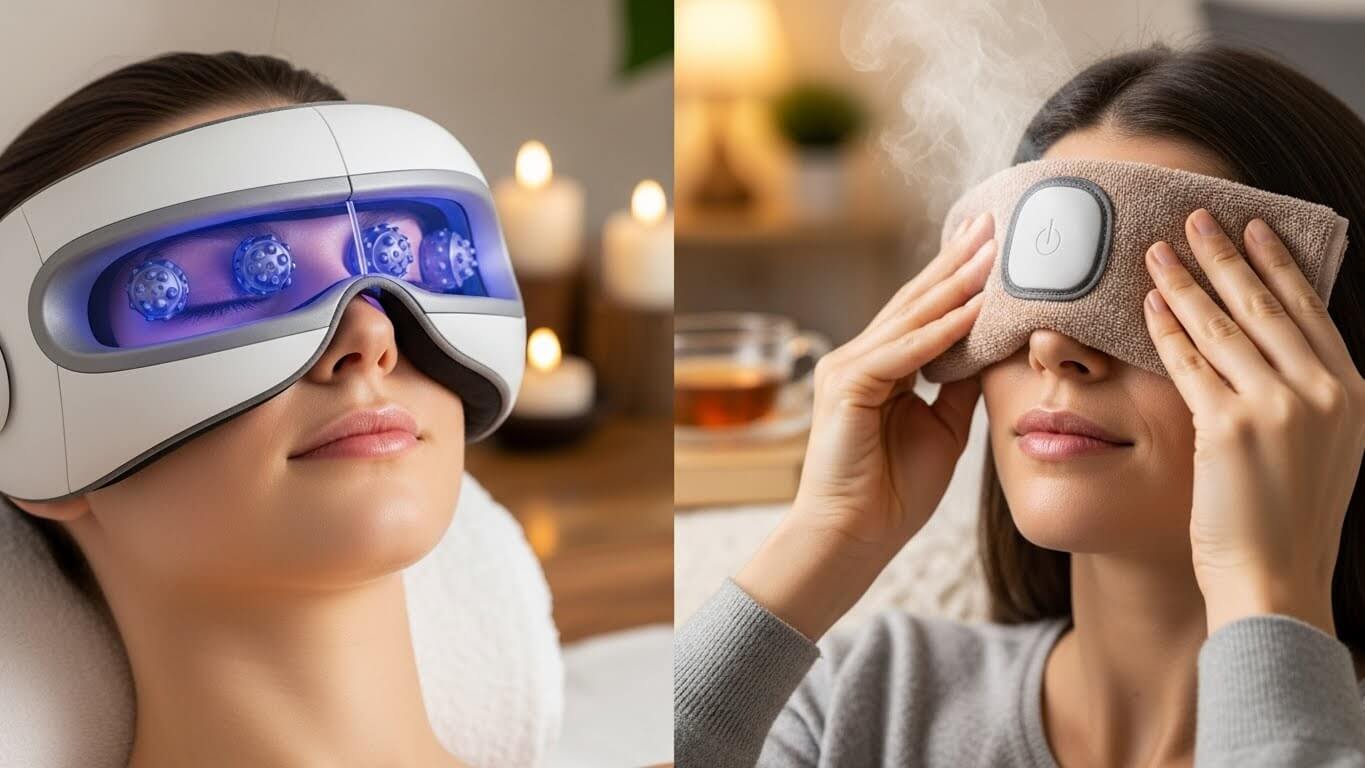
Warm compresses involve applying controlled heat to closed eyelids for therapeutic benefit. The traditional method uses a clean washcloth soaked in warm water and placed over closed eyes for 5-10 minutes. Modern variations include microwaveable eye masks filled with materials like flaxseed or gel that retain heat ($10-$25), reusable gel eye masks that can be heated or cooled ($8-$15), and single-use disposable warm eye masks that self-heat upon opening ($15-$30 for a box).
The optimal temperature is approximately 104-108°F (40-42°C)—warm enough to be therapeutic but not hot enough to burn delicate eye area skin. Treatment typically lasts 5-15 minutes and can be repeated multiple times daily.
How Warm Compresses Work
The therapeutic mechanism is straightforward but effective. Heat increases blood flow to the eye area, delivering oxygen and nutrients while removing metabolic waste. This enhanced circulation supports healing and reduces inflammation. The warmth melts oils in meibomian glands that may be blocked or thickened, improving tear film quality and reducing dry eye symptoms.
Heat relaxes eye muscles and the surrounding tissue that become tight from prolonged focusing or tension. The warmth soothes inflammation and provides immediate comfort. Studies on meibomian gland dysfunction show that applying heat at 108°F for 10 minutes effectively liquefies gland secretions, making warm compresses a scientifically supported treatment for dry eye conditions.
Types of Warm Compresses
Traditional washcloth compresses cost nothing but require frequent reheating as washcloths cool quickly. They’re inconvenient but accessible to everyone. Microwaveable eye masks ($10-$25) like the Bruder Moist Heat Eye Compress maintain therapeutic temperature for 8-10 minutes, contain materials that release moisture for added benefit, and are reusable for months or years. They require access to a microwave and brief heating time.
Electric heated eye masks ($20-$40) plug into outlets and maintain consistent temperature throughout treatment without reheating. They’re convenient but less portable than microwaveable options. Self-heating disposable masks ($15-$30 per box) activate through air exposure, heat to approximately 104°F for 20 minutes, require no preparation, and work anywhere. The per-use cost is higher but convenience is maximum.
Effectiveness and Benefits
Research strongly supports warm compress effectiveness for specific eye conditions. A 2012 study in The Ocular Surface found that warm compresses significantly improved meibomian gland function and dry eye symptoms in patients with meibomian gland dysfunction. Other research shows reduced eye strain symptoms, improved comfort for contact lens wearers, relief from stye and chalazion (eyelid bumps), and soothing effect for allergic eye symptoms.
Warm compresses work best for dry eye symptoms and meibomian gland dysfunction, eye strain and fatigue, minor eye irritation, and promoting relaxation before sleep. They’re safe, simple, and supported by extensive clinical use and research.
Limitations
Warm compresses provide primarily heat therapy without additional benefits. They don’t offer massage, compression, or other modalities. Temperature control can be challenging; too hot risks burns, while too cool provides insufficient benefit. Traditional washcloths cool rapidly, requiring frequent reheating that disrupts relaxation. Microwaveable masks require nearby microwave access.
The treatment requires you to remain relatively still with the compress in place, limiting multitasking ability. While effective for specific conditions like dry eye, warm compresses don’t address all causes of eye discomfort. They’re passive treatments without features like massage that some find beneficial.
Electric Eye Massagers: Details
What Are Eye Massagers?
Electric eye massagers are wearable devices resembling oversized goggles that provide multiple therapeutic modalities. They typically combine heat therapy with adjustable temperature (95-108°F), air pressure massage with rhythmic inflation and deflation of internal chambers, vibration massage providing gentle oscillations, and sometimes music or white noise for enhanced relaxation.
Prices range from $50 for basic models to $200+ for premium devices with advanced features. Popular brands include RENPHO, Breo, and various manufacturers offering similar functionality at different price points.
How Eye Massagers Work
Eye massagers employ multiple therapeutic mechanisms simultaneously. Heat therapy works identically to warm compresses, increasing circulation, melting blocked oils in meibomian glands, and relaxing muscles. Air compression creates a gentle pressure massage around the eyes, promoting circulation and lymphatic drainage, reducing puffiness and fluid retention, and providing a massaging sensation many users find relaxing.
Vibration massage offers gentle stimulation that can reduce perceived discomfort, relax surrounding muscles, and enhance the soothing effect. Some models include massage nodes that gently press on acupressure points around the eyes, believed to relieve tension and promote relaxation in traditional Chinese medicine.
Sessions typically last 15-20 minutes with automatic shut-off. Most devices offer multiple modes combining therapies differently and adjustable settings for pressure intensity, heat level, and vibration strength.
Features and Functions
Modern eye massagers include various features. Heat therapy ranges from basic fixed-temperature heating to adjustable temperature control from 95-108°F for personalized comfort. Air compression patterns vary from gentle to firm, with multiple massage modes offering different pressure patterns and sequences.
Vibration settings provide multiple intensities or can be disabled if users find them uncomfortable. Music and audio integration includes built-in speakers playing relaxing music or white noise, Bluetooth connectivity for personal music, and volume control. Portability features include rechargeable batteries lasting 2-5 sessions, foldable or compact designs for travel, and carrying cases.
Premium models may include eye cavity designs that don’t touch closed eyes, reducing pressure on eyeballs; adjustable headbands for different head sizes; and washable or replaceable interior fabrics for hygiene.
Effectiveness and Benefits
Eye massagers provide comprehensive treatment addressing multiple issues simultaneously. The heat component delivers proven warm compress benefits, air compression reduces puffiness and promotes circulation that static warm compresses don’t provide, and massage and vibration offer muscle relaxation extending beyond heat alone.
Users report benefits including reduced eye strain and fatigue, relief from dry eye symptoms, decreased tension headaches, improved sleep quality when used before bed, reduced appearance of dark circles and puffiness, and overall relaxation and stress relief. The hands-free design allows relaxing completely during treatment, and the consistent temperature eliminates the reheating hassle of traditional compresses.
However, scientific research specifically on electric eye massagers is limited compared to the extensive literature supporting warm compresses. Most benefits are extrapolated from research on individual components (heat therapy, compression therapy, massage) rather than the combined device.
Limitations and Drawbacks
Eye massagers have significant limitations. High cost represents a barrier—$80-$200 for most quality devices versus $10-$25 for reusable warm compresses. The devices require charging and can’t be used if the batteries are depleted. They’re bulkier and less portable than simple warm compresses, though still travel-friendly.
Some users find the compression uncomfortable or claustrophobic; the fit may not suit all face shapes comfortably, and noise from motors and air pumps can detract from relaxation. The devices include electronic components that can malfunction, have a limited lifespan (2-5 years typically), and may require replacement rather than simple repair.
For people with specific eye conditions or recent eye surgery, the pressure and massage features may be contraindicated. Always consult eye care professionals before using massage devices if you have eye conditions or concerns.
Head-to-Head Comparison
Effectiveness for Dry Eyes
Winner: Warm Compresses (with caveat)
For meibomian gland dysfunction and dry eyes specifically, warm compresses have the strongest scientific evidence. Research clearly demonstrates their effectiveness when used at the proper temperature (104-108°F) for an adequate duration (10 minutes). Eye massagers provide heat therapy plus additional features, but the heat component is the primary therapeutic element for dry eyes.
However, eye massagers maintain consistent temperature throughout treatment without cooling or requiring reheating, potentially improving compliance and effectiveness in real-world use. The convenience factor may make users more consistent with treatment, improving outcomes despite warm compresses having stronger direct evidence.
Effectiveness for Eye Strain and Fatigue
Winner: Eye Massagers (slightly)
For general eye strain and muscle fatigue, eye massagers offer advantages through multiple modalities. The combination of heat, compression, and massage addresses different aspects of eye strain simultaneously. The massage and compression components specifically target muscle tension and circulation in ways static warm compresses cannot.
Users consistently report significant relief from eye strain symptoms with regular eye massager use. However, warm compresses also provide meaningful relief through heat therapy and forced rest, so the advantage is modest rather than overwhelming.
Effectiveness for Puffiness and Dark Circles
Winner: Eye Massagers
Air compression specifically promotes lymphatic drainage and reduces fluid retention causing puffiness. Warm compresses provide some circulation benefit but don’t mechanically move fluid like compression does. For morning puffiness or swelling from allergies, fatigue, or fluid retention, eye massagers show superior results.
Dark circles have multiple causes (genetics, pigmentation, thinning skin, shadows from puffiness). Improved circulation from both methods may help, but compression’s fluid-reducing effect provides more visible improvement for puffiness-related dark circles.
Convenience and Ease of Use
Winner: Eye Massagers
Eye massagers win convenience through hands-free operation allowing complete relaxation, consistent temperature maintenance throughout treatment without reheating, adjustable settings for personalized comfort, and timer functions ensuring appropriate treatment duration. Simply put them on, press start, and relax for 15 minutes.
Warm compresses require preparation (heating), frequent reheating for traditional washcloths, holding the compress in place or lying down, and monitoring to ensure appropriate temperature. While not difficult, they’re less convenient than automated eye massagers.
Portability and Accessibility
Winner: Warm Compresses
Microwaveable or disposable warm compresses pack easily in luggage and require minimal space. Self-heating disposable masks work anywhere without electricity. Traditional washcloth compresses need only warm water available in any hotel or location.
Eye massagers are bulkier, heavier, require charging capabilities, and may not fit easily in carry-on luggage. While still portable compared to many electronics, they’re less travel-friendly than simple compress masks.
Cost and Value
Winner: Warm Compresses
Reusable microwaveable eye masks cost $10-$25 and last for years. Even with replacement every 2-3 years, the lifetime cost is under $50. Washcloth compresses cost nothing. Electric heated masks at $20-$40 remain far cheaper than eye massagers.
Eye massagers cost $80-$200 initially and last 2-5 years before requiring replacement. While the cost-per-use drops with frequent use, the upfront investment is substantial. For occasional users, warm compresses deliver better value. For daily users who’ll maximise the device, eye massagers may justify the cost through convenience and comprehensive treatment.
Safety and Contraindications
Winner: Warm Compresses (slightly)
Warm compresses pose minimal risk when used at appropriate temperatures. The main concern is burns from excessive heat, easily avoided by testing the temperature first. They’re appropriate for nearly everyone, including during pregnancy, with most eye conditions, and for all ages, including children with supervision.
Eye massagers introduce compression and vibration that may be contraindicated for certain conditions, including recent eye surgery, glaucoma or increased eye pressure, retinal detachment or high risk, eye infections or inflammation, and severe myopia (nearsightedness). Always consult eye care professionals if you have eye conditions or concerns before using eye massagers.
Who Should Choose Each Option
Choose Warm Compresses If…
Warm compresses are ideal for several user profiles. People with diagnosed dry eye or meibomian gland dysfunction benefit from the proven heat therapy specifically recommended by eye care professionals. Budget-conscious users spending $10-$25 get effective treatment without significant financial investment.
Those who prioritize simplicity and prefer straightforward treatment without electronics and settings benefit from warm compresses. Frequent travellers needing ultra-portable solutions find microwaveable or disposable masks more practical than bulky devices. People with eye conditions or those uncertain about safety prefer the gentler, universally safe warm compress approach.
Occasional users treating symptoms infrequently don’t need expensive devices for sporadic use. Anyone wanting treatment matching clinical recommendations will find eye care professionals most commonly recommend warm compresses for dry eye management.
Choose Eye Massagers If…
Eye massagers suit different needs. Those dealing with multiple issues, including eye strain, puffiness, headaches, and general tension, benefit from comprehensive multi-modal treatment. People who value convenience and technology appreciate hands-free automated operation with adjustable settings.
Daily users treating symptoms every day justify the higher cost through frequent use. Office workers experiencing daily eye strain from computer use benefit from consistent evening treatment. Those who struggle with warm compress compliance due to reheating inconvenience may be more consistent with automated devices.
People without contraindicated eye conditions who’ve consulted professionals about safe use, and those willing to invest $100-$200 for potentially enhanced results and convenience, find value in eye massagers. Users who enjoy relaxation-focused experiences appreciate features like music, gentle massage, and spa-like treatment.
Some users strategically combine both methods. They use eye massagers for comprehensive evening treatment, providing relaxation and addressing multiple concerns, while using warm compresses for targeted dry eye treatment following eye care professional recommendations or quick midday relief when convenient. Disposable warm masks work for travel when eye massagers aren’t practical, and warm compresses serve as backup when devices need charging or if they stop working.
Best Practices for Eye Care
Using Warm Compresses Effectively
For maximum benefit, heat compresses to 104-108°F; warm to the touch but not burning. Test the temperature on your wrist before applying it to your eyes. Apply to closed eyes for 10-15 minutes, typically once or twice daily. For dry eye treatment, follow with a gentle eyelid massage if recommended by your eye care professional.
Maintain hygiene by using clean washcloths or masks, washing reusable masks regularly according to instructions, and never sharing eye treatments with others. Position yourself comfortably, lying down or reclining, to fully relax during treatment.
Using Eye Massagers Effectively
Start with gentler settings (lower pressure and vibration) and gradually increase as you adapt to the sensation. Use for 15-20 minutes once or twice daily, avoiding excessive use that might irritate. Remove contact lenses before use and ensure face is clean.
Position the device comfortably, adjusting straps for a secure but not tight fit. Create a relaxing environment with dim lights, a quiet space, and a comfortable position. Charge regularly to ensure the device is always ready when needed. Clean according to manufacturer instructions, typically wiping interior surfaces with a slightly damp cloth and allowing to dry completely.
Complementary Eye Care Strategies
Both treatments work best as part of comprehensive eye care. Practice the 20-20-20 rule: every 20 minutes, look at something 20 feet away for 20 seconds to reduce eye strain. Adjust the screen position with monitors at arm’s length, slightly below eye level, and with appropriate brightness.
Blink consciously and fully, especially during screen time when blink rate naturally decreases. Use artificial tears as needed for dry eye symptoms. Maintain adequate hydration by drinking water throughout the day. Ensure proper sleep since fatigue worsens eye symptoms. Optimize your environment with adequate lighting, reduced glare, and humid air when possible.
Regular eye exams detect problems early and ensure prescriptions remain current. Outdated prescriptions contribute significantly to eye strain.
Cost-Benefit Analysis
Initial Investment
Basic warm compresses cost $0 (washcloth) to $25 (microwaveable mask). Mid-range options, including electric heated masks, run $20-$40. Premium disposable masks for convenience cost $15-$30 per box (10-20 masks).
Budget eye massagers cost $50-$80 with basic features. Mid-range devices at $80-$150 offer better build quality and features. Premium eye massagers cost $150-$200+ with advanced options.
Long-Term Value
Over five years, reusable warm compresses cost $10-$50 total with occasional replacement. Disposable masks used twice weekly cost approximately $150-$200 over five years. Eye massagers cost $80-$200 initially, with no ongoing costs beyond electricity (negligible).
Cost per use depends on frequency. An eye massager at $120 used daily for three years costs $0.11 per use; excellent value for frequent users. The same device used weekly costs $0.77 per use, still reasonable. A $15 microwaveable compress used daily for two years costs $0.02 per use, exceptional value at any frequency.
Compared to Professional Treatments
Professional dry eye treatments, including intense pulsed light therapy or meibomian gland expression, cost $100-$500+ per session, with multiple sessions needed. Eye massages at spas or wellness centres cost $30-$60 per session. Both at-home options provide enormous savings versus professional care.
However, professional care offers superior treatment for serious conditions. At-home methods work best for maintenance, mild to moderate symptoms, and prevention rather than treating severe eye problems.
Frequently Asked Questions
Can eye massagers damage your eyes?
When used properly according to manufacturer instructions, quality eye massagers are safe for most people. However, individuals with certain eye conditions, including glaucoma, retinal problems, or recent surgery, should consult eye care professionals before use. Excessive pressure or using devices despite discomfort could potentially cause problems.
How often should I use warm compresses for dry eyes?
For meibomian gland dysfunction, eye care professionals typically recommend warm compresses twice daily for 10-15 minutes as part of comprehensive dry eye management. Consistency matters more than occasional intensive treatment.
Do eye massagers really reduce dark circles?
Results vary depending on dark circles. If puffiness or fluid retention contributes to dark circles, the compression feature may provide visible improvement. Genetic pigmentation or skin thinning won’t respond significantly to any topical or massage treatment. Improved circulation from both methods may provide modest benefits.
Are warm compresses or eye massagers better for computer eye strain?
Both provide relief, with eye massagers offering slight advantages through massage and compression. However, prevention is most important; proper ergonomics, the 20-20-20 rule, adequate blinking, and screen breaks prevent much of the strain that treatments merely relieve.
Can I use these treatments if I wear contact lenses?
Yes, but remove contacts before treatment. Wait 15-20 minutes after treatment before reinserting lenses to ensure the eyes have returned to normal temperature and the tear film has stabilized.
Will these treatments improve my vision?
No. Neither treatment improves vision acuity nor corrects refractive errors. They relieve symptoms of eye strain, dryness, and fatigue but don’t change the eye’s optical properties. They may temporarily improve comfort and reduce blurriness caused by dry eyes or fatigue.
Conclusion
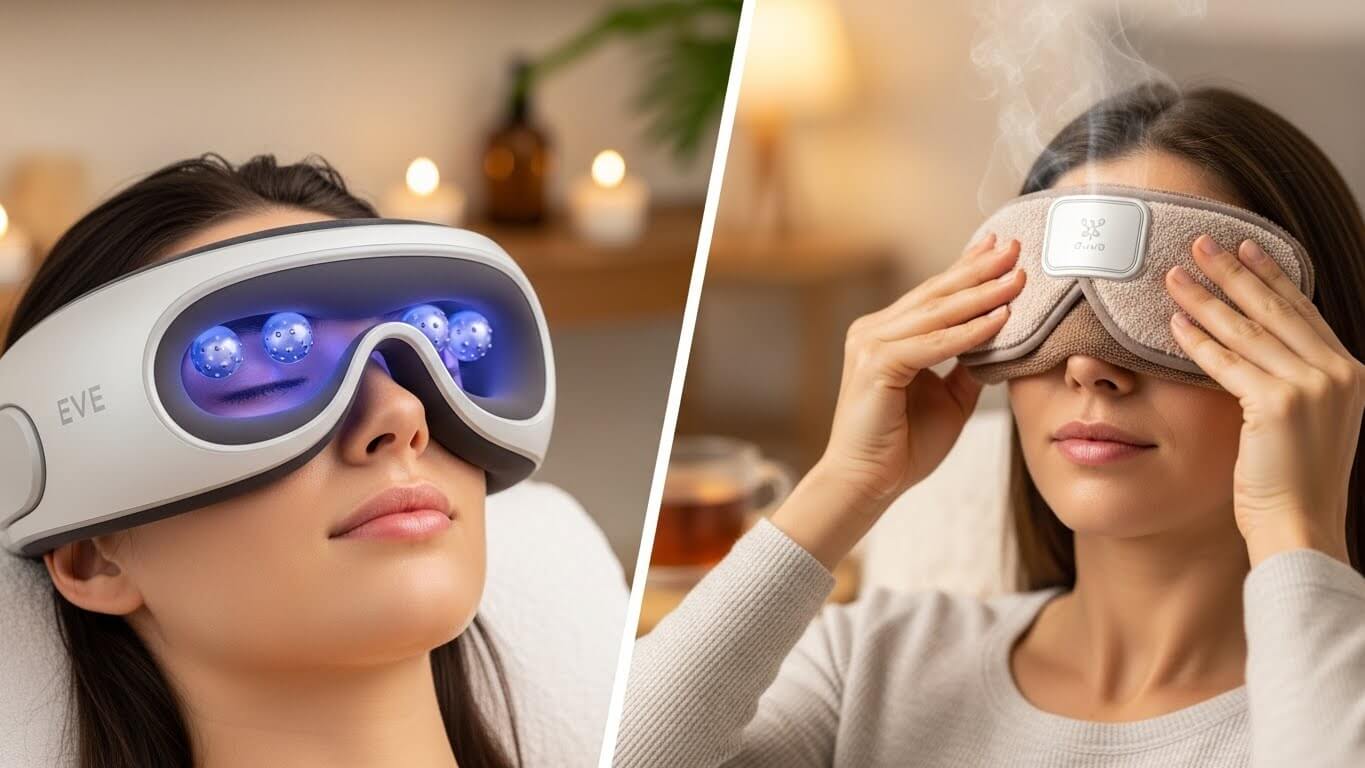
Both warm compresses and electric eye massagers offer legitimate benefits for tired, strained, or dry eyes, but they excel in different ways and suit different needs. Warm compresses provide proven, scientifically supported treatment, particularly effective for dry eyes and meibomian gland dysfunction, all at minimal cost and with universal safety. They represent the gold standard recommended by eye care professionals and deliver excellent results when used consistently.
Electric eye massagers offer convenient, comprehensive treatment, addressing multiple eye concerns simultaneously through heat, compression, vibration, and massage. The hands-free automated operation and consistent heat delivery make them appealing for daily users willing to invest in eye comfort and relaxation. While scientific evidence specifically supporting combined-therapy eye massagers is less extensive than for warm compresses alone, user experiences suggest real benefits for eye strain, fatigue, and puffiness.
For most people, warm compresses provide excellent value and effectiveness, particularly for dry eye management. They’re the logical starting point for eye care; inexpensive, safe, and proven effective. Add an eye massager later if you want enhanced convenience, comprehensive treatment, or find yourself wanting more sophisticated eye care after experiencing warm compress benefits. For tech enthusiasts, daily computer users, or those valuing spa-like relaxation experiences, eye massagers may justify the investment as a primary treatment tool.
Ultimately, the best choice depends on your specific eye concerns, budget, preferences for simplicity versus features, and commitment to consistent use. Whether you choose traditional warm compresses or modern eye massagers, regular treatment combined with proper eye care habits will help your eyes feel refreshed, comfortable, and ready to handle the visual demands of modern life.