

Our feet endure incredible stress daily, supporting our entire body weight, absorbing shock with every step, and often confined in restrictive shoes for hours. It’s no wonder that foot pain, soreness, and fatigue affect nearly everyone at some point. From plantar fasciitis and heel pain to simple tiredness after long days standing or walking, foot discomfort significantly impacts mobility, comfort, and quality of life.
Electric foot massagers have become popular at-home solutions, offering relief without expensive spa visits or professional massage appointments. But one key decision faces prospective buyers: should you invest in a model with built-in heat therapy, or is a massager without heat sufficient? Heat functions typically add $20-$60 to the purchase price, but do they deliver enough additional benefit to justify the cost?
In this comprehensive guide, we’ll examine how foot massage and heat therapy work individually and together, compare their effectiveness across various foot conditions, evaluate the practical differences in daily use, and help you determine whether the heat function is a worthwhile investment for your specific foot care needs, pain conditions, and budget.
Understanding Foot Pain and Fatigue
Common Foot Problems
Feet suffer from various conditions requiring different treatment approaches. Plantar fasciitis, one of the most common causes of heel pain, involves inflammation of the thick band of tissue running across the bottom of the foot. It typically causes stabbing pain with first steps in the morning or after prolonged sitting.
General muscle fatigue and soreness from standing, walking, or running creates achiness throughout the feet. Poor circulation, particularly in older adults or those with diabetes, causes cold feet, numbness, tingling, or swelling. Arthritis in foot joints creates stiffness, pain, and reduced mobility, worsening with age and activity.
Neuropathy or nerve damage causes burning, tingling, numbness, or sharp pain, common in diabetic patients. Edema or swelling from fluid retention makes feet feel heavy and uncomfortable. Metatarsalgia (ball of foot pain), Morton’s neuroma, bunions, and other structural issues cause localized discomfort.
Chronic standing occupations (nurses, teachers, retail workers, factory workers) create persistent foot fatigue and pain even without specific diagnosed conditions. Understanding your primary foot issue helps determine which massage features provide optimal benefit.
How Foot Massage Helps
Massage therapy addresses foot problems through multiple proven mechanisms. Improved circulation from mechanical pressure and kneading enhances blood flow, delivering oxygen and nutrients while removing metabolic waste. This increased circulation supports healing and reduces inflammation.
Muscle relaxation occurs as sustained pressure or rhythmic manipulation releases tension in foot muscles, which work constantly during standing and walking. Trigger point release addresses hypersensitive knots in foot muscles that refer pain to other areas. Lymphatic drainage reduces fluid retention and swelling through gentle pressure promoting lymph movement.
Fascial release targets the plantar fascia and other connective tissue, improving tissue mobility and reducing restriction. Pain modulation through gate control theory—mechanical stimulation “closes the gate” to pain signals traveling to the brain. Stress reduction and relaxation extend beyond just the feet as foot massage activates the parasympathetic nervous system.
Reflexology principles suggest that stimulating specific foot points affects corresponding body organs and systems, though scientific evidence for this is limited. Regardless of mechanism debates, foot massage consistently provides relief for various foot conditions.
The Role of Heat Therapy
Heat therapy contributes additional benefits through distinct mechanisms. Vasodilation causes blood vessels to expand with warmth, significantly increasing blood flow beyond what mechanical massage alone achieves. Enhanced tissue flexibility results as heat makes muscles, tendons, and fascia more pliable, improving the effectiveness of concurrent massage.
Deeper penetration of warmth reaches tissues that mechanical surface massage doesn’t access easily. Pain relief comes directly from heat stimulating sensory receptors that can override pain signals. Muscle relaxation is enhanced as warmth triggers physiological relaxation responses stronger than massage alone for some people.
Improved comfort creates a more pleasant, spa-like experience that encourages consistent use. The soothing sensation of warmth adds psychological comfort enhancing overall therapeutic benefit.
The question is whether these additional heat benefits justify the extra cost and complexity in foot massager design.
Foot Massagers Without Heat: Core Functionality
What They Offer
Non-heated foot massagers focus exclusively on mechanical massage without thermal components. They typically feature multiple massage types including shiatsu (rotating nodes), kneading, rolling, and air compression. These devices provide adjustable intensity levels, various massage modes and programs, and coverage of different foot areas.
Common designs include flat massage mats you stand or rest feet on, enclosed foot spas where feet insert into a chamber, and roller massagers combining manual and electric elements. Sizes accommodate different foot sizes, and operation is simple—place feet and select desired settings.
Prices range from $30 for basic models to $200 for premium devices without heat. Most effective non-heated models cost $50-$120.
How They Work
The massage mechanism relies on motors driving various components. Rotating massage nodes create shiatsu-style kneading pressure on foot soles and sides. Rolling mechanisms with textured surfaces or wheels massage along foot length. Air compression uses inflating chambers to squeeze feet rhythmically, promoting circulation and reducing swelling.
Vibration motors provide gentle oscillation throughout the foot. Some models include acupressure nodes or reflexology targeting specific pressure points. The combination of these mechanical actions works foot muscles, improves circulation, releases tension, and provides relief without any thermal element.
Users select intensity levels and massage programs via controls or remote, then relax for 15-30 minute sessions. The devices deliver consistent massage without requiring manual effort.
Advantages of Heat-Free Models
Non-heated massagers offer several compelling advantages. Lower cost is primary—saving $20-$60 versus heated equivalents makes them more accessible. Simpler design with fewer components means less can malfunction, potentially extending lifespan and reliability.
Lower power consumption results in reduced electricity costs and less heat generation in your home. Cooler operation prevents overheating concerns and makes them more comfortable in warm weather or climates. Some users prefer coolness for certain conditions like acute inflammation where heat would be contraindicated.
Universal suitability means anyone can use them without heat-related contraindications. Faster startup requires no warming period—immediate use when you want relief. The devices focus budget and design on maximizing massage quality rather than dividing resources between massage and heat functions.
Limitations
The primary limitation is obvious—no heat therapy benefits including enhanced circulation from vasodilation, deeper muscle relaxation from warmth, improved tissue flexibility, and the soothing comfort many users associate with quality foot care.
For conditions specifically benefiting from heat therapy (chronic stiffness, arthritis, poor circulation, plantar fasciitis), non-heated models provide incomplete treatment. Cold weather makes foot massage less comfortable without warmth. The experience is less spa-like and luxurious without the added sensory pleasure of soothing heat.
Some users find mechanical massage alone feels harsh or uncomfortable without warmth to relax muscles first. The therapeutic ceiling is lower—maximum relief potential is limited compared to combined heat and massage.
Foot Massagers With Heat: Enhanced Therapy
What Heat Adds
Heated foot massagers incorporate warming elements alongside massage mechanisms. They feature built-in heating elements (typically infrared or resistive), adjustable temperature settings or on/off heat control, and safety features including auto-shut-off and overheat protection.
The heat typically reaches approximately 100-120°F, warm enough for therapeutic benefit without burning. Modern models maintain consistent temperature throughout sessions and integrate heat with massage for simultaneous therapy.
Prices range from $60 for basic heated models to $300+ for premium devices. Most effective heated foot massagers cost $80-$150.
How Heat Integration Works
The heating mechanism uses electrical elements generating warmth distributed through the device. Infrared heating penetrates deeper than surface heat, potentially reaching tissues more effectively. Resistive heating using coils or pads provides direct warmth transfer through contact.
Heat and massage work synergistically—warmth relaxes muscles making them more receptive to massage, improves blood flow enhancing massage circulation benefits, increases tissue pliability allowing deeper effective massage, and provides sensory pleasure encouraging longer, more frequent sessions.
Users typically activate heat separately from massage or select combined programs. Temperature adjustment allows customization based on comfort preferences and therapeutic needs.
Advantages of Heated Models
Heated foot massagers provide several meaningful benefits. Comprehensive therapy addresses foot problems through multiple mechanisms simultaneously—mechanical massage plus thermal therapy. Enhanced circulation from combined vasodilation and mechanical stimulation exceeds either therapy alone.
Superior muscle relaxation results from warmth preparing muscles for more effective massage. Better results for chronic conditions like arthritis, plantar fasciitis, and poor circulation benefit specifically from heat therapy. Improved comfort and spa-like experience increase user satisfaction and compliance with regular use.
Cold weather benefits are significant—warm massage is particularly appealing during winter months. Some users achieve faster pain relief with combined therapy than massage alone. The psychological comfort of warmth shouldn’t be underestimated in promoting overall relaxation and stress relief.
Potential for reduced treatment time as combined therapy may work faster than massage alone for some conditions. More thorough treatment addressing both mechanical and thermal aspects of foot care.
Disadvantages
Despite benefits, heated models have notable drawbacks. Higher cost adds $20-$60 to purchase price, creating financial barrier. Increased complexity with additional components means more potential failure points and reduced reliability.
Higher power consumption increases electricity costs modestly and generates more heat in your home. Some heat-related safety concerns including burn risk with excessive temperature or prolonged use, particularly for people with diabetes or neuropathy with reduced sensation.
Contraindications expand to include conditions where heat isn’t recommended: acute injuries (first 48-72 hours), active inflammation, and certain medical conditions. Slower startup as devices warm to therapeutic temperature adds wait time.
Potential for overheating if safety features fail, though rare in quality modern devices. More expensive repairs when heating elements fail. Some users find the heat uncomfortable or unnecessary, making the extra cost wasted.
Head-to-Head Comparison
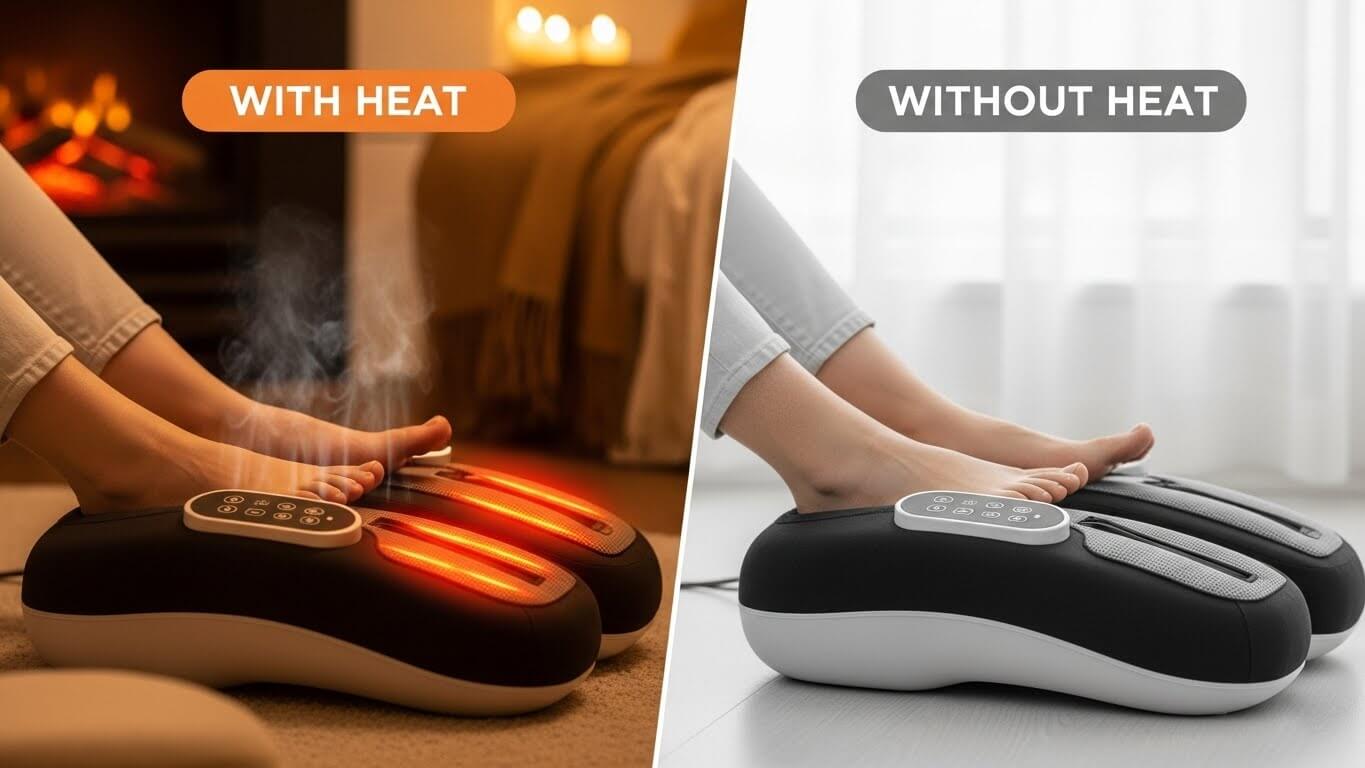
Pain Relief Effectiveness
Winner: Foot Massagers with Heat (for most conditions)
For the majority of chronic foot conditions including plantar fasciitis, arthritis, general fatigue, stiffness, and poor circulation, heated massagers provide superior relief through combined therapy. The heat enhances massage effectiveness, addresses thermal therapy-responsive aspects of pain, and promotes deeper muscle relaxation.
For acute injuries or active inflammation where heat is contraindicated, non-heated models are more appropriate. For simple fatigue or mild soreness in people with good circulation, the difference may be modest.
Overall, for most users with chronic foot problems, heat adds meaningful therapeutic value.
Circulation Improvement
Winner: Foot Massagers with Heat (significantly)
Heat therapy specifically targets circulation through vasodilation—expanding blood vessels dramatically increases blood flow beyond mechanical massage alone. For people with poor circulation, cold feet, or conditions benefiting from enhanced blood flow, the heat function provides crucial additional benefit.
Mechanical massage improves circulation through pumping action, but doesn’t match heat’s circulatory effects. Combined therapy delivers superior circulation improvement, particularly important for older adults, diabetics (with appropriate precautions), and those with vascular issues.
User Experience and Comfort
Winner: Foot Massagers with Heat
The spa-like experience of warm massage is inherently more pleasant and relaxing than room-temperature mechanical massage for most users. The soothing warmth provides psychological comfort enhancing overall satisfaction. Users consistently rate heated massagers higher for comfort and enjoyment.
The pleasant experience encourages more frequent, longer sessions, potentially improving outcomes through better compliance. For pure sensory pleasure and relaxation, heat-enhanced massage wins clearly.
Ease of Use and Convenience
Winner: Foot Massagers Without Heat (slightly)
Non-heated models offer simpler operation—fewer settings to manage, no temperature considerations, and immediate use without warming periods. The plug-and-go simplicity appeals to users wanting straightforward functionality.
Heated models require temperature selection, warming time (typically 1-3 minutes), and monitoring to ensure appropriate heat levels. While not difficult, it’s objectively more complex than heat-free operation.
The convenience difference is modest but real, favoring non-heated simplicity.
Safety and Contraindications
Winner: Foot Massagers Without Heat
Non-heated massagers have fewer safety concerns and contraindications. They’re safe for acute injuries (avoiding the area), don’t risk burns, and suit people with heat-sensitive conditions or reduced sensation.
Heated models require caution for diabetes or neuropathy patients with reduced sensation, people with acute injuries or inflammation, users with certain vascular conditions, and anyone heat-sensitive. Burn risk exists with excessive temperature or prolonged exposure.
For universal safety and minimal contraindications, non-heated models win.
Cost and Value
Winner: Depends on Individual Needs
Non-heated models cost $20-$60 less, providing better pure financial value for users who don’t need or want heat therapy. For simple massage needs, the savings represent smart budgeting.
However, for users whose conditions benefit meaningfully from heat therapy, the extra $20-$60 represents excellent value for significantly enhanced relief. A $40 price difference seems modest when heated models provide noticeably better results for chronic conditions.
Value calculation is personal—heat provides poor value if you don’t need it, excellent value if you do.
Versatility and Year-Round Use
Winner: Foot Massagers with Heat
Heated models offer more versatility through adjustable or deactivatable heat. You can use heat when desired (cold days, chronic pain) or turn it off when not needed (warm weather, acute issues). This flexibility provides options for different conditions and seasons.
Non-heated models offer only one option—room temperature massage. They work well in that capacity but lack the versatility of selectable heat.
For adaptability to various situations, heated models provide more options.
Energy Efficiency and Operating Cost
Winner: Foot Massagers Without Heat
Non-heated models use less electricity, typically drawing 15-30 watts versus 30-60 watts for heated models during use. Over a year of regular use (daily 20-minute sessions), the difference might be $5-$15 in electricity costs—modest but real.
Non-heated models also don’t generate excess heat in your home, potentially reducing air conditioning costs slightly in warm weather. The energy difference is minor for most users but favors non-heated efficiency.
Who Should Choose Each Type
Choose Foot Massagers Without Heat If…
Non-heated massagers suit several user profiles perfectly. Budget-conscious individuals want effective foot massage at $50-$100 without paying extra for features they may not need. People with primarily acute issues or occasional foot fatigue need simple massage without thermal therapy complexity.
Those living in warm climates where added heat is uncomfortable or unnecessary benefit from cool or room-temperature massage. Users with conditions where heat is contraindicated (certain acute injuries, some inflammatory conditions) need massage-only options.
Individuals preferring simplicity and immediate use value straightforward operation without temperature management. People with heat sensitivity or who find warmth uncomfortable during massage prefer non-thermal options.
Those wanting to minimize electricity consumption and operating costs choose more efficient non-heated models. Users focused on mechanical massage quality may prefer devices where engineering and budget concentrate entirely on massage function.
Choose Foot Massagers With Heat If…
Heated massagers appeal to different priorities and needs. People with chronic conditions specifically benefiting from heat therapy including arthritis, plantar fasciitis, poor circulation, and chronic stiffness need comprehensive treatment. Those in cold climates value warm foot massage particularly during winter months.
Users wanting spa-like, luxurious experiences appreciate the enhanced comfort and relaxation heated massage provides. Individuals willing to invest $80-$150 for superior features and potentially better results justify the premium cost.
People with chronically cold feet benefit from warming therapy alongside massage. Those seeking maximum pain relief and fastest results want combined therapy’s comprehensive approach. Users who’ve tried non-heated massage without adequate relief may discover heat provides the missing therapeutic element.
Individuals wanting versatile devices for year-round use appreciate heat they can activate or deactivate based on conditions and needs.
The Practical Reality
Many users purchasing non-heated models later wish they’d spent extra for heat after experiencing its benefits elsewhere. Conversely, some heated model owners rarely use the heat function, making the extra cost unnecessary.
The decision often hinges on your primary foot issue—chronic conditions with inflammation or stiffness strongly favor heated models, while simple fatigue or occasional soreness may not require heat therapy.
When to Seek Professional Help
Warning Signs
Seek medical evaluation for severe, sudden foot pain particularly after injury, swelling, redness, or warmth suggesting infection or blood clots, numbness or tingling that’s new or worsening, and inability to bear weight or walk normally.
Foot deformities, visible wounds that won’t heal, persistent pain unresponsive to home treatment for 2+ weeks, and pain accompanied by fever or other systemic symptoms require professional assessment.
Conditions Requiring Professional Care
Diabetes patients should see podiatrists regularly for professional foot care and evaluation. Structural problems like severe bunions, hammertoes, or flat feet may need orthotics, physical therapy, or surgical intervention.
Suspected stress fractures, plantar fasciitis not improving with conservative care, and Morton’s neuroma or other specific diagnosed conditions often require professional treatment beyond home massage.
Foot massagers complement professional care but don’t replace proper medical evaluation and treatment for serious conditions.
Frequently Asked Questions
Is the heat function worth the extra cost?
For people with chronic conditions like arthritis, poor circulation, plantar fasciitis, or chronic stiffness, the heat function typically provides enough additional benefit to justify the $20-$60 premium. For those with simple fatigue or mild occasional soreness, heat may not be necessary. Consider your specific condition and whether heat therapy has helped you in the past.
Can I add heat externally to a non-heated massager?
While you could theoretically use heating pads or warm towels before massage, it’s inconvenient and doesn’t provide the integrated, continuous warmth of built-in heating. If you’re considering workarounds, you likely want a heated model.
Are heated foot massagers safe for diabetics?
Diabetics should consult healthcare providers before using heated foot massagers. Neuropathy (nerve damage) common in diabetes reduces sensation, increasing burn risk without feeling excessive heat. If approved by doctors, use lowest heat settings and check feet carefully after each use.
How hot do these devices actually get?
Most heated foot massagers reach approximately 100-120°F (38-49°C); warm to touch but well below burning temperatures for healthy skin. Adjustable models allow customizing temperature based on comfort.
Do heated models use a lot more electricity?
The difference is modest. Non-heated models use approximately 15-30 watts, heated models use 30-60 watts during operation. For daily 20-minute use, annual cost difference is roughly $5-$12—noticeable but not substantial for most users.
Can I turn off the heat on heated models?
Most quality heated foot massagers allow deactivating heat while still using massage functions. Check specifications before purchasing to ensure this flexibility if important to you.
Conclusion
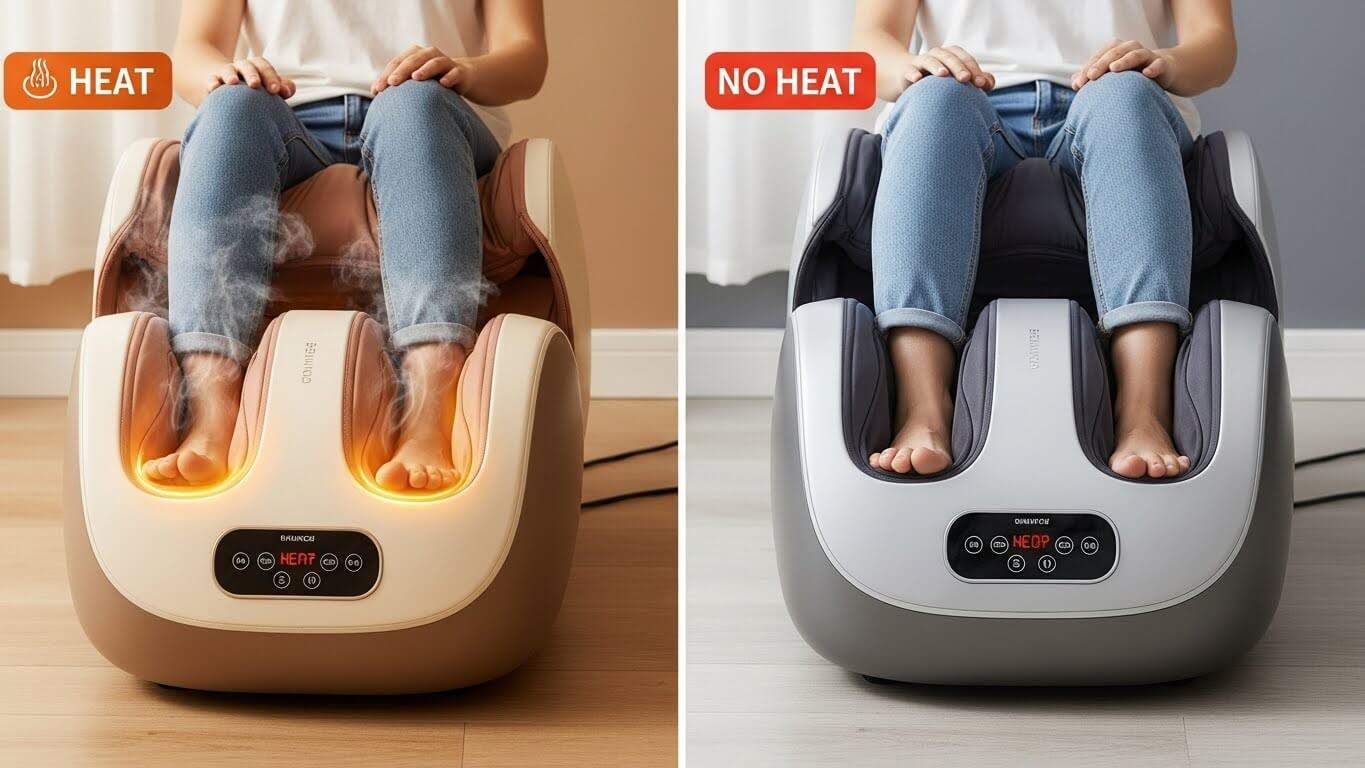
The choice between foot massagers with and without heat ultimately depends on your specific foot conditions, climate, personal preferences, and budget priorities. Foot massagers without heat provide effective, straightforward massage therapy at lower cost ($50-$120) with simpler operation, fewer contraindications, and lower electricity consumption. They’re perfect for users with simple fatigue or mild soreness, those in warm climates, people wanting minimal complexity, budget-conscious buyers, and anyone with conditions where heat is contraindicated.
Foot massagers with heat deliver enhanced therapy combining mechanical massage with warmth for comprehensive treatment at moderately higher cost ($70-$150). The heat function provides meaningful additional benefits for chronic conditions like arthritis, plantar fasciitis, poor circulation, and chronic stiffness. They suit users seeking maximum pain relief, those in cold climates, people wanting spa-like experiences, and individuals willing to invest modestly more for potentially better results.
For most people with chronic foot problems, the $20-$60 premium for heat therapy represents good value for the enhanced circulation, deeper muscle relaxation, improved tissue flexibility, and superior comfort heated models provide. The combined therapy addresses foot pain more comprehensively than massage alone.
However, if your foot care needs are simple, occasional, or heat-contraindicated, non-heated massagers deliver excellent results while saving money and simplifying operation. Start by honestly assessing your primary foot issues—if they include stiffness, poor circulation, or chronic inflammation that responds to warmth, choose heated. If you mainly need relief from simple fatigue or occasional soreness, non-heated models work excellently while keeping your budget happy.
Either choice brings professional-quality foot care into your home for daily use at a fraction of ongoing spa or therapy costs, improving comfort, reducing pain, and enhancing your overall quality of life through the simple yet powerful benefits of regular foot massage.