

If you’ve ever struggled to open a jar, felt stiffness in your fingers first thing in the morning, or experienced that deep, aching pain in your hands that makes everyday tasks challenging, you understand how debilitating hand arthritis can be. More than 54 million Americans live with some form of arthritis, with hand arthritis being particularly common and impactful since we use our hands for virtually every daily activity.
As the population ages and more people work at computers for decades, hand arthritis continues to affect more lives. Electric hand massagers promise drug-free relief, improved mobility, and reduced pain through compression, heat, and massage. But do these gadgets actually help with arthritis symptoms, or are they just expensive toys that gather dust after a few uses? In this comprehensive guide, we’ll explore the science behind hand arthritis, examine how electric hand massagers work, evaluate their effectiveness, and help you determine whether they’re a worthwhile investment for managing your specific arthritis symptoms.
Understanding Hand Arthritis
Types of Hand Arthritis
Several forms of arthritis affect the hands, each with distinct characteristics. Osteoarthritis (OA), the most common type, results from wear and tear on joint cartilage over time. It typically affects the base of the thumb, finger joints closest to the nails (DIP joints), and middle finger joints (PIP joints). Symptoms include stiffness, pain with use, bony enlargements, and reduced grip strength.
Rheumatoid arthritis (RA) is an autoimmune condition where the body attacks joint linings. It typically affects multiple joints symmetrically, often starting in the knuckles (MCP joints) and wrists. Symptoms include morning stiffness lasting over an hour, swelling and warmth, fatigue, and potential joint deformity over time.
Psoriatic arthritis occurs in some people with psoriasis, affecting fingers and often causing “sausage digits” with uniform swelling. Gout, though more common in the feet, can affect the hands through sudden, severe pain attacks from uric acid crystal buildup. Post-traumatic arthritis develops after injuries to hand joints or ligaments.
Common Symptoms and Challenges
Hand arthritis creates numerous daily challenges. Pain ranges from dull aching to sharp, acute discomfort, often worsening with use. Stiffness is particularly problematic in the morning or after periods of inactivity. Swelling can make rings tight and fingers appear puffy. Reduced range of motion limits hand flexibility and makes reaching difficult. Weakness affects grip strength, making it hard to hold objects or perform tasks requiring dexterity. Joint instability can make hands feel unreliable or shaky.
These symptoms profoundly impact daily life, affecting basic tasks like opening containers, buttoning clothing, typing or writing, cooking and food preparation, personal grooming, and holding objects like books or phones. The psychological impact shouldn’t be underestimated—chronic pain and loss of independence can lead to frustration, anxiety, and depression.
Medical treatment for hand arthritis typically involves multiple approaches. Medications include over-the-counter pain relievers like acetaminophen or NSAIDs, prescription anti-inflammatories, disease-modifying drugs for rheumatoid arthritis, and corticosteroid injections for acute flares.
Physical and occupational therapy teaches joint protection techniques, strengthening exercises, range of motion activities, and adaptive strategies for daily tasks. Splints and braces provide support and rest for affected joints. Heat and cold therapy offers temporary symptom relief. Paraffin wax treatments provide deep heat penetration. In severe cases, surgical interventions may be necessary.
Many arthritis sufferers seek complementary approaches to manage symptoms without relying solely on medications, which is where electric hand massagers enter the picture.
How Electric Hand Massagers Work
Types of Hand Massager Gadgets
The market offers several distinct hand massager designs. Compression massagers are the most common type, featuring glove-like chambers that inflate and deflate rhythmically around your hand and fingers. They provide a squeeze-and-release massage that promotes circulation. Prices range from $80-$250, with brands like RENPHO and Comfier leading the market.
Heat therapy massagers combine warming elements with compression or vibration, maintaining temperatures around 100-110°F to relax muscles and improve blood flow. These typically cost $100-$200. Vibration massagers use gentle oscillations to stimulate hands, often handheld devices you grip or rest your hand on, priced at $30-$100.
Acupressure massagers feature massage balls or nodes targeting specific pressure points, sometimes combining with heat and vibration. These range from $50-$150. Roller massagers have textured surfaces or rollers for manual-electric hybrid massage, providing more control over pressure and location at $40-$100.
Full hand spa systems incorporate multiple therapies, including compression, heat, vibration, and sometimes red light therapy in premium units costing $150-$400.
Therapeutic Mechanisms
Electric hand massagers employ several therapeutic mechanisms relevant to arthritis relief. Air compression creates rhythmic squeezing that promotes blood circulation, reduces fluid buildup, causing swelling, and provides gentle mobilization of joints. The massage effect can help break up muscle tension around arthritic joints.
Heat therapy increases tissue temperature, which relaxes muscles and connective tissue, improves blood flow, delivering nutrients and oxygen, reduces stiffness, and provides pain-relieving warmth. Vibration offers gentle sensory input that can reduce pain perception through the gate control theory, stimulate circulation, and may help maintain joint mobility.
Massage stimulation generally reduces muscle tension around affected joints, promotes relaxation and stress reduction (stress can worsen arthritis pain), and may trigger endorphin release for natural pain relief.
What to Expect During Treatment
A typical session with an electric hand massager involves positioning your hand comfortably in the device, selecting your preferred settings for intensity, heat, and massage mode, then relaxing for 10-20 minutes while the device works. Most users describe the sensation as gentle squeezing with warmth, generally pleasant and relaxing rather than intense or painful.
Compression rhythms vary by device—some provide consistent squeeze patterns while others alternate between fingers and palm. Heat gradually warms your hand to a comfortable, therapeutic temperature. After treatment, many users report temporary reduction in pain and stiffness, improved hand mobility and flexibility, and a sense of relaxation that extends beyond just the hands.
Choosing the Right Hand Massager
Key Features to Consider
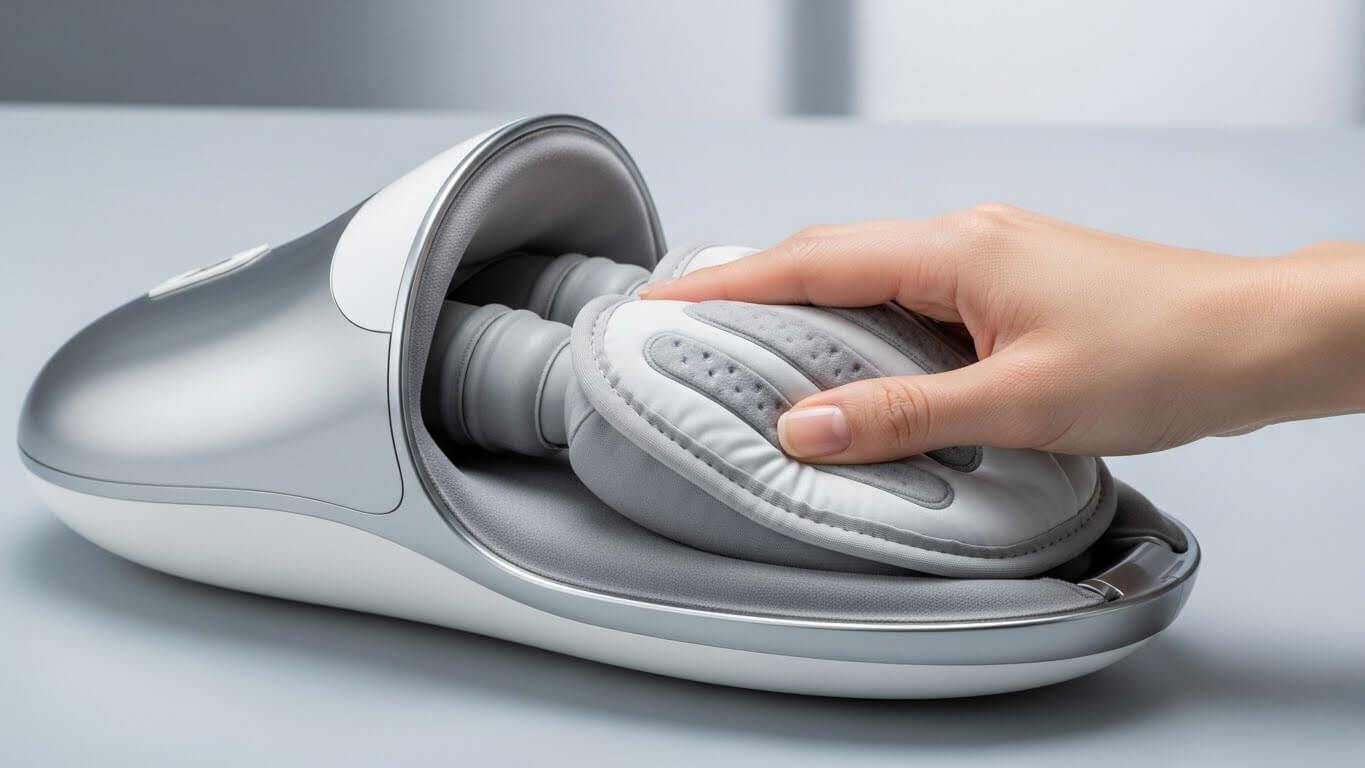
Compression coverage and pattern matter significantly. Look for devices that encompass the full hand, including fingers, provide adjustable intensity levels, and offer multiple compression patterns or modes. Some devices treat one hand at a time, while others accommodate both hands simultaneously—two-hand options save time but are bulkier and more expensive.
Heat therapy effectiveness requires sufficient warmth (reaching at least 100-105°F), even heat distribution across the treatment area, and adjustable temperature settings for personal preference. Some people with certain arthritis types or conditions should avoid heat, so consult healthcare providers if uncertain.
Size and fit considerations include interior dimensions that accommodate your hand size comfortably, and whether the device works for both left and right hands (most do). Build quality indicators include sturdy construction that feels durable, quiet operation without excessive noise, machine-washable or wipeable liners for hygiene, and reputable brands with positive long-term reviews.
Ease of use features include intuitive controls that arthritic hands can operate, remote controls (helpful if hand mobility is limited), automatic shut-off after 15-20 minutes for safety, and wireless or long cord designs for positioning flexibility.
Top Hand Massagers for Arthritis
The RENPHO Hand Massager ($120-$150) leads the market with air compression, soothing heat, and multiple intensity levels. It accommodates most hand sizes and receives consistently positive reviews from arthritis sufferers for effectively combining heat and compression. The device treats both hands though not simultaneously, and its reasonable price point offers good value.
The Comfier Hand Massager with Heat ($100-$130) provides similar features at a slightly lower price, with strong compression and effective heat. Users appreciate the comfortable interior and easy controls. Some reviewers note it runs slightly smaller, so those with larger hands should verify dimensions.
The SereneLife Compression Hand Massager ($80-$100) offers budget-friendly entry into electric hand massage with basic but effective compression and heat. It’s a good starting point for those uncertain about committing to pricier models, though it has fewer features and simpler controls than premium options.
The Lunix LX3 Cordless Hand Massager ($140-$170) provides the freedom of wireless operation with rechargeable batteries, making it more portable and convenient for use anywhere. The compression is strong and heat effective, though battery life requires charging every few days with regular use.
Premium options like the Fit King Hand and Finger Massager ($150-$200) offer advanced features including finger-specific compression chambers, multiple massage modes, and superior build quality. These suit serious users who will maximize features and want maximum longevity.
Price Ranges and Value
Budget options under $80 provide basic compression and sometimes heat, often with fewer features and simpler construction. These work for occasional use or trying the concept before larger investment. Mid-range devices from $80-$150 offer the sweet spot for most users, combining effective compression, reliable heat, good build quality, and features matching most needs.
Premium options over $150 provide advanced features, superior materials, longer warranties, and sometimes rechargeable batteries or multiple therapy types. They’re worthwhile for daily users who need maximum effectiveness and durability.
For most arthritis sufferers, mid-range devices provide the best value—sufficient features and quality without paying for unnecessary premium features.
Proper Use for Maximum Benefit
For acute pain and stiffness relief, use the massager when experiencing discomfort for 15-20 minute sessions at moderate intensity. Include heat if tolerated and inflammation isn’t active. For morning stiffness, which many arthritis sufferers find particularly troublesome, use the device for 15 minutes upon waking to improve morning mobility and reduce stiffness before starting daily activities.
For ongoing management and prevention, use the device 1-2 times daily—morning and evening is ideal for many users. Consistency produces better results than sporadic use. Some users benefit from brief sessions (10 minutes) before activities requiring hand use, like cooking or crafting.
During arthritis flares with acute inflammation, apply the principles of RICE (rest, ice, compression, elevation) and consult healthcare providers. Heat may worsen inflammatory flares, so use devices with caution or avoid heat function during these periods.
Combining with Other Treatments
Hand massagers work best as part of comprehensive arthritis management. Continue prescribed medications—massagers complement but don’t replace medical treatment. Perform gentle hand exercises and stretches to maintain flexibility and strength, ideally after massager use when hands are warm and relaxed.
Use proper ergonomics with adaptive tools, ergonomic keyboards and utensils, and frequent breaks during repetitive tasks. Apply ice packs for 10-15 minutes after activities that aggravate arthritis. Maintain healthy weight to reduce overall inflammation, and practice stress management since stress can worsen pain perception.
Consider periodic professional hand massage or physical therapy for targeted treatment that devices can’t provide.
Safety Considerations
Electric hand massagers are generally safe but have important precautions. Avoid use during acute inflammatory flares with significant warmth and swelling, if you have open wounds or skin infections on hands, with severe circulatory problems, or if you have uncontrolled diabetes with neuropathy (reduced sensation).
Consult healthcare providers before use if you have a pacemaker or other electronic medical devices, recent hand injuries or surgeries, blood clots or clotting disorders, or severe osteoporosis with bone fragility.
Start with gentle settings and gradually increase intensity—arthritic joints are more fragile. Never force your hand into a device or use if it causes increased pain. Stop immediately if you experience increased swelling, numbness or tingling, skin irritation, or persistent increased pain after use.
Cost-Benefit Analysis
Financial Investment
Initial device costs range from $60-$80 for basic models to $120-$200 for quality mid-range to premium devices. Most effective arthritis-focused massagers fall in the $100-$150 range. Ongoing costs are minimal—primarily electricity for charging (negligible) and occasional replacement of washable liners ($10-$20 if available).
Comparing to Alternatives
Professional hand massage therapy costs $50-$80 per session focused on hands, or $60-$120 for full massage. Weekly sessions total $200-$480 monthly or $2,400-$5,760 annually. Occupational therapy for hand arthritis costs $75-$150 per session, with typical treatment plans of 6-12 sessions totaling $450-$1,800.
Paraffin wax treatments at salons cost $15-$30 per session, or home paraffin baths run $30-$80 for the unit plus $10-$20 monthly for wax. Over-the-counter arthritis creams and topicals cost $10-$30 monthly with regular use. Prescription medications range from $10-$200+ monthly depending on type and insurance coverage.
A $120 hand massager used for two years costs just $5 monthly. Even with minimal effectiveness, the low ongoing cost makes it a reasonable investment for most arthritis sufferers to try. If it reduces even a few professional therapy sessions or allows modest medication reduction, it pays for itself quickly.
Long-Term Value
Quality hand massagers typically last 2-4 years with regular use. A $120 device lasting three years costs $3.33 monthly—exceptional value if it provides consistent relief. The convenience of at-home use adds value beyond pure economics. Having immediate access to relief when stiffness strikes, especially morning stiffness, is worth considerable premium.
However, if the device proves ineffective or you don’t use it consistently, even low cost represents wasted money. The value proposition depends entirely on your individual response and commitment to regular use.
When to See a Healthcare Provider
Seeking Professional Evaluation
Consult healthcare providers if you experience new joint pain or swelling lasting more than a few weeks, sudden severe pain or rapid worsening, significant functional impairment affecting daily activities, joint deformity or instability, or signs of infection like fever with warm, red, swollen joints.
For diagnosed arthritis, regular check-ups monitor disease progression, adjust treatments as needed, and catch complications early. Don’t rely solely on home treatments if your arthritis significantly impacts your life.
Complementary Professional Treatments
Healthcare providers offer treatments beyond what home massagers can provide. Occupational therapy teaches joint protection techniques, provides custom splints, and recommends adaptive equipment. Physical therapy strengthens supporting muscles and improves hand function.
Corticosteroid injections provide powerful anti-inflammatory relief for acute flares. Hyaluronic acid injections may help some osteoarthritis cases. Prescription medications including DMARDs for rheumatoid arthritis slow disease progression. In advanced cases, surgical options like joint replacement or fusion may be necessary.
Hand massagers complement but never replace appropriate medical care for arthritis. They’re one tool in a comprehensive management approach.
Frequently Asked Questions
Do hand massagers help rheumatoid arthritis or just osteoarthritis?
Hand massagers may help both types, though responses vary. Osteoarthritis sufferers generally report more consistent benefits. Rheumatoid arthritis patients should use devices during remission or low-inflammation periods, avoiding heat during active inflammatory flares. Always consult your rheumatologist before adding new treatments to your RA management plan.
How often should I use a hand massager for arthritis?
Most users benefit from 1-2 daily sessions of 15-20 minutes each. Morning use addresses stiffness, while evening use promotes relaxation. Consistency matters more than duration—regular short sessions outperform occasional long ones. Adjust frequency based on your response and symptoms.
Can hand massagers make arthritis worse?
When used properly, they shouldn’t worsen arthritis. However, excessive pressure, using heat during inflammatory flares, or too-frequent use might temporarily increase discomfort. Start gently, avoid use during acute flares, and stop if pain increases. Massagers don’t cause arthritis progression but improper use can temporarily aggravate symptoms.
Will my insurance cover a hand massager?
Most insurance plans don’t cover consumer hand massagers as they’re considered wellness devices rather than durable medical equipment. However, if prescribed by a doctor as part of arthritis treatment, some plans might provide partial coverage or reimbursement through flexible spending accounts (FSA) or health savings accounts (HSA). Check with your insurance provider and consider using pre-tax dollars if available.
Are hand massagers better than paraffin wax treatments?
Both provide heat therapy benefits. Paraffin wax offers deeper heat penetration and covers the hands completely, while electric massagers add compression and massage benefits. Many users find electric massagers more convenient for regular use. Some people alternate between both methods or use paraffin wax occasionally for deeper treatment with daily massager use.
How long do the effects last after using a hand massager?
Benefits are temporary, typically lasting 30 minutes to a few hours after treatment. Some users report cumulative benefits with consistent use over weeks, including generally reduced baseline pain and stiffness. The goal is regular use for ongoing management rather than a permanent cure from single sessions.
Conclusion
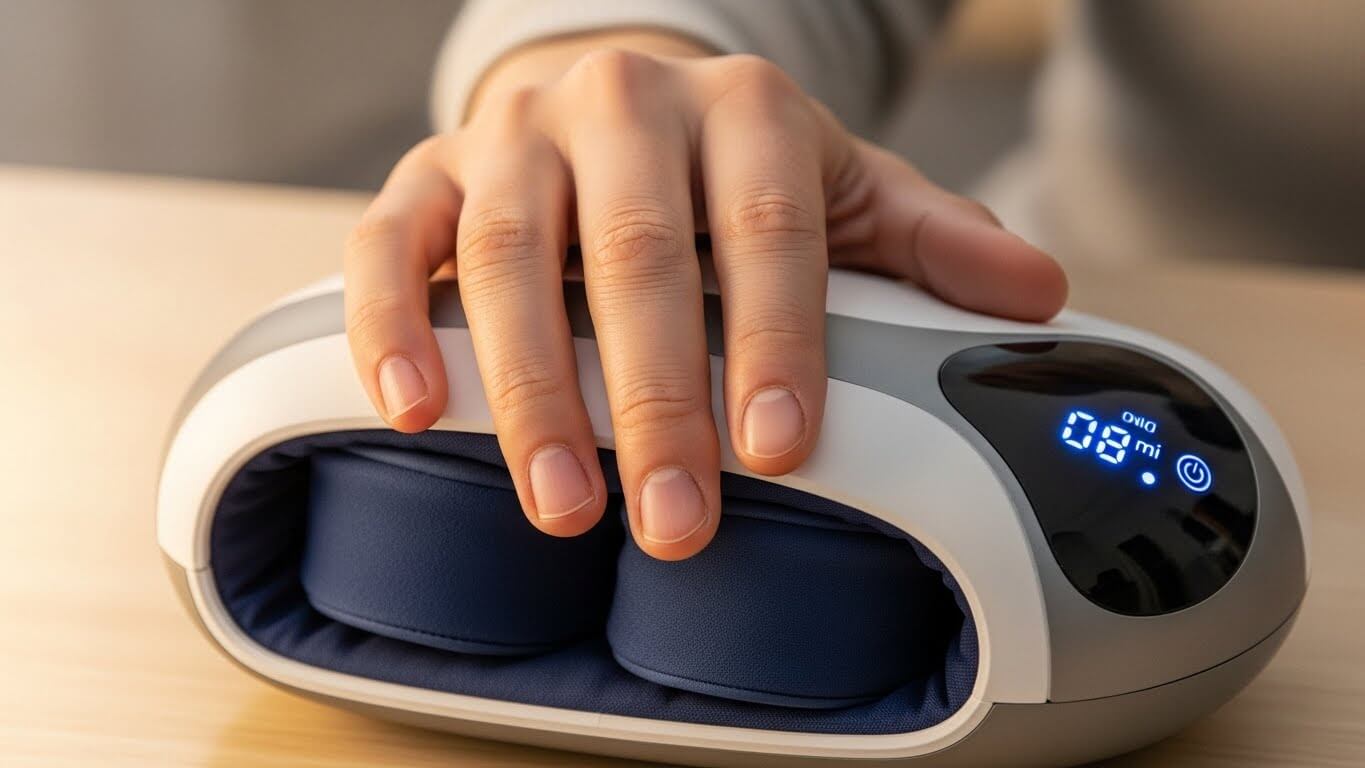
Electric hand massager gadgets can be valuable tools for managing hand arthritis symptoms, particularly for those with mild to moderate osteoarthritis experiencing stiffness, pain, and reduced mobility. While they don’t cure arthritis or stop disease progression, research supports the benefits of heat, compression, and massage for temporary symptom relief. Real-world user experiences confirm that many arthritis sufferers find meaningful improvement in daily function and comfort with regular use.
The key to success lies in choosing an appropriate device with effective compression and heat, using it consistently as part of your daily routine, combining it with other arthritis management strategies, including medication, exercise, and ergonomics, and maintaining realistic expectations about it being a symptom management tool rather than a cure. For most arthritis sufferers, a quality mid-range device in the $100-$150 range represents a reasonable investment with potential for significant return through improved comfort and function.
However, hand massagers aren’t magic solutions and don’t work equally well for everyone. Inflammatory arthritis, like rheumatoid arthritis, during active flares may not respond well, and severe arthritis with significant joint damage may need more intensive interventions. If you have chronic severe symptoms, rapid progression, or inadequate relief from home treatments, professional medical evaluation and treatment remain essential.
The most effective approach for many people combines the convenience and consistency of electric hand massagers for daily maintenance with appropriate medical care, prescribed medications when needed, and periodic professional therapy for comprehensive arthritis management. With realistic expectations and proper use, electric hand massagers can become helpful allies in your ongoing effort to maintain hand function and comfort despite arthritis.