

Introduction: Why the Temperature of Your Heating Pad Matters
Heat therapy is one of the most trusted methods for relieving muscle pain, stiffness, joint discomfort, and chronic tension. Heating pads are used for back pain, neck strain, arthritis, cramps, sports recovery, and general relaxation. Many people use them daily, yet very few understand that the temperature setting on the heating pad can determine whether the therapy helps the body heal or only provides temporary comfort.
Some people turn the heat to the highest level because they believe stronger heat will work faster. Others keep the temperature low and wonder why their pain never fully improves. The truth is that different temperature ranges affect the body in different ways. Mild heat helps muscles relax slowly and safely, while stronger heat penetrates deeper and works better for tight or stiff muscles.
A common comparison is between heating pads that operate around 110°F and those that reach about 130°F. The difference may look small, but the effect on the body is very different. These two temperature levels influence circulation, muscle relaxation, nerve sensitivity, and recovery speed. Using the wrong temperature can reduce the effectiveness of heat therapy, irritate the skin, or even make inflammation worse.
This guide explains how heat therapy works, what the numbers on heating pads really mean, and how to choose the right temperature for different types of pain. You will learn when to use gentle heat, when to use stronger heat, how long to apply it, and how to avoid common mistakes. You will also learn how posture, daily habits, and lifestyle choices affect how well heat therapy works.
If you use heating pads often, understanding the difference between 110°F and 130°F can help you get better results, stay safe, and support long-term healing.
Reader Roadmap
In this article, you will learn
- What heat therapy temperature settings mean
- The difference between 110°F and 130°F heating pads
- Why the wrong temperature can slow recovery
- Step-by-step guide to choosing the correct heat level
- Safe usage tips and timing rules
- Lifestyle habits that improve heat therapy results
- Common mistakes to avoid
- Recommended heating pads and tools
- How to build a daily heat therapy routine
Understanding Heat Therapy: Key Terms You Should Know
Heat Therapy
Heat therapy, also called thermotherapy, is the use of warmth to relax muscles, increase blood flow, reduce stiffness, and relieve pain. Heat causes blood vessels to expand, which allows more oxygen and nutrients to reach the tissues. This helps muscles loosen and reduces discomfort.
Surface Heat
Surface heat affects the skin and the tissues close to the skin. Heating pads, hot water bottles, and warm towels provide surface heat. This type of heat is useful for mild pain and relaxation.
Deep Heat Effect
When heat is strong enough and used correctly, it increases circulation deeper in the muscles and joints. This helps reduce stiffness and improve flexibility.
Temperature Range of Heating Pads
Most heating pads operate between about 100°F and 140°F.
- Low heat range: 100°F to 115°F
- Medium heat range: 115°F to 125°F
- High heat range: 125°F to 140°F
The most common comparison is between about 110°F and about 130°F because these fall into the mild and high heat ranges.
Why Temperature Choice Matters More Than People Think
Choosing the wrong temperature is one of the main reasons heat therapy does not work well.
If the heat is too low
- Muscles may not relax enough
- Blood flow may not increase properly
- Pain relief may be temporary
- Stiffness may return quickly
If the heat is too high
- Skin irritation may occur
- Inflammation may increase
- The burn risk becomes higher
- Sensitive areas may become sore
People who should pay special attention to temperature include
- People with chronic back pain
- Office workers with neck and shoulder tension
- Athletes and gym users
- Older adults
- People with arthritis
- People who use heating pads every day
The goal of heat therapy is not just to feel warm. The goal is to help the body recover safely.
110°F Heating Pads: Gentle Heat for Chronic Pain and Relaxation
A heating pad around 110°F provides mild to moderate warmth. It feels comfortable and soothing rather than intense. This level is ideal for longer sessions and for people who need steady relaxation.
Effects include:
- Gradual increase in circulation
- Slow muscle relaxation
- Reduced stiffness
- Calming of nerve sensitivity
- Safe use for longer periods
When to Use 110°F
- Chronic back pain
- Neck tension from desk work
- Arthritis stiffness
- Menstrual cramps
- Daily muscle soreness
- Before sleep relaxation
- Long workday fatigue
Why Mild Heat Works for Chronic Pain
Chronic pain usually involves tight muscles and poor circulation rather than active injury. Gentle heat improves blood flow without irritating the tissue.
Recommended Session Length
15 to 30 minutes
Can be repeated several times per day if skin stays comfortable
130°F Heating Pads: Strong Heat for Deep Muscle Tension
A heating pad around 130°F produces stronger warmth that reaches deeper muscle layers. This level is useful for short sessions when tight muscles need faster relief.
Effects include
- Faster increase in circulation
- Release of deep muscle knots
- Improved flexibility
- Reduction of strong stiffness
- Better warming of large muscle groups
When to Use 130°F
- Severe lower back tightness
- Shoulder knots
- Post workout soreness
- Hip and thigh stiffness
- Muscle spasms
- Cold weather stiffness
Who Should Use High Heat Carefully
- People with diabetes
- People with poor circulation
- Older adults
- Children
- People with sensitive skin
Recommended Session Length
10 to 20 minutes
Check skin often. Do not sleep with high heat on
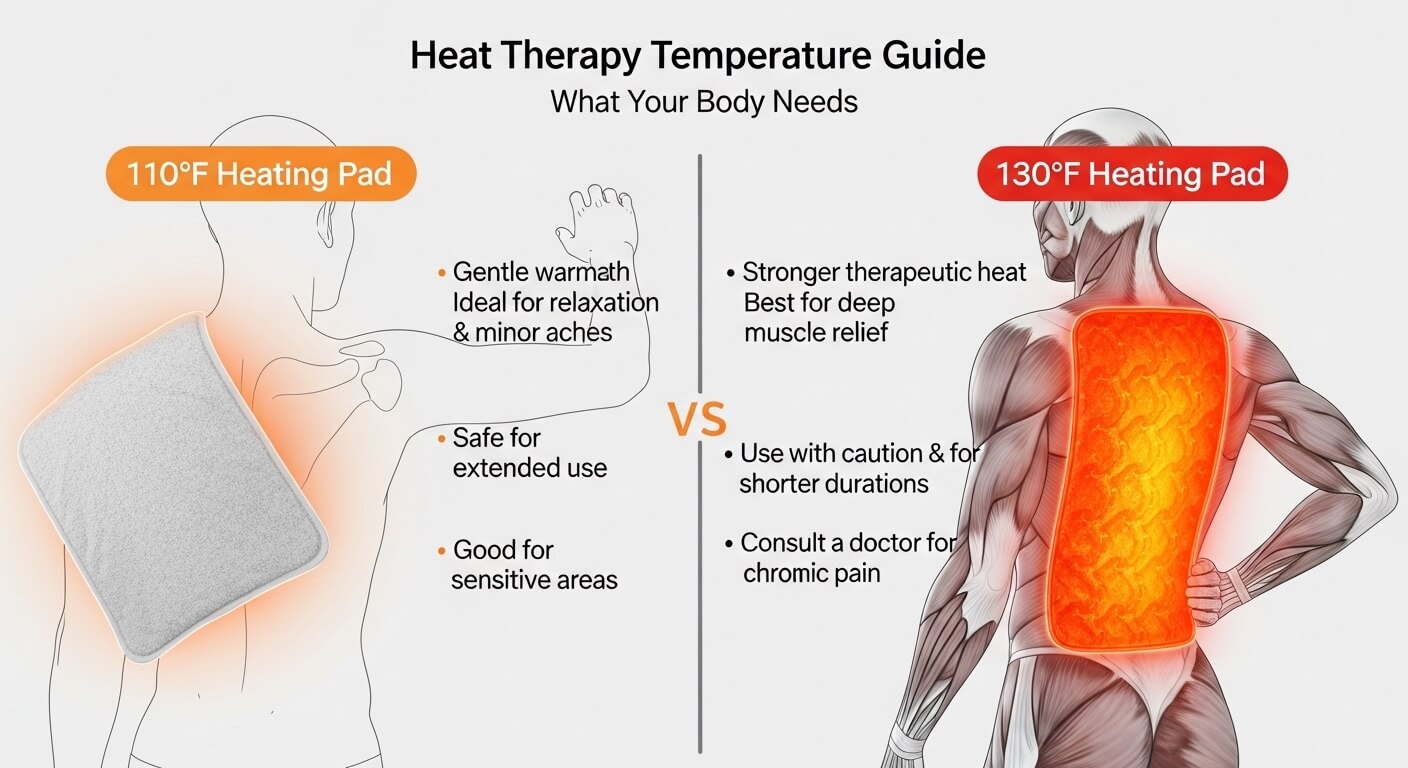
110°F vs 130°F Comparison
110°F
- Gentle warmth
- Safe for longer use
- Best for chronic pain
- Lower burn risk
- Good for daily therapy
130°F
- Stronger warmth
- Shorter sessions needed
- Best for deep stiffness
- Higher burn risk
- Better for occasional use
Both temperatures are useful when used correctly. The key is matching the heat level to the condition.
Step by Step Guide to Choosing the Right Temperature
Step 1: Identify the Type of Pain
- Sharp or swollen pain
- Use low heat or avoid heat at first
- Dull stiffness
- Use mild heat
- Deep muscle tightness
- Use medium to high heat
Step 2: Consider the Body Area
- Neck needs lower heat
- Lower back can handle medium heat
- Thighs and hips can handle higher heat
Step 3: Check Skin Sensitivity
- If skin turns red quickly reduce temperature
- If heat feels uncomfortable lower the setting
Step 4: Start Low and Increase Slowly
- Begin near 110°F
- Increase only if needed
Step 5: Limit Time
- Low heat up to 30 minutes
- High heat 10 to 20 minutes
Step 6 Allow Cooling Between Sessions
- Give skin time to recover
Practical Tips for Safe and Effective Heat Therapy
- Place cloth between pad and skin if heat feels strong
- Do not lie directly on heating pad
- Do not use heat on swelling
- Check skin often
- Stay hydrated
- Use heat before stretching
- Use heat before massage
- Use heat after long sitting
- Turn off heat if burning sensation occurs
Lifestyle Habits That Improve Heat Therapy Results
Daily Stretching
Stretch after heat to keep muscles loose.
Good Posture
Poor posture creates constant tension. Heat alone cannot fix it.
Regular Movement
Sitting too long reduces circulation.
Quality Sleep
Muscles recover during sleep. Heat before bed can help relaxation.
Hydration
Water helps muscles function properly.
Stress Control
Stress causes tight muscles. Relaxation improves results.
Common Mistakes People Make With Heating Pads
- Using the highest setting every time
- Using heat on fresh injury
- Sleeping with heating pad on high
- Using heat too long
- Ignoring redness
- Using heat instead of fixing posture or habits
Recommended Heating Pads and Tools
Standard Electric Heating Pad
What it does
Provides adjustable heat for general pain relief
Who it is for
People with back pain, neck pain, or daily stiffness
Price range
Low to medium
Moist Heat Heating Pad
What it does
Uses moisture to allow heat to reach deeper muscles
Who it is for
People with severe stiffness or chronic tension
Price range
Medium
Microwavable Heat Pack
What it does
Provides gentle natural heat for short sessions
Who it is for
People who prefer mild heat around 110°F
Price range
Low
Large Heating Wrap
What it does
Wraps around shoulders, knees, or back
Who it is for
People with arthritis or widespread pain
Price range
Medium to high
Infrared Heating Pad
What it does
Produces deeper warming effect
Who it is for
People with chronic pain or deep soreness
Price range
Medium to high
How to Build a Heat Therapy Routine
- Morning: Use mild heat to reduce stiffness
- Afternoon: Use medium heat after work
- After exercise: Use stronger heat for tight muscles
- Evening: Use gentle heat to relax
- Before sleep: Use low heat for comfort
When to Avoid Heat Therapy
- Do not use heat on swelling
- Do not use heat on open wounds
- Do not use heat if skin is numb
- Do not use heat if doctor advised against it
- Stop if burning sensation occurs
Conclusion
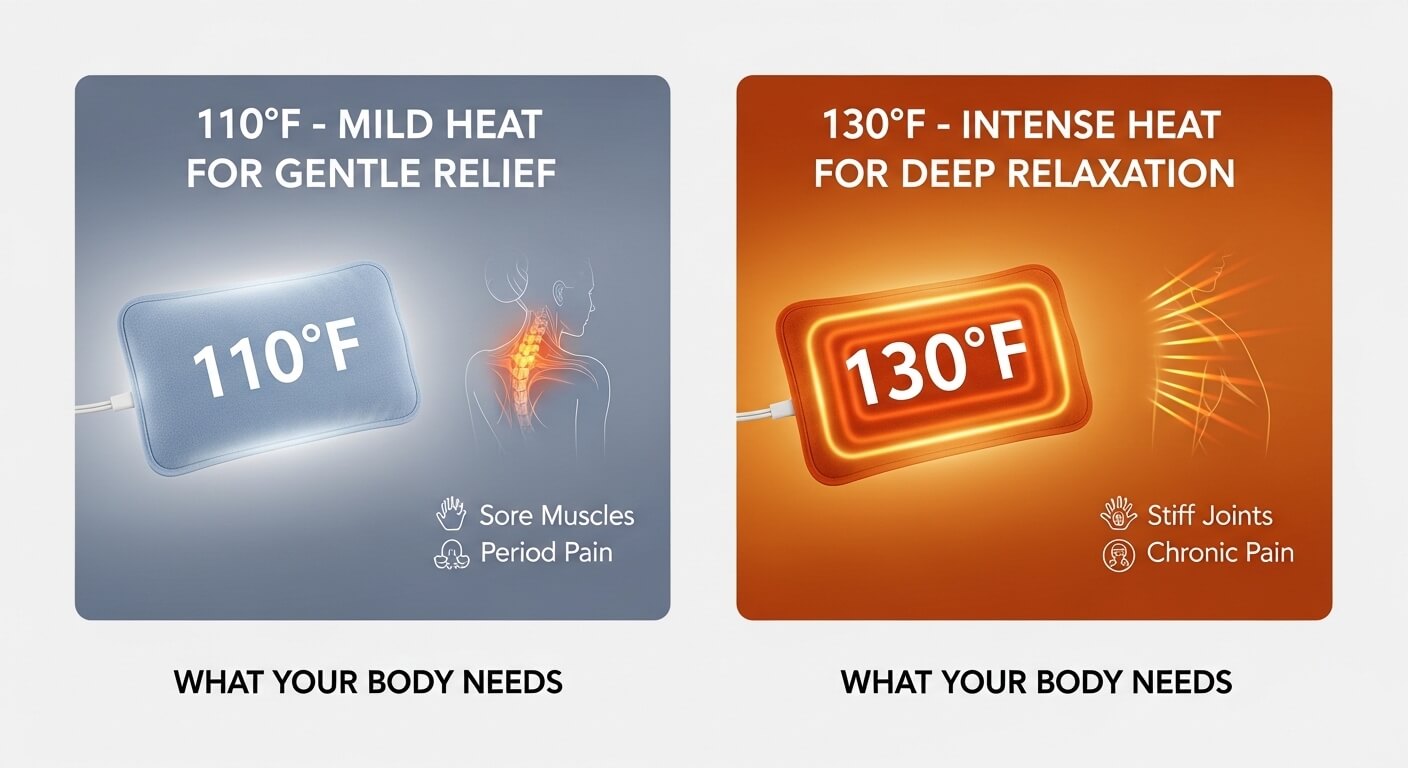
Heat therapy is simple, but using the correct temperature makes a big difference. The choice between 110°F and 130°F is not just about comfort. It is about giving your body the type of warmth it needs at the right time. Gentle heat can calm chronic pain and help you relax, while stronger heat can release deep muscle tension and restore movement.
When you understand how temperature affects the body, you stop guessing and start helping your body heal properly. Small changes in how you use your heating pad can reduce pain, improve flexibility, and support long-term recovery.
- Start paying attention to your heat settings today.
- Use lower heat for long relaxation sessions.
- Use higher heat for deep stiffness.
- Follow safe timing rules.
- Combine heat therapy with stretching, posture, and healthy habits.
Your body responds to the care you give it. Choose the right temperature, use heat wisely, and allow your recovery to work the way it should.