

If you’ve been shopping for recovery tools lately, you’ve probably noticed the terms “massage gun” and “percussion therapy device” used seemingly interchangeably. This can be confusing when you’re trying to make an informed purchase decision. Are these different products, or just different names for the same thing? More importantly, which one should you buy for your specific needs?
In this comprehensive guide, we’ll clear up the confusion surrounding massage guns versus percussion therapy devices, explore their features and benefits, and help you choose the right recovery tool for your goals and budget.
What Is a Massage Gun?
A massage gun is a handheld device that delivers rapid, concentrated pulses to muscle tissue. These devices became mainstream consumer products around 2016-2017, with the explosion of brands like Theragun, Hypervolt, and dozens of alternatives flooding the market.
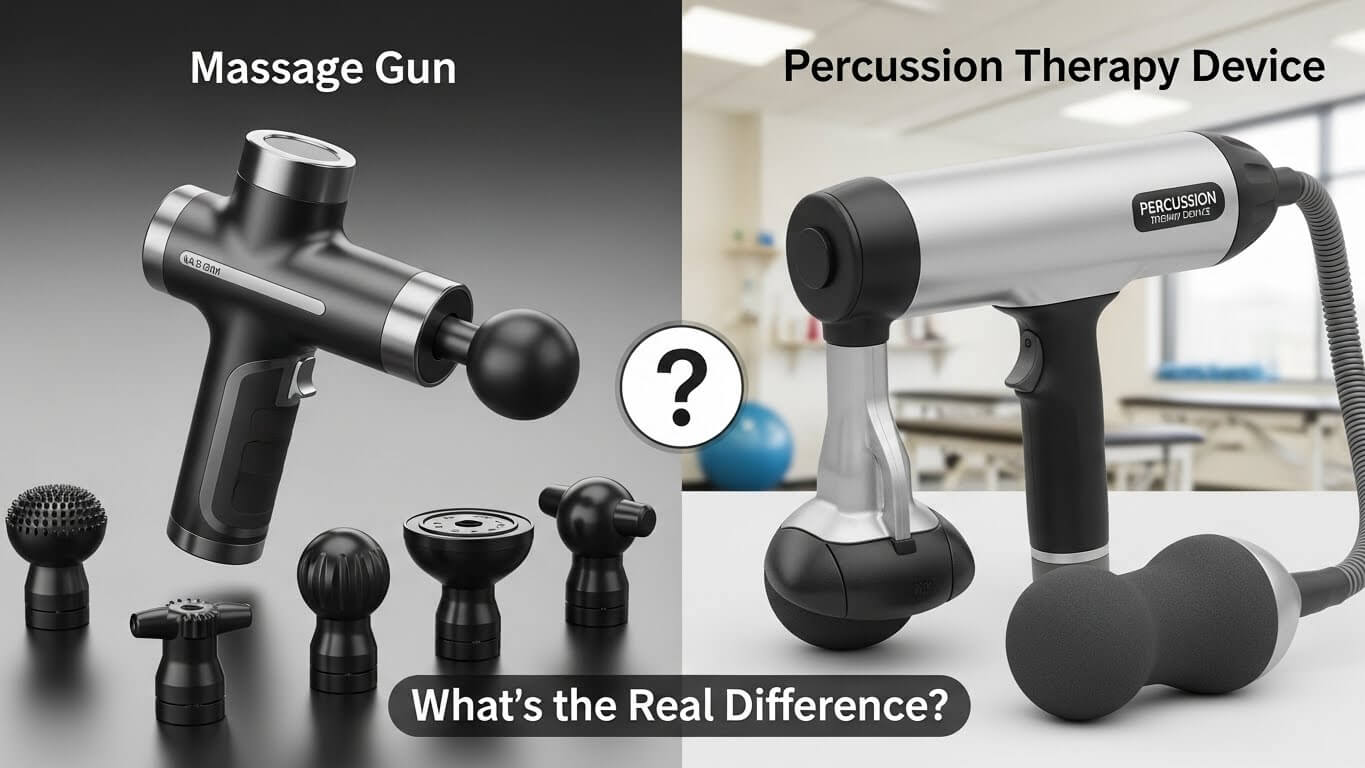
The typical massage gun features a motor that drives an attachment head back and forth at high speeds, creating a percussion or vibration effect when applied to the body. Most models offer multiple speed settings, ranging from about 1,200 to 3,200 percussions per minute, and come with various attachment heads designed for different muscle groups and purposes.
Massage guns are marketed primarily to fitness enthusiasts, athletes, and anyone seeking muscle recovery and pain relief at home. They’ve become particularly popular among gym-goers, runners, and people who work at desks and experience regular muscle tension. The appeal lies in their convenience—you can get massage-like benefits without booking an appointment or relying on someone else.
Common brands include Theragun, Hypervolt, TimTam, and hundreds of more affordable options available through online retailers.
What Is a Percussion Therapy Device?
A percussion therapy device is a tool that uses rapid, repetitive pressure to target soft tissue and muscles. The technical term “percussion therapy” refers to the therapeutic technique itself—a method that has been used in clinical and athletic settings for decades, though it was traditionally delivered manually by trained therapists.
Modern percussion therapy devices work on the same principle as massage guns, using a motor to create rapid striking motions against the body. In clinical settings, percussion therapy has been used to improve circulation, reduce muscle tension, break up scar tissue, and enhance recovery from injury or intense physical activity.
The term “percussion therapy device” is often used in more professional or medical contexts, while “massage gun” tends to be the consumer-friendly marketing term. Some professional-grade models specifically market themselves as percussion therapy devices to emphasize their clinical applications and higher quality standards.
The Truth: Are They Actually Different?
Here’s the short answer: in most cases, massage guns and percussion therapy devices are the same thing. The terminology difference is primarily a matter of marketing and context rather than a fundamental difference in technology or function.
Both devices use the same basic mechanism—a motor that creates rapid, repetitive striking motions through an attachment head. Both deliver percussion therapy to muscle tissue. The terms are used interchangeably by manufacturers, retailers, and consumers.
However, there are some nuances worth understanding. When manufacturers use “percussion therapy device,” they may be emphasizing the therapeutic aspect of the product, potentially positioning it as a more serious or professional-grade tool. Some physical therapists and medical professionals prefer this terminology because it connects the device to established therapeutic practices.
On the other hand, “massage gun” is the more popular consumer term. It’s descriptive, easy to understand, and marketable. The term evokes relaxation and self-care rather than clinical treatment, which appeals to the broader consumer market.
The distinction that truly matters isn’t in the name but in the quality, specifications, and intended use of the specific model. A high-end Theragun Pro and a budget massage gun from an unknown brand are both technically percussion therapy devices, but they differ dramatically in amplitude, build quality, noise level, and effectiveness.
Key Features to Compare
When evaluating any percussion therapy tool, regardless of what it’s called, focus on these essential features:
Amplitude (Stroke Length): This measures how far the attachment head travels with each percussion. Professional-grade devices typically offer 12-16mm of amplitude, while budget models may only provide 6-10mm. Greater amplitude means the device can reach deeper into muscle tissue, which is particularly important for larger muscle groups or if you have more body mass. However, more amplitude isn’t always better—smaller amplitudes can be preferable for sensitive areas or smaller muscle groups.
Speed and Power: Most devices offer speeds ranging from 1,200 to 3,200 percussions per minute (PPM). Variable speed settings allow you to customize the intensity based on the muscle group, your pain tolerance, and whether you’re using it for warm-up or recovery. More powerful motors maintain consistent speed even under pressure, while weaker motors may slow down when pressed against muscle tissue.
Attachment Heads: Quality devices include multiple attachment options. Common types include a large ball for major muscle groups, a dampener or flat head for bony areas, a bullet for trigger points, a fork for the spine and neck areas, and a wedge for shoulder blades. The variety and quality of attachments can significantly affect versatility and comfort.
Battery Life: Professional devices typically offer 2-6 hours of continuous use per charge, while budget models may last only 1-2 hours. Consider how often you’ll use the device and whether you’ll need to travel with it. Longer battery life means less frequent charging and better reliability.
Noise Level: This is often overlooked but can be important, especially if you live with others or want to use the device while watching TV. Professional models invest in quieter motors (often around 50-60 decibels), while cheaper alternatives can be significantly louder (70+ decibels).
Build Quality and Durability: Professional-grade devices feature higher-quality materials, better heat dissipation, and more robust motors designed for daily use. Budget models may work well initially but can fail after several months of regular use.
Price Range: Massage guns and percussion therapy devices range from around $50 for basic models to $600+ for top-tier professional devices. The price generally reflects motor quality, amplitude, durability, battery life, and brand reputation.
Benefits of Percussion Therapy
Regardless of whether you call it a massage gun or percussion therapy device, these tools offer several evidence-supported benefits:
Muscle Recovery and Soreness Reduction: Percussion therapy helps reduce delayed onset muscle soreness (DOMS) by increasing blood flow to fatigued muscles and potentially breaking up metabolic waste products. Many athletes use these devices immediately after workouts to minimize next-day soreness.
Increased Blood Flow and Circulation: The rapid percussions stimulate blood flow to targeted areas, which can speed healing and reduce stiffness. This increased circulation delivers oxygen and nutrients while helping remove waste products from muscle tissue.
Breaking Up Adhesions and Scar Tissue: Percussion therapy can help break up fascial adhesions and scar tissue that develop from injury, surgery, or chronic tension patterns. This can improve tissue quality and reduce areas of restriction.
Improved Flexibility and Range of Motion: Using percussion therapy before stretching or activity can help improve tissue extensibility, allowing for better range of motion. Many people use these devices as part of their warm-up routine for this reason.
Pain Management: For chronic pain conditions like tension headaches, lower back pain, or muscle knots, percussion therapy provides temporary relief by relaxing tight muscles and disrupting pain signals.
Pre-Workout Activation: Beyond recovery, these devices can activate and wake up muscles before exercise, potentially improving performance and reducing injury risk.
Who Should Use Each Type?
Since massage guns and percussion therapy devices are essentially the same technology, the question becomes which quality level and feature set matches your needs:
Serious Athletes and Fitness Enthusiasts: If you train intensely and frequently, invest in a professional-grade device with higher amplitude, longer battery life, and better durability. Models in the $300-600 range from established brands will withstand daily use and deliver consistent results.
Physical Therapy Patients: Those recovering from injuries or managing chronic conditions may benefit from professional-grade devices, ideally used under the guidance of a physical therapist who can recommend specific protocols. Some insurance plans may even cover these devices with a prescription.
Office Workers with Tension: If you’re primarily addressing neck, shoulder, and back tension from desk work, a mid-range device ($100-250) will likely meet your needs. Focus on quieter models if you plan to use them at work.
Weekend Warriors and Casual Users: For occasional muscle soreness from hiking, recreational sports, or yard work, a budget-friendly option ($50-150) can provide adequate relief without breaking the bank.
Those with Chronic Pain: Consult with your healthcare provider first, but many chronic pain sufferers benefit from higher-quality devices that offer precise speed control and multiple attachment options for different sensitive areas.
How to Choose the Right Device
Consider these factors when making your decision:
Budget: Determine how much you’re willing to invest. Remember that this is a tool you may use for years, so consider the cost per use rather than just the upfront price.
Frequency of Use: Daily users should prioritize durability and battery life. Occasional users can opt for more budget-friendly options.
Specific Goals: Are you addressing specific injuries, managing chronic pain, enhancing athletic performance, or just seeking general relaxation? Your goals should influence both the quality level and specific features you need.
Portability: If you travel frequently or want to use your device at the gym, consider weight, size, and battery life. Some professional models are quite heavy and bulky.
Noise Tolerance: If you’re sensitive to noise or live with others, invest in a quieter model even if it costs more.
Professional Recommendations: If you’re working with a physical therapist, chiropractor, or sports medicine professional, ask for their recommendations. They may suggest specific brands or features based on your situation.
Top Recommendations by Category
Best Professional-Grade Option: Theragun Pro (around $599) offers 16mm amplitude, extremely quiet operation, and a rotating arm for better ergonomics. It’s the gold standard for serious athletes and professionals.
Best Mid-Range Choice: Hypervolt 2 (around $299) provides excellent value with good amplitude, quiet operation, and solid build quality. It’s a great all-around option for regular users.
Best Budget Option: Ekrin Athletics B37 (around $149) delivers surprising quality for the price, with decent amplitude and multiple speed settings, though it’s louder than premium models.
Best for Travel: Theragun Mini (around $199) is compact and lightweight while maintaining good power and quality. The smaller size means less amplitude, but it’s perfect for on-the-go use.
Best Quiet Option: Hypervolt Go 2 (around $199) prioritizes whisper-quiet operation while maintaining respectable power, making it ideal for shared living spaces or professional environments.
Safety Considerations and Best Practices
Use your percussion therapy device safely and effectively:
Avoid Certain Areas: Never use these devices directly on the spine, joints, bones, neck arteries, or areas with injuries, inflammation, or open wounds. Focus on muscle bellies rather than tendons or ligaments.
Duration Guidelines: Spend no more than 1-2 minutes per muscle group. The total session should generally stay under 15 minutes. More is not better—overstimulation can cause bruising or inflammation.
Pressure Recommendations: Let the device do the work. You should apply minimal pressure, allowing the weight of the device to create the effect. Pressing too hard reduces effectiveness and can cause discomfort.
When to Consult a Professional: If you have any medical conditions, are pregnant, take blood thinners, have a pacemaker, or experience unusual pain, consult your healthcare provider before using percussion therapy.
Contraindications: Avoid use if you have acute inflammation, recent fractures, severe osteoporosis, DVT, or certain neurological conditions. When in doubt, ask your doctor.
Conclusion
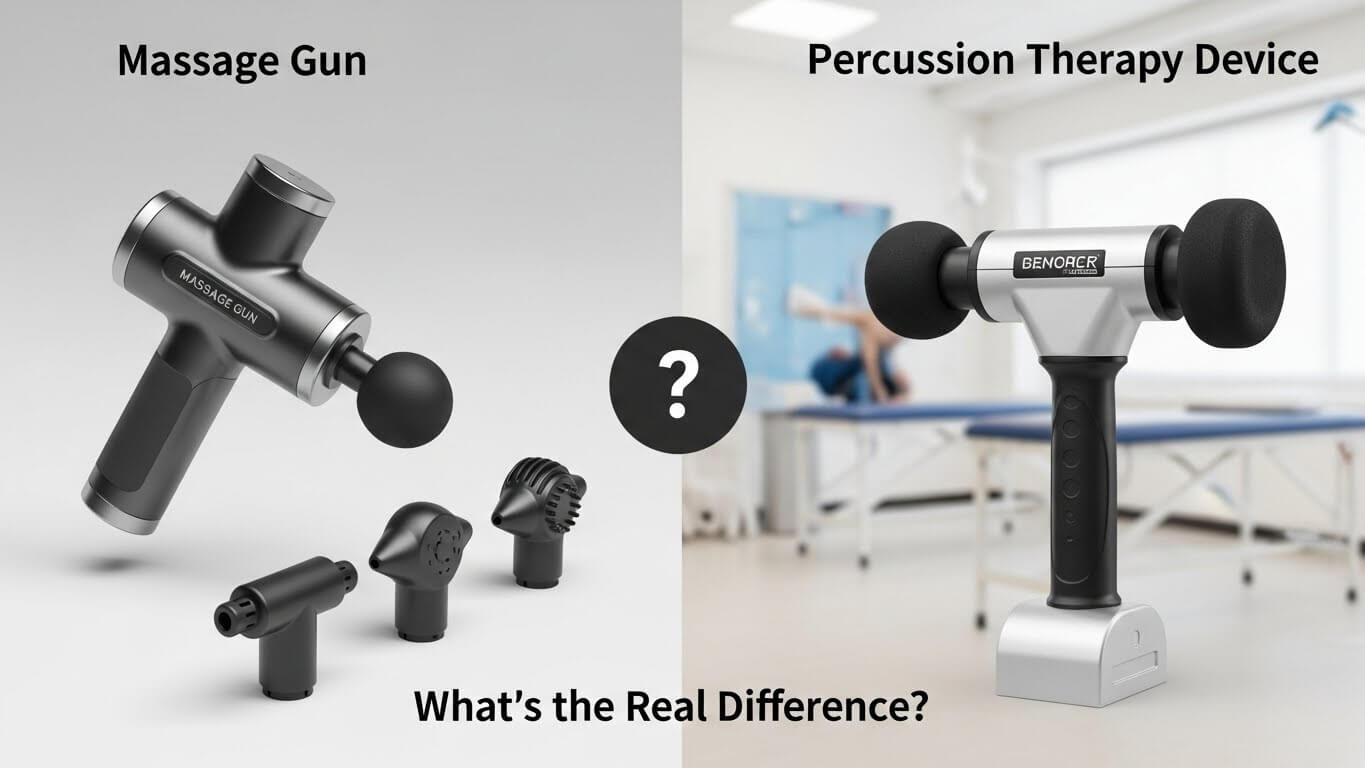
The massage gun versus percussion therapy device debate is largely a matter of semantics. These terms describe the same technology applied to muscle recovery and pain management. What matters most is not what you call the device, but rather the quality, features, and specifications that match your individual needs.
For serious athletes and those with specific therapeutic needs, investing in a professional-grade device will provide better results and longer-lasting durability. For casual users seeking occasional muscle relief, a more affordable option can deliver satisfactory results without the premium price tag.
Before making your purchase, consider your frequency of use, specific pain points, budget, and whether you need professional-level features or consumer-grade simplicity will suffice. And remember, while these devices are excellent tools for self-care, they complement rather than replace professional treatment for injuries or chronic conditions.
Ready to make your choice? Start by identifying your primary use case, set a realistic budget, and read detailed reviews of specific models in your price range. Your muscles will thank you for the investment in recovery.