

Neck pain has become epidemic in modern society, affecting an estimated 70% of people at some point in their lives. Whether caused by hours hunched over smartphones, poor sleeping positions, desk work that strains the cervical spine, or specific injuries and conditions, neck discomfort significantly impacts quality of life. When searching for relief, you’ll encounter two main categories of solutions: neck traction devices and cervical support pillows.
But here’s where many people get confused. These products appear in similar searches, target similar problems, and both claim to provide neck pain relief and improved cervical alignment. Are they interchangeable? Should you choose one over the other? Or do they serve fundamentally different purposes that might make both valuable?
Understanding the distinction between active therapeutic intervention (traction) and passive supportive alignment (cervical pillows) is crucial for making the right choice for your specific situation. In this comprehensive guide, we’ll explore exactly what each solution does, how they differ, who benefits most from each approach, and how to use them safely and effectively for optimal neck health.
What Is a Neck Traction Device?
A neck traction device is a therapeutic tool that applies gentle pulling force to your cervical spine, creating space between vertebrae and stretching soft tissues. This decompression can relieve pressure on nerves, reduce disc compression, relax tense muscles, and promote healing through improved circulation.
Cervical traction has medical origins; physical therapists, chiropractors, and orthopedic specialists have used traction for decades to treat various neck conditions. Professional traction often involves sophisticated equipment in clinical settings, but home devices make this therapy accessible for self-treatment.
Several types of home traction devices exist. Over-door traction systems use a pulley mechanism attached to a door, with a head halter that you wear while sitting. You control the traction force by adjusting weights or pulling on the pulley rope, creating gentle decompression. These are among the most affordable options ($30-80) and can provide significant traction force, but they require proper setup and door access.
Inflatable cervical collars are neck braces with an internal air bladder. You pump air into the collar, which inflates and gradually separates your head from your shoulders, creating vertical decompression. These are portable, don’t require setup, and allow you to control pressure easily ($40-100). However, they provide less traction force than over-door systems.
Manual traction devices include cushioned slings or hammock-style supports you lie on, using your body weight and gravity to create decompression. Some incorporate curves and contours designed to restore natural cervical lordosis while decompressing ($30-70).
Pneumatic traction units are more sophisticated devices with pumps and gauges allowing precise pressure control. These professional-grade options ($150-300+) offer more controlled and powerful traction but at higher cost.
Traction is active therapy—you use it for specific sessions (typically 10-30 minutes) with the goal of achieving therapeutic effects. It’s not something you use all day or while sleeping. The treatment creates temporary space between vertebrae, and with consistent use over weeks or months, can produce lasting improvements in symptoms and potentially structural changes.
Popular brands include ComforTrac, Posture Pump, Neck Hammock, and various generic options across price points.
What Is a Cervical Support Pillow?
A cervical support pillow is a specially designed sleep pillow that maintains the natural curve of your neck throughout the night. Unlike standard flat pillows that can flatten cervical lordosis or create awkward angles, cervical pillows feature contoured designs specifically engineered for neck support.
The typical cervical pillow design includes a neck roll; a raised cylindrical section that fits under the natural curve of your neck and a head cradle; a recessed area where your head rests. This dual-level design keeps your head and neck in proper alignment regardless of sleeping position, supporting the natural cervical curve rather than flattening it.
Several varieties exist. Contoured memory foam pillows are the most common, featuring the classic neck roll and head cradle design that conforms to your specific contours. Cervical roll pillows are simpler cylindrical supports, often used in combination with regular pillows or for targeted support. Water-based pillows allow adjustability by adding or removing water to change firmness and height. Adjustable pillows feature removable layers or inserts allowing customization of height and firmness to match your preferences and body dimensions.
Design features matter significantly. The height of the neck roll should match your body size and sleeping position—side sleepers typically need higher support than back sleepers. Materials range from memory foam (conforming and popular) to latex (more responsive and cooler) to buckwheat or other natural fills (adjustable and breathable). Cover materials should be breathable, washable, and comfortable against skin.
Some cervical pillows are designed specifically for sleeping, while others can be used during the day for sitting support. The primary function remains consistent: maintaining proper cervical alignment during periods of rest or inactivity.
Quality cervical pillows range from $30-150, with most effective options in the $40-80 range. Brands include Tempur-Pedic, Core Products, Mediflow, Therapeutica, and numerous specialized cervical pillow manufacturers.
Cervical pillows represent passive support; you sleep on them nightly, and they maintain alignment throughout sleep without active intervention. This prevents the strain and poor positioning that causes or exacerbates many neck problems.
The Fundamental Difference
The neck traction device versus cervical support pillow comparison reveals complementary solutions serving different purposes, not competing products where you must choose one.
Neck traction devices provide active therapeutic intervention. They create temporary decompression through applied force, actively stretching tissues and creating space between vertebrae during treatment sessions. Traction is something you do—a deliberate therapeutic activity lasting 10-30 minutes, typically performed daily or several times weekly. The goal is therapeutic change: reducing acute symptoms, decompressing pinched nerves, relaxing muscle spasms, and over time potentially encouraging better cervical alignment and disc health.
Cervical support pillows provide passive alignment maintenance. They support your neck in proper position during sleep, preventing the strain and poor positioning that occurs with standard pillows. A cervical pillow is something you use—you sleep on it every night, providing 6-8 hours of proper support that prevents problems rather than actively treating them. The goal is prevention and maintenance: avoiding the neck pain and stiffness that develops from poor sleeping positions, maintaining healthy cervical curve, and supporting neck structures during rest.
The timing difference is crucial. Traction sessions are brief, focused interventions. Cervical pillow use is continuous during sleep—you’re already sleeping 6-8 hours nightly, so using a supportive pillow instead of a standard one simply improves what you’re already doing.
These different approaches aren’t competing—they’re complementary. You can use traction therapy to address acute problems, nerve compression, or significant alignment issues, while simultaneously using a cervical pillow to maintain proper alignment during sleep. In fact, this combination often produces superior results to either alone, addressing neck health from multiple angles.
The analogy to dental care helps: traction is like seeing a dentist for treatment of a cavity, while a cervical pillow is like brushing your teeth daily to prevent cavities. Both have value, neither replaces the other, and combining them provides comprehensive care.
Benefits of Neck Traction Devices
When used appropriately, cervical traction offers several evidence-supported therapeutic benefits.
Cervical Decompression: The primary mechanism of traction is creating space between cervical vertebrae. This vertical separation reduces compression on intervertebral discs, allowing them to rehydrate and potentially return toward normal position if bulging or herniated. Decompression also reduces pressure on nerve roots exiting the spine, which is particularly valuable for radiculopathy (pinched nerve symptoms).
Pinched Nerve Relief: Nerve compression in the cervical spine causes pain, numbness, tingling, or weakness radiating into shoulders, arms, and hands. By creating space around nerve roots, traction can provide significant or complete relief from these symptoms. Many people experience improvement within minutes during a traction session, though sustained benefit requires consistent treatment.
Disc Herniation Symptom Management: While traction doesn’t “fix” herniated discs, it can reduce symptoms by decompressing the disc and creating negative pressure that may encourage herniated material to move away from nerves. Clinical studies show mixed but generally positive results for cervical traction in managing disc-related symptoms.
Muscle Relaxation and Tension Relief: The gentle stretching and decompression created by traction helps relax chronically tense neck muscles. Many people carry significant muscle tension in their neck and shoulders; traction provides a release that’s difficult to achieve through other means.
Improved Circulation: Decompression and muscle relaxation promote better blood flow to cervical tissues. Improved circulation delivers oxygen and nutrients while removing inflammatory waste products, supporting healing and reducing pain.
Posture Correction Over Time: Consistent traction use can gradually encourage better cervical alignment. While one session doesn’t permanently change structure, regular treatment over weeks and months can support improvements in cervical curve and head position, especially when combined with postural exercises and awareness.
Benefits of Cervical Support Pillows
Cervical pillows provide different but equally valuable benefits focused on prevention and sleep-related neck health.
Maintains Natural Cervical Curve During Sleep: The fundamental benefit is supporting the natural lordotic curve throughout the night. Standard flat pillows either flatten this curve (if too thin) or create excessive curve (if too thick). Cervical pillows maintain the Goldilocks position—just right for optimal alignment.
Prevents Morning Neck Pain and Stiffness: Many people wake with neck pain, stiffness, or headaches caused by poor sleeping position. Hours spent with your neck in awkward angles strains muscles and ligaments. Proper cervical support eliminates this common source of discomfort, with many users reporting dramatic reduction in morning symptoms within days of switching pillows.
Reduces Strain on Cervical Structures: By maintaining neutral alignment, cervical pillows prevent the sustained stress on discs, facet joints, ligaments, and muscles that occurs with poor positioning. This long-term protection can prevent or slow degenerative changes and chronic problems.
Supports Proper Head and Neck Alignment: Beyond the cervical curve specifically, these pillows keep your head properly aligned with your spine. This full-body alignment during sleep supports overall spinal health and comfort.
May Reduce Snoring and Sleep Apnea Symptoms: Proper neck positioning can improve airway alignment, reducing airway collapse that causes snoring and contributes to sleep apnea. While not a treatment for sleep apnea, better neck alignment can help some people breathe more easily during sleep.
Prevents Pillow-Related Neck Problems: Standard pillows, particularly when old and compressed, contribute to neck problems rather than preventing them. A quality cervical pillow actively supports health rather than passively allowing problems to develop.
Eight Hours of Passive Support Nightly: Consider the math: you sleep approximately 6-8 hours daily, over 2,500 hours annually. Using a properly supportive pillow for these hours provides enormous cumulative benefit without requiring any additional time or effort beyond what you’re already spending sleeping.
Long-term Posture Benefits: Maintaining proper alignment during sleep supports better overall posture awareness and muscle balance, complementing daytime posture efforts.
Research on cervical pillows consistently shows benefits for neck pain, with studies demonstrating reduced pain intensity, improved sleep quality, and decreased morning stiffness compared to standard pillows.
When to Choose a Neck Traction Device
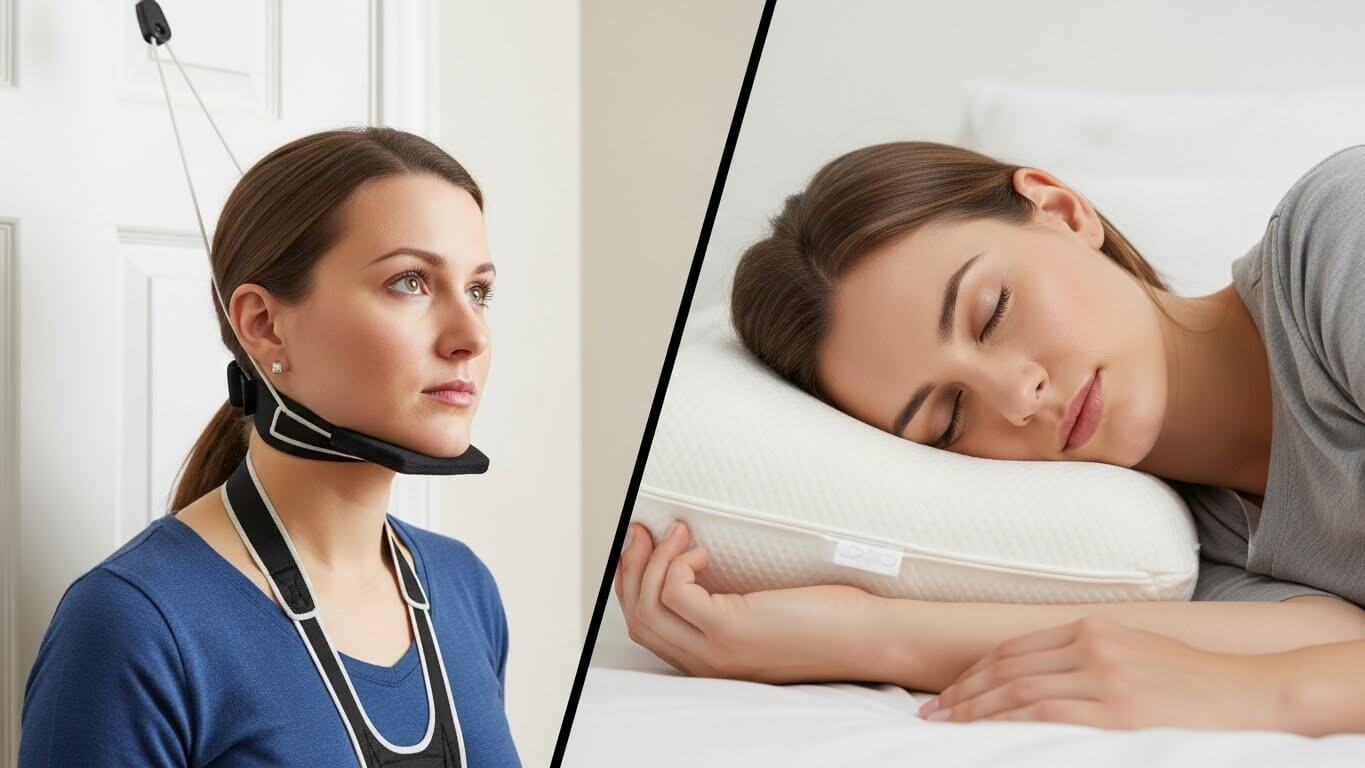
Traction devices are most appropriate for specific conditions and symptom patterns.
Conditions That Benefit from Traction: Herniated or bulging cervical discs causing nerve compression respond particularly well to decompression. Cervical radiculopathy (pinched nerves with radiating symptoms) often improves significantly with traction. Chronic neck pain that hasn’t responded adequately to other conservative treatments may benefit from adding traction. Cervical muscle spasms and severe muscle tension can be relieved through traction’s stretching and relaxation effects. Forward head posture and loss of cervical curve may improve with consistent traction combined with postural exercises.
Who Should Use Traction: People experiencing moderate to severe neck symptoms, those with diagnosed disc problems or nerve compression, individuals whose symptoms worsen or don’t improve with basic interventions, people working with physical therapists who recommend traction, and those seeking active treatment rather than just passive support.
Who Should Avoid Traction: Important contraindications include spinal instability or ligamentous laxity, severe osteoporosis (risk of fracture from traction forces), rheumatoid arthritis affecting the cervical spine, active infections or tumors in the spine, recent trauma or unhealed fractures, vertebral artery compromise, and severe anxiety or inability to relax during treatment.
Getting Medical Clearance: Before using traction, particularly if you have diagnosed spinal conditions, recent injuries, or severe symptoms, consult a healthcare provider. Physical therapists can evaluate whether traction is appropriate and provide guidance on proper use. Chiropractors and orthopedic specialists can also assess suitability and provide recommendations.
Severity of Symptoms: Traction makes most sense when symptoms are significant enough to warrant active intervention. Mild occasional neck discomfort might not require traction’s therapeutic intensity, while moderate to severe symptoms, nerve involvement, or chronic unresolved pain justify the effort.
When to Choose a Cervical Support Pillow
Cervical pillows have broader applicability and fewer restrictions, making them appropriate for nearly everyone.
Prevention-Focused Approach: Unlike traction which treats existing problems, cervical pillows prevent issues from developing or worsening. Anyone interested in maintaining neck health can benefit, even without current symptoms.
Mild to Moderate Neck Discomfort: People experiencing occasional neck stiffness, minor pain, or discomfort that’s noticeable but not severe often find cervical pillows provide sufficient relief without needing more intensive interventions like traction.
Sleep-Related Neck Pain: If your neck feels fine during the day but you wake with pain or stiffness, your sleeping position and pillow are likely culprits. A cervical pillow directly addresses this specific problem.
Maintaining Neck Health: Even people without neck problems benefit from proper sleep support. Prevention is easier than treatment, and a cervical pillow is simple, passive prevention.
Post-Treatment Maintenance: After physical therapy, chiropractic care, or other neck treatments resolve acute problems, a cervical pillow helps maintain improvements and prevent recurrence.
Universal Application: Unlike traction which has contraindications and requires specific conditions to justify use, virtually everyone can safely use a cervical pillow. It’s the lower-risk, universally applicable option.
Sleeping Position Considerations: Side sleepers often need higher cervical support than back sleepers due to shoulder width creating more space between head and mattress. Stomach sleeping is generally discouraged for neck health, but if you can’t avoid it, minimal pillow height is best. Most cervical pillows accommodate back and side sleeping with appropriate height selection.
Budget-Friendly Entry Point: At $30-80 for quality options, cervical pillows represent an accessible first step in addressing neck health without significant financial commitment.
Performance and Effectiveness Comparison
Comparing traction devices and cervical pillows requires recognizing their different purposes and measuring appropriate outcomes.
Pain Relief for Acute vs. Chronic Issues: Traction often provides more dramatic relief for acute flare-ups, nerve compression, and severe symptoms. The active decompression can produce noticeable improvement within minutes for some conditions. Cervical pillows excel at preventing the daily accumulation of minor strain that develops into chronic pain, providing steady, consistent support rather than dramatic intervention.
Speed of Results: Traction can produce immediate relief during sessions, though sustained improvement requires consistent use over weeks. Cervical pillows typically show benefits within a few nights to two weeks as your neck adapts to better support, with continued improvement over months.
Treatment vs. Prevention: Traction is primarily therapeutic—addressing existing problems. Cervical pillows are primarily preventive; maintaining health and preventing problems, though they also help mild existing issues.
Daytime vs. Nighttime Use: Traction occurs during dedicated sessions, usually while sitting or lying down for 10-30 minutes. Cervical pillows work while you sleep, requiring no additional time beyond what you already spend sleeping.
Intensity of Intervention: Traction is a more intensive intervention requiring proper technique, gradual progression, and awareness of contraindications. Cervical pillows are low-intensity with minimal risk and no special technique required beyond choosing appropriate height.
User Commitment Required: Traction demands dedicated time and effort, setting up equipment, maintaining proper position, tracking session duration. Cervical pillows require only the initial investment and adjustment period, then provide benefit automatically each night.
Long-term Outcomes: Both can provide long-term benefits. Traction may produce more significant structural or therapeutic changes when used consistently as part of a comprehensive treatment plan. Cervical pillows provide cumulative preventive benefit over years of proper sleep support.
Scientific Evidence: Both have research support, though cervical pillows have more consistent evidence for general neck pain and sleep quality, while traction shows more variable results depending on specific conditions being treated.
Safety Considerations
Safety differs significantly between these options, with cervical pillows being extremely safe and traction requiring more caution.
Traction Contraindications and Precautions: Do not use cervical traction if you have spinal instability, severe osteoporosis, rheumatoid arthritis of the cervical spine, active infections or tumors, recent fractures or trauma, vertebral artery issues, or severe anxiety. Use cautiously and under professional guidance if you have moderate osteoporosis, history of cervical spine surgery, significant disc herniation, or severe degenerative changes.
Proper Traction Use: Start with minimal force/weight and brief sessions (5-10 minutes), gradually increasing as tolerated. Never force beyond comfort—mild stretching sensation is appropriate, pain is not. Stop immediately if you experience increased pain, dizziness, visual changes, numbness or tingling that worsens, or any unusual symptoms. Position carefully according to device instructions, and consider working with a physical therapist initially to ensure proper technique.
Cervical Pillow Safety: Cervical pillows are extremely safe with virtually no contraindications. Very rarely, someone might experience temporary increased discomfort during the adjustment period as their neck adapts to different support. If this occurs, it typically resolves within a few nights. The main “risk” is simply that the pillow might not be optimally sized for your body, requiring trying a different height or style.
Starting Gradually: For traction, gradual progression is essential—aggressive initial treatment can cause muscle soreness or spasm. For cervical pillows, some people adjust immediately while others need several nights to adapt. Give yourself 1-2 weeks before deciding if a cervical pillow works for you.
When to Seek Medical Attention: For either product, seek evaluation if you experience worsening symptoms, new neurological symptoms (weakness, numbness, coordination problems), symptoms spreading to previously unaffected areas, severe headaches, or pain that significantly impacts daily function despite treatment.
Red Flag Symptoms: Seek immediate medical care for loss of bowel or bladder control, progressive weakness, symptoms in both arms or legs simultaneously, difficulty walking or maintaining balance, severe headache unlike previous headaches, or trauma followed by neck pain.
Top Recommendations
Based on effectiveness, safety, value, and user reviews, here are the top choices in each category.
Best Neck Traction Devices
Best Over-Door Traction: ComforTrac Cervical Traction (around $75-95): This professional-grade over-door system provides excellent traction force with comfortable head support and precise control. Physical therapists often recommend this brand for home use. The pulley system allows gradual force adjustment, and the head halter distributes pressure comfortably. Requires door access but delivers superior results.
Best Inflatable Collar: Pnrskter Cervical Neck Traction Device (around $30-40): An affordable inflatable option providing decent decompression in a portable format. Easy to use—simply wear the collar and pump air for adjustable traction. Less powerful than over-door systems but convenient and accessible for beginners or those wanting portable options.
Best Portable Device: Neck Hammock (around $30): This clever sling-style device uses your body weight for traction and can attach to doorknobs or other anchors. Portable, affordable, and surprisingly effective for a simple design. Good for travel or people wanting to try traction without significant investment.
Best Professional-Grade: Pronex Pneumatic Cervical Traction Unit (around $150-200): For those serious about home traction therapy, this sophisticated device offers clinical-quality decompression with precise pressure control. More expensive but provides consistent, powerful, and controlled traction comparable to physical therapy equipment.
Best Cervical Support Pillows
Best for Side Sleepers: Core Products Tri-Core Cervical Pillow (around $50-65): This time-tested design features a higher profile ideal for side sleepers, with a supportive trapezoid shape and center cavity for back sleeping. Available in different sizes to match body dimensions. Firm foam maintains shape well over time.
Best for Back Sleepers: Therapeutica Sleeping Pillow (around $70-90): Precisely engineered with different sizes based on body measurements, this pillow maintains excellent cervical curve for back sleepers. The unique design keeps you positioned correctly throughout the night. Investment-level pricing but exceptional support.
Best Adjustable Pillow: Mediflow Waterbase Pillow (around $45-60): Features a water chamber allowing precise adjustability—add or remove water to customize firmness and height perfectly for your needs. The water base also stays cool and conforms naturally. Clinical studies support its effectiveness for neck pain.
Best Budget Option: DONAMA Cervical Memory Foam Pillow (around $30-40): Providing solid cervical support at an accessible price, this contoured memory foam pillow works well for both back and side sleepers. While it may compress faster than premium options, it delivers good value for those wanting to try cervical support without major investment.
Best Cooling Pillow: LUXEAR Cooling Cervical Pillow (around $40-50): Combines cervical support with cooling gel technology, ideal for hot sleepers. The contoured design maintains alignment while specialized materials dissipate heat. Particularly valuable in warm climates or for people who sleep hot.
How to Use Each Effectively
Proper use maximizes benefits and minimizes risks for both products.
Traction Device Guidelines
Starting Weight/Pressure: Begin with minimal force—5-8 pounds for over-door systems, very light inflation for collar-style devices. This seems too gentle for many people, but starting conservatively prevents adverse reactions and allows your tissues to adapt.
Session Duration and Frequency: Start with 5-10 minute sessions once daily. Gradually increase to 15-30 minutes as comfortable, typically performed 1-2 times daily. Some people find morning sessions helpful for relieving overnight stiffness, while others prefer evening sessions for relaxation.
Proper Positioning: Follow device-specific instructions carefully. For over-door traction, sit with good posture, relaxed shoulders, and face straight ahead—don’t rotate or tilt your head. For collar devices, ensure even inflation and comfortable fit. For lying-down devices, position cervical curve over supports as directed.
Progressive Approach: Increase duration and force gradually over 1-2 weeks. Never force through significant discomfort. The sensation should be gentle stretching, not pain. Track your progress and symptoms to identify optimal settings.
Combining with Other Therapies: Traction works well alongside gentle neck stretches, strengthening exercises, posture correction, and ergonomic improvements. Consider it one component of comprehensive neck care rather than a standalone solution.
Cervical Pillow Guidelines
Adjustment Period Expectations: Give yourself 1-2 weeks to adapt. Your neck has likely spent years or decades in poor positions; it needs time to adjust to proper support. Initial mild discomfort is common and usually resolves quickly.
Proper Positioning: The neck roll should fit snugly in the curve of your neck, with your head resting in the cradle section. Your spine should form a relatively straight line when side sleeping, with your head neither tilted up nor down. When back sleeping, your head should be slightly reclined with maintained cervical curve.
Choosing Right Height: Side sleepers typically need the higher side of contoured pillows due to shoulder width creating more space. Back sleepers use the lower side. If between sizes, choose based on your primary sleeping position. Some trial and error may be necessary.
Sleeping Position Considerations: If you switch positions during sleep, choose a pillow that accommodates both back and side sleeping. Dual-height contoured pillows work well for combination sleepers.
When to Replace: Replace cervical pillows every 1-3 years depending on quality and compression. If the pillow no longer springs back to original shape or provides adequate support, it’s time for replacement.
Combining Both for Maximum Benefit
Using traction devices and cervical support pillows together creates a comprehensive approach to neck health.
Complementary Timing: Use traction sessions during the day for active therapy while using your cervical pillow every night for passive support. This addresses neck health during both waking hours (traction) and sleep (pillow).
Creating a Comprehensive Routine: A full neck care routine might include daily or several-times-weekly traction sessions, sleeping nightly on a cervical pillow, performing neck and upper back strengthening exercises, maintaining good ergonomics during work and daily activities, and taking regular movement breaks.
Maximizing Results: The combination approach addresses neck health from multiple angles—active decompression through traction, passive alignment through cervical pillows, and active strengthening through exercise creates a well-rounded strategy more effective than any single intervention.
Practical Scheduling: Consider traction in the evening after work to decompress from the day’s strain, followed by relaxation. Then sleep on your cervical pillow for overnight support. This creates a consistent daily rhythm supporting neck health.
Cost Analysis and Value
Both options represent cost-effective investments in neck health compared to ongoing professional treatment.
Traction Device Investment: Quality home traction devices range from $30-100 for basic options to $150-300 for professional-grade systems. Even premium devices cost less than 2-4 physical therapy sessions, yet provide unlimited treatments at home.
Cervical Pillow Investment: Quality cervical pillows cost $30-80 for most effective options, with premium models reaching $100-150. Considering you use this pillow approximately 2,500 hours annually, even a $75 pillow costs about 3 cents per hour of use in year one.
Value Proposition: Traction devices offer value for people with specific conditions requiring active therapy, potentially replacing or reducing professional treatment frequency. Cervical pillows provide universal value for anyone who sleeps, preventing problems that would cost far more to treat later.
Long-term Financial Benefits: Both options can reduce or eliminate the need for ongoing treatments like massage, physical therapy, or chiropractic care. While professional care remains valuable, effective home management tools reduce frequency and cost.
Which Provides Better ROI?: For prevention and general neck health, cervical pillows likely provide better return on investment due to universal applicability and nightly use. For treating specific acute or chronic conditions, traction devices justify their cost through therapeutic benefit. Many people benefit from investing in both.
Complementary Treatments and Lifestyle Changes
Neither traction nor cervical pillows alone fully addresses neck health—comprehensive care includes additional elements.
Ergonomic Workspace Setup: Position monitors at eye level, keep keyboards close to avoid reaching, use chairs with proper support, and ensure desk height allows relaxed shoulders. Poor workspace ergonomics undermines even the best therapeutic interventions.
Posture Exercises and Stretches: Chin tucks to counteract forward head posture, neck rotations and side bends for flexibility, shoulder blade squeezes for upper back strength, and doorway chest stretches to prevent rounded shoulders all support neck health.
Strengthening Neck Muscles: Weak neck muscles can’t support proper alignment. Gentle resistance exercises, isometric holds, and progressive strengthening build the muscular support necessary for long-term health.
Reducing Screen Time and Tech Neck: Frequent breaks from devices, holding phones at eye level rather than looking down, and overall reduction in sustained forward head positioning all protect your cervical spine.
Stress Management: Stress manifests physically as muscle tension, particularly in neck and shoulders. Meditation, breathing exercises, regular physical activity, and stress reduction techniques complement physical interventions.
Regular Movement: Prolonged static positions strain the neck regardless of posture. Stand and move every 30-60 minutes, vary your positions throughout the day, and maintain overall activity levels.
Conclusion
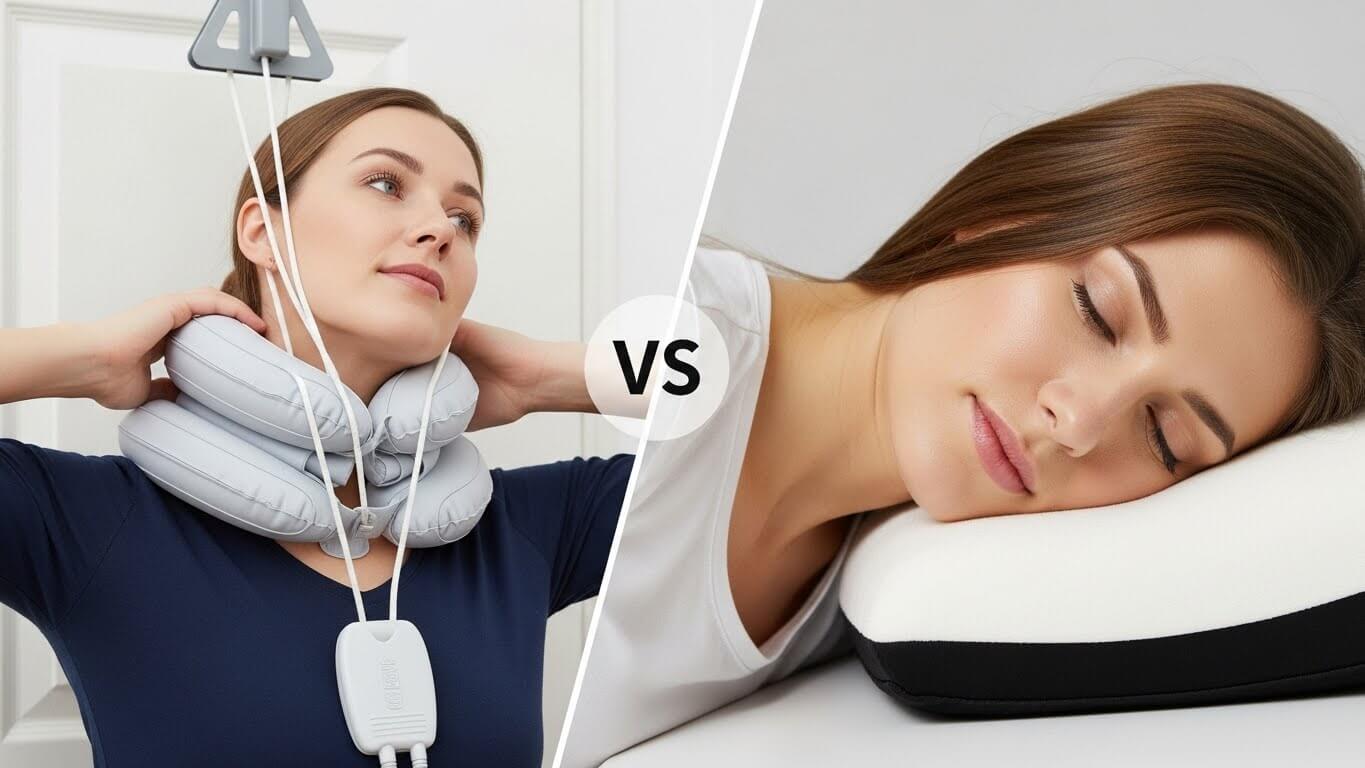
The neck traction device versus cervical support pillow comparison reveals complementary solutions rather than competing alternatives. Traction devices provide active therapeutic intervention through decompression, ideal for treating specific conditions like disc problems, pinched nerves, or severe muscle tension. Cervical support pillows provide passive alignment maintenance during sleep, preventing strain and supporting neck health for everyone regardless of symptom severity.
For most people, the ideal approach incorporates both: using a cervical pillow nightly as universal sleep support (everyone sleeps, so everyone can benefit), and adding traction therapy if you have specific conditions, moderate to severe symptoms, or need active treatment beyond basic support.
If choosing only one, let your situation guide you. For general neck health maintenance, mild discomfort, or prevention, start with a cervical pillow—lower cost, universal benefit, extremely safe, and addresses the 6-8 hours you spend sleeping anyway. For diagnosed disc issues, nerve compression, or significant chronic pain, consider traction under professional guidance while also improving your sleep support with a cervical pillow.
Remember that neither solution replaces proper medical evaluation for serious or worsening symptoms. Both work best as components of comprehensive neck care including good ergonomics, appropriate exercises, postural awareness, and professional treatment when needed.
Your neck carries your head through every moment of every day. Investing in its health—whether through traction therapy, proper sleep support, or ideally both—pays dividends in comfort, function, and long-term wellbeing.