

Neck pain and tension are among the most common complaints in modern life, affecting up to 70% of people at some point. Whether caused by poor posture during endless hours at computers, stress-induced muscle tightness, sleeping awkwardly, or chronic conditions, neck discomfort significantly impacts daily life, concentration, and sleep quality.
Two distinct at-home treatment approaches have gained popularity for addressing neck pain: shiatsu neck massagers using rotating massage nodes to mechanically knead and work muscles, and TENS (Transcutaneous Electrical Nerve Stimulation) units delivering electrical pulses to interrupt pain signals and stimulate muscles. Both promise drug-free relief without the recurring costs of professional therapy, yet they work through completely different mechanisms and address pain in fundamentally different ways. Which approach provides better relief? Should you choose the familiar comfort of mechanical massage or the clinical precision of electrical stimulation?
In this comprehensive guide, we’ll examine how each therapy works, compare their effectiveness across various neck pain conditions, evaluate safety and practicality, and help you determine which solution best addresses your specific neck pain type, severity, lifestyle needs, and budget.
Understanding Neck Pain and Its Causes
Common Sources of Neck Pain
Neck pain arises from various sources requiring different treatment approaches. Muscle tension and strain from poor posture, particularly forward head position during screen use, creates chronic tightness in neck and shoulder muscles. The average adult head weighs 10-12 pounds, but for every inch it moves forward from neutral position, it adds approximately 10 pounds of perceived weight on neck muscles.
Cervical spine issues including disc degeneration, herniated discs, bone spurs, or spinal stenosis create structural problems potentially compressing nerves or causing inflammation. Myofascial pain syndrome involves trigger points—hypersensitive knots in muscles that refer pain to other areas. Nerve compression from herniated discs or bone spurs causes radiating pain, numbness, or tingling down arms.
Stress and anxiety manifest physically as unconscious muscle tension, particularly in neck and shoulders. Whiplash or injury from accidents creates acute pain and muscle guarding. Sleeping position, particularly on unsupportive pillows or in awkward positions, strains neck muscles overnight. Arthritis in cervical spine joints causes pain and stiffness, worsening with age.
Types of Neck Pain
Understanding your pain type helps determine appropriate treatment. Mechanical pain results from muscle strain, poor posture, or joint dysfunction, typically responding well to mechanical treatments like massage. Neuropathic pain from nerve compression or damage causes burning, tingling, or shooting sensations requiring different approaches.
Referred pain originates elsewhere but manifests in the neck—like jaw tension from TMJ disorders or shoulder problems radiating upward. Acute pain from recent injury or strain differs from chronic pain persisting beyond normal healing time (typically 3+ months).
Tension-type pain feels like tightness, stiffness, or dull aching, often stress-related. Sharp, stabbing pain suggests different issues potentially requiring medical evaluation. Location matters—upper neck/base of skull pain differs from mid-neck or lower neck/shoulder junction discomfort.
Identifying your primary pain type guides treatment selection and realistic expectation setting.
How Pain Relief Therapies Work
Different therapies address pain through distinct mechanisms. Mechanical massage physically manipulates muscles and soft tissue, releasing tension, improving circulation, breaking up adhesions, and triggering relaxation reflexes. It directly addresses the source of muscle-based pain.
Electrical stimulation doesn’t physically manipulate tissue but instead sends electrical impulses that interfere with pain signal transmission (gate control theory), stimulate muscles to contract and relax, and potentially trigger endorphin release. It modulates pain perception rather than directly treating underlying muscle dysfunction.
Heat therapy, often combined with massage devices, increases blood flow and relaxes muscles through warmth. Understanding these different approaches helps explain why each device works better for certain pain types.
Shiatsu Neck Massagers: Mechanical Relief
What Are Shiatsu Neck Massagers?
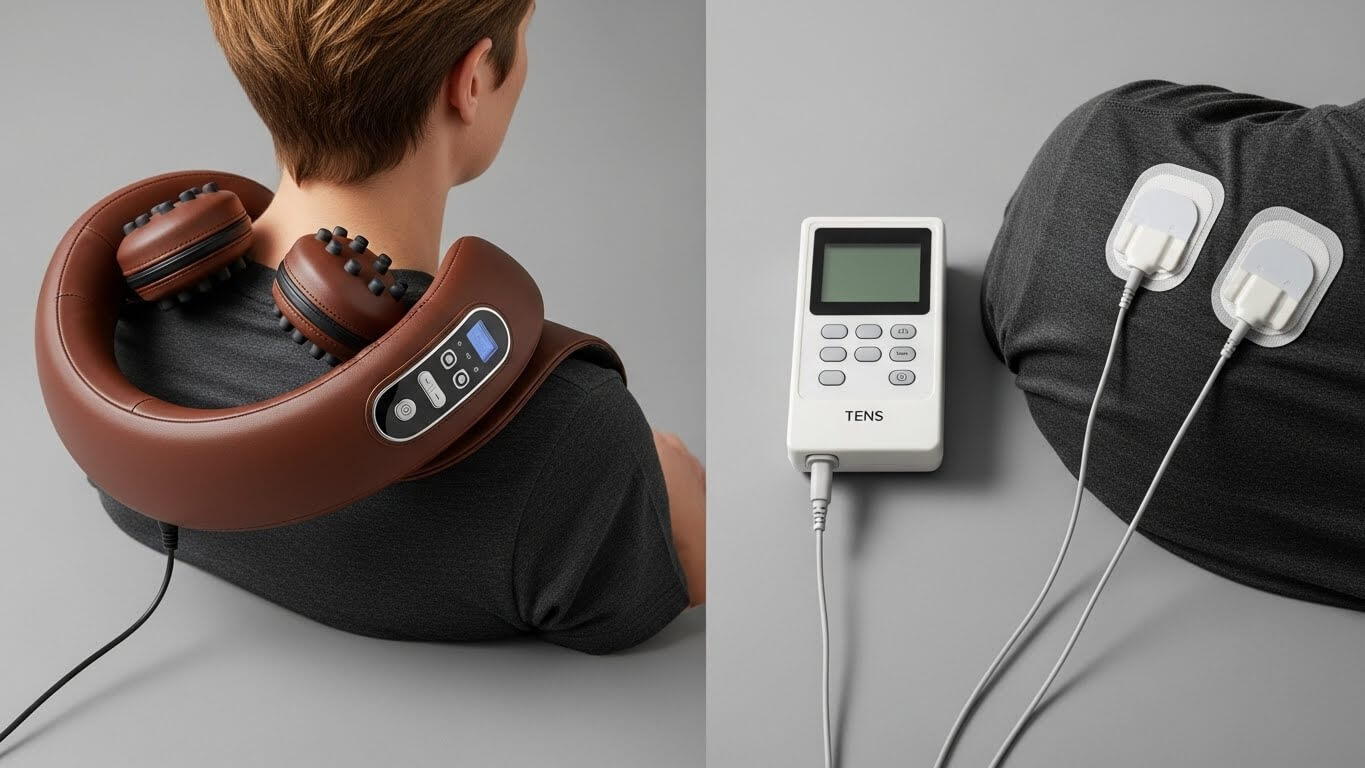
Shiatsu neck massagers are U-shaped or pillow-like devices that drape around your neck and shoulders, featuring rotating massage nodes that knead muscles in circular motions. They simulate the finger pressure and kneading techniques of Japanese shiatsu massage therapy in an automated, accessible format.
Most devices measure approximately 16-18 inches across to fit around necks comfortably. They feature 4-8 rotating massage nodes arranged to target neck and shoulder muscles, electric motors driving the rotating massage action, adjustable intensity settings (typically 2-3 levels), and often heat therapy functions. Many include handles allowing you to pull the massager tighter for increased pressure.
Prices range from $30 for basic models to $150 for premium devices with advanced features. Most effective models cost $40-$80.
How Shiatsu Massagers Work
The mechanism provides automated mechanical massage. Internal motors rotate massage nodes in programmed patterns—typically bi-directional (alternating clockwise/counterclockwise) or synchronized movements. The rotating nodes press into neck and shoulder muscles, creating kneading sensations that manipulate soft tissue.
You control the pressure by pulling the handles tighter against your neck or relaxing for lighter touch. The devices target upper trapezius muscles (top of shoulders), levator scapulae (side of neck), and paraspinal muscles along the spine. The mechanical action increases local blood circulation, releases muscle knots and trigger points, promotes muscle relaxation through sustained pressure, and stimulates sensory nerves providing pain relief through gate control theory.
Heat therapy, included on most modern models, warms muscles simultaneously with massage, enhancing relaxation and improving effectiveness. Sessions typically last 15-20 minutes with automatic shut-off for safety.
Types and Price Ranges
Budget shiatsu massagers ($30-$50) offer basic rotating massage with 1-2 intensity levels, simple heat function or none, and basic construction quality. These work adequately for occasional use despite limited features and shorter lifespan.
Mid-range devices ($50-$80) provide stronger motors with better massage depth, adjustable speeds and directions, reliable heat therapy, ergonomic designs fitting necks better, and improved durability. This range offers optimal value for regular users.
Premium massagers ($80-$150) feature advanced massage patterns and customization, superior build quality and materials, quieter operation with powerful motors, sometimes rechargeable batteries for cordless use, and extended warranties. The additional cost provides modest performance improvement over mid-range options.
Specialty designs include car-compatible versions (12V adapters), extra-wide models for larger bodies, and compact travel versions, ranging from $35-$100.
Effectiveness and Benefits
Shiatsu neck massagers deliver meaningful benefits for specific conditions. Muscle tension and knots respond well to mechanical kneading that physically works tight muscles. The devices effectively address tension headaches originating from neck muscle tightness.
Upper back and shoulder pain benefits from the dual neck-shoulder coverage most models provide. Stress-related muscle tension releases as automated massage promotes relaxation without effort. Improved circulation from massage and heat supports muscle recovery and reduces stiffness.
The user-friendly design requires minimal learning curve—drape around neck and turn on. Affordability at $40-$80 makes effective neck massage accessible without professional appointment costs. Convenience allows use while working, watching TV, or relaxing without dedicated treatment time.
Versatility enables use on other body areas including lower back, thighs, calves, or feet by positioning the device differently. The devices work well for mechanical, muscle-based neck pain from poor posture, stress, or minor strain.
Limitations
Shiatsu massagers have notable limitations. They provide limited depth—massage stays relatively superficial compared to professional deep tissue work. The one-size-fits-most design may not fit all neck sizes or shapes optimally, with smaller necks getting less contact or larger necks feeling cramped.
Fixed massage node positions can’t be adjusted to target specific problem spots precisely. Some users find the rotating sensation uncomfortable or the pressure insufficient despite maximum settings. The devices address only muscle-based pain, not nerve-related or structural neck problems.
Noise from motors can be bothersome during use, reducing relaxation effect. Corded models limit mobility and positioning options. The massage is repetitive and somewhat generic rather than responsive to your body’s feedback like skilled therapists provide.
They’re contraindicated for certain conditions including acute neck injuries, herniated discs with nerve compression, severe osteoporosis, or recent surgery. Always consult healthcare providers for chronic or severe neck pain before relying solely on self-treatment.
TENS Units: Electrical Stimulation Therapy
What Are TENS Units?
TENS (Transcutaneous Electrical Nerve Stimulation) units are medical devices delivering low-voltage electrical currents through electrode pads placed on skin near pain areas. Originally developed for pain management in clinical settings, TENS units are now widely available for home use.
The devices consist of a control unit (typically pocket-sized or smaller), electrode pads adhering to skin, wires connecting pads to control unit, and controls for adjusting intensity, frequency, and pulse width. Some modern units are wireless with electrodes containing integrated electronics.
TENS units range from $20 for basic models to $200+ for medical-grade devices. Most effective consumer models cost $30-$80.
How TENS Units Work
The mechanism differs fundamentally from mechanical massage. Small electrical currents pass through skin via electrode pads, stimulating sensory and motor nerves. The proposed mechanisms include gate control theory—electrical stimulation activates large diameter sensory fibers that “close the gate” to pain signals from smaller pain fibers traveling to the brain, providing immediate pain relief.
Endogenous opioid release may occur as electrical stimulation potentially triggers the body to produce natural pain-relieving endorphins. Muscle stimulation at certain settings causes muscles to contract and relax rhythmically, potentially reducing spasm and improving circulation. Nervous system modulation suggests repeated TENS use may alter how the nervous system processes pain signals.
Users place electrode pads on or near the painful area, select appropriate settings (intensity, frequency, pulse width), and adjust until they feel comfortable tingling or buzzing sensation without pain. Treatment duration typically ranges from 15-60 minutes per session.
Types and Price Ranges
Budget TENS units ($20-$40) offer basic functionality with 2-4 preset programs, simple intensity adjustment, limited electrode pads (usually 2-4), and basic batteries. These work for experimenting with TENS therapy at minimal cost.
Mid-range devices ($40-$80) provide 6-12+ preset programs for different pain types, dual-channel operation treating two areas simultaneously, rechargeable batteries, better electrode quality and variety, and clearer displays. This range suits regular users wanting versatility.
Premium TENS units ($80-$200) feature advanced customization of all parameters (frequency, pulse width, intensity), professional-grade electrodes lasting longer, combination TENS/EMS modes (electrical muscle stimulation), smartphone app integration, and superior build quality. Medical-grade units prescribed by doctors often fall in this category.
Combination devices including TENS plus massage, heat, or other modalities range from $50-$150, attempting to provide comprehensive therapy in single units.
Effectiveness and Benefits
TENS units provide proven benefits for specific applications. Research supports TENS effectiveness for acute and chronic pain management, with numerous studies showing significant pain reduction for various conditions including neck pain, back pain, arthritis, and neuropathic pain.
Drug-free pain relief appeals to those wanting to avoid or reduce pain medication. Targeted treatment allows placing electrodes precisely where pain occurs. Adjustable parameters enable customizing therapy to your specific pain type and response.
Portability of small units allows discreet use under clothing during daily activities. Low operating costs after initial purchase means minimal ongoing expenses beyond occasional electrode replacement. Scientific backing provides confidence in the therapy’s legitimacy and safety.
TENS works well for both mechanical and neuropathic pain, potentially providing broader applications than purely mechanical massage. Some insurance plans cover TENS units when prescribed, reducing or eliminating out-of-pocket costs.
Limitations and Drawbacks
TENS units have significant limitations despite their benefits. The learning curve is steep—determining optimal electrode placement, selecting appropriate settings, and finding effective parameters requires experimentation and patience. Improper use can cause skin irritation or ineffective treatment.
Results vary dramatically between individuals—some experience significant relief while others feel minimal effect. The sensation isn’t inherently pleasant like massage—it’s tingling or buzzing rather than soothing touch. Electrode pads require regular replacement ($5-$20 per set every 1-3 months), creating ongoing costs.
Skin preparation and electrode placement takes time compared to simply draping on a massage device. Adhesive from electrode pads can irritate sensitive skin or lose stickiness requiring frequent replacement. The units don’t physically address muscle knots or tension—they modulate pain perception rather than treating underlying muscle dysfunction.
Contraindications include pacemakers or implanted devices, pregnancy (especially near abdomen), epilepsy, heart conditions, and placement over carotid sinuses, eyes, or mucous membranes. Always consult healthcare providers before using TENS for chronic pain conditions.
TENS provides temporary pain relief while in use but rarely creates lasting changes to underlying problems. Once you turn it off, pain often returns, necessitating frequent or continuous use.
Head-to-Head Comparison
Effectiveness for Muscle Tension and Knots
Winner: Shiatsu Neck Massagers
For mechanical muscle tension, knots, and tightness from poor posture or stress, shiatsu massagers excel through direct muscle manipulation. The kneading action physically works muscles, releases adhesions, and improves local circulation in ways electrical stimulation cannot replicate.
TENS may reduce pain perception from muscle tension but doesn’t address the underlying muscle tightness or knots. For purely muscular neck pain, mechanical massage provides more comprehensive treatment.
Effectiveness for Nerve-Related Pain
Winner: TENS Units
For neuropathic pain, nerve compression symptoms, or radiating pain down arms, TENS units potentially provide superior relief through pain signal modulation. The electrical stimulation directly affects nerve function rather than just working muscles.
Shiatsu massagers may aggravate nerve-related pain if pressure compresses already irritated nerves. For neck pain with tingling, numbness, or radiating symptoms, TENS offers safer, potentially more effective approach after medical evaluation.
Ease of Use and Convenience
Winner: Shiatsu Neck Massagers
Shiatsu devices win on simplicity—drape around neck, turn on, and relax. No learning curve, no electrode placement decisions, no parameter adjustments. Immediate use without preparation or technique knowledge.
TENS units require electrode placement skill, setting selection, skin preparation, and experimentation to find effective parameters. While not extremely difficult, it’s objectively more complex than automated massage devices.
Comfort and Pleasant Experience
Winner: Shiatsu Neck Massagers (significantly)
Shiatsu massage provides familiar, pleasant sensations most people find relaxing and enjoyable. The warmth and kneading feel soothing and comforting, creating positive treatment experiences that encourage consistent use.
TENS produces tingling or buzzing sensations that, while not painful when used correctly, aren’t inherently pleasant. Many users describe it as strange or uncomfortable rather than relaxing. The clinical nature lacks the spa-like comfort of massage.
For pure treatment enjoyment, massage wins decisively.
Targeted Pain Relief Precision
Winner: TENS Units (slightly)
TENS allows precise electrode placement targeting exact pain locations with adjustable parameters for personalized therapy. You can treat very specific areas or multiple areas simultaneously with dual-channel units.
Shiatsu massagers have fixed node positions targeting general neck and shoulder areas rather than precise spots. While effective for broad treatment, they lack the pinpoint precision of electrode placement.
Cost and Value
Winner: Shiatsu Neck Massagers (initially)
Initial costs are comparable—$40-$80 for effective models of either type. However, TENS units have ongoing electrode costs ($20-$60 annually) while shiatsu massagers have no consumables.
Over five years, a $60 shiatsu massager costs just $60 total. A $60 TENS unit plus $200 in electrodes costs $260. The value gap widens with time.
However, if TENS provides significantly superior relief for your specific pain type, the ongoing costs may justify the benefit.
Versatility and Applications
Winner: TENS Units (slightly)
TENS units work for any body area with proper electrode placement—neck, back, shoulders, knees, feet, or anywhere pain occurs. The small electrodes access areas massage devices can’t reach effectively.
Shiatsu massagers work well on neck, shoulders, upper back, and repurposed for other large muscle areas like lower back or thighs, but less effectively than devices designed for those areas.
For whole-body pain management versatility, TENS edges ahead.
Scientific Evidence and Medical Recognition
Winner: TENS Units (significantly)
TENS therapy has extensive research supporting effectiveness for various pain conditions. It’s recognized by medical professionals, often prescribed by doctors, and sometimes covered by insurance. The FDA regulates TENS devices as medical devices.
While massage therapy generally has research support, consumer shiatsu massagers specifically have minimal clinical study. They’re considered wellness devices rather than medical treatments.
For evidence-based medicine credibility, TENS has stronger scientific foundation.
Who Should Choose Each Device
Choose Shiatsu Neck Massagers If…
Shiatsu massagers suit specific user profiles excellently. People with muscle-based neck pain from tension, poor posture, or stress benefit most from mechanical muscle work. Those seeking pleasant, relaxing treatment experiences want enjoyable therapy they’ll use consistently.
Users valuing simplicity and immediate usability prefer no-learning-curve devices ready to use immediately. Individuals uncomfortable with electrical stimulation or clinical treatments want familiar massage sensations. People without ongoing consumable costs budget prefer one-time purchases without electrode replacement expenses.
Those who enjoy heat therapy benefit from built-in heating functions most shiatsu devices include. Users wanting versatile positioning—use while sitting, lying down, or standing—appreciate flexible massage device applications. People seeking gift options find massage devices more universally appealing than clinical TENS units.
Individuals with primarily upper body tension including neck, shoulders, and upper back find devices targeting these areas effectively.
Choose TENS Units If…
TENS units appeal to different priorities. People with nerve-related pain including radiating symptoms, tingling, or numbness need pain modulation rather than muscle manipulation. Those with medical recommendations from healthcare providers should follow professional guidance toward TENS therapy.
Users wanting evidence-based, medically-recognized treatment value scientific backing and potential insurance coverage. Individuals needing whole-body pain management benefit from electrode versatility treating multiple areas with one device.
People with chronic pain requiring frequent treatment appreciate TENS portability and ability to use discreetly during daily activities. Those who’ve tried massage without adequate relief may discover electrical stimulation provides the missing therapeutic element.
Users comfortable with learning curves and experimentation don’t mind the initial setup complexity. People with insurance coverage potentially get TENS units at reduced cost or free with prescriptions.
Some neck pain sufferers strategically use both therapies. Shiatsu massagers handle daily muscle tension relief, relaxation sessions, and pleasant evening treatments. TENS units provide acute pain management during flare-ups, targeted relief for specific pain spots, and treatment during daily activities when massage devices aren’t practical.
This combination addresses both mechanical muscle issues and pain modulation, maximizing therapeutic flexibility for complex or varying pain patterns.
When to Seek Professional Help
Warning Signs
Seek immediate medical attention for severe pain following trauma or injury, weakness, numbness, or loss of coordination in arms or hands, difficulty walking or balance problems, loss of bowel or bladder control, and fever accompanying neck pain.
Conditions Requiring Evaluation
Consult healthcare providers for pain persisting beyond 2 weeks despite home treatment, progressively worsening pain, pain radiating into shoulders or arms, frequent or severe headaches with neck pain, and pain interfering significantly with daily activities or sleep.
New neck pain in people over 50 or with cancer history requires evaluation. Never rely solely on self-treatment for serious neck problems—both devices complement but don’t replace appropriate medical care.
Frequently Asked Questions
Which is better for chronic neck pain?
It depends on pain type. For muscle-based chronic tension, shiatsu massagers often provide better relief through direct muscle work. For chronic pain involving nerve components or complex causes, TENS may be more effective. Many people with chronic pain benefit from trying both to determine which works better individually.
Can I use these devices together?
Generally yes, though not simultaneously in the same area. You might use TENS during the day for pain management and shiatsu massage in the evening for muscle relaxation. Consult healthcare providers if combining multiple therapies for chronic conditions.
Do TENS units actually heal neck problems?
No. TENS provides pain relief by modulating pain signals but doesn’t heal underlying structural issues, strengthen muscles, or correct postural problems. It’s a pain management tool, not a cure. Healing requires addressing root causes through physical therapy, posture correction, strengthening, or medical treatment.
Are shiatsu massagers safe for everyone?
No. Avoid use with acute injuries, herniated discs, severe osteoporosis, cancer, blood clots, recent surgery, or pregnancy without medical clearance. People with chronic neck conditions should consult healthcare providers before using massage devices regularly.
How long do TENS unit electrode pads last?
With proper care (cleaning skin before use, storing properly, gentle removal), quality electrodes last 20-30 uses or 1-3 months. Poor care or low-quality pads may only last 10-15 uses. Always have spare pads available.
Will insurance cover these devices?
Some insurance plans cover TENS units when prescribed by doctors for documented pain conditions. Shiatsu massagers are rarely covered as they’re considered wellness devices rather than medical equipment. Check with your insurance provider and obtain prescriptions if required.
Conclusion
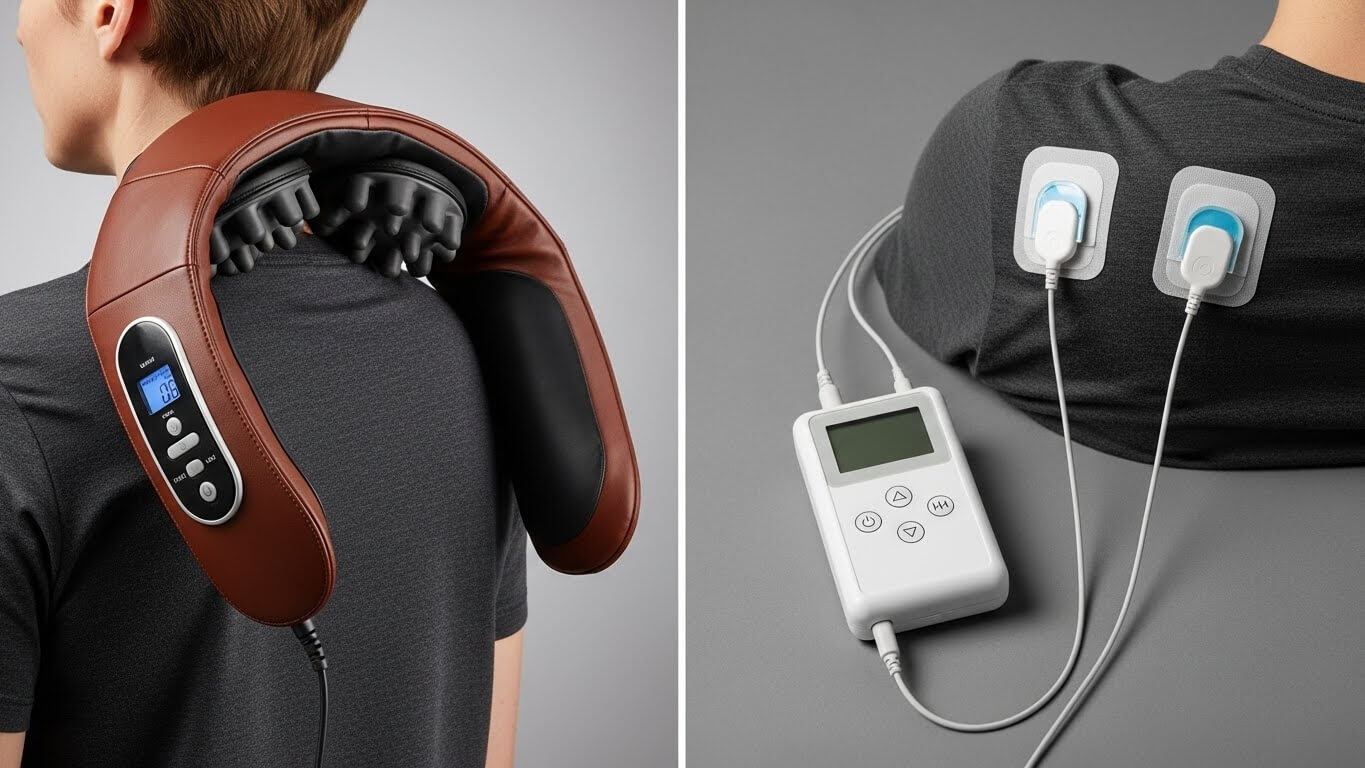
Shiatsu neck massagers and TENS units both offer valuable at-home neck pain relief, but they address pain through fundamentally different mechanisms suited to different pain types and user preferences. Shiatsu neck massagers provide pleasant, familiar mechanical massage effectively treating muscle-based tension and knots at $40-$80 with no ongoing costs. They’re perfect for users with muscular neck pain from stress or poor posture, those valuing simple, enjoyable treatment experiences, and people wanting one-time purchases without consumable expenses.
TENS units deliver scientifically-backed electrical stimulation modulating pain signals and potentially treating both muscular and nerve-related pain at comparable initial costs ($40-$80) but with ongoing electrode expenses ($20-$80 annually). They suit users with nerve-involved pain, those wanting evidence-based medical therapy, and people needing versatile whole-body pain management despite higher complexity and ongoing costs.
For most people with straightforward muscle tension neck pain, shiatsu massagers provide effective, pleasant relief at superior long-term value. For those with complex, chronic, or nerve-related pain, or anyone whose pain hasn’t responded adequately to massage, TENS units offer legitimate medical-grade therapy worth the additional investment and learning curve.
The smartest approach for uncertain buyers is starting with whichever therapy matches their primary pain type—shiatsu for obvious muscle tension, TENS for radiating or nerve-type pain—then adding the other if the first doesn’t provide adequate relief. Many chronic pain sufferers ultimately benefit from having both options available, using each when it best serves their current needs. Whether you choose mechanical comfort or electrical precision, both paths can lead to meaningful pain reduction and improved quality of life.