

Percussion massage guns have revolutionised athletic recovery and muscle care, bringing professional-grade deep tissue therapy into homes and gyms worldwide. What was once relegated to physical therapy clinics and elite training facilities is now accessible to anyone seeking faster recovery, reduced muscle soreness, and relief from chronic tension. Two brands dominate the premium massage gun market: Theragun, the original innovator that essentially created the category, and Hypervolt, the sleek challenger that emerged shortly after with its own distinctive approach to percussion therapy.
Both promise deep tissue penetration, rapid recovery, and professional-quality results, but they achieve these goals through different designs, philosophies, and technologies. With prices ranging from $200 to $600, choosing between these two industry leaders represents a significant investment. Which brand delivers better deep tissue performance? Does Theragun’s higher price justify its premium positioning, or does Hypervolt provide equivalent results at better value?
In this comprehensive comparison, we’ll examine both brands’ technology, performance, ergonomics, and real-world effectiveness to help you determine which percussion massage gun best serves your recovery needs, muscle care goals, and budget.
Understanding Percussion Therapy and Deep Tissue Massage
How Percussion Massage Works
Percussion therapy, also called percussive therapy or vibration therapy, delivers rapid, repetitive strikes to muscle tissue at frequencies ranging from 1,800 to 3,200 percussions per minute (PPM). The mechanism differs fundamentally from traditional massage—instead of sustained pressure, percussion creates rapid compression and release cycles that penetrate deep into muscle tissue.
The therapeutic effects include deep tissue penetration reaching muscle layers that surface massage can’t access effectively, neuromuscular activation triggering muscle relaxation through rapid sensory input, enhanced blood flow from mechanical pumping action delivering oxygen and nutrients while removing metabolic waste, myofascial release as percussion breaks up adhesions and restrictions in connective tissue, and reduced muscle soreness (DOMS) with research showing 30-50% reduction when used post-exercise.
Pain modulation occurs through gate control theory—intense sensory input from percussion blocks pain signals traveling to the brain. Increased range of motion results as percussion reduces muscle tension and improves tissue pliability. The rapid strikes create benefits traditional massage requires much longer to achieve, making percussion therapy efficient for time-conscious athletes and active individuals.
Benefits for Athletes and Active Individuals
Athletes and fitness enthusiasts particularly benefit from percussion therapy. Pre-workout activation warms muscles and prepares them for activity, potentially reducing injury risk. Post-workout recovery accelerates by reducing DOMS and promoting faster muscle repair. Between-training-session maintenance prevents excessive tightness and maintains optimal muscle function.
Injury rehabilitation under professional guidance uses controlled percussion to promote healing and restore function. Chronic tension relief addresses persistent muscle tightness from training or daily life. Improved athletic performance may result from better recovery, increased range of motion, and reduced fatigue.
The convenience of at-home treatment eliminates the need for frequent professional massage appointments, saving money and time while allowing immediate post-workout recovery when it’s most effective.
Deep Tissue Considerations
Deep tissue massage gun effectiveness depends on amplitude (stroke length), force/stall force (how much resistance the device handles before stalling), and speed settings allowing customization for different muscle groups and sensitivity levels. Quality devices penetrate 10-16mm into tissue with each strike, reaching deep muscle layers where chronic tension resides.
Not all percussion devices are equal—cheap models lack the power, amplitude, or build quality to deliver true deep tissue benefits. Theragun and Hypervolt represent the premium tier where performance genuinely matches professional-quality percussion therapy.
Theragun: The Original Innovation
Brand Background and Philosophy
Theragun, now part of the Therabody brand, was founded by Dr. Jason Wersland, a chiropractor who developed the original device to treat his own injury. The brand essentially created the percussion therapy category for consumers, establishing the triangular ergonomic grip and powerful motor that define modern massage guns.
Therabody positions itself as the clinical, science-backed leader in percussion therapy. The company invests heavily in research, collaborates with professional athletes and medical professionals, and emphasizes therapeutic effectiveness over pure consumer appeal. This clinical focus justifies premium pricing through proven performance and extensive validation.
Product Lineup and Pricing
Theragun offers multiple tiers. The Theragun PRO (5th generation) costs $599 and represents the professional-grade flagship with maximum power, adjustability, and features. The Theragun Elite ($399) provides premium performance for serious enthusiasts with most PRO features at lower cost. The Theragun Prime ($299) delivers excellent performance for regular users at mid-tier pricing.
The Theragun Relief ($149-$199) targets specific pain relief with simplified operation. Mini versions ($199-$249) offer portability at reduced power. This comprehensive lineup allows matching device capabilities to user needs and budgets, though all models maintain Theragun’s signature power and amplitude.
Technology and Performance Specifications
Theragun devices feature proprietary QuietForce Technology delivering powerful percussion at reduced noise levels (below 65 decibels on premium models). The signature triangular multi-grip ergonomic handle allows multiple holding positions for reaching different body areas comfortably. Adjustable arm positions on premium models enable better positioning for hard-to-reach spots like the back.
Amplitude on premium models reaches 16mm—among the deepest in the industry, enabling genuine deep tissue penetration. Stall force (resistance before motor stalls) exceeds 60 pounds on the PRO, allowing application of significant pressure without performance degradation. Speed ranges typically offer 5 speed settings from 1,750 to 2,400 PPM (varies by model).
Battery life reaches 150-300 minutes per charge depending on model and intensity, with removable batteries on premium versions allowing swapping for continuous use. The devices include multiple attachment heads for different muscle groups and purposes, typically 4-6 attachments included.
OLED screens on premium models display speed, force applied, and battery life. Bluetooth connectivity allows app integration for guided routines and usage tracking. Build quality is exceptional with aircraft-grade materials and professional-grade construction throughout.
Ergonomics and Design
Theragun’s distinctive triangular grip allows multiple hand positions reducing wrist and arm fatigue during extended sessions. The rotatable arm on premium models adjusts to six positions, enabling optimal angles for self-treatment of difficult areas like the back and shoulders. This ergonomic innovation addresses the common limitation of massage guns—difficulty reaching your own back effectively.
The industrial, clinical aesthetic emphasizes function over fashion. The devices look like professional tools because they are, appealing to users who prioritize performance over sleek consumer styling. Weight ranges from 1.5 pounds (Mini) to 2.9 pounds (PRO), substantial but distributed well through the ergonomic grip.
Performance and Effectiveness
Theragun devices deliver exceptional deep tissue performance. The 16mm amplitude and high stall force create genuine muscle penetration reaching deep layers. Users consistently report significant relief from chronic muscle tension, reduced DOMS, and improved recovery between training sessions.
The power level allows treating even the largest, toughest muscle groups (glutes, quads, lats) effectively without the device struggling or stalling. Professional athletes, physical therapists, and serious training enthusiasts frequently choose Theragun for its uncompromising performance.
The trade-off is intensity—Theragun devices are powerful and sometimes intense, potentially uncomfortable for beginners or those with sensitivity. The lowest settings provide gentler options, but Theragun’s strength is deep, aggressive treatment rather than light relaxation massage.
Hypervolt: Sleek Performance
Brand Background and Philosophy
Hypervolt, created by Hyperice, emerged shortly after Theragun’s success with a different philosophy—combining professional performance with consumer-friendly design. Hyperice, founded by an athletic trainer, focuses on recovery technology for athletes and active individuals, with the Hypervolt as their flagship product.
The brand emphasizes quieter operation, sleeker aesthetics, and user-friendly design while maintaining professional-grade performance. Hypervolt positions itself as premium performance without the clinical intensity of Theragun, appealing to athletes who want effective recovery in a more approachable package.
Product Lineup and Pricing
Hypervolt offers several tiers. The Hypervolt 2 Pro ($399) represents their flagship with maximum power and features. The Hypervolt 2 ($299) provides excellent performance for most users at mid-tier pricing. The Hypervolt GO ($199-$229) delivers portability with reduced power and size.
The Hypervolt Plus ($349, often on sale for less) sits between the standard and Pro models with added battery life. This lineup directly competes with Theragun’s tiers at comparable or slightly lower price points, positioning Hypervolt as the value-performance alternative.
Technology and Performance Specifications
Hypervolt features Quiet Glide Technology creating exceptionally quiet operation (around 55-65 decibels depending on model), quieter than most Theragun models. The vertical pistol-grip design uses traditional handheld tool ergonomics familiar and comfortable for most users. Some models include Bluetooth connectivity with the Hyperice app for guided routines.
Amplitude reaches 12-14mm depending on model—less than Theragun’s 16mm but still providing effective deep tissue access. Stall force is approximately 40-50 pounds, sufficient for most applications but lower than Theragun PRO’s 60+ pounds. Speed settings typically offer 3-5 levels ranging from approximately 1,800 to 3,200 PPM depending on model.
Battery life reaches 120-180 minutes per charge on premium models. The devices include 4-5 attachment heads for different purposes. LED indicators show battery status and speed level. Build quality is excellent with premium materials and consumer-product polish throughout.
The proprietary Pressure Sensor Technology on some models provides haptic feedback when you’re applying optimal pressure, helping users avoid pressing too hard or too lightly.
Ergonomics and Design
Hypervolt’s vertical pistol grip uses conventional handheld power tool ergonomics—comfortable and intuitive for most users immediately. The single-position design lacks Theragun’s multi-grip options, potentially causing more arm fatigue during extended sessions or when treating hard-to-reach areas.
The sleek, modern aesthetic with smooth lines and premium finishes appeals to consumer preferences for attractive products. The devices look at home in modern gyms or homes rather than clinical settings. Weight ranges from 1.5 to 2.5 pounds depending on model, similar to Theragun but feeling different due to weight distribution in vertical design.
The quieter operation makes Hypervolt more suitable for shared spaces, offices, or environments where noise matters. You can use it while watching TV or in hotel rooms without disturbing others significantly.
Performance and Effectiveness
Hypervolt delivers strong performance suitable for most athletes and active individuals. The 12-14mm amplitude provides good deep tissue access for most muscle groups. Users report excellent results for recovery, DOMS reduction, and general muscle maintenance.
The slightly less aggressive nature compared to Theragun makes Hypervolt more approachable for beginners or those with sensitivity. It’s still powerful enough for serious athletes but less likely to feel overwhelming initially. The device handles medium to large muscle groups well, though the largest, densest muscles (like glutes on heavily-muscled athletes) may challenge it more than they would a Theragun PRO.
The quieter operation and sleeker design encourage more frequent use in various settings, potentially improving outcomes through better compliance compared to devices users hesitate to use due to noise or appearance.
Head-to-Head Comparison
Deep Tissue Penetration and Power
Winner: Theragun (especially premium models)
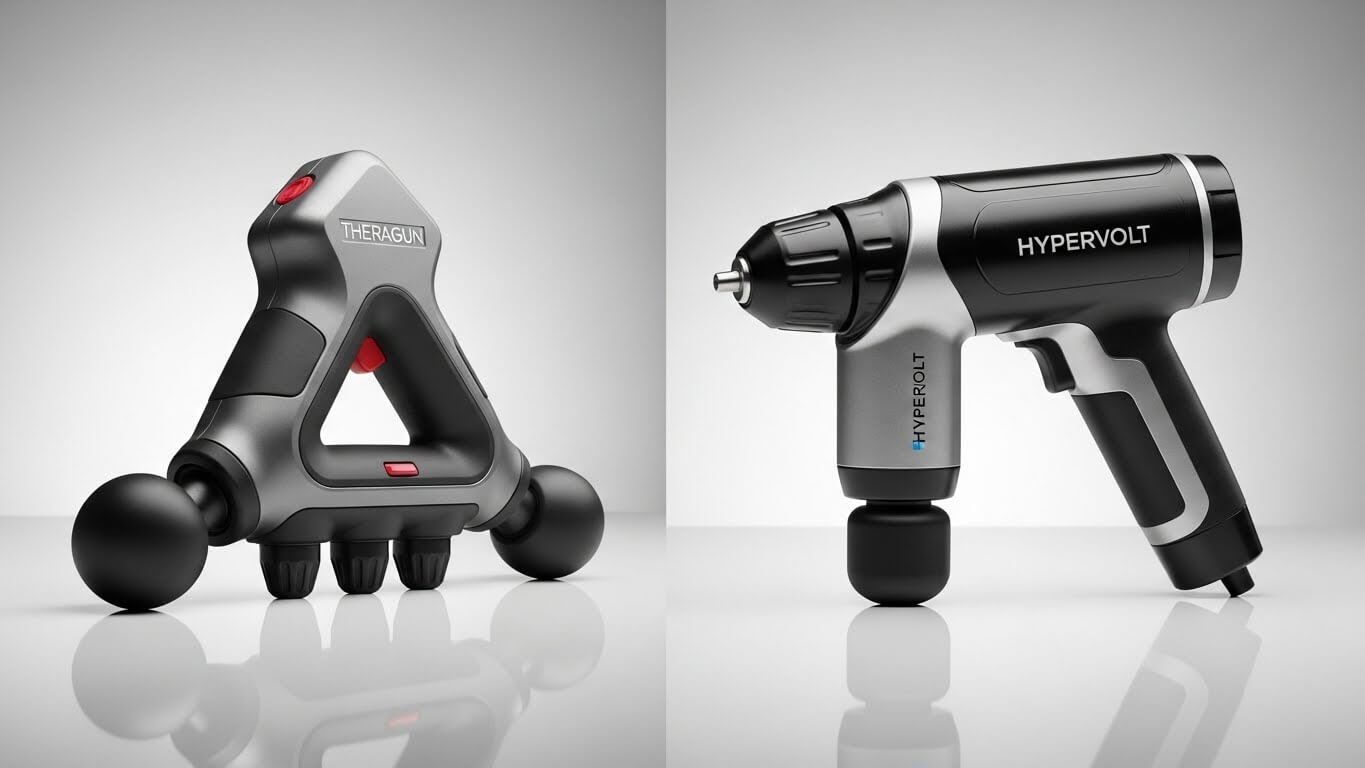
Theragun’s 16mm amplitude versus Hypervolt’s 12-14mm creates measurable difference in deep tissue penetration. The higher stall force (60+ vs. 40-50 pounds) allows Theragun to maintain performance under greater pressure, enabling more aggressive deep tissue work.
For serious athletes with significant muscle mass, chronic deep tension, or those who’ve found other devices insufficient, Theragun’s superior power and penetration provide tangible advantages. For most recreational athletes and fitness enthusiasts, Hypervolt’s penetration is adequate for effective recovery.
Theragun wins on pure power metrics, though the margin matters more to some users than others.
Noise Level and Quiet Operation
Winner: Hypervolt (significantly)
Hypervolt’s Quiet Glide Technology creates noticeably quieter operation than even Theragun’s QuietForce models. The difference is meaningful; Hypervolt can be used during TV watching or in office settings without significantly disturbing others, while Theragun, though quieter than early models, remains more audible.
For users prioritizing discrete operation in shared spaces, apartments, hotels, or offices, Hypervolt’s quieter performance is a significant practical advantage.
Ergonomics and Reach
Winner: Theragun (for versatility)
Theragun’s triangular multi-grip design and rotatable arm (on premium models) provide superior ergonomics for reaching various body areas, especially the back and shoulders. The ability to adjust grip and arm position reduces fatigue during extended sessions.
Hypervolt’s pistol grip is immediately comfortable and intuitive but offers less versatility. Reaching your own back effectively is more challenging with Hypervolt’s fixed vertical design.
For comprehensive self-treatment versatility, Theragun’s ergonomic innovations provide meaningful advantages.
Ease of Use and User-Friendliness
Winner: Hypervolt
Hypervolt’s intuitive pistol grip, simpler controls, and less aggressive default intensity make it more approachable for beginners. The device requires no learning curve—pick it up and use it like any handheld tool.
Theragun’s unique ergonomics and more intense default power require brief adaptation. Users must learn optimal grip positions and pressure application to maximize benefits. While not difficult, it’s objectively less immediately intuitive than Hypervolt.
For plug-and-play simplicity, Hypervolt wins.
Build Quality and Durability
Winner: Tie
Both brands deliver exceptional build quality appropriate for professional use. Theragun’s clinical-grade construction feels indestructible with industrial materials throughout. Hypervolt’s premium consumer product finish is equally robust but with more refined aesthetics.
Both handle regular intensive use reliably. Professional trainers, athletes, and physical therapists use both brands successfully. Long-term durability reports suggest both brands last years with proper care. Warranties are comparable (1-2 years depending on model).
Neither brand shows significant advantage in real-world durability—both are built to last.
Price and Value
Winner: Hypervolt (at comparable tiers)
Comparing equivalent tiers, Hypervolt typically prices 10-20% below Theragun:
- Theragun PRO ($599) vs. Hypervolt 2 Pro ($399) – $200 difference
- Theragun Elite ($399) vs. Hypervolt 2 ($299) – $100 difference
- Theragun Prime ($299) vs. Hypervolt 2 ($299) – comparable pricing
Hypervolt delivers excellent performance at lower investment, providing superior value for users who don’t need absolute maximum power. The performance gap doesn’t necessarily justify Theragun’s premium for recreational athletes and fitness enthusiasts.
For pure value-per-performance, Hypervolt edges ahead at most tiers.
Attachment Variety and Ecosystem
Winner: Theragun (slightly)
Both brands include 4-6 attachments covering standard needs (ball, flat, fork, cone/bullet variations). Theragun offers slightly more specialty attachments and replacement options through their ecosystem. Neither provides dramatic advantage here.
Attachments are largely compatible with similar devices, so third-party options work with both brands. The included selections from both brands suit most users’ needs without requiring additional purchases.
Model-by-Model Comparison
Premium Tier: Theragun PRO vs. Hypervolt 2 Pro
Theragun PRO ($599): 16mm amplitude, 60+ lb stall force, rotating arm, OLED screen, removable batteries, 150-minute battery life, 5 speeds.
Hypervolt 2 Pro ($399): 14mm amplitude, ~50 lb stall force, pressure sensor, 180-minute battery life, 5 speeds, quieter operation.
Verdict: Theragun PRO provides maximum power and ergonomic versatility justifying its $200 premium for professional users, elite athletes, or those needing absolute peak performance. Hypervolt 2 Pro delivers 90% of the performance at 67% of the cost—exceptional value for serious athletes who don’t require the absolute maximum.
Mid-Tier: Theragun Elite vs. Hypervolt 2
Theragun Elite ($399): 16mm amplitude, OLED screen, rotating arm (limited positions), 120-minute battery life, 5 speeds.
Hypervolt 2 ($299): 12mm amplitude, LED indicators, 120-minute battery life, 3 speeds, superior quiet operation.
Verdict: $100 price difference represents 25% savings with Hypervolt. Theragun Elite provides deeper penetration and better ergonomics; Hypervolt 2 offers quieter operation and easier use. For most regular users training 3-5 times weekly, Hypervolt 2 provides excellent value. Serious athletes may prefer Elite’s deeper penetration.
Entry-Premium: Theragun Prime vs. Hypervolt 2
Theragun Prime ($299): 16mm amplitude, simplified controls, standard grip, 120-minute battery life, 4 speeds.
Hypervolt 2 ($299): Same as above.
Verdict: At identical pricing, choice comes down to priorities—Theragun Prime’s deeper amplitude versus Hypervolt 2’s quieter operation and sleeker design. Both perform excellently for recreational athletes and fitness enthusiasts. Theragun for maximum deep tissue, Hypervolt for quieter, more user-friendly experience.
Real User Experiences
Theragun User Feedback
Professional and serious amateur athletes praise Theragun for powerful, effective deep tissue work that genuinely relieves chronic tension and accelerates recovery. Physical therapists and trainers frequently choose Theragun for clinical settings. Users appreciate the ability to apply significant pressure without device performance degrading.
Common positive comments include “most powerful massage gun available,” “actually reaches deep muscle layers,” “rotating arm is game-changer for self-treatment,” and “worth the premium for serious recovery needs.”
Criticisms mention the high price being prohibitive for casual users, noise level still audible despite improvements, intense power being uncomfortable initially, and the unique ergonomics requiring adaptation. Some find Theragun overkill for their needs.
Long-term users report continued excellent performance after years of regular use, confirming build quality and durability justify the investment for committed users.
Hypervolt User Feedback
Athletes and fitness enthusiasts consistently praise Hypervolt for excellent performance-to-price ratio, quiet operation allowing use anywhere, intuitive design requiring no learning curve, and sleek appearance fitting modern aesthetics.
Users coming from Theragun often note Hypervolt is “plenty powerful for my needs” while being significantly quieter and more affordable. The devices effectively reduce muscle soreness and improve recovery for regular training.
Criticisms include less power than Theragun for extremely tight muscles, vertical grip causing more arm fatigue during extended sessions than Theragun’s multi-grip, and difficulty reaching back effectively without assistance. Some serious athletes feel it lacks the raw power for their needs.
Overall satisfaction is high, with users feeling they received professional-quality recovery tools at reasonable prices.
Who Should Choose Each Brand
Choose Theragun If…
Theragun suits specific user profiles excellently. Professional and elite athletes needing maximum deep tissue penetration and aggressive treatment benefit from Theragun’s uncompromising power. Physical therapists, trainers, and bodywork professionals requiring clinical-grade tools choose Theragun for professional applications.
Users with chronic deep muscle tension that other devices haven’t adequately addressed need Theragun’s superior amplitude and stall force. Those who’ve tried Hypervolt or similar devices and found them insufficient should upgrade to Theragun’s greater power.
Serious training enthusiasts working out 5-7 days weekly with high intensity benefit from maximum recovery capabilities. Users prioritizing ergonomics and self-treatment of hard-to-reach areas appreciate the rotating arm and multi-grip design.
Buyers unconcerned about price who want the absolute best performance available choose Theragun as the category leader. Anyone willing to pay premiums for proven clinical effectiveness and validation.
Choose Hypervolt If…
Hypervolt appeals to different priorities. Budget-conscious buyers wanting professional performance at 20-30% savings versus comparable Theragun models get exceptional value. Users prioritizing quiet operation for shared spaces, apartments, or discrete use need Hypervolt’s superior noise reduction.
Athletes and fitness enthusiasts with regular training (3-5 weekly sessions) find Hypervolt’s power adequate for their recovery needs. Beginners wanting approachable, user-friendly devices without intimidating power appreciate Hypervolt’s accessibility.
Users valuing sleek, modern aesthetics who want devices looking at home in contemporary settings choose Hypervolt’s refined design. Those who tried Theragun and found it too intense or uncomfortable prefer Hypervolt’s gentler approach while maintaining effectiveness.
Best Practices for Percussion Therapy
Effective Usage Techniques
Start with lower speeds and gentle pressure, gradually increasing as muscles adapt. “Float” the device over muscles rather than pressing hard—let the percussion do the work. Treat each muscle group for 30-120 seconds, avoiding prolonged use on single spots.
Move slowly across muscle length, following muscle fiber direction when possible. Use appropriate attachments—large ball for large muscles, bullet for trigger points, flat for overall coverage. Integrate into routines as pre-workout activation (lighter intensity, 30-60 seconds per group), post-workout recovery (medium intensity, immediately after training), or between-session maintenance (varied intensity as needed).
Safety Considerations
Never use on bones, joints, or the spine. Avoid neck front, abdomen, and sensitive areas. Don’t use over acute injuries or active inflammation. Stop if pain increases or unusual symptoms occur. Consult healthcare providers before using with certain conditions including circulatory problems, blood clotting disorders, cancer, neuropathy, or pregnancy.
Start conservatively—overzealous initial use can cause soreness or bruising. Allow muscles to adapt before intensive treatment.
Complementary Recovery Strategies
Percussion therapy works best within comprehensive recovery including adequate sleep, proper hydration, appropriate nutrition, active recovery activities, foam rolling, stretching, and rest days.
Frequently Asked Questions
Is Theragun really worth the extra money?
For professional athletes, physical therapists, or users with severe chronic muscle tension, Theragun’s superior power, amplitude, and ergonomics justify the premium. For recreational athletes and regular fitness enthusiasts, Hypervolt provides 80-90% of the performance at 70-80% of the cost, representing better value. The answer depends on your training intensity, budget, and specific needs.
Can these devices replace professional massage?
They complement but don’t fully replace skilled massage therapy. Percussion devices excel at muscle recovery and maintenance between professional sessions, potentially reducing massage frequency from weekly to monthly or as-needed. They can’t replicate therapists’ assessment, technique variety, and full-body treatment.
Which is quieter, Theragun or Hypervolt?
Hypervolt is noticeably quieter across comparable models. While Theragun has improved significantly with QuietForce technology, Hypervolt’s Quiet Glide remains the industry leader for quiet operation.
Do professional athletes actually use these?
Yes, extensively. Both brands are used by professional athletes across sports including NFL, NBA, MLB, professional cycling, marathon running, and Olympic athletes. Physical therapists and trainers for professional teams use both brands. Both provide legitimate professional-grade performance.
How long do these devices last?
With proper care, both brands last 3-5+ years of regular intensive use. Professional settings see devices lasting multiple years despite daily use. Batteries eventually degrade (after 2-3 years typically) but are replaceable on premium models. The motor and mechanical components prove very durable on both brands.
Can I use cheaper massage guns instead?
Budget percussion devices ($50-$150) lack the amplitude, stall force, and build quality for genuine deep tissue work. They may help with surface-level massage but won’t deliver the recovery benefits that justify percussion therapy investment. If budget is tight, save for Hypervolt rather than settling for inadequate cheap alternatives.
Conclusion
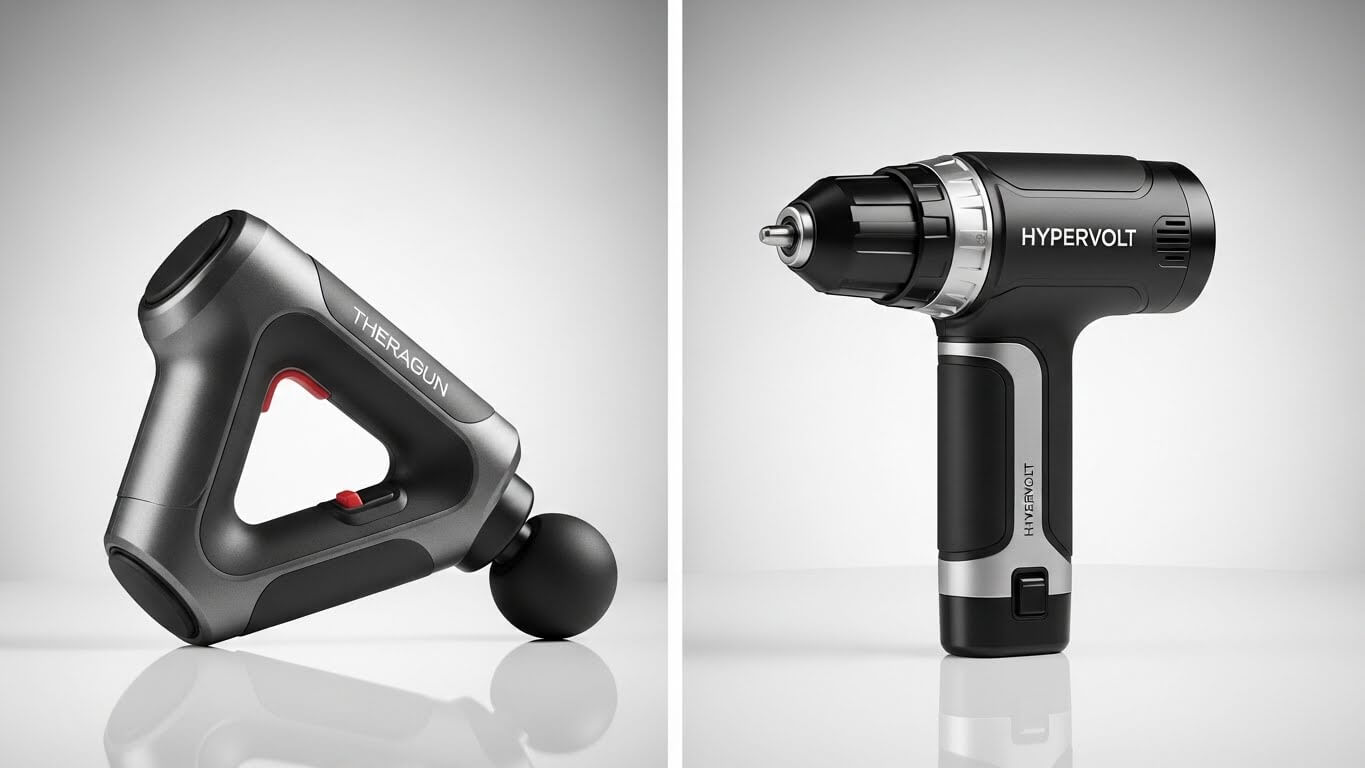
Both Theragun and Hypervolt represent the pinnacle of consumer percussion massage guns, delivering professional-grade deep tissue therapy that genuinely accelerates recovery, reduces muscle soreness, and improves athletic performance. Theragun, as the category innovator, provides unmatched power, deepest penetration (16mm amplitude), and superior ergonomics through its unique multi-grip design and rotating arm. The brand justifies premium pricing ($299-$599) through clinical validation, maximum performance, and professional-grade construction, making it ideal for elite athletes, professionals, and users needing absolute maximum deep tissue capability.
Hypervolt delivers 80-90% of Theragun’s performance at 70-80% of the cost ($199-$399), with superior quiet operation, more approachable intensity, and sleek modern design. The brand provides exceptional value for serious recreational athletes, regular fitness enthusiasts, and users wanting professional recovery tools without extreme investment.
For most athletes and active individuals training regularly but not professionally, Hypervolt delivers everything needed for effective recovery at better value. For professional athletes, physical therapy applications, or users with severe chronic tension requiring maximum power, Theragun justifies its premium through uncompromising performance.
The practical reality is both brands dramatically outperform budget alternatives and provide legitimate professional-quality percussion therapy. Your choice ultimately depends on whether you prioritize absolute maximum power and clinical-grade performance (Theragun) or excellent performance with quieter operation and better value (Hypervolt). Either decision brings effective, convenient deep tissue recovery into your routine, supporting your training, reducing soreness, and helping you perform at your best.