

Introduction
Leg fatigue, swelling, stiffness, and poor circulation affect millions of people worldwide. Office workers sit for hours, healthcare professionals and teachers stand all day, frequent travellers remain seated for long periods, and athletes push their muscles to the limit. Over time, these habits can cause fluid buildup in the legs, soreness, heaviness, and slower recovery. When circulation is inefficient, the legs often feel tired even after rest.
Compression leg massagers have become increasingly popular for home use because they provide relief from these issues. However, many buyers are confused by compression levels, especially when devices list 15 to 20 mmHg or 20 to 30 mmHg. Choosing the wrong pressure level can reduce the effectiveness of the device or even cause discomfort.
Compression therapy works by applying controlled pressure to the legs to help blood flow upward toward the heart. The correct pressure level can reduce swelling, accelerate recovery, and make the legs feel lighter. The wrong level, however, may feel uncomfortable or ineffective.
This guide explains the differences between 15–20 mmHg and 20–30 mmHg leg massagers, helping you choose the right one for your needs. You will also learn how to use compression safely, combine it with lifestyle habits for better results, avoid common mistakes, and identify the best products on the market.
In this article, you will learn:
- What compression levels mean
- Why compression strength affects circulation and recovery
- Detailed explanation of 15–20 mmHg compression
- Detailed explanation of 20–30 mmHg compression
- Step-by-step guide to choosing the correct level
- Lifestyle habits that improve results
- Common mistakes to avoid
- Recommended compression tools and leg massagers
- Conclusion
What Compression Level Means in Leg Massagers
Compression level refers to the amount of pressure a device applies to your legs. It is measured in millimetres of mercury (mmHg), the same unit used to measure blood pressure. A higher number indicates stronger pressure, while a lower number provides gentler support.
How Compression Massagers Work
Compression leg massagers use air chambers that inflate and deflate around the feet, calves, and sometimes thighs. This controlled squeezing action:
- Pushes blood upward toward the heart
- Prevents fluid from pooling in the lower legs
- Supports veins and improves circulation
- Aids in muscle recovery by delivering oxygen and removing metabolic waste
Compression Ranges and Their Uses
Compression levels are usually divided into ranges:
- Light compression (10–20 mmHg): Comfort, prevention, and mild swelling
- Moderate compression (20–30 mmHg): Recovery, circulation support, and moderate swelling
- Firm compression (30 mmHg+): Medical therapy, severe swelling, or chronic venous insufficiency
Choosing the correct compression range ensures the device works with your body instead of against it.
Why Compression Strength Matters
The effectiveness of compression therapy depends on using the correct pressure.
Benefits of Correct Compression
Proper compression can:
- Improve blood flow in the legs
- Reduce swelling in feet and calves
- Support vein function
- Speed up muscle recovery
- Reduce fatigue after standing or sitting
- Prevent stiffness after long travel
- Make relaxation more effective
Risks of Incorrect Compression
Using the wrong compression level can:
- Cause discomfort or pain
- Lead to tingling or numbness
- Produce poor results
- Causes skin irritation
- Make the device difficult to use regularly
Even a small difference in pressure, such as 15–20 mmHg versus 20–30 mmHg, can significantly affect results. Understanding these differences is crucial for safety and effectiveness.
Understanding 15–20 mmHg Compression
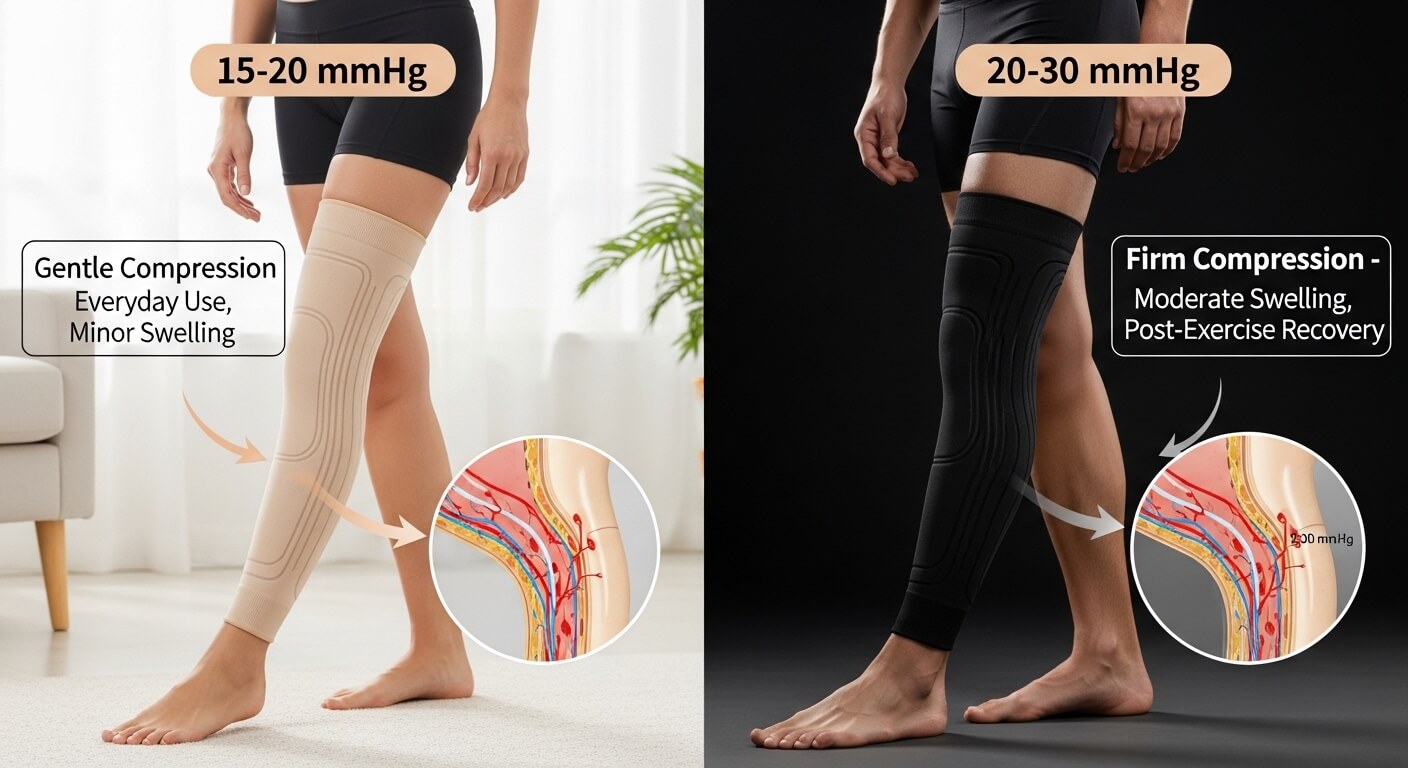
What 15–20 mmHg Does
15–20 mmHg is considered light to moderate compression. It applies gentle pressure that supports circulation without feeling too intense. It is ideal for general wellness and daily comfort.
This compression level helps:
- Support normal blood flow
- Reduce mild swelling
- Relieve tired legs
- Improve comfort after sitting or standing
- Prevent stiffness
- Support light muscle recovery
- Promote relaxation
Who Should Use 15–20 mmHg
- Office workers sitting long hours
- Teachers, nurses, and retail workers who stand all day
- Frequent travelers
- Older adults seeking gentle support
- People with mild leg fatigue or swelling
- Beginners to compression therapy
- People want daily relaxation
Benefits of 15–20 mmHg
- Comfortable for beginners
- Safe for frequent use
- Low risk of discomfort
- Provides daily circulation support
- Easy to tolerate during long sessions
Limitations of 15–20 mmHg
- May not be strong enough for severe swelling
- May not provide deep muscle compression
- Might feel too light for athletes
- Less effective for chronic circulation issues
Understanding 20–30 mmHg Compression
What 20–30 mmHg Does
20–30 mmHg is moderate to firm compression. It works deeper on muscles and veins, making it ideal for recovery and noticeable results.
It helps:
- Improve circulation more strongly
- Reduce moderate swelling
- Support vein function
- Accelerate muscle recovery
- Relieve heavy leg feeling
- Provide a deeper massage effect
Who Should Use 20–30 mmHg
- Athletes and fitness enthusiasts
- People standing all day with discomfort
- Individuals with frequent swelling
- People recovering from workouts
- Those with mild varicose vein discomfort
- Users who prefer stronger pressure
- People seeking noticeable results
Benefits of 20–30 mmHg
- Stronger circulation support
- Better swelling reduction
- Deeper muscle compression
- Faster recovery
- More noticeable relief
- Effective for short, intense sessions
Limitations of 20–30 mmHg
- May feel too strong for beginners
- Not ideal for sensitive users
- Requires an adjustment period
- Should be used carefully with medical conditions
Step-by-Step Guide to Choosing the Right Compression Level
Step 1: Identify Your Goal
- Relaxation
- Swelling reduction
- Muscle recovery
- Circulation support
- Daily comfort
Step 2: Consider Usage Frequency
- Daily use
- After work
- Post-exercise
- During travel
- Occasional use
Step 3: Assess Comfort Preference
- Gentle pressure → 15–20 mmHg
- Stronger pressure → 20–30 mmHg
Step 4: Consider Activity Level
- Low activity → lighter compression
- High activity → stronger compression
Step 5: Review Health Conditions
- Circulation issues → consult a healthcare professional
- Sensitive legs → start low
Step 6: Choose Adjustable Compression if Possible
Devices with multiple levels allow gradual adjustment, offering the safest and most flexible experience.
Lifestyle Habits That Improve Compression Results
Even the best leg massager works better when paired with healthy habits.
Move Regularly
Avoid sitting for long periods. Short walks improve circulation naturally.
Stay Hydrated
Water reduces fluid buildup and improves circulation.
Stretch Your Legs
Daily stretching keeps muscles flexible and reduces stiffness.
Elevate Your Legs
Raising the legs helps fluid move back toward the heart.
Use the Massager Consistently
Regular use produces better results than occasional use.
Wear Comfortable Shoes
Tight footwear restricts circulation and can worsen swelling.
Maintain Healthy Activity Levels
Exercise supports vein and muscle function, complementing compression therapy.
Maintain Healthy Weight
Excess weight increases pressure on veins and slows circulation.
Common Mistakes to Avoid
Choosing Too Strong Compression
Stronger pressure is not always better. Comfort matters for consistency.
Using Compression Without Medical Advice
People with vein or circulation issues should consult professionals.
Overusing the Device
Follow recommended session times to avoid discomfort.
Ignoring Discomfort
Pain, tingling, or numbness indicates excessive pressure.
Buying Non-Adjustable Devices
Adjustable compression ensures flexibility and safety.
Expecting Instant Results
Compression therapy works best with regular use over weeks.
Using the Wrong Size
Poor fit reduces effectiveness and comfort.
Ignoring Instructions
Correct use ensures safety and optimal results.
Recommended Compression Leg Massagers and Tools
1. Adjustable Air Compression Leg Massager
- What it does: Air chambers with multiple pressure settings
- Who it is for:People who want flexible compression levels
- Price range: Mid to high
2. 15–20 mmHg Compression Boots
- What it does: Gentle daily compression
- Who it is for: Beginners and daily users
- Price range: Low to mid
3. 20–30 mmHg Recovery Massager
- What it does: Stronger compression for recovery
- Who it is for: Athletes and active users
- Price range: Mid to high
4. Full Leg Compression System
- What it does: Covers feet, calves, and thighs
- Who it is for: People needing full leg support
- Price range: Mid to premium
5. Portable Compression Wraps
- What it does: Light compression in compact form
- Who it is for: Travelers
- Price range: Low to mid
6. Smart Multi-Level Compression Massager
- What it does: Several pressure levels for complete control
- Who it is for: People who want full flexibility
- Price range: Mid to premium
7. Heated Compression Leg Massager
- What it does: Combines heat with compression
- Who it is for: People with stiff muscles
- Price range: Mid
8. Professional Recovery Compression Boots
- What it does: Strong compression for recovery
- Who it is for: Athletes or heavy users
- Price range: High
Conclusion
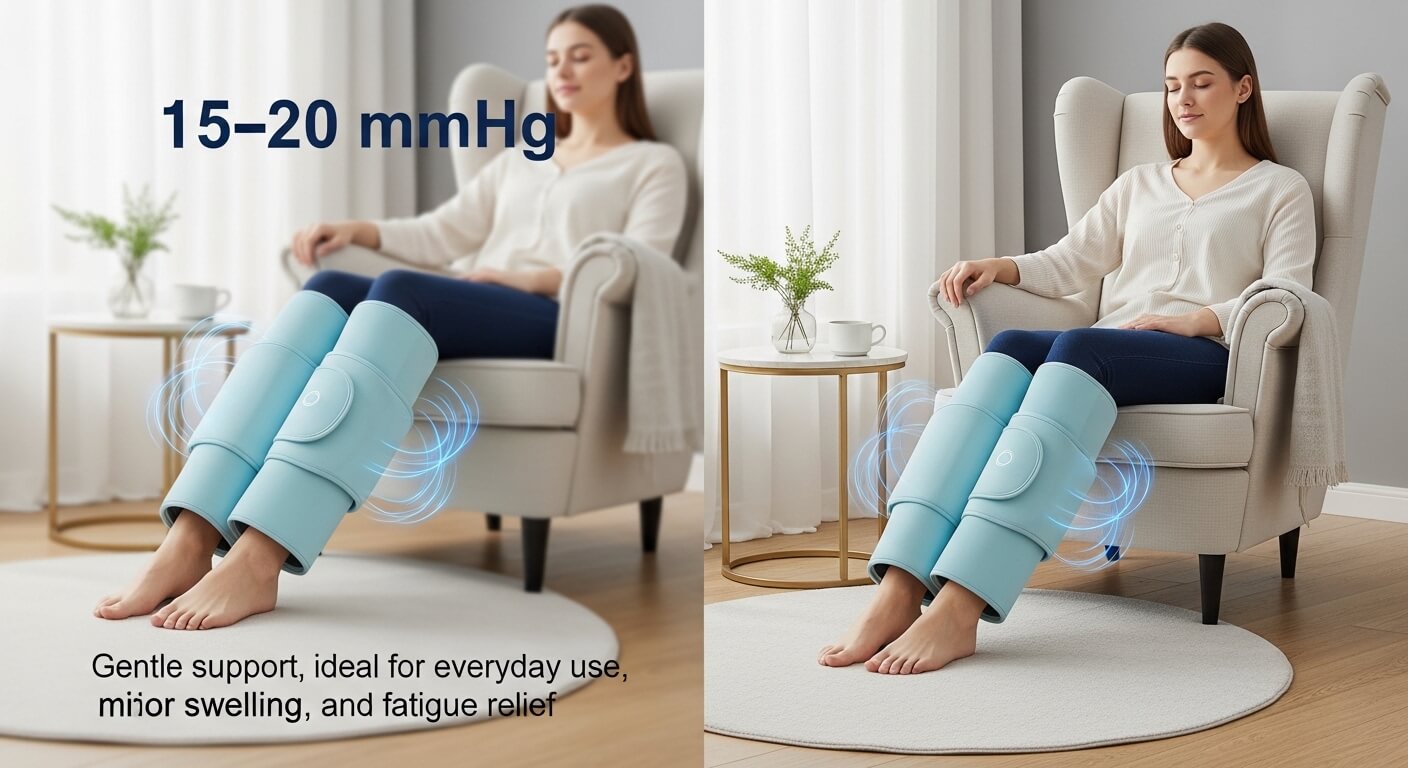
Choosing the correct compression level is essential for getting real benefits from a leg massager. The difference between 15–20 mmHg and 20–30 mmHg may seem minor, but it can drastically affect comfort, effectiveness, and recovery.
- Light compression is ideal for comfort, prevention, and daily use.
- Moderate compression is better for recovery, swelling, and noticeable support.
When you select the right level, your legs feel lighter, your muscles recover faster, and circulation improves naturally. Choosing the wrong level may result in discomfort or ineffective therapy.
Take time to evaluate your needs, lifestyle, and comfort. Choose adjustable devices when possible, use them consistently, and pair compression therapy with healthy habits.
Your legs carry you every day. Give them the care they deserve. Choose the right compression level and feel the difference.