

As more people look for a healthier, brighter smile without the expense or time commitment of professional dental procedures, at-home teeth whitening products have grown in popularity in recent years. Whitening strips and teeth-whitening kit are two of the most popular choices. Both promise whiter teeth, but they differ greatly in terms of cost, convenience, efficacy, and safety, so it’s important to know how each functions before choosing one.
In order to speed up the whitening process, teeth whitening equipment usually combines bleaching agents with LED lights or light-activated technologies. These gadgets replicate the technology used in dental procedures; however, they are frequently made for home usage. When utilised as part of a systematic program, they can produce more consistent and long-lasting outcomes. In order to provide customers greater control over the whitening process, many devices also include features like timers and intensity levels that can be adjusted.
Conversely, whitening strips are an easy and practical choice. Over the course of several treatments, thin, flexible strips coated with a gel based on peroxide are placed directly on the teeth, progressively whitening them. They are appealing to people seeking a quick and accessible way to brighten their smile because they are portable, simple to use, and reasonably priced. Strips work well for mild discolouration and maintaining a naturally white smile, though effects could take longer to show than with whitening kits.
The decision between whitening strips and teeth whitening devices is based on lifestyle, sensitivity, and personal objectives. Strips offer an affordable, low-maintenance option for progressive whitening, but devices may produce quicker, more noticeable effects. To choose the ideal solution for your needs, it is essential to comprehend the variations in cost, safety, convenience of use, and efficacy.
The main characteristics, advantages, and drawbacks of teeth-whitening kits and whitening strips will be discussed in this comparison. By the end, you’ll know exactly which choice best suits your budget, convenience needs, and smile goals, enabling you to get whiter teeth in a safe and efficient manner.
What Is a Teeth Whitening Device?
Modern at-home teeth-whitening kits are made to produce professional-quality teeth-whitening results without requiring a dental visit. To speed up the whitening process, these gadgets frequently combine LED or light-activated technology with bleaching substances like hydrogen or carbamide peroxide. Compared to conventional techniques like toothpaste or strips, these devices can yield faster and more obvious results by improving the chemical reaction of the whitening gel.
Teeth-whitening devices come in a variety of forms. While electronic whitening pens enable focused application of the whitening gel to particular teeth, LED whitening kits usually come with a mouth tray with built-in lighting. Additionally, some gadgets have rechargeable batteries, timers, or intensity settings that may be changed to suit certain demands.
For those looking for reliable, long-lasting whitening results, these devices are frequently recommended. Depending on the degree of discolouration and the kind of gadget utilised, many customers see noticeable improvements after just a few sessions. Additionally, when used in conjunction with proper oral hygiene practices, teeth-whitening equipment can help sustain benefits for longer.
Teeth whitening kits might cost a little more up front than less complicated options like whitening strips, but they do produce faster, more consistent results. Additionally, they must be used carefully to prevent gum irritation or sensitivity, especially for people with sensitive teeth.
In conclusion, teeth whitening equipment is perfect for people who want to whiten their teeth effectively and professionally at home. They work best for people who are prepared to meticulously follow directions in order to preserve both safety and efficacy, are willing to invest in a device, and desire rapid, apparent effects.
What Are Whitening Strips?
A common and practical at-home method for whitening teeth is using whitening strips. With regular usage, the peroxide-based gel coating on these thin, flexible strips sticks straight to the teeth, gradually eliminating surface stains and lightening discolouration. Whitening strips operate by chemical bleaching, which makes them easy to use and accessible for the majority of people, in contrast to systems that rely on LED or light activation.
There are many formulations and strengths of whitening strips. While some offer greater peroxide concentrations for more thorough whitening, others are made for everyday usage over brief periods of time. Usually lasting 10 to 30 minutes each session, treatment starts to show results after a few days. Many strips can be applied covertly at home, at work, or while travelling because they are clear or almost invisible.
The main benefits of whitening strips are their price and ease of usage. They are perfect for those seeking a rapid, low-maintenance whitening procedure because they don’t require any additional tools or power sources. Additionally, strips are portable, which makes them useful for sporadic use or touch-ups.
Whitening strips do have certain drawbacks, though. Compared to teeth whitening kits, they may not cover all parts of the teeth equally, especially the rear molars, and the benefits may be slower. Stronger peroxide formulations may cause mild irritation or transient discomfort for users with sensitive teeth or gums.
In conclusion, whitening strips are an efficient and reasonably priced way to gradually whiten teeth. They are ideal for anyone looking for mobility, ease of use, and light stain removal without the more expensive or complicated teeth-whitening equipment. A whitening gadget might be more suitable for people seeking quick, consistent results.
Efficiency and Whitening Outcomes
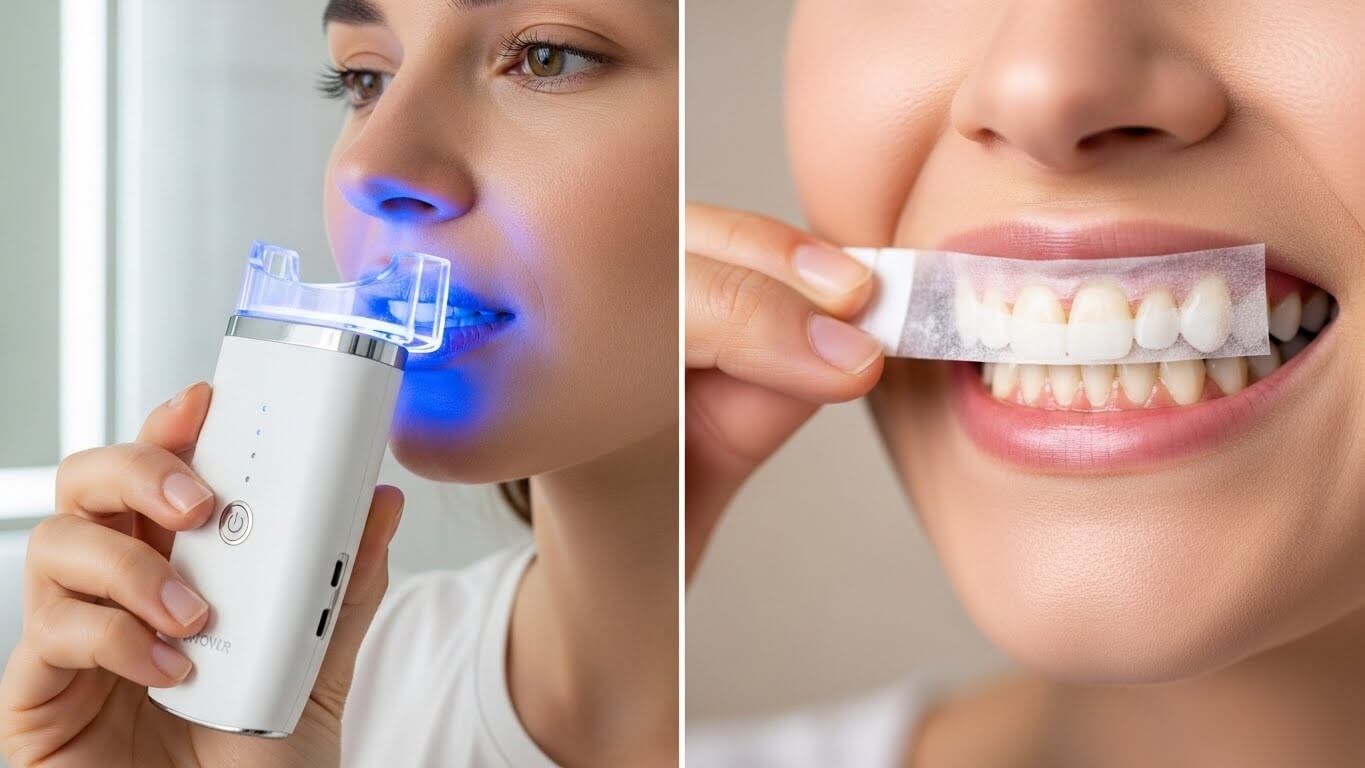
Effectiveness and outcomes are frequently the deciding considerations for consumers when comparing teeth-whitening devices and whitening strips. Although both techniques can effectively lighten teeth, they vary in terms of coverage, speed, and intensity.
For quicker, more obvious results, teeth-whitening technologies are typically more effective. These gadgets speed up the whitening process and more effectively remove stains by combining bleaching ingredients with LED or light-activated technology. In just a few sessions, many customers report noticeable improvements, with all teeth looking whiter and more consistent. Devices work particularly well for people who want long-lasting results, tenacious stains, or mild to severe discolouration.
Conversely, whitening strips offer a gradual whitening effect. After one to two weeks of regular use, the peroxide gel on the strips usually starts to show results. Strips work well for surface-level stains brought on by tobacco, tea, or coffee, but they might not work as well for deeper or uneven discolouration. Additionally, coverage may be restricted since strips might not reach the rear teeth or apply evenly.
The length of the results is another factor. When combined with proper oral hygiene, teeth-whitening technologies typically last longer. Although whitening strips can produce observable results, more regular touch-ups may be necessary to maintain brightness.
In conclusion, teeth whitening kits are usually the better option if the objective is rapid, consistent, and long-lasting whitening. For slight discolouration and occasional use, whitening strips provide a practical, economical, and progressive remedy. Budget, time commitment, and intended outcomes all play a role in selecting the best approach.
Convenience and Usability
Teeth whitening gadgets and whitening strips offer extremely different experiences in terms of convenience and ease of use, which may affect which choice is ideal for you.
More setup is frequently needed with teeth-whitening equipment. Usually, users must apply the whitening gel, properly fit the mouth tray or LED gadget, and adhere to a set session. Depending on the device, sessions can last anywhere from 10 to 30 minutes. For best results, some users may need to repeat treatments multiple times a week. These gadgets are a little more complicated, but once you get the hang of them, they’re easy to use. They frequently have timers, intensity settings that can be adjusted, and convenient rechargeable batteries. For those who value efficacy and are prepared to spend a little time each session, devices are perfect.
In contrast, whitening strips are very easy to use and need little preparation. Peeling the strips, applying them to the teeth, and leaving them in place for the suggested duration—typically 10 to 30 minutes—is all that is required. Strips are a terrific option for short whitening sessions at home or while travelling because they are inconspicuous, portable, and simple to use anywhere. They are also simpler to fit into hectic schedules because they are self-contained and don’t require any additional equipment.
In conclusion, teeth whitening devices offer a more regulated and customizable whitening experience that can produce faster and longer-lasting results, while whitening strips excel in simplicity, portability, and quick application. The decision is based on your preference for optimum whitening efficacy or simplicity of usage.
Sensitivity and Safety Issues
Safety and possible sensitivity are important considerations when deciding between teeth-whitening equipment and whitening strips. Both techniques require bleaching agents, which, if handled improperly, can occasionally result in momentary discomfort.
Since many kits come with timers, dosage instructions, and adjustable intensity levels, teeth whitening gadgets typically provide regulated application. This measure lessens the possibility of excessive exposure to whitening agents, which may cause gum inflammation or tooth sensitivity. However, individuals with sensitive teeth may experience tingling or minor discomfort, particularly at the beginning of treatments, because devices frequently employ greater doses of peroxide. These dangers can be reduced by closely adhering to instructions and minimising the frequency of sessions.
Because whitening strips utilise less peroxide, they are typically kinder to teeth and gums. Sensitivity can still happen, especially after extended use or when strips are applied incorrectly. One frequent problem is that some teeth may not be completely covered by the strips, which could result in uneven teeth whitening or unintentional gum contact that could cause mild irritation.
Because teeth whitening devices use stronger bleaching agents, there is a tiny increased risk of sensitivity, even though they may produce faster and more consistent results. Although benefits might take longer to show, whitening strips are a safer option for people with sensitive teeth because they are more convenient and gentler. Selecting the best alternative necessitates striking a balance between comfort, safety, and intended efficacy.
Price and Long-Term Worth
Cost and long-term benefit are important considerations when comparing teeth whitening equipment and whitening strips to determine which is best for you.
The initial cost of teeth-whitening products is usually higher. The LED gadget, mouth trays, whitening gel, and other accessories are frequently included in kits, which might increase the initial cost. They do, however, typically produce benefits that endure longer, which lessens the need for frequent repurchases. For those looking for consistent whitening over time, high-quality devices are a worthy investment because they are also long-lasting, frequently lasting months or even years with proper care. Additionally, users may spend less overall on repeated treatments because effects materialise more quickly.
In contrast, whitening strips are widely accessible and reasonably priced. Budget-conscious consumers can afford single-use or multi-week packs because they are substantially less expensive than devices. Strips, however, often provide moderate whitening, and maintaining results can necessitate repeated purchases, which might mount up over time. They are perfect for people who desire easy, short-term whitening or sporadic touch-ups without having to make a bigger financial commitment.
In conclusion, despite their greater initial cost, teeth whitening equipment provides better long-term value because of its durability, quicker outcomes, and prolonged whitening effects. Whitening strips are an inexpensive and practical choice, but if consistent use is required to sustain effects, repeated purchases may raise overall costs. Budget, usage frequency, and desired whitening speed all play a role in the decision between the two.
Pros And Cons
In order to assist consumers in making an informed decision, a comparison of teeth whitening equipment and whitening strips outlines the advantages and disadvantages of each option.
Teeth Whitening Devices
Pros
- Faster, more obvious results: Whitening is accelerated by LED or light-activated technology.
- Uniform coverage: Devices frequently produce uniform outcomes for every tooth.
- Long-lasting effects: When used properly, whitening results might endure for several months.
- Customizable settings: For safety and control, a lot of devices provide timers or intensity adjustments.
Cons:
- Higher initial cost: Compared to strips, kits are often more costly.
- Longer treatment sessions: Ten to thirty minutes may be allotted to each session.
- Potential sensitivity: Temporary discomfort may result from higher peroxide concentrations.
- A little more difficult: Careful attention must be given to gadget maintenance and setup.
Whitening Strips
Pros:
- Accessible and reasonably priced: They are perfect for informal use due to their lower cost.
- Convenient and portable: No additional equipment is needed to apply it anywhere.
- Softer on teeth: There is less chance of sensitivity when peroxide concentrations are lower.
Cons:
- Slower results: One to two weeks or more may be needed for gradual whitening.
- Uneven coverage: Not every tooth will be equally covered by the strips.
Verdict: While whitening strips are the greatest option for convenience, cost, and gradual results, teeth whitening devices are perfect for individuals looking for quick, consistent, and long-lasting whitening. Both approaches work well, but the decision is based on budget, sensitivity issues, and desired pace.
Final Verdict
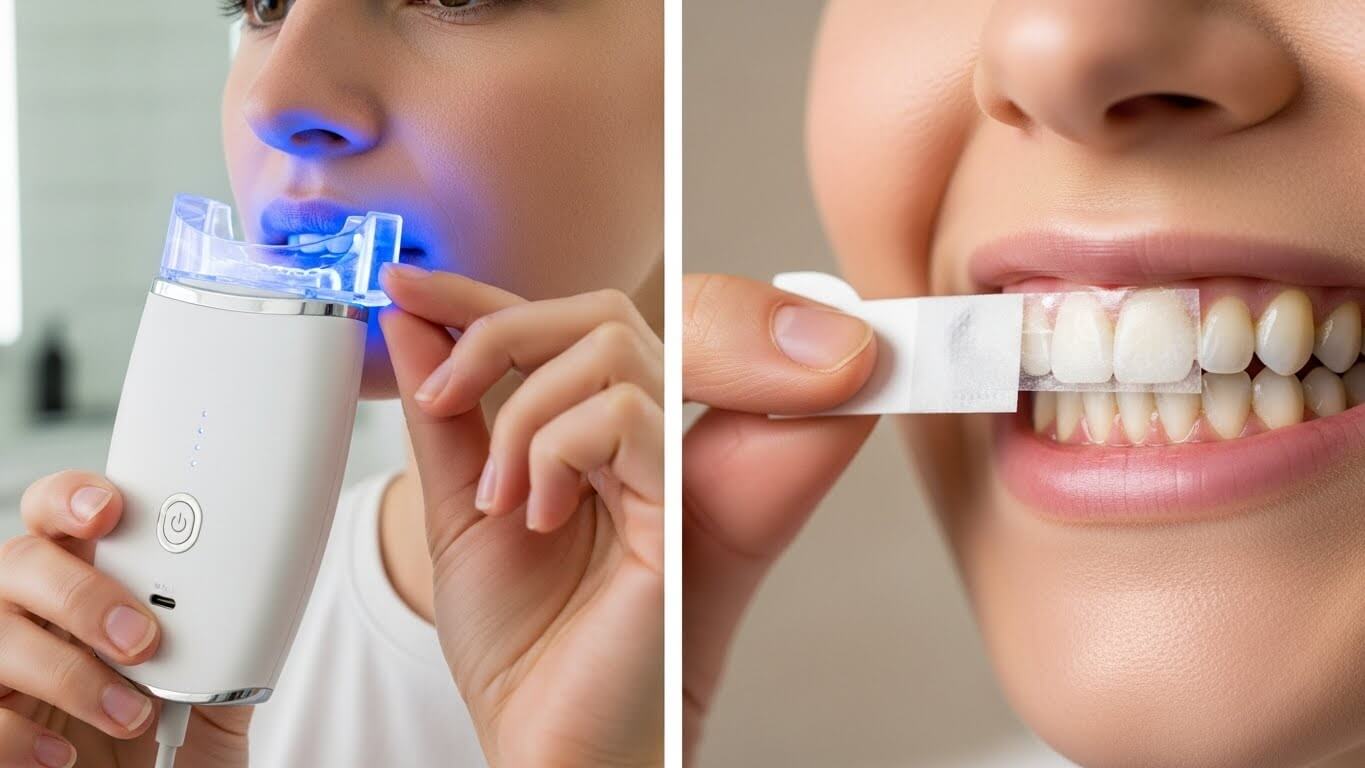
Effectiveness, affordability, ease of use, and sensitivity issues should all be taken into consideration when choosing between teeth-whitening kit and whitening strips. Although they serve slightly different purposes, both solutions can help generate a brighter smile.
Teeth whitening kits are perfect for people looking for quick, expert-quality results. Devices offer more consistent whitening, especially for moderate to severe stains, thanks to their LED or light-activated technology and larger concentrations of bleaching ingredients. They are an excellent investment for people who desire consistent results over time or who frequently whiten their teeth because they are also longer-lasting. The results are typically more striking and long-lasting, but they do come with a higher initial cost and a little more work per session.
On the other hand, whitening strips are an affordable and practical choice. They are perfect for mild discolouration or sporadic touch-ups because they are simple to use, portable, and gentle on sensitive teeth. Strips provide a straightforward and affordable option for anyone looking to whiten without committing to a device or greater cost, even though results are more gradual and may require regular usage to maintain.
If you are comfortable with a higher initial investment and you prioritise immediate, consistent, and long-lasting effects, go with teeth whitening equipment. If you want inexpensive, simple to use, and mild whitening for little stains, go for whitening strips. In the end, both approaches work well, so your choice should take into account your budget, convenience, and desired outcomes to ensure a whiter, brighter smile safely and effectively.