

Muscle pain, tension, and chronic aches affect nearly everyone at some point—whether from intense workouts, long hours hunched over a desk, sleeping awkwardly, or simply the everyday stresses our bodies endure. Heat therapy has been a trusted remedy for centuries, providing soothing relief that relaxes tight muscles, increases blood flow, and eases discomfort.
Traditional heating pads have served this purpose reliably for generations, offering simple, affordable warmth wherever pain strikes. Recently, wireless heated massage pillows have emerged as high-tech alternatives, combining therapeutic heat with automated massage, rechargeable batteries, and ergonomic designs. But do these modern devices justify their significantly higher price tags, or do simple heating pads remain the smarter choice for most people? Which provides better pain relief, and for what types of discomfort?
In this comprehensive guide, we’ll examine how each device works, compare their effectiveness across various pain conditions, evaluate convenience and value, and help you determine which heat therapy solution best serves your specific pain relief needs, lifestyle, and budget.
Understanding Heat Therapy and Pain Relief
Why Heat Works for Pain
Heat therapy, also called thermotherapy, is one of the oldest and most effective non-pharmaceutical pain treatments. It works through several well-documented mechanisms. Vasodilation occurs as heat causes blood vessels to expand, increasing blood flow to the affected area. This enhanced circulation delivers oxygen and nutrients that support healing while removing metabolic waste products like lactic acid that contribute to soreness.
Muscle relaxation happens as heat raises tissue temperature, making muscles more pliable and reducing spasm. The warmth triggers sensory receptors that signal muscles to release sustained contractions. Pain modulation works through the gate control theory; heat stimulates sensory nerves, effectively closing the “gate” to pain signals traveling to the brain and providing immediate relief.
Reduced stiffness results from heat improving the elasticity of collagen fibers in tendons and ligaments, making joints more flexible and movements easier. Endorphin release is triggered as the body responds to sustained warmth by producing natural pain-relieving chemicals. Psychological comfort shouldn’t be underestimated—the soothing sensation of warmth provides emotional comfort that enhances the physical benefits.
Best Uses for Heat Therapy
Heat therapy excels for specific conditions and situations. Chronic muscle pain and tension respond excellently to regular heat application, particularly for persistent neck, shoulder, or back discomfort. Muscle stiffness and soreness benefit from heat’s ability to improve tissue flexibility and reduce tightness.
Arthritis pain and joint stiffness are significantly relieved by sustained warmth, with many arthritis sufferers relying on daily heat therapy. Menstrual cramps respond remarkably well to abdominal heat application. Stress-related muscle tension releases as heat promotes overall relaxation. Pre-exercise warming prepares muscles for activity and may reduce injury risk.
Important caveat: heat is contraindicated for acute injuries within the first 48-72 hours, active inflammation with swelling and redness, open wounds or skin infections, and areas with reduced sensation. For acute injuries, ice therapy is appropriate—heat comes later during recovery.
The Evolution of Heat Therapy Devices
Heating technology has evolved significantly from hot water bottles and heated stones to electric heating pads in the mid-20th century, moist heat pads in recent decades, and now wireless heated massage devices combining multiple therapies. Each generation addresses limitations of predecessors while introducing new capabilities and complexities.
The question for consumers is whether newer technologies provide meaningfully better results or whether simpler, proven options remain sufficient for most needs.
Traditional Heating Pads: Details
What Are Traditional Heating Pads?
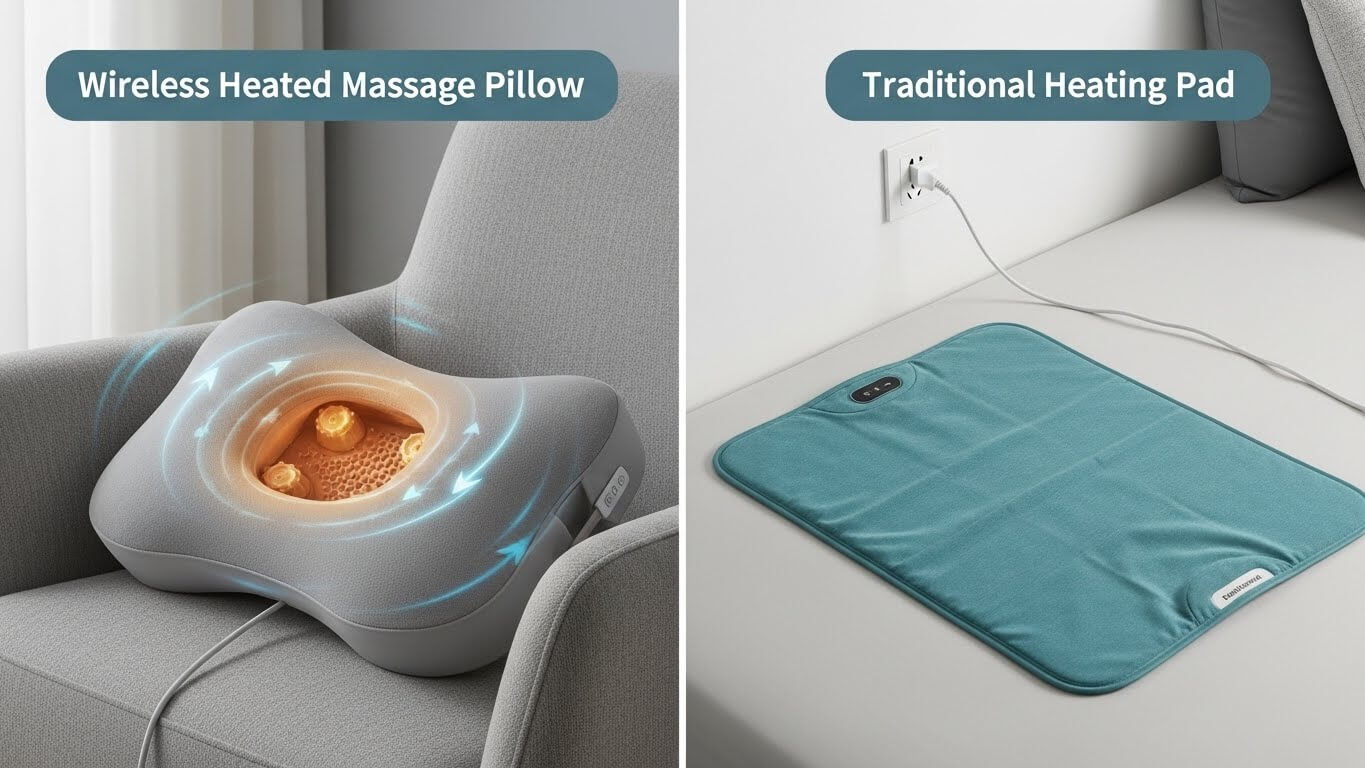
Traditional heating pads are flat, flexible devices containing electrical heating elements covered in soft fabric. They plug into standard wall outlets and provide consistent, controllable heat. Heating pads have been household staples for decades, trusted by millions for reliable pain relief.
Modern heating pads come in various types including standard dry heat pads with electric coils providing direct heat ($15-$40), moist heat pads using special materials that add humidity to the heat for deeper penetration ($25-$50), extra-large pads covering larger areas like the full back ($30-$60), and flexible wraps designed for joints or limbs with securing straps ($20-$45).
Most pads feature multiple heat settings (typically 3-6 levels), auto-shut-off timers for safety (usually 2 hours), and washable covers for hygiene.
How Heating Pads Work
The mechanism is straightforward and reliable. Electrical current flows through internal heating elements, generating warmth that radiates through the fabric covering. You place the pad on or under the painful area, select your desired temperature, and relax as heat penetrates the tissue.
The consistent power from wall outlets maintains stable temperature throughout treatment. Modern pads use microplush or fleece fabrics that feel soft against skin while efficiently transferring heat. Safety features including auto-shut-off prevent overheating and reduce fire risk if you fall asleep.
Therapeutic temperature ranges typically span from approximately 110°F (low setting) to 150°F (high setting), with mid-range around 130°F being most common for extended use. The controllable heat allows customization based on personal comfort and therapeutic needs.
Types and Price Ranges
Budget heating pads ($15-$25) offer basic functionality with 2-3 heat settings, standard size (12″ x 15″), simple fabric covers, and basic auto-shut-off. These work adequately for occasional use despite limited features.
Mid-range pads ($25-$50) provide 4-6 heat settings, larger sizes or specialized shapes, moist heat capability, better fabric quality, and longer warranties. This range offers the best value for regular users.
Premium heating pads ($50-$80) feature extra-large sizes, advanced moist heat technology, rapid heating, ultra-soft premium fabrics, digital controllers, and extended warranties. The additional cost rarely justifies the modest performance improvement for most users.
Specialty pads including joint wraps, neck/shoulder specific designs, and full-body pads range from $20-$60 depending on size and features.
Effectiveness and Benefits
Traditional heating pads deliver proven, reliable benefits. Consistent, stable heat maintains therapeutic temperature throughout sessions without fluctuation. The simple operation requires no learning curve—plug in, select heat, apply. Affordable pricing makes effective heat therapy accessible to everyone at $15-$50.
Durability is exceptional; quality pads last 5-10+ years with proper care, providing outstanding long-term value. Moist heat options available on many modern pads penetrate deeper than dry heat, enhancing effectiveness for muscle pain. Flexibility allows conforming to various body contours for good contact.
Safety features, including UL listing, auto-shut-off, and overheat protection, provide peace of mind. Wide availability means easy purchase at pharmacies, big-box stores, and online retailers. The proven track record of decades of use demonstrates reliability.
For straightforward heat therapy without complications, traditional pads excel.
Limitations
Heating pads have notable limitations despite their strengths. They require nearby electrical outlets, limiting portability and positioning options. Power cords restrict movement—you’re tethered to the outlet. The devices provide only heat without massage or other therapeutic modalities.
Limited ergonomic design means flat pads don’t contour to curved body areas optimally without manual positioning. Maintaining consistent contact during movement or shifting positions can be challenging. Some users find the tether restrictive, particularly for neck or shoulder pain where movement is desirable.
The single-function nature means you need separate devices for massage if desired. While not significant drawbacks for heat therapy specifically, these limitations create opportunities for enhanced alternatives.
Wireless Heated Massage Pillows: Details
What Are Heated Massage Pillows?
Wireless heated massage pillows combine heat therapy with mechanical massage in portable, rechargeable devices. They typically feature ergonomic designs conforming to neck, shoulder, or back contours, rechargeable batteries for cordless operation, rotating massage nodes for shiatsu-style massage, infrared or resistive heating elements, and remote controls or button operation.
These devices range from $40 for basic models to $150+ for premium options with advanced features. Most effective models cost $60-$120.
How Heated Massage Pillows Work
The mechanism is more complex than traditional pads. Rechargeable lithium-ion batteries power the device for 1.5-3 hours per charge. Electric motors drive rotating massage nodes that press and knead muscles in circular motions. Heating elements, either infrared or resistive, warm the treatment area to approximately 100-110°F.
The combined therapy provides simultaneous heat and massage; warmth relaxes muscles while massage mechanically works out tension and knots. Ergonomic shapes with straps secure the device to your body, allowing hands-free use while sitting, lying down, or even moving around.
Most devices offer adjustable features, including massage intensity (typically 2-3 levels), heat on/off or temperature control, and auto-shut-off timers (usually 15-20 minutes). Some include vibration functions, multiple massage modes, and even infrared therapy, claiming deeper heat penetration.
Types and Price Ranges
Budget heated massage pillows ($40-$70) provide basic massage and heat with limited features, shorter battery life (1-2 hours), fewer intensity settings, and simpler construction. These suit occasional users or those testing the concept.
Mid-range devices ($70-$120) offer better massage mechanisms with stronger motors, longer battery life (2-3 hours), adjustable heat and massage intensity, ergonomic designs for better contact, and improved durability. This range provides optimal value for regular users.
Premium heated massage pillows ($120-$200+) feature advanced massage modes and patterns, superior battery technology, quieter operation, premium materials, longer warranties, and sometimes smart features like app connectivity. Professional-grade devices exceed typical home user needs.
Specialty designs target specific areas including neck/shoulder pillows, back support cushions, and leg/calf massagers with heat, ranging from $50-$150.
Effectiveness and Benefits
Heated massage pillows provide compelling advantages for specific uses. The dual therapy of combined heat and massage addresses pain through multiple mechanisms simultaneously—heat relaxes while massage works muscles mechanically. Portability from wireless operation allows use anywhere without outlet constraints; in bed, on the couch, at work, or travelling.
Ergonomic designs contour to curved body areas like neck and shoulders better than flat pads. Hands-free operation via securing straps allows multitasking during treatment. The massage component provides active muscle work that passive heat alone cannot achieve.
Versatility in using different body areas, neck, shoulders, back, legs, or feet, provides flexibility. Modern convenience appeals to tech-oriented users who appreciate rechargeable, portable solutions. Users report significant relief for neck tension, shoulder tightness, and upper back pain where both heat and massage combine effectively.
Limitations and Drawbacks
Despite their advantages, heated massage pillows have significant limitations. High cost at 2-5 times traditional heating pad prices creates a substantial barrier. Battery dependence means devices become useless when discharged until recharged. Battery degradation over 2-3 years reduces runtime and eventually necessitates device replacement.
Limited heat consistency results as batteries drain; temperature may decrease during sessions. The massage quality doesn’t match dedicated massage devices or professional massage, with limited pressure and somewhat generic patterns. Complexity creates more failure points; motors, batteries, and electronics can malfunction.
Noise from massage motors detracts from relaxation for some users. A bulkier design compared to flat heating pads reduces storage convenience. Some users find the intense massage uncomfortable, or the automatic nodes hit wrong spots. The devices require regular charging, adding maintenance that simple plug-in pads don’t need.
Heat intensity is often lower than traditional heating pads can achieve, potentially reducing therapeutic effectiveness for users needing stronger heat. Lifespan is typically shorter (2-4 years) than traditional pads (5-10+ years) due to battery and motor components.
Head-to-Head Comparison
Heat Therapy Effectiveness
Winner: Traditional Heating Pads (slightly)
For pure heat therapy effectiveness, traditional heating pads generally deliver superior results. They achieve and maintain higher temperatures consistently throughout treatment due to continuous wall power. The stable heat penetrates effectively without fluctuation as batteries drain.
Moist heat pads available in traditional options penetrate even deeper, enhancing effectiveness for muscle pain. Heated massage pillows provide adequate heat but typically at lower maximum temperatures (100-110°F) versus heating pads’ potential 130-150°F range.
For conditions requiring strong, sustained heat, like chronic muscle pain or arthritis, traditional pads maintain a slight advantage.
Overall Pain Relief (Heat + Massage)
Winner: Heated Massage Pillows (for appropriate conditions)
When considering combined therapy, heated massage pillows excel for specific pain types. The simultaneous heat and massage address tension and muscle knots more comprehensively than heat alone. For neck tension, shoulder tightness, and upper back pain where muscle work enhances heat benefits, the combination proves superior.
Trigger point release and myofascial tension respond better to massage plus heat than heat alone. Users with muscle-based pain from tension or overuse often experience meaningfully better relief from the dual approach.
However, for conditions primarily requiring heat; arthritis, menstrual cramps, or general warmth for comfort, the massage component adds little value, making traditional pads equally effective at lower cost.
Convenience and Portability
Winner: Heated Massage Pillows
Wireless operation provides genuine freedom—use anywhere without outlet constraints. The portability enables use at work, while traveling, or in different rooms without cord limitations. Hands-free operation via straps allows moving around during treatment.
Traditional pads’ cord tether restricts positioning and movement significantly. While not a major issue for stationary use, it’s a real limitation for active users or those wanting treatment mobility.
The convenience advantage is meaningful for users who value flexibility over pure heat intensity.
Ease of Use
Winner: Traditional Heating Pads
Traditional pads are foolproof—plug in, select heat level, apply. No charging to remember, no battery management, no complexity. They work consistently every time without preparation.
Heated massage pillows require remembering to charge, managing battery levels, selecting heat and massage settings, and positioning ergonomic shapes correctly. While not difficult, it’s objectively more complex than plug-and-use heating pads.
For users valuing simplicity and reliability, traditional pads win clearly.
Cost and Value
Winner: Traditional Heating Pads (significantly)
At $20-$50 versus $60-$150 for comparable models, traditional heating pads cost 1/3 to 1/4 as much. The long lifespan (5-10+ years) versus heated pillows’ 2-4 years widens the value gap further.
For pure heat therapy, traditional pads provide exceptional value. Heated massage pillows justify higher cost only if the massage component meaningfully enhances your pain relief—a determination requiring personal experience to make confidently.
For budget-conscious users or those uncertain about benefits of added massage, traditional pads offer no-regret value.
Versatility and Applications
Winner: Traditional Heating Pads
Traditional pads work for any body area—back, abdomen, legs, feet, joints, or anywhere heat helps. Their flexible, flat design adapts to various uses without specialized shapes.
Heated massage pillows work best for specific areas matching their ergonomic design—typically neck, shoulders, and upper back. Using them on flat areas like abdomen or lower back is possible but less optimal than devices designed for those areas.
For whole-body pain relief versatility, traditional pads serve more situations effectively.
Durability and Longevity
Winner: Traditional Heating Pads
Simple heating pads with basic electrical components last 5-10+ years regularly. The straightforward design has minimal failure points. Many users report heating pads lasting decades with proper care.
Heated massage pillows contain batteries degrading within 2-3 years and motors that can fail. Electronics are more vulnerable to malfunction. Expected lifespan of 2-4 years means replacement costs recurring more frequently.
Over a decade, you might spend $30-$60 replacing traditional pads versus $120-$300 replacing heated massage pillows 2-3 times.
Who Should Choose Each Option
Choose Traditional Heating Pads If…
Traditional heating pads suit several user profiles perfectly. Budget-conscious individuals spending $20-$50 get proven pain relief without significant investment. People needing strong, consistent heat for conditions like arthritis or chronic muscle pain benefit from higher achievable temperatures.
Users valuing simplicity and reliability prefer plug-and-use operation without battery management. Those treating various body areas need versatile, flat designs that work anywhere. People wanting long-lasting devices appreciate 5-10+ year lifespans with minimal maintenance.
Individuals primarily needing heat therapy without massage find no value in added features. Users comfortable with corded devices for stationary use don’t mind outlet proximity. Those wanting moist heat options specifically benefit from pads offering this feature.
Anyone uncertain about investing significantly in pain relief should start with affordable, proven heating pads.
Choose Heated Massage Pillows If…
Heated massage pillows appeal to different priorities. People with neck and shoulder tension benefit most from combined heat and massage targeting these specific areas. Users valuing portability and cordless freedom need wireless operation for flexibility.
Those experiencing muscle knots and trigger points benefit from massage plus heat addressing tension comprehensively. Individuals who multitask during treatment appreciate hands-free secured designs. Users wanting modern, tech-forward solutions enjoy rechargeable, feature-rich devices.
People willing to invest $60-$150 for enhanced features and potential superior relief justify higher costs. Those who’ve tried heat-only therapy without adequate results may discover massage addition provides missing therapeutic element.
Travelers or office workers benefit from portable devices usable anywhere. Users comfortable managing charging and battery maintenance handle the added complexity.
Some pain sufferers strategically maintain both devices. Traditional heating pads handle abdominal heat for menstrual cramps, lower back heat for general soreness, long sessions where outlet access isn’t limiting, and backup when massage pillows need charging.
Heated massage pillows provide targeted neck/shoulder relief after workdays, portable treatment at work or while traveling, and comprehensive therapy when both heat and massage benefit the condition.
This combination maximizes therapeutic options while ensuring heat therapy availability regardless of battery status or location.
Best Practices for Safe Heat Therapy
Using Heating Pads Safely
Select appropriate temperature starting with low-to-medium settings, gradually increasing only if needed for comfort. Typical treatment duration is 15-30 minutes, up to 2 hours maximum with auto-shut-off protection. Place a thin cloth barrier between pad and skin for sensitive areas or prolonged use.
Never sleep on heating pads set to high temperature to avoid burns. Check skin periodically during treatment for excessive redness or discomfort. Ensure cords are positioned safely without creating trip hazards. Clean washable covers regularly per manufacturer instructions.
Inspect pads periodically for damaged cords, exposed heating elements, or frayed fabric indicating replacement need. Replace pads showing any electrical damage immediately.
Using Heated Massage Pillows Safely
Charge fully before first use and maintain regular charging habits. Start with gentle massage and heat settings, increasing gradually as you determine comfortable levels. Limit sessions to device-recommended durations (typically 15-20 minutes) to avoid overuse.
Position devices correctly with straps securing but not constricting circulation. Don’t use during sleep or while driving despite hands-free capability. Allow devices to cool between sessions if using multiple times consecutively.
Store in cool, dry places protecting from moisture that can damage electronics. Clean according to manufacturer instructions, typically wiping surfaces with slightly damp cloth. Replace batteries or entire unit when battery life degrades significantly.
Heat Therapy Contraindications
Never use heat therapy on acute injuries within 48-72 hours—ice is appropriate initially. Avoid heat on areas with active inflammation, swelling, or infection. People with diabetes, neuropathy, or reduced sensation should use extreme caution as they may not feel burns developing.
Pregnant women should consult healthcare providers before using heat on abdomen or lower back. Individuals with certain conditions including multiple sclerosis (heat sensitive), dermatitis, vascular disease, or bleeding disorders should seek medical guidance.
Never use heat therapy over topical analgesics (like capsaicin cream) which can cause intense burning. Don’t apply to areas with impaired circulation or recent surgical sites without medical clearance.
Frequently Asked Questions
Can I use these devices every day?
Yes, daily use is generally safe when following recommended session durations (15-30 minutes) and using appropriate temperatures. Listen to your body—if skin becomes irritated or pain worsens, reduce frequency. Consult healthcare providers if you need daily heat therapy for chronic conditions.
Which is better for menstrual cramps?
Traditional heating pads generally work better for menstrual cramps. The flat design fits naturally on the abdomen, achieving higher temperatures than most massage pillows. The massage function adds little value for this specific condition. Cordless pillows offer portability advantage if you want to move around during cramping.
Do heated massage pillows work as well as professional massage?
No. While they provide pleasant, beneficial massage, they cannot match professional therapists’ skill, technique variety, pressure adjustment, or targeted treatment. They’re best for routine muscle maintenance and minor tension rather than serious muscle problems requiring professional intervention.
How long do batteries last in massage pillows?
Initial battery life provides 1.5-3 hours per charge depending on model and usage intensity. Battery capacity degrades over 2-3 years, eventually requiring more frequent charging or device replacement when runtime becomes impractically short.
Are moist heat pads better than dry heat?
Moist heat generally penetrates deeper than dry heat, potentially providing more effective pain relief for muscle issues. However, individual preferences vary—some people find dry heat more comfortable. Quality evidence directly comparing them is limited, but many physical therapists recommend moist heat for deep muscle pain.
Can these devices cause burns?
Yes, if used improperly. Burns occur from excessive temperature, prolonged contact without checking skin, use during sleep at high settings, or use by people with reduced sensation who don’t feel burns developing. Following safety guidelines and using auto-shut-off features minimizes burn risk significantly.
Conclusion
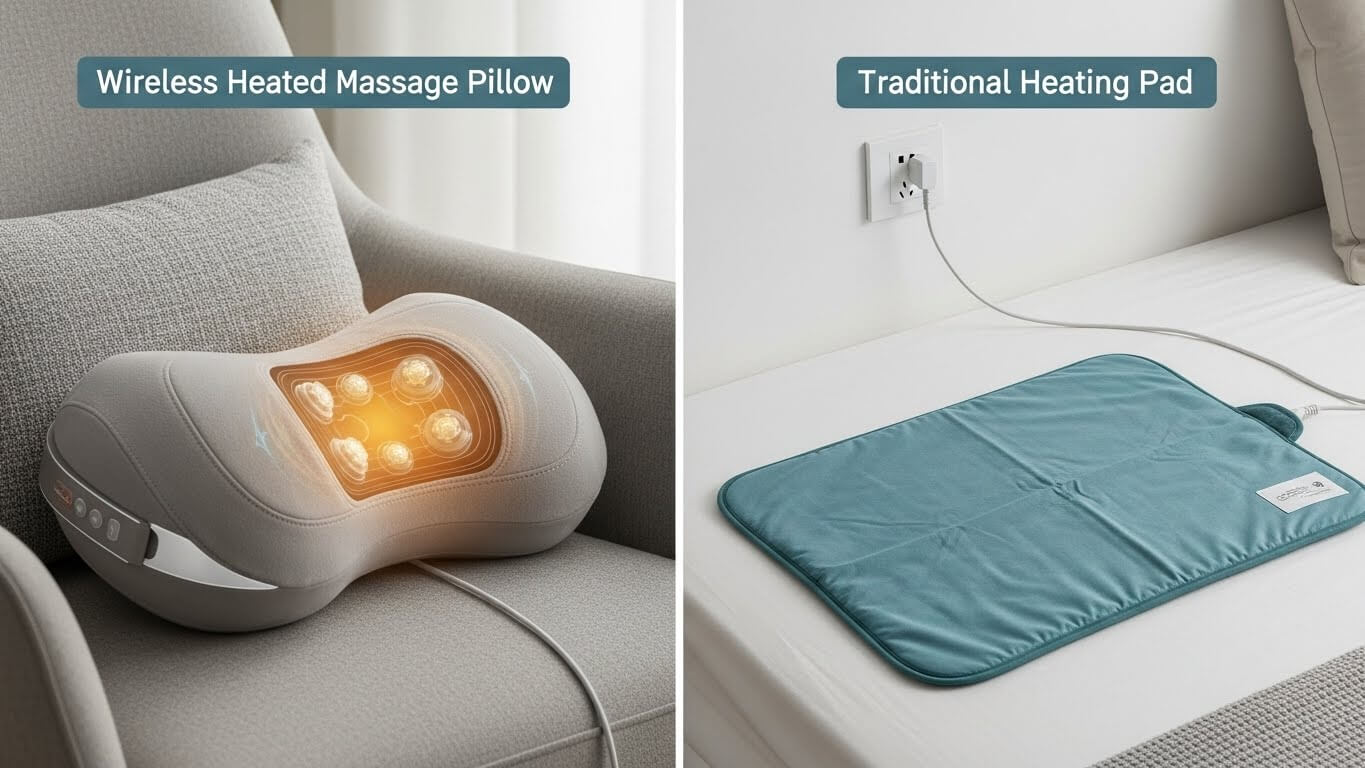
Both traditional heating pads and wireless heated massage pillows offer valuable pain relief through heat therapy, but they serve different needs at dramatically different price points. Traditional heating pads provide simple, reliable, affordable heat therapy ($20-$50) with exceptional durability (5-10+ years) and proven effectiveness for heat-responsive conditions. They’re perfect for users primarily needing therapeutic warmth, those valuing simplicity and reliability, budget-conscious individuals, and anyone wanting versatile treatment for various body areas.
Wireless heated massage pillows deliver enhanced therapy combining heat with mechanical massage ($60-$150) in portable, hands-free designs ideal for neck and shoulder tension. The higher cost is justified for users benefiting meaningfully from massage plus heat, those valuing portability and cordless freedom, and individuals with muscle-based pain where combined therapy provides superior relief to heat alone.
For most casual users seeking general pain relief, traditional heating pads offer unbeatable value, delivering everything needed at minimal cost with maximum simplicity. For those with specific neck/shoulder tension benefiting from massage, frequent travelers needing portable solutions, or users who’ve found heat-only therapy insufficient, wireless heated massage pillows provide worthwhile enhancement despite higher investment.
The smartest approach for uncertain buyers is starting with a quality traditional heating pad. If it meets your needs, you’ve saved money while getting effective relief. If you discover you want massage enhancement, upgrade knowing the additional features genuinely benefit your specific pain. Either path leads to the same destination: effective, accessible pain relief bringing comfort and improved quality of life through the time-tested benefits of therapeutic heat.