

Maintaining strong and healthy wrists has never been more crucial in today’s society, as repetitive hand movements rule our daily routines, from typing on keyboards to scrolling on smartphones. Wrist balls, sometimes referred to as power balls or gyro balls, have become one of the most talked-about fitness devices for hand rehabilitation, regardless of whether you’re healing from an accident, trying to increase your grip strength, or just trying to avoid stiffness.
A wrist ball may initially appear to be a straightforward sphere with a rotating rotor within. However, as it moves, it produces a strong gyroscopic resistance that engages and challenges your forearm, wrist, and hand muscles. Many athletes, physical therapists, and regular users have come to vouch for this special mechanism’s capacity to enhance strength, flexibility, and coordination.
The key query still stands, though: How useful are wrist balls for building hand strength again? Are they just another overhyped device, or can they actually have an impact? It’s important to investigate their functions, advantages, and comparisons to other conventional strengthening aids, such as resistance bands or hand grippers in order to provide answers to these queries.
We’ll examine the science underlying wrist balls, the methods that make them work, and the actual outcomes that users have encountered in this tutorial. By the finish, you will know for sure whether this small but effective gadget is worthy of being a part of your workout or recuperation regimen.
What Are Wrist Balls and How Do They Work?
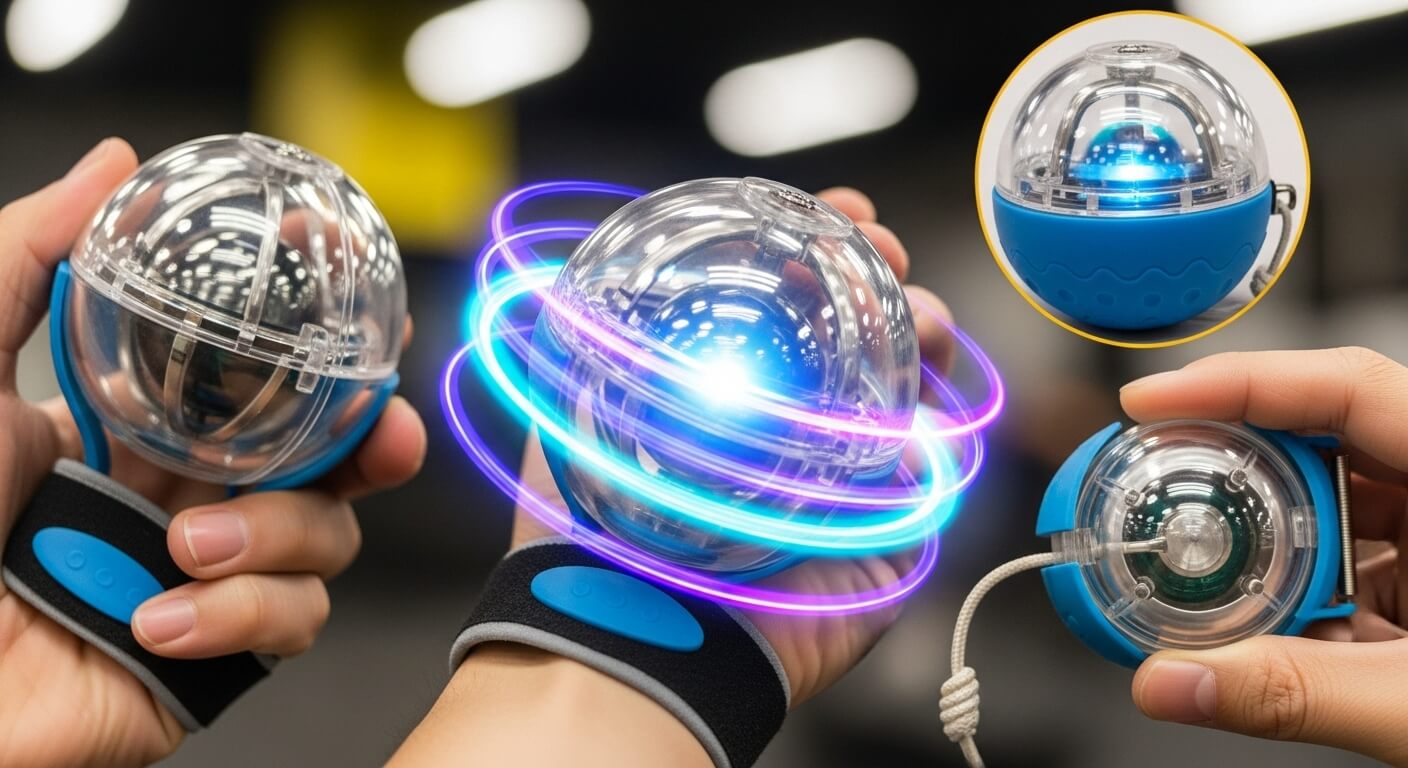
Wrist balls, also known as power balls or gyro balls, are small, portable gadgets that use gyroscopic resistance to increase forearm and wrist strength. A revolving rotor inside the ball generates resistance as it revolves. To maintain the internal gyroscope spinning, the user rotates their hand in rhythmic, circular motions after starting the rotor, which is often accomplished with a pull-string or a wrist flick.
The wrist ball’s ability to produce increasing resistance is what sets it apart. It generates greater resistance the faster you spin it. Both novice and expert users can profit from this self-regulating process without having to change any settings. In essence, it’s a mini-workout that changes in real time according to your strength level.
Anatomically speaking, wrist balls work several muscle groups simultaneously, such as the wrist and forearm stabilizers, flexors, and extensors. Additionally, they engage the smaller supporting muscles that are sometimes overlooked in conventional strength training. Because of this, they are especially useful for enhancing grip strength, dexterity, and endurance as well as for supporting recovery following wrist surgeries or injuries.
Wrist balls are popular among athletes (particularly climbers, tennis players, and golfers), musicians, office workers, and anybody else wishing to enhance hand health due to their small size and adaptability. To put it briefly, they are a useful, scientifically supported method of improving strength and coordination rather than only being a novel idea.
Benefits of Using Wrist Balls for Hand Strength Recovery
Wrist balls are dynamic rehabilitation instruments that are intended to improve and restore hand and wrist functions, making them more than merely exercise devices. They can offer a variety of therapeutic and strength-building advantages when used regularly and appropriately, which makes them very useful for those recuperating from injuries or overcoming weakness brought on by inactivity.
Their capacity to increase grip strength is among their most noteworthy benefits. Every muscle used to grasp, squeeze, and stabilize the wrist is activated by the gyroscopic resistance produced by a rotating wrist ball. This eventually aids users in regaining robust, self-assured hand control for daily tasks, typing, or athletic performance.
Wrist balls also aid in progressive healing. They adjust to your strength level; the faster you rotate the ball, the greater resistance it produces, in contrast to static hand exercisers. They are safe and effective for persons of all fitness levels because of this self-regulating feature, which guarantees that you may start out slowly during the early phases of recovery and progressively increase intensity as your strength improves.
Improved blood flow to the hands and forearms is another significant advantage. By encouraging blood flow, the continuous circular action helps to lessen stiffness, hasten healing, and improve pain from ailments like tendinitis, arthritis, and carpal tunnel syndrome. Additionally, the rhythmic movement helps enhance neuromuscular control and coordination, which is important following prolonged immobility or repeated strain injuries.
Additionally, wrist balls are a great way to avoid further injuries. They increase resistance to repeated motion strains, which are a major issue for office workers, gamers, and athletes, by fortifying the stabilizing muscles surrounding the wrist and forearm. The exercise’s moderate impact reduces joint stress while still allowing for deep muscle involvement. Last but not least, employing a wrist ball promotes stress reduction and mental relaxation. Users can focus and relax while still exercising thanks to the soothing effects of the rhythmic spinning action and tactile feedback.
Wrist balls essentially offer a holistic approach to healing by integrating mental wellbeing, physical strengthening, and rehabilitation into a single, portable device. With regular use, these tiny gadgets produce amazing results for anyone looking for a simple yet efficient natural method to regain hand strength.
How to Use a Wrist Ball Effectively for Hand Strength Recovery

Effective wrist ball use combines appropriate technique, regular practice, and steady improvement. Despite its seeming simplicity, the device’s motion must be mastered in order to fully benefit from its resistance without experiencing strain or tiredness. Here’s how to make the most of your wrist ball while recovering your hand strength.
- Begin by setting up properly: Start by firmly grasping the wrist ball with your dominant hand. To begin the spin, place the pull cord, if it has one, into the rotor’s hole and pull firmly. To activate the internal gyroscope of self-starting devices, turn your wrist in a circular motion. The internal rotor spins more effectively when the device is held horizontally.
- Emphasis on Circular, Smooth Motions: Rotate your wrist in steady, fluid circles once the ball is rotating. Rhythm, not speed, is the key. As the rotor accelerates, resistance will inevitably increase. It requires more work to keep moving the quicker it spins. Small, slow circles are a good place for beginners to start, and as comfort increases, pace should be gradually increased.
- Brief Meetings, Slow Advancement: Start with 30-second sessions two or three times a day during recuperation. Increase to 1-2 minutes per hand as your endurance increases. To guarantee balanced muscle engagement, alternate between clockwise and counterclockwise revolutions. Steer clear of overdoing it, particularly in the early stages of recovery.
- Keep Your Grip and Posture Correct: To avoid needless tension, keep your wrist and forearm in line. Muscle exhaustion may result from applying too much pressure. Let your wrist handle the action as you relax your shoulders and forearm.
- Combine with rest and stretching: Combine wrist ball workouts with mild stretching techniques for optimal effects. To preserve mobility and lessen stiffness, flex and extend your wrist after each session. Take a break in between sets to give your muscles time to fully recover.
- Monitor Your Development: To track rotations and speed, a lot of contemporary wrist balls have built-in counters or Bluetooth tracking. Monitoring your development will help you stay motivated and gauge how much your strength and coordination have improved.
Correct use of wrist balls reduces the risk of overuse and provides a safe, regulated method of regaining hand function. They are perfect for novices, athletes, and anyone recuperating from hand or wrist weakness because of their variable resistance. Patience and consistency are essential; even modest daily efforts result in long-lasting recovery and enhanced performance.
Who Can Benefit from Wrist Ball Exercises?
Anyone who wants to maintain healthy wrist and hand function or strengthen, rehabilitate, or both will benefit from wrist ball workouts. These small devices provide numerous advantages for a variety of lifestyles, occupations, and age groups because of their adaptability and resistance adjustment.
- Fitness enthusiasts and athletes: For athletes participating in sports like tennis, golf, climbing, basketball, or weightlifting that significantly depend on wrist and grip strength, wrist balls are highly useful. Wrist balls boost power, endurance, and control by focusing on stabilizing muscles, which helps athletes avoid strain and perform better overall.
- Office Workers and Gamers: Wrist fatigue and repetitive strain injuries are widespread among people who type, scroll, or play video games for extended periods of time. By maintaining the flexibility and strength of the hand and forearm muscles, regular wrist ball exercises can counteract stiffness, enhance blood flow, and lower the risk of carpal tunnel syndrome.
- Musicians and Artists: The fine motor control and endurance that wrist balls foster are extremely beneficial to musicians, painters, and other artists who depend on precise hand movements. By strengthening the tiny stabilizing muscles, the repetitive motion enhances dexterity without requiring excessive effort.
- People Recovering from Injury: For those recuperating from sprains, fractures, or tendon injuries, wrist balls are an important component of rehabilitation therapy. They are perfect for gradually restoring muscle strength and coordination because of the self-paced resistance. They are suggested by several physiotherapists for a gradual, regulated recuperation.
- Seniors & People with Arthritis: Wrist balls offer a low-impact workout option that improves mobility and circulation for elderly people or those with stiff joints. Depending on spinning speed, the resistance can be naturally changed, enabling safe use without overtaxing delicate joints.
- Users of General Wellness: Wrist balls can ease everyday tension, enhance coordination, and maintain healthy muscular tone even if you’re not an athlete or recuperating from an injury. They are ideal for quick breaks throughout the day because of their small size, which also makes them a practical stress-relieving tool.
In summary, almost everyone can use wrist balls. Without the need for a gym or complicated setup, they provide a flexible and entertaining method to enhance hand health, performance, and recuperation.
Conclusion
Wrist balls are a useful, reasonably priced, and adaptable tool for restoring hand strength and flexibility. Through a special combination of strength training and rehabilitation, their gyroscopic resistance technology enables users to enhance their grip, coordination, and endurance in a low-impact, controlled manner. Wrist balls dynamically adapt to your speed and effort, so the more you spin, the harder it is, in contrast to conventional weights or static grip exercisers.
Because of this, they are especially helpful for those recuperating from injuries, those afflicted with ailments like arthritis or carpal tunnel syndrome, and anybody looking to avoid wrist fatigue from routine repeated chores. In addition to strengthening muscles, the constant circular action improves blood circulation, hastening healing and preserving joint mobility.
Wrist balls are a useful investment that combines treatment and fitness for office workers, athletes, and artists. The real key to long-lasting strength and recuperation is consistency, which is made simple by their portability and lack of setup requirements.
However, regular use and appropriate form are necessary for effectiveness. Before beginning, anyone with serious wrist issues should speak with a physiotherapist. Incorporating wrist balls within a well-rounded hand and wrist care regimen can greatly enhance comfort, strength, and control.
In conclusion, wrist balls are well worth the investment—not as a miraculous device, but as an easily available, scientifically supported method of hand strength and healing. The outcomes can be long-lasting and healing with perseverance and consistent work.