

If you’ve spent hours hunched over a laptop or scrolling through your phone, you’ve probably experienced the aching neck, tight shoulders, and back pain that come with poor posture. The modern work-from-home era has only intensified these issues, with people spending more time than ever in front of screens. Enter wearable posture trackers; small devices that promise to monitor your posture and vibrate when you slouch, training you to sit and stand properly. But do these gadgets actually work, or are they just another wellness trend destined to gather dust in your drawer? In this comprehensive guide, we’ll examine the science behind posture trackers, evaluate their effectiveness, explore who benefits most from using them, and help you decide whether investing in one makes sense for your specific situation.
Understanding Posture and Why It Matters
What is Good Posture?
Good posture means maintaining the natural curves of your spine while sitting, standing, or moving. When standing, proper alignment involves ears over shoulders, shoulders over hips, and hips over ankles. Your spine has three natural curves: a slight forward curve in the neck (cervical), a slight backward curve in the upper back (thoracic), and a slight forward curve in the lower back (lumbar). Good posture maintains these curves without exaggeration.
When sitting, good posture means keeping your back straight with your shoulders relaxed, feet flat on the floor, and your knees at roughly 90 degrees. Your computer screen should be at eye level, and your arms should rest comfortably without reaching or hunching. This neutral position minimizes strain on muscles, ligaments, and joints.
The Hidden Costs of Poor Posture
Chronic poor posture contributes to numerous health problems beyond simple discomfort. The forward head position common with phone use adds a significant load to neck muscles. For every inch your head moves forward, your neck supports an additional 10 pounds of perceived weight. This leads to chronic neck pain, tension headaches, and shoulder tightness.
Poor posture compresses the chest cavity, reducing lung capacity by up to 30% and potentially affecting breathing efficiency and energy levels. It strains the lower back, contributing to chronic pain that affects millions of people. Over time, poor posture can lead to degenerative changes in the spine, reduced flexibility, and even digestive issues as compressed organs function less efficiently.
The psychological effects are equally significant. Research shows that slouched posture is associated with negative mood, reduced confidence, and lower energy levels. Simply sitting upright can measurably improve mood and self-perception.
Common Causes of Poor Posture
Modern life conspires against good posture. Prolonged sitting, especially with screens below eye level, encourages slouching. Weak core and back muscles fail to support proper alignment. Tight hip flexors from excessive sitting pull the pelvis forward, creating poor standing posture. Smartphone use creates “tech neck” as we look down repeatedly throughout the day.
Stress and fatigue cause protective hunching as we unconsciously try to make ourselves smaller. Poorly designed workspaces without ergonomic furniture force awkward positions. Finally, a simple lack of awareness means we don’t notice our slouching until pain develops.
What Are Wearable Posture Trackers?
How They Work
Wearable posture trackers are small devices containing accelerometers and gyroscopes that detect your body position and movement. Most attach to your upper back between the shoulder blades using adhesive pads or magnetic clips. Some are worn like necklaces, while others integrate into shirts or sports bras.
During initial setup, you calibrate the device by sitting or standing in proper alignment. The device learns what correct posture feels like for your body. After calibration, sensors continuously monitor your position. When you slouch or maintain poor posture beyond a set threshold (typically 30-60 seconds), the device vibrates gently to remind you to correct your position.
Most modern trackers connect to smartphone apps via Bluetooth, providing data on your posture throughout the day, tracking improvements over time, and offering insights into patterns like when you slouch most. Some apps include exercises and stretches to strengthen postural muscles.
Types of Posture Trackers
Clip-on devices are the most common type, attaching to your shirt or directly to your upper back. They’re discrete, affordable ($30-$100), and easy to use. Examples include the Upright Go and similar devices. Smart clothing options integrate sensors into shirts, bras, or back braces, offering a more seamless experience but at a higher cost ($100-$200+) with less flexibility.
Necklace-style trackers hang around your neck and monitor head position, specifically targeting tech neck. They’re less common but useful for people whose primary issue is forward head posture. Some smartwatches and fitness trackers now include posture monitoring features, though they’re generally less accurate than dedicated devices since they track arm position rather than spine alignment.
Popular Posture Tracker Brands
The Upright Go 2 is among the most popular, offering a small, discrete device with effective vibration feedback and a comprehensive app. It costs around $100 and receives generally positive reviews. The Upright Pro is a larger, more powerful version with longer battery life and stronger feedback.
Lumo Lift was an early entrant in the space, though the company has since closed. Alex Plus offers a shirt-integrated solution at premium pricing. Many newer devices from various manufacturers offer similar functionality at different price points, typically ranging from $40 to $150.
The Science: Do Posture Trackers Actually Work?
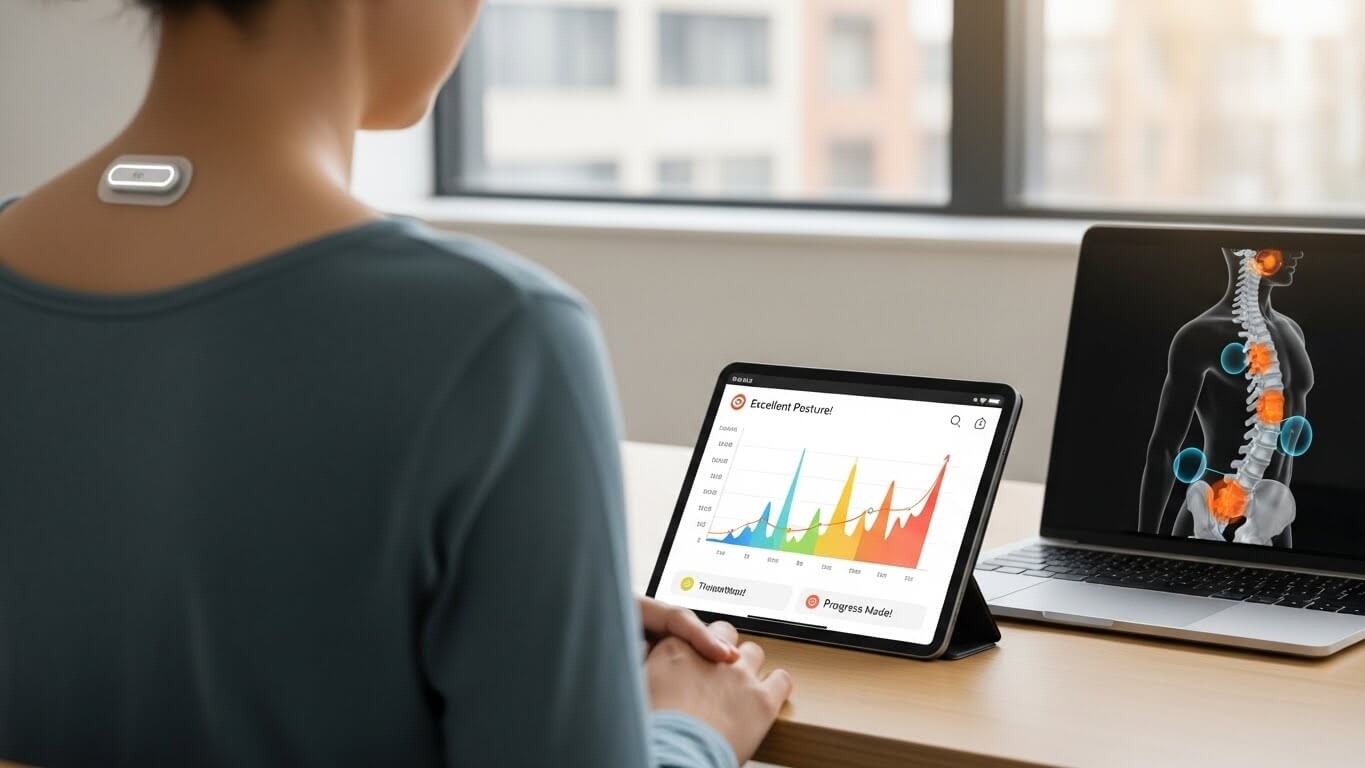
Scientific research on wearable posture trackers presents a mixed but generally positive picture. Several studies demonstrate that vibration feedback effectively increases awareness of poor posture and can improve sitting and standing alignment in the short term. Users typically show measurable improvements in posture metrics while wearing the devices.
A 2020 study published in the Journal of Physical Therapy Science found that participants using posture feedback devices showed significant improvements in forward head posture after four weeks. Another study in Ergonomics found that real-time feedback reduced slouching time by up to 25% during computer work.
However, the key limitation across studies is that most improvements occur while wearing the device. Long-term behaviour change after discontinuing use shows mixed results. Some users maintain better posture habits, while others gradually revert to old patterns. The devices are effective at creating awareness and providing immediate correction, but they don’t automatically create permanent change.
Posture trackers have important limitations. They don’t strengthen weak muscles or stretch tight ones—they only provide feedback about position. If poor posture stems from muscle imbalances, weakness, or tightness, a tracker alone won’t fix the underlying issue. You’ll need complementary exercises and stretches.
The devices can become annoying, leading some users to either turn them off, remove them, or consciously ignore the vibrations. If the sensitivity is set too high, constant vibrations create frustration rather than helpful correction. Set too low, they miss many instances of poor posture.
Dependency is a real concern. Some users develop a reliance on the device and struggle to maintain good posture without it. The goal should be developing intrinsic awareness and habit, not permanent device dependency.
Who Benefits Most from Posture Trackers?
Ideal Candidates
Certain individuals are more likely to benefit from posture trackers. Office workers spending 6-8+ hours daily at computers often develop poor sitting habits that trackers effectively address. People in the early stages of posture problems who haven’t yet developed chronic pain or structural changes respond better than those with advanced issues.
Younger users generally see better results, possibly due to greater physical adaptability and less ingrained poor habits. Individuals who are motivated and committed to improvement, using the device consistently and combining it with exercises, achieve the best outcomes.
People with specific postural issues, like forward head posture or rounded shoulders, find targeted feedback helpful. Those who are generally unaware of their posture throughout the day gain the most from increased awareness.
Who May Not Benefit
Posture trackers are less effective for certain groups. People with chronic pain or established musculoskeletal problems need comprehensive treatment, including physical therapy, not just feedback devices. Those with structural issues like scoliosis or spinal abnormalities require medical treatment beyond what trackers can address.
Individuals who work in physical jobs requiring varied positions throughout the day may find the device impractical or too frequently triggered. People who already have good body awareness and consciously maintain posture don’t need reminders; they need to address the underlying reasons they can’t maintain proper alignment.
Users lacking commitment to actually correct posture when reminded will waste money on devices they ignore. Finally, those expecting a complete solution without complementary exercises and ergonomic improvements will be disappointed.
Complementary Approaches for Better Posture
Strengthening Exercises
Posture trackers work best when combined with exercises that address underlying weaknesses. Core strengthening through planks, bird dogs, and dead bugs builds the foundation for maintaining proper alignment. Upper back exercises like rows, reverse flies, and wall angels strengthen muscles that pull the shoulders back.
Neck strengthening with chin tucks and cervical extensions counteract forward head posture. Glute bridges and hip extension exercises address the posterior chain, important for standing posture. Scapular retraction exercises specifically target the muscles between the shoulder blades that hold the shoulders in proper position.
Consistency matters more than intensity. Performing 10-15 minutes of targeted exercises 3-4 times weekly produces better long-term results than occasional intense workouts.
Stretching and Mobility Work
Tight muscles pull you into poor posture despite your best efforts. Chest stretches in doorways or with foam rollers open the front body that becomes shortened with slouching. Hip flexor stretches counteract tightness from excessive sitting that tilts the pelvis forward. Upper trapezius and levator scapulae stretches release tension in the neck and shoulders.
Thoracic spine mobility exercises using foam rollers improve extension in the upper back, allowing you to sit upright more easily. Daily stretching for just 5-10 minutes can dramatically improve your ability to maintain good posture comfortably.
Ergonomic Workspace Setup
Even the best posture habits falter in poorly designed workspaces. Adjust your chair so your feet rest flat on the floor with your knees at 90 degrees. Position your monitor at eye level, about arm’s length away, to prevent looking down. Use external keyboards and mice with laptops, elevating the laptop screen to the proper height.
Consider a standing desk or desk converter to alternate between sitting and standing throughout the day. Use a lumbar support cushion if your chair lacks adequate lower back support. Position frequently used items within easy reach to avoid repeated reaching or twisting.
Proper lighting reduces eye strain that contributes to forward head posture as you lean toward screens. Take regular breaks every 30-45 minutes to stand, stretch, and reset your posture.
Cost-Benefit Analysis
Financial Investment
Entry-level posture trackers cost $30-$60, offering basic vibration feedback with limited app features. These work adequately for many users but may have shorter battery life and less reliable sensors. Mid-range devices at $80-$120 provide better build quality, more accurate sensors, comprehensive apps with tracking and exercises, and longer battery life. Premium options exceeding $150 offer smart clothing integration, advanced analytics, and enhanced comfort features.
Ongoing costs include replacement adhesive pads ($10-$20 per pack of 10-20), periodic battery replacement for non-rechargeable models, and potential app subscription fees for premium features on some devices.
Comparing to Alternatives
Physical therapy sessions cost $75-$150 per visit, with typical treatment plans involving 6-12 sessions totalling $450-$1,800. However, physical therapy addresses underlying issues, not just awareness. Ergonomic assessments by professionals cost $100-$300 but provide comprehensive workplace optimization. Personal training sessions focusing on posture cost $50-$100 per session.
Massage therapy for posture-related pain runs $80-$150 per session and requires ongoing appointments. Standing desks and ergonomic chairs represent one-time investments of $200-$1,000+ but provide permanent improvements.
Compared to these alternatives, posture trackers offer a relatively low-cost intervention. However, they shouldn’t replace professional care for serious issues. Many people benefit from combining a modest tracker investment with one-time ergonomic improvements and occasional professional guidance.
Making Your Decision
Questions to Ask Yourself
Consider several questions when deciding whether to invest in a posture tracker. Do you spend significant time sitting at a computer or looking at screens? Are you generally unaware of your posture throughout the day? Have you tried to improve posture through awareness alone without success? Are you willing to wear a device daily for several weeks minimum?
Can you commit to complementary exercises and stretches? Is your poor posture primarily a positional habit rather than structural or caused by chronic pain? Do you have realistic expectations about the device being a training tool rather than a complete solution? Can you afford not just the device but replacement supplies?
If you answered yes to most questions, a posture tracker might benefit you. If you answered no to several, consider alternative approaches or address underlying issues first.
Alternatives to Consider First
Before purchasing a tracker, try improving ergonomics through free or low-cost workspace adjustments. Set phone or computer reminders every 30 minutes to check and correct posture. Use apps that provide periodic posture check-in notifications without requiring wearable devices.
Try a short course of physical therapy to identify and address specific muscle imbalances. Practice mindfulness and body awareness throughout the day without devices. Consider whether underlying stress, fatigue, or workspace design are root causes that require different interventions.
For many people, a combination of ergonomic improvements, targeted exercises, and increased awareness produces results comparable to trackers at a lower cost and with more sustainable long-term outcomes.
Frequently Asked Questions
How long does it take to see results?
Most users notice increased awareness immediately, but meaningful habit formation typically requires 4-8 weeks of consistent use. Some people see reduced pain within 2-3 weeks as posture improves. Long-term postural changes may take several months of combined tracker use, exercises, and ergonomic improvements.
Can I wear a posture tracker all day?
Most devices are designed for all-day wear, though many users find starting with a few hours daily more manageable. Gradually increase wear time as you build tolerance and as posture improves, reducing the frequency of correction reminders.
Will my posture revert after stopping use?
Results vary significantly. Some users successfully develop automatic good posture habits and maintain them after discontinuing device use. Others gradually slip back into poor posture without regular reminders. Combining tracker use with exercise and ergonomic improvements increases the likelihood of lasting change.
Are posture trackers uncomfortable?
Initial discomfort is common as you adjust to wearing the device and as your muscles adapt to proper alignment. Most users acclimate within a few days. If significant discomfort persists, the device may be positioned incorrectly, or you may have underlying issues requiring professional attention.
Can children use posture trackers?
While not specifically contraindicated, posture trackers are generally designed for adults. Children and adolescents with posture concerns should be evaluated by paediatricians or physical therapists to rule out developmental issues or structural problems before using feedback devices.
Do I need a subscription?
Most posture trackers include basic app functionality with the device purchase. Some offer premium subscriptions ($5-$10 monthly) for advanced features, personalised coaching, or extended exercise libraries. Basic features suffice for most users.
Conclusion
So, are wearable posture trackers effective? The answer is a qualified yes—but with important caveats. Research and user experiences show that these devices effectively increase posture awareness and can improve alignment in the short term, particularly for people who spend long hours at desks and are simply unaware of their slouching habits. The gentle vibration feedback creates a learning process that helps some users develop better posture habits.
However, posture trackers aren’t magic solutions. They work best as one component of a comprehensive approach that includes strengthening weak muscles, stretching tight areas, optimizing workspace ergonomics, and addressing lifestyle factors contributing to poor posture. Users who view trackers as training tools rather than permanent solutions and who commit to 4-8 weeks of consistent use combined with complementary exercises achieve the best results.
For office workers and screen-heavy users willing to invest both money and effort, posture trackers can provide meaningful benefits. For those with chronic pain or structural issues, professional evaluation and treatment should precede or accompany device use. And for everyone, remember that the goal isn’t dependent reliance on technology but rather developing intrinsic body awareness and sustainable habits that support lifelong postural health. If you decide to try a posture tracker, approach it with realistic expectations, commitment to consistency, and willingness to address posture comprehensively and you’re likely to see real improvements in how you sit, stand, and feel.