

Muscle soreness, tension, and tightness are universal experiences, whether you’re an athlete pushing your limits, a desk worker battling chronic shoulder tension, or simply someone dealing with the everyday aches of modern life. Professional massage therapy offers powerful relief, but at $60-$120 per session, regular visits quickly become financially unsustainable for most people.
Home massage devices are portable tools promising professional-quality muscle relief without the recurring costs or scheduling hassles. Two distinct categories dominate the market: traditional handheld massagers featuring vibrating heads on wand-like devices, and the newer percussion massage guns delivering rapid, pulsing pressure deep into muscles. Both claim to relieve pain, accelerate recovery, and improve mobility, but they work in fundamentally different ways and serve different needs. Which delivers better results? Is the massage gun trend justified by performance, or do traditional handheld massagers provide equivalent relief at a lower cost?
In this comprehensive guide, we’ll examine how each device works, compare their effectiveness across various applications, evaluate value propositions, and help you determine which tool best fits your specific muscle relief needs, recovery goals, and budget.
Understanding Muscle Recovery and Pain Relief
Why Muscles Need Recovery
Muscles experience stress and damage through various mechanisms. Exercise creates microscopic tears in muscle fibres; a normal part of building strength and endurance. However, these micro-tears trigger inflammation and delayed onset muscle soreness (DOMS) peaking 24-48 hours post-exercise. Prolonged static positions during desk work or long drives cause certain muscles to remain contracted for hours, developing tension, trigger points, and restricted blood flow.
Overuse from repetitive motions without adequate rest leads to chronic muscle tightness and pain. Stress causes unconscious muscle tension, particularly in neck, shoulders, and jaw. Injury or trauma creates acute pain and muscle guarding where surrounding muscles tighten protectively. Inadequate hydration and nutrition deprive muscles of resources needed for proper function and recovery.
All these factors create discomfort, reduced mobility, and decreased quality of life if not addressed properly.
How Massage Helps
Massage therapy provides relief through multiple proven mechanisms. Increased circulation from mechanical pressure and movement enhances blood flow, delivering oxygen and nutrients while removing metabolic waste like lactic acid. This improved circulation accelerates healing and reduces inflammation.
Muscle relaxation occurs as sustained pressure or rhythmic stimulation triggers the Golgi tendon organ reflex, signaling muscles to release tension. Myofascial release addresses the connective tissue (fascia) surrounding muscles. Restricted fascia contributes to pain and limited mobility—massage helps restore normal tissue mobility. Pain gate theory explains how massage stimulates sensory nerves, effectively “closing the gate” to pain signals traveling to the brain, providing immediate pain relief.
Trigger point release targets hypersensitive knots in muscles that refer pain to other areas. Sustained pressure on trigger points can deactivate them, reducing both local and referred pain. Endorphin release occurs as massage stimulates the nervous system to produce natural pain-relieving chemicals. Psychological benefits include stress reduction, improved mood, and the simple comfort of receiving care.
Research consistently supports massage therapy’s effectiveness for pain relief, improved range of motion, and enhanced recovery from exercise.
Different Massage Modalities
Various massage techniques serve different purposes. Swedish massage uses long, flowing strokes and gentle pressure for relaxation and circulation. Deep tissue massage applies sustained pressure to reach deeper muscle layers and address chronic tension. Sports massage combines techniques specifically targeting athletic recovery and injury prevention.
Trigger point therapy focuses intense pressure on specific knots or tender points. Myofascial release uses sustained gentle pressure to release fascial restrictions. Percussion therapy delivers rapid, repetitive strikes to muscles, penetrating deeply to reduce tension and improve blood flow.
At-home massage devices attempt to replicate these professional techniques with varying degrees of success.
Traditional Handheld Massagers: Details
What Are Handheld Massagers?
Traditional handheld massagers are wand-style devices featuring a long handle connected to a vibrating head. They’ve been popular for decades, evolving from simple corded models to sophisticated rechargeable versions. Prices range from $20 for basic models to $150+ for premium therapeutic devices.
Common types include full-body wand massagers with large vibrating heads suitable for broad muscle groups ($30-$150), compact personal massagers with smaller heads for targeted areas ($20-$60), and heated massagers combining vibration with therapeutic warmth ($40-$100). Materials typically include ABS plastic bodies with silicone or soft rubber heads for comfortable skin contact.
Popular brands include Wahl, Homedics, Pure-Wave, and numerous manufacturers offering similar functionality at various price points.
How Handheld Massagers Work
These devices provide relief through vibration therapy. Motors create rapid oscillations typically ranging from 2,000-6,000 vibrations per minute (VPM). The vibrating head contacts your skin and underlying muscles, stimulating nerve endings, increasing local blood circulation, creating muscle relaxation through sustained gentle stimulation, and providing sensory input that reduces pain perception.
Most models offer multiple speed settings allowing adjustment from gentle to intense. Interchangeable heads target different needs; large flat heads for broad areas like back and thighs, small pointed heads for precise trigger point work, and curved or ridged heads for varied sensations. The sustained vibration creates a kneading or relaxing effect rather than deep percussion.
You apply the device to target areas and hold it in place or slowly move it across muscles, controlling pressure, position, and duration based on your needs.
Effectiveness and Benefits
Traditional handheld massagers excel in specific applications. They provide excellent general relaxation through soothing vibration that promotes overall muscle relaxation and stress relief. Surface-level muscle tension responds well to sustained vibration. The devices effectively warm muscles through increased circulation from vibration.
Large treatment areas benefit from broad vibrating heads that cover significant muscle groups efficiently. Pre-workout warming prepares muscles for exercise through increased blood flow and reduced stiffness. They’re user-friendly with simple operation requiring minimal learning curve. The affordable pricing makes them accessible to most budgets.
For general muscle relaxation, stress relief, and addressing surface tension, traditional handheld massagers work effectively at modest cost.
Limitations
Traditional massagers have notable limitations. Limited penetration depth means vibration affects primarily surface muscles without reaching deep tissue effectively. They’re less effective for deep muscle knots, chronic tightness in deeper muscle layers, or myofascial release requiring sustained deep pressure.
The intensity ceiling is modest; even highest settings provide gentle to moderate stimulation insufficient for serious athletes or chronic pain sufferers needing deeper work. Prolonged use can cause hand fatigue from holding and controlling the device. Some models are quite loud, reducing the relaxation effect. Corded models limit mobility, while battery-powered options need frequent charging.
For deep tissue work or intensive recovery, traditional massagers fall short of professional massage or newer percussion technology.
Percussion Massage Guns: Details
What Are Massage Guns?
Percussion massage guns, also called percussive therapy devices or muscle guns, deliver rapid, pulsing strikes to muscles rather than continuous vibration. They resemble power drills with massage head attachments, featuring powerful motors delivering 1,800-3,200 percussions per minute (PPM) at amplitudes of 10-16mm (how far the head travels with each strike).
Prices range dramatically from $50 for budget models to $600 for premium devices like Theragun PRO. Most effective models fall in the $100-$300 range.
How Massage Guns Work
The mechanism differs fundamentally from traditional massagers. Instead of vibration, massage guns deliver rapid, repetitive strikes perpendicular to the muscle surface. The percussive action creates several effects: deep penetration reaches multiple muscle layers including deep tissues, rapid compression and release creates a pumping effect enhancing circulation, neuromuscular response triggers muscle relaxation through rapid sensory input, and myofascial release occurs as percussion breaks up adhesions and restrictions.
The amplitude (stroke length) determines depth of penetration; longer amplitude (14-16mm) reaches deeper than shorter amplitude (10-12mm). Users control the device differently than traditional massager; typically “floating” it over muscles rather than pressing hard, allowing the percussion to do the work.
Most guns offer multiple speed settings (typically 5-20 levels), interchangeable heads for different muscle groups and purposes, and ergonomic designs allowing various grip positions for reaching different body areas.
Types and Price Ranges
Budget massage guns ($50-$100) include basic models from brands like TOLOCO or Amazon generics. These offer adequate percussion for casual users but often feature louder motors, lower build quality, shorter battery life, and limited speeds. Mid-range devices ($100-$250) from brands like Ekrin, Opove, or Vybe provide strong performance with quieter motors, better batteries, more speeds, and improved durability.
Premium massage guns ($250-$600) include Theragun, Hypervolt, and TimTam professional models featuring the quietest operation, longest battery life, most sophisticated motors, extensive attachments, and premium materials. Professional-grade devices exceed what most home users need unless used daily for serious training.
Effectiveness and Benefits
Massage guns deliver impressive results for specific applications. Deep tissue work effectively reaches muscles that traditional massagers can’t penetrate. Athletic recovery benefits from percussion therapy’s ability to reduce DOMS, improve range of motion, and accelerate recovery between training sessions. Research shows percussion therapy reduces muscle soreness and improves flexibility.
Myofascial release occurs more effectively than with traditional vibration. Trigger point therapy becomes feasible at home with focused percussion on specific knots. Targeted treatment allows precise work on problem areas with appropriate head attachments. Time efficiency is notable—effective treatment in 1-2 minutes per muscle group versus extended sessions with traditional massagers.
Athletes, fitness enthusiasts, and people with chronic deep muscle tension report significant benefits from quality massage guns that traditional massagers couldn’t provide.
Limitations and Drawbacks
Despite their effectiveness, massage guns have downsides. High cost represents a significant barrier—effective models start around $100 with premium options exceeding $300. The learning curve is steep—improper use can cause bruising, pain, or injury. Users must learn appropriate pressure, positioning, and duration.
Noise levels, while improved in newer models, still exceed traditional massagers in most cases. Some areas are difficult to reach effectively; the devices work poorly for self-massage of the middle back. Weight can cause arm fatigue during extended sessions. They’re intimidating for beginners who may find the intense percussion uncomfortable initially.
Certain conditions contraindicate use including acute injuries, inflammation, bone fractures, or specific medical conditions. Overuse or misuse can cause tissue damage, bruising, or increased pain.
Head-to-Head Comparison
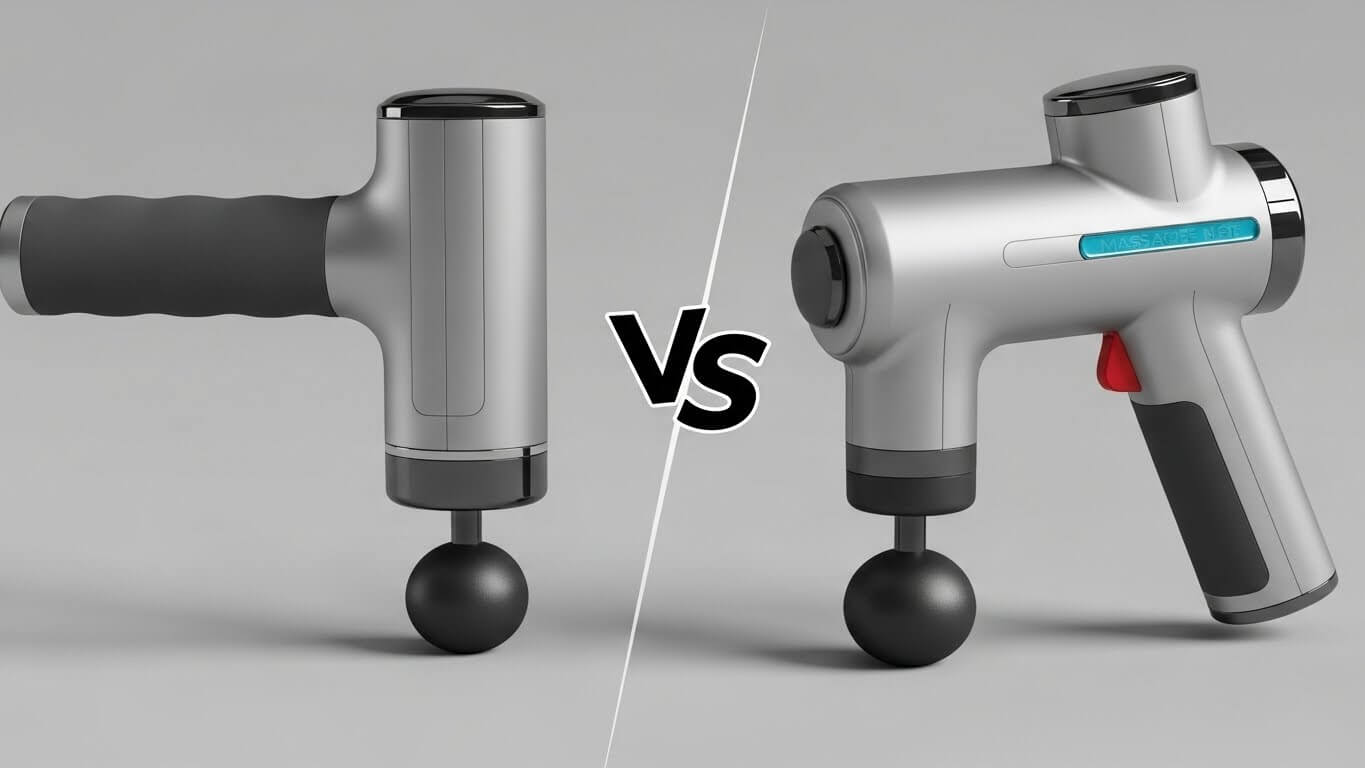
Depth of Penetration and Muscle Access
Winner: Massage Guns
Percussion therapy fundamentally excels at reaching deep muscle layers. The rapid striking action with 10-16mm amplitude penetrates far beyond surface muscles, accessing deep tissues where chronic tension often resides. Traditional massagers’ vibration affects primarily surface layers with minimal deep tissue impact.
For addressing deep knots, chronic tightness, or athletic recovery requiring serious muscle work, massage guns provide vastly superior penetration.
Surface-Level Relaxation
Winner: Traditional Handheld Massagers
For gentle, relaxing massage addressing surface tension and promoting general relaxation, traditional massagers excel. The sustained, soothing vibration provides comfort without intensity. Many users find them more relaxing for extended use before bed or during television watching.
Massage guns can be modified with soft attachments and low speeds for relaxation, but their design emphasizes therapeutic intensity over gentle comfort.
Athletic Recovery and Performance
Winner: Massage Guns
Research and athlete experiences strongly favor percussion therapy for serious athletic recovery. Studies show massage guns effectively reduce DOMS, improve range of motion, and enhance recovery between training sessions. Professional and serious amateur athletes overwhelmingly prefer massage guns for pre-workout activation and post-workout recovery.
Traditional massagers provide modest benefits but insufficient for the intensive recovery needs of regular training.
Versatility and Ease of Use
Winner: Traditional Handheld Massagers
Traditional massagers are intuitive; turn on, apply to muscles, enjoy. Minimal learning curve, low risk of misuse, and straightforward operation suit beginners and casual users. They work well for various body areas with simple technique.
Massage guns require learning proper technique, appropriate head selection, correct pressure and duration, and awareness of contraindicated areas. The learning investment pays off for serious users but creates barriers for casual use.
Cost and Value
Winner: Traditional Handheld Massagers (for casual users)
At $30-$80 for quality traditional massagers versus $100-$300 for effective massage guns, the price difference is substantial. For casual users seeking general relaxation and modest muscle relief, traditional massagers provide excellent value.
However, for serious athletes or chronic pain sufferers, massage guns may offer superior value despite higher costs by providing relief previously requiring professional massage at $80+ per session. A $200 massage gun pays for itself in 2-3 professional massage equivalents.
Portability and Convenience
Winner: Traditional Handheld Massagers (slightly)
Traditional massagers are typically lighter, more compact, have longer battery life, and are simpler to pack. However, modern massage guns have become increasingly portable, with many mid-range models comparable in size and weight. Premium models often include travel cases. The difference is modest in modern devices, with both types reasonably portable for travel and gym use.
Noise Level
Winner: Traditional Handheld Massagers
Even the quietest massage guns produce more noise than traditional vibrating massagers due to the percussion mechanism. While premium massage guns have significantly reduced noise from early models, they still generate 40-60 decibels compared to traditional massagers’ 30-40 decibels.
For noise-sensitive users or those wanting discreet use in shared spaces, traditional massagers are quieter.
Who Should Choose Each Device
Choose Traditional Handheld Massagers If…
Traditional massagers suit several user profiles. Casual users seeking general relaxation and stress relief rather than intensive muscle work find them sufficient. Budget-conscious individuals with $30-$80 to spend get effective devices without major investment. Beginners unfamiliar with massage therapy benefit from intuitive, low-risk devices.
People with primarily surface-level muscle tension from stress or mild overuse don’t need deep penetration. Those preferring gentle, soothing stimulation over intense percussion appreciate traditional massage sensation. Users wanting simple, no-learning-curve devices can use traditional massagers immediately without technique study.
People with noise sensitivity needing quieter devices, or those who already own one and find it meets their needs, should stick with traditional massagers.
Choose Massage Guns If…
Massage guns serve different needs excellently. Athletes in regular training needing serious recovery support benefit from percussion therapy’s proven effectiveness. People with chronic deep muscle tension, knots, or trigger points requiring deep tissue work find relief traditional massagers can’t provide.
Those willing to invest $100-$300 for superior muscle treatment justify the cost through frequent use. Users committed to learning proper technique maximize benefits and minimize risks. Fitness enthusiasts who strength train, run, or engage in intense exercise regularly benefit from enhanced recovery.
People with myofascial restrictions, limited range of motion, or mobility issues may find percussion therapy helps where other methods failed. Those who’ve tried traditional massagers without adequate results often discover massage guns provide the missing intensity.
Individuals seeking to reduce professional massage frequency by handling routine recovery at home can recoup the investment quickly.
Many muscle care enthusiasts maintain both devices strategically. Massage guns handle intensive post-workout recovery, deep tissue work on problem areas, and targeted trigger point therapy. Traditional massagers provide evening relaxation sessions, gentle warm-up before stretching, and comfortable extended use while watching television.
This combination maximizes benefits—deep therapeutic work when needed, gentle relaxation when preferred; while providing device redundancy.
Best Practices for Safe and Effective Use
Using Traditional Handheld Massagers
Start with lower speeds and gradually increase to find comfortable intensity. Move the device slowly across muscles rather than holding in one spot too long (no more than 2 minutes per area). Apply moderate pressure; the vibration does the work without pressing hard.
Target large muscle groups including back, shoulders, thighs, and calves most effectively. Use for 10-20 minutes per session to avoid overuse. Combine with heat for enhanced muscle relaxation when addressing tightness.
Avoid bony areas, joints, and the front of the neck. Never use on injured, inflamed, or broken skin. Clean devices regularly and allow them to cool between uses if they become warm.
Using Massage Guns Safely
Learn proper technique before intensive use. “Float” the gun over muscles rather than pressing hard—let percussion do the work. Start on low speeds (level 1-2) and increase gradually as muscles adapt. Limit use to 30-120 seconds per muscle group initially, extending as you gain experience.
Move slowly across muscles covering the entire area. Maintain 45-degree angle or perpendicular to muscle fibers for optimal effect. Use appropriate attachments; large ball heads for large muscle groups, bullet heads for trigger points, and flat heads for broader coverage.
Critical safety rules: never use on bones, joints, or the spine; avoid the front of neck, kidneys, or abdomen; don’t use over acute injuries or inflamed areas; and stop immediately if pain increases or you experience unusual symptoms. Avoid prolonged use on any single spot which can cause bruising or tissue damage.
Consult healthcare providers before use if you have circulatory conditions, take blood thinners, have cancer or tumors, are pregnant, or have neuropathy or reduced sensation.
Complementary Recovery Strategies
Massage devices work best within comprehensive recovery programs. Proper hydration supports muscle function and recovery. Adequate nutrition provides protein and nutrients muscles need for repair. Sufficient sleep allows maximal recovery and adaptation. Dynamic stretching improves flexibility and mobility. Foam rolling complements massage for myofascial release.
Progressive training avoids overuse by gradually increasing intensity. Active recovery through light movement promotes circulation on rest days. Professional care including periodic professional massage or physical therapy addresses issues beyond self-care capabilities.
Cost-Benefit Analysis
Initial Investment
Quality traditional handheld massagers cost $30-$80 with premium models reaching $150. Budget massage guns cost $50-$100, mid-range devices run $100-$250, and premium models cost $250-$600. For most users, the price difference is $50-$200 more for massage guns versus traditional massagers.
Long-Term Value and Durability
Traditional massagers typically last 2-5 years with regular use depending on quality and usage intensity. Replacement cost is modest at $30-$80. Massage guns last 3-5 years for quality models, though budget versions may fail sooner. Replacement cost is substantial at $100-$300+.
Neither device requires ongoing costs beyond occasional replacement. Both represent one-time investments providing years of service.
Comparing to Professional Massage
Professional massage therapy costs $60-$120 per session. Sports massage or deep tissue work often exceeds $100. Weekly sessions total $240-$480 monthly or $2,880-$5,760 annually.
A $60 traditional massager pays for itself in one professional session equivalent. A $200 massage gun pays for itself in 2-3 sessions. For anyone receiving professional massage monthly or more frequently, either device offers exceptional value. Massage guns potentially replace more professional sessions due to superior deep tissue capability.
Physical therapy often costs $100-$200 per session. Self-care devices reduce but don’t eliminate the need for professional care; they complement rather than completely replace professional treatment.
Value by User Type
For casual users seeking occasional relaxation, traditional massagers provide superior value delivering adequate results at minimal cost. For serious athletes using devices daily or multiple times weekly, massage guns justify higher costs through superior performance and professional massage replacement.
For chronic pain sufferers, the value calculation depends on whether percussion therapy provides meaningful relief. If a $200 massage gun reduces a $100 monthly professional massage to every other month, it pays for itself in four months.
Making Your Decision
Questions to Ask Yourself
Consider several questions when choosing. What are your primary goals—general relaxation, athletic recovery, or chronic pain relief? How frequently will you use the device—daily, weekly, or occasionally? What’s your budget; $30-$80 for traditional or $100-$300+ for percussion?
Do you need deep tissue work, or is surface-level massage sufficient? Are you comfortable learning proper technique, or do you prefer simple, intuitive devices? Do you currently receive professional massage regularly that you’d like to reduce? Do you have conditions that might contraindicate percussion therapy?
Are you willing to invest in quality, or do you need the most affordable functional option? What’s your experience level with massage and recovery tools? Honest answers guide you toward the appropriate device for your specific situation.
Starting Point Recommendation
For most beginners uncertain about their needs, start with a quality mid-range traditional massager ($40-$60). This provides effective muscle relief at low cost with minimal risk. If you find it insufficient after consistent use over several weeks, upgrade to a massage gun knowing you need the additional intensity. This approach minimizes financial risk while allowing informed decision-making based on actual experience rather than speculation.
When to Upgrade
Consider upgrading from traditional massagers to massage guns if after consistent use, traditional massagers provide insufficient relief; you develop serious athletic training requiring better recovery; or chronic deep muscle tension doesn’t respond adequately to vibration therapy. Your budget grows allowing $100-$300 investment, or you receive professional massage regularly and want to reduce frequency. The upgrade is justified when benefits clearly exceed the 3-5x cost increase.
Frequently Asked Questions
Can massage guns replace professional massage?
Massage guns effectively handle routine recovery and muscle maintenance but don’t fully replace skilled professional massage. Therapists provide techniques, precise trigger point location, full-body treatment, and assessment that devices can’t match. However, massage guns can significantly reduce professional massage frequency from weekly to monthly or as-needed.
Are massage guns safe for everyone?
No. People with certain conditions should avoid massage guns or consult healthcare providers first including those with circulatory conditions, blood clotting disorders, pregnant women, individuals with neuropathy or reduced sensation, people with cancer or tumors in treatment areas, those with acute injuries or inflammation, and anyone with unexplained pain. When in doubt, consult medical professionals.
How do I know which speed to use?
Start low (level 1-2 for massage guns, lowest setting for traditional massagers) and gradually increase until you feel effective stimulation without pain. Appropriate intensity feels intense but not painful. Different muscle groups may require different speeds—larger muscles tolerate higher intensity while smaller or sensitive areas need gentler treatment.
Can I use massage devices every day?
Yes, daily use is generally safe when done properly. Limit each muscle group to recommended durations (2 minutes for traditional massagers, 30-120 seconds for massage guns) and avoid overuse of any single area. Listen to your body; if you feel overly sore or fatigued, reduce frequency.
Why are premium massage guns so expensive?
Premium models feature quieter motors through superior engineering, longer battery life with better batteries, more sophisticated electronics providing precise control, durable construction withstanding years of intensive use, and extensive warranties. For professional use or daily serious training, the investment is worthwhile. Casual users rarely need premium features.
Will these devices cure my chronic pain?
Massage devices are management tools, not cures. They can significantly reduce pain and improve function when used consistently as part of comprehensive pain management. However, chronic pain often requires medical evaluation, physical therapy, lifestyle changes, and possibly medical treatment. Devices complement but don’t replace proper medical care.
Conclusion
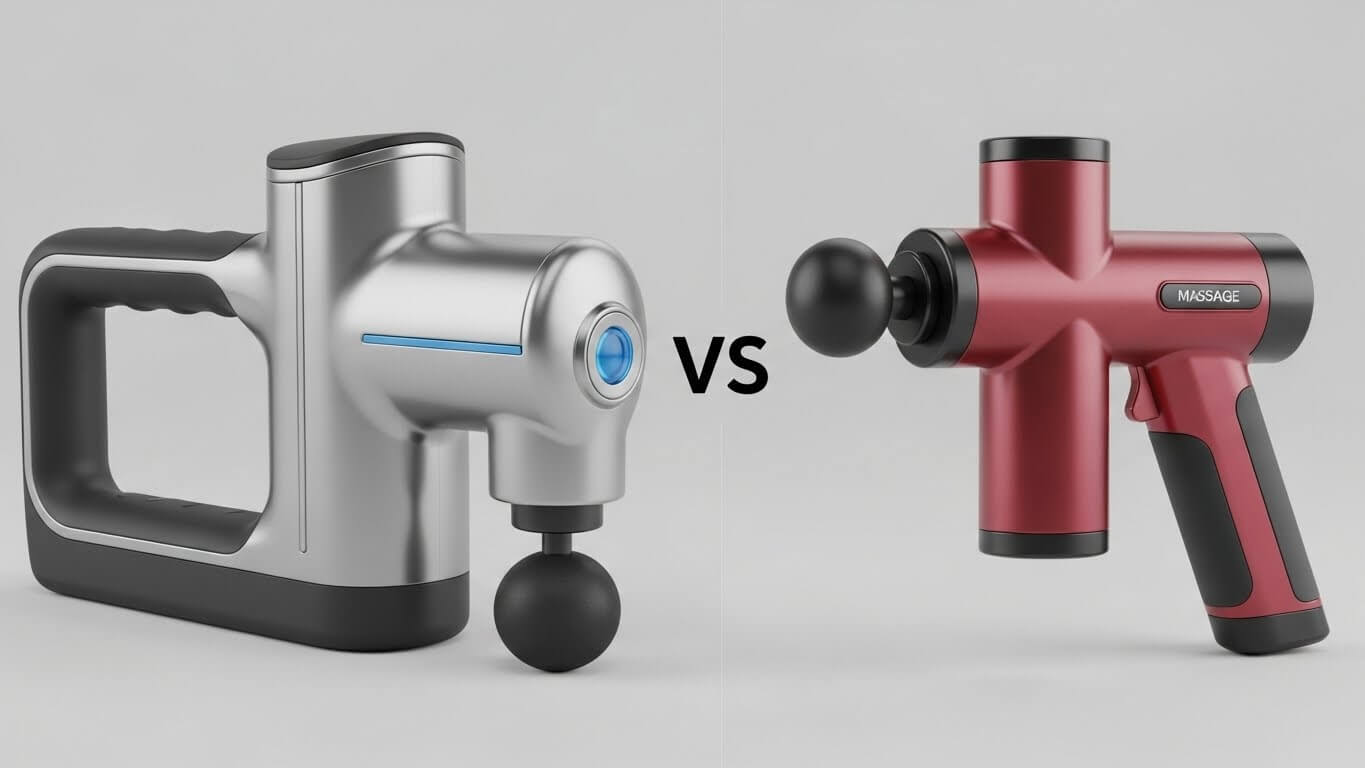
Both traditional handheld massagers and percussion massage guns offer valuable muscle relief and recovery benefits, but they serve different needs and user types. Traditional handheld massagers provide gentle, effective relief for surface muscle tension, general relaxation, and stress reduction at affordable prices ($30-$80). They’re perfect for casual users, beginners, and those seeking simple, soothing muscle care without intensive recovery needs.
Percussion massage guns deliver superior deep tissue work, athletic recovery, and therapeutic intensity necessary for serious training, chronic muscle issues, and conditions requiring more than surface-level treatment. The higher cost ($100-$300+) is justified for athletes, fitness enthusiasts, and chronic pain sufferers who need the enhanced penetration and effectiveness that vibration therapy can’t provide.
For most casual users seeking general muscle relaxation, traditional handheld massagers offer excellent value and adequate results. For serious athletes, regular exercisers, or those with chronic deep muscle tension, massage guns provide game-changing relief worth the additional investment. Many dedicated recovery practitioners ultimately maintain both traditional massagers for relaxation and massage guns for intensive work, maximizing flexibility and effectiveness across different needs.
Choose based on your specific goals, usage frequency, budget, and muscle care requirements. Start conservatively with traditional massagers if uncertain, upgrading to percussion therapy when you clearly need the additional intensity. Either choice represents significant value compared to ongoing professional massage costs, bringing effective muscle care into your home for long-term benefit and improved quality of life.