

The debate between water flossers and traditional string floss has intensified as portable water flossers have become more affordable and convenient. Both promise to remove plaque and food debris from between teeth, but they work through fundamentally different mechanisms. This comprehensive comparison examines the cleaning effectiveness, convenience, cost, and practical considerations of each method to help you make an informed decision for your oral health.
Understanding How Each Method Works
Manual Floss
Manual floss has been the gold standard of interdental cleaning for over a century. Whether waxed, unwaxed, flavored, or tape-style, the principle remains the same: a thin strand of nylon or PTFE material physically scrapes plaque and debris from tooth surfaces.
The cleaning action depends entirely on technique. You wrap the floss around each tooth in a C-shape and move it up and down against the tooth surface, breaking the seal of the gum line to remove bacteria accumulated below. The mechanical friction literally pulls plaque biofilm away from enamel and dentin.
Different floss types offer varying benefits. Waxed floss slides more easily between tight contacts but may be slightly less effective at gripping plaque. Unwaxed floss provides better scrubbing action but can shred between tight teeth. Dental tape works well for people with wider gaps, while expanding floss adjusts to different spacing.
The effectiveness of manual floss lies in its direct contact with tooth surfaces. When used correctly, it reaches areas that toothbrushes cannot, particularly the sides of teeth and just below the gum line where periodontal disease begins.
Portable Water Flossers
Portable water flossers use pulsating water jets to remove plaque and debris from between teeth and below the gum line. Unlike countertop models that plug into outlets, portable versions include rechargeable batteries and water reservoirs, making them truly mobile.
The technology relies on water pressure and pulsation to dislodge particles and disrupt plaque biofilm. Most portable models deliver 1,200 to 1,800 pulses per minute at pressures ranging from 40 to 90 PSI. This combination creates a flushing action that reaches into pockets and gaps without requiring the manual dexterity that string floss demands.
The cleaning mechanism differs fundamentally from scraping. Water flossers use hydraulic force to blast away debris and bacteria while simultaneously massaging gums. The pulsating action stimulates blood flow to gingival tissue, which can promote healing and reduce inflammation.
Modern portable water flossers include multiple pressure settings, various tip designs for different cleaning needs, and reservoir capacities typically ranging from 150ml to 300ml. The better models provide 30 to 60 seconds of continuous water flow, enough for a complete flossing session.
Cleaning Effectiveness: What the Research Says
Plaque Removal Capabilities
Multiple studies have compared water flossers to string floss for plaque removal, with nuanced results. A 2013 study published in the Journal of Clinical Dentistry found that water flossers removed 29% more plaque than string floss in a four-week trial. However, this study examined people who received proper instruction in both methods.
The effectiveness gap widens when comparing real-world use to ideal use. Research consistently shows that most people use manual floss incorrectly, failing to curve it around each tooth or reach below the gum line. Water flossers require less technique to achieve results, making them more effective for average users who haven’t mastered proper flossing form.
For removing food particles, water flossers demonstrate clear superiority. The pressurized water reaches into spaces and flushes out debris that string floss might push deeper or miss entirely. This matters particularly for people with braces, bridges, or dental implants where food easily becomes trapped.
However, string floss excels at removing adherent plaque through mechanical action. The physical scraping breaks up biofilm more aggressively than water pressure alone. For people with heavy plaque buildup or those prone to calculus formation, the tactile feedback of string floss helps ensure thorough cleaning.
Gum Health and Periodontal Benefits
Water flossers show impressive results for gum health. A study in the Journal of Clinical Periodontology found that water flossers reduced gingival bleeding by 93% compared to 69% for string floss. The pulsating water massages gums and flushes bacteria from periodontal pockets without causing trauma.
For people with gingivitis or early periodontal disease, water flossers offer therapeutic benefits beyond simple cleaning. The increased blood flow to gum tissue promotes healing and can reverse mild inflammation. Dentists often recommend water flossers specifically for patients with gum disease because compliance rates are higher than with string floss.
Manual floss, when used correctly with proper technique, provides excellent gum health benefits. The key phrase is “when used correctly.” Studies examining flossing technique find that many people saw back and forth horizontally, which can damage gums rather than help them. Others fail to go beneath the gum line where bacteria accumulate.
The American Dental Association has given its Seal of Acceptance to both properly used string floss and certain water flosser models, acknowledging that both can effectively reduce plaque and gingivitis when used as directed.
Effectiveness for Special Cases
For orthodontic patients wearing braces, water flossers provide substantially better results. Flossing around brackets and wires with string floss is time-consuming and often incomplete. Water flossers easily navigate around orthodontic hardware and flush out food particles that would otherwise remain trapped.
People with dental implants benefit significantly from water flossers. The pulsating water cleans around implant posts without risking damage to the restoration or surrounding tissue. String floss can occasionally catch on implant components and requires careful technique to avoid problems.
Individuals with arthritis or limited hand dexterity find water flossers vastly easier to use. The simple point-and-spray operation requires minimal fine motor control compared to wrapping floss around fingers and maneuvering between teeth.
However, for people with extremely tight contacts between teeth, string floss may work better. Some teeth are spaced so closely that even the narrow water stream cannot penetrate effectively, whereas thin floss can slide through with patience and proper technique.
Convenience and Ease of Use
Manual Floss: Simple but Skill-Dependent
The convenience of manual floss lies in its simplicity and portability. A small container fits in any pocket, bag, or drawer. You can floss anywhere without electricity, water sources, or charging concerns. The disposable nature means no cleaning or maintenance required.
However, effective flossing requires significant technique and time. Dentists recommend spending two to three minutes flossing properly, using a fresh section of floss for each tooth to avoid transferring bacteria. Many people rush through the process or skip difficult-to-reach molars entirely.
The learning curve for proper flossing technique is steeper than many realize. You must master the C-curve method, apply appropriate pressure, navigate around each tooth’s unique contours, and develop the finger dexterity to manipulate floss in tight spaces. Many people never achieve truly effective technique despite years of flossing.
For travel, manual floss is unbeatable. It passes through airport security without question, takes up minimal luggage space, and works anywhere. The convenience of grab-and-go flossing appeals to people with busy lifestyles who floss throughout the day.
Portable Water Flossers: Technology with Trade-offs
Portable water flossers excel at ease of use. Point the tip between your teeth, press the button, and move along your gum line. The technique is straightforward enough that most people master it immediately. This simplicity translates to better compliance and more consistent use.
The mess factor requires consideration. Water sprays everywhere when you’re learning, though proper technique minimizes this issue. You need to lean over a sink and keep your mouth slightly open to let water drain. Some people find this awkward initially, though most adapt quickly.
Charging requirements add a maintenance step that manual floss doesn’t require. Most portable models need charging every one to two weeks depending on usage frequency. Forgetting to charge means you cannot floss that day unless you have backup floss available.
Refilling the reservoir interrupts the cleaning process for people with extensive dental work who need more than one tank. Most portable flossers provide 30 to 45 seconds of water, which suffices for average mouths but may require refilling mid-session for thorough cleaning of complex dental situations.
The noise level bothers some users and household members. Portable water flossers typically operate at 65 to 75 decibels, similar to a shower or dishwasher. This makes early morning or late night flossing potentially disruptive in shared living spaces.
Cost Analysis: Short-Term and Long-Term
Manual Floss Economics
Manual floss represents minimal financial investment. A single container costs $2 to $6 and lasts four to six weeks with daily use. Annual floss costs typically range from $15 to $40 depending on brand preferences and whether you choose specialty options like expanding floss or specific flavors.
Over a decade, you might spend $150 to $400 on floss, making it one of the most economical health maintenance tools available. The low cost removes financial barriers to consistent oral hygiene.
However, these calculations assume you use only floss. Many people who struggle with floss technique end up purchasing additional tools like floss picks, interdental brushes, or other aids that increase overall costs. Floss picks typically cost $4 to $8 per pack and some users go through them more quickly than traditional floss.
The hidden costs of ineffective flossing potentially dwarf the direct expenses. Inadequate interdental cleaning leads to cavities between teeth and periodontal disease, both requiring expensive dental treatment. A single filling costs $150 to $300, while gum disease treatment can run thousands of dollars.
Portable Water Flosser Investment
Portable water flossers require higher upfront investment, with quality models ranging from $30 to $100. Budget-friendly options from brands like Waterpik and Philips Sonicare start around $35, while premium models with advanced features approach $100.
Replacement tips add ongoing costs. Most manufacturers recommend replacing tips every three to six months, with tips costing $5 to $15 each or $10 to $30 for multi-packs. Some models use proprietary tips, which can limit options and increase costs.
Battery degradation eventually affects all rechargeable devices. Most portable water flossers use lithium-ion batteries that maintain performance for two to four years before capacity noticeably decreases. Some models allow battery replacement for $20 to $40, while others essentially become disposable when battery life diminishes.
Total five-year cost of ownership typically ranges from $100 to $200 including the device, replacement tips, and potential battery service. This significantly exceeds string floss costs but remains reasonable if improved compliance prevents dental problems.
The value proposition depends heavily on whether the water flosser actually improves your oral health. If it means you floss consistently instead of skipping days or doing a poor job with string floss, the investment easily justifies itself through avoided dental bills.
Head-to-Head Comparison
Thorough Cleaning Ability
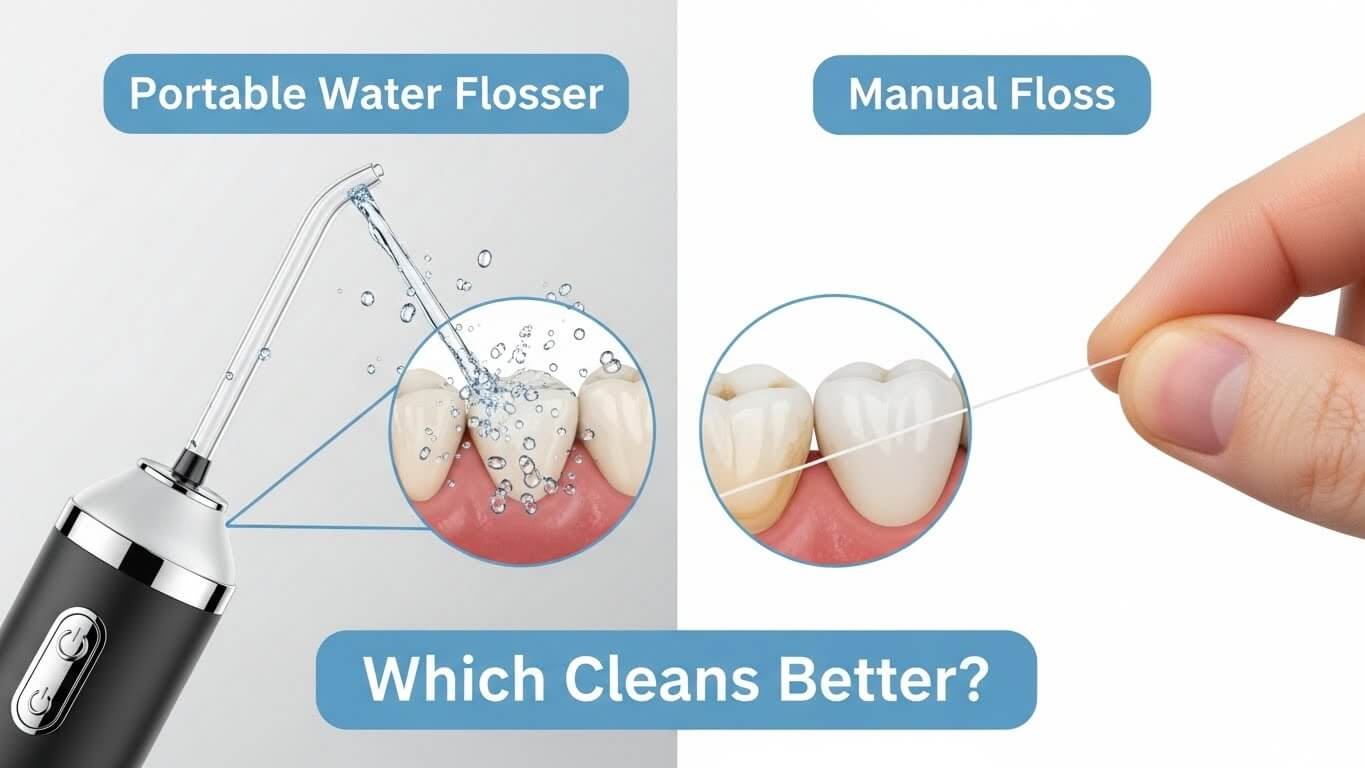
String floss provides more thorough mechanical cleaning when used with perfect technique. The scraping action removes stubborn plaque biofilm more aggressively than water pressure. Dentists can often tell which patients use string floss by the cleanliness of interdental surfaces during examinations.
Water flossers clean more thoroughly in practice for most users because they’re easier to use correctly. The foolproof nature ensures you treat all areas rather than skipping difficult molars or rushing through the process. For real-world effectiveness, water flossers often win despite string floss’s theoretical superiority.
The combination of both methods provides optimal results. Using string floss for mechanical plaque removal followed by water flossing to flush remaining debris offers the best of both approaches. Many dental professionals recommend this hybrid strategy for patients serious about oral health.
Speed and Efficiency
Manual flossing requires two to three minutes when done properly. Many people shortcut this to 30 to 60 seconds, sacrificing thoroughness for speed. The time investment feels burdensome to some users, particularly when tired at bedtime.
Water flossing typically takes 60 to 90 seconds for a complete pass around all teeth. The process feels faster because it requires less concentration and effort. The satisfying sensation of blasting away debris provides psychological rewards that make the time pass quickly.
For morning routines when time is limited, water flossers offer clear advantages. You can effectively clean your entire mouth in under two minutes with minimal effort or thought.
Mess and Bathroom Cleanliness
String floss creates minimal mess beyond occasional blood spotting during initial use if your gums are inflamed. The used floss goes directly in the trash with no cleanup required. Bathroom counters and mirrors remain pristine.
Water flossers inevitably create water splatter, especially during the learning phase. You’ll spray your mirror, countertop, and possibly your shirt until you master the technique of keeping your mouth positioned correctly. Even experienced users occasionally create messes.
The need to refill the reservoir means handling the device with wet hands and potentially spilling water. Cleanup adds 30 to 60 seconds to your routine, though this becomes automatic with practice.
Suitability for Sensitive Gums
People with sensitive or inflamed gums often find string floss painful. The sawing motion and pressure can cause bleeding and discomfort that discourages consistent use. However, this initial discomfort usually subsides within a week or two as gum health improves.
Water flossers offer gentler cleaning with adjustable pressure settings. You can start at low pressure and gradually increase as your gums toughen. The massaging action actually soothes irritated gum tissue rather than traumatizing it further.
For people with severe gingivitis or periodontal disease, water flossers provide therapeutic benefits that make them the better choice during the healing phase. Once gum health improves, adding string floss enhances maintenance.
Environmental Impact
String floss generates plastic waste from packaging and the floss itself. A year’s worth of flossing produces approximately 200 to 300 feet of plastic-coated nylon waste plus multiple plastic containers. Biodegradable floss options exist but cost more and represent a tiny market share.
Water flossers create electronic waste when disposed of after battery failure. However, one device used for three to five years generates less total waste than the equivalent period’s worth of floss containers and floss picks. Replacement tips add some ongoing waste but far less than daily floss disposal.
Reusable floss alternatives like refillable holders reduce waste for manual flossers, while water flossers inherently follow a reusable model. From a pure waste perspective, water flossers generally have a smaller environmental footprint despite being electronic devices.
Travel Practicality
Manual floss dominates for travel convenience. It requires no charging, takes up negligible space, and works anywhere. You can throw a container in your carry-on without security concerns or weight considerations.
Portable water flossers are designed for travel but introduce complications. You must remember the charger, ensure it’s charged before trips, and pack replacement tips if traveling for extended periods. The device adds noticeable weight and bulk to toiletry bags.
Airport security occasionally questions water flossers, though they’re permitted in carry-on luggage. The reservoir must be empty during flight security screening. Some frequent travelers keep a dedicated travel water flosser to avoid packing their daily-use model.
For short trips of three to five days, many water flosser users simply pack string floss rather than dealing with device logistics. For longer trips or if you have braces or dental implants that benefit significantly from water flossing, bringing the device becomes worthwhile.
User Experiences and Preferences
Manual Floss User Perspectives
Dedicated string floss users appreciate the control and thoroughness they achieve. Many describe satisfaction from the tactile feedback of feeling plaque being removed and the clean sensation afterward. For these users, the ritual of flossing provides psychological benefits beyond oral health.
Common frustrations include difficulty reaching back molars, bleeding gums despite consistent use, and the tedious nature of the process. Many people admit they don’t floss as often as recommended because it feels like a chore rather than self-care.
Dental professionals often note that patients overestimate their flossing effectiveness. Many believe they’re doing an excellent job but show significant interdental plaque at appointments. The skill gap between perceived and actual technique leads some dentists to recommend water flossers for patients who struggle with string floss.
Water Flosser User Perspectives
Water flosser converts often describe them as life-changing for their oral hygiene. The ease of use and satisfying feeling of blasting debris from between teeth makes flossing enjoyable rather than burdensome. Many users report flossing more consistently after switching to water flossers.
The most common complaint involves the learning curve for mess-free use. New users frequently spray water across their bathroom until they master the technique of leaning over the sink with mouth slightly open. This initial frustration causes some people to abandon water flossers entirely.
Battery life concerns emerge in user reviews, with some budget models requiring weekly charging that users find annoying. Device reliability issues also appear in reviews, with cheaper models sometimes failing within six months to a year.
Orthodontic patients consistently rave about water flossers, describing them as essential for maintaining hygiene with braces. The ability to clean around brackets and wires without the frustration of threading floss makes compliance dramatically easier.
Product Recommendations
Best Portable Water Flosser Overall: Waterpik Cordless Freedom
The Waterpik Cordless Freedom represents the gold standard in portable water flossers. Priced around $70, it delivers professional-level cleaning in a truly portable design. The 150ml reservoir provides adequate water for most users, and the rechargeable battery lasts up to two weeks per charge.
With three pressure settings ranging from 45 to 75 PSI, it accommodates sensitive gums and aggressive cleaning needs. The waterproof design allows shower use, which many users find convenient for reducing mess. Waterpik’s reputation ensures reliable customer service and readily available replacement tips.
Best Budget Portable Water Flosser: Philips Sonicare Power Flosser 3000
At approximately $35, the Philips Sonicare Power Flosser 3000 provides exceptional value. It includes two pressure settings and a quad-stream tip that covers more surface area efficiently. The 250ml reservoir is generous for a portable model, reducing mid-session refilling.
Battery life impresses for the price point, delivering up to 90 uses per charge. Build quality exceeds expectations for budget-priced water flossers. While it lacks the premium feel of higher-priced models, it performs the core function admirably.
Best Premium Portable Option: Waterpik Cordless Pro Plus
For users wanting the absolute best, the Waterpik Cordless Pro Plus at around $90 offers advanced features including four pressure settings, 360-degree tip rotation, and premium build quality. The larger 200ml reservoir reduces refilling needs.
The global voltage charger benefits international travelers, and the premium tips provide specialized cleaning for various dental situations. The two-year warranty offers peace of mind for the higher investment.
Best Manual Floss for Beginners: Oral-B Glide Pro-Health
For those committed to string floss, Oral-B Glide Pro-Health provides the easiest flossing experience. The smooth texture slides between tight contacts without shredding, and the light coating helps it glide past rough filling edges.
At approximately $4 per package, it costs slightly more than basic floss but the improved experience increases compliance. The wide ribbon style makes gripping easier for people developing their flossing technique.
Best Manual Floss for Tight Contacts: Cocofloss
Cocofloss offers a unique textured design that removes more plaque than traditional smooth floss while still navigating tight spaces. The coconut oil coating provides natural antibacterial properties and pleasant taste that makes flossing more enjoyable.
At $8 per container, it’s premium-priced but many users find the experience worthwhile. The expanded texture grabs plaque effectively while remaining gentle on gums.
Best Hybrid Approach: Waterpik Sonic-Fusion
For users who want both brushing and water flossing in one device, the Waterpik Sonic-Fusion (around $120 for the full-size version) combines an electric toothbrush with water flossing. While not strictly portable, it represents the ultimate in convenience for home use and shows the direction oral care technology is heading.
Frequently Asked Questions
Can water flossers completely replace traditional floss?
For most people, water flossers can effectively replace string floss and may actually provide better results due to easier consistent use. The American Dental Association has given its Seal of Acceptance to water flossers as effective interdental cleaners. However, some dentists still recommend using both methods for optimal results, particularly for patients with heavy plaque buildup or a history of cavities between teeth. If you’re considering switching entirely to water flossing, discuss it with your dentist first.
How do I use a portable water flosser without making a mess?
Start with the lowest pressure setting and lean over the sink before turning on the device. Keep your mouth slightly open to allow water to drain directly into the sink rather than pooling in your mouth. Place the tip at a 90-degree angle to your gum line and pause briefly between teeth to let water flow out. Work from back to front so you can see what you’re doing as you improve technique. With practice, you’ll minimize splatter to nearly zero.
Which method is better for people with braces?
Water flossers dramatically outperform string floss for orthodontic patients. Flossing with traditional floss requires threading under wires and around brackets, a process so tedious that many people skip it entirely. Water flossers effortlessly flush food and bacteria from around orthodontic hardware. Orthodontists consistently recommend water flossers for their patients to improve compliance and reduce cavity risk during treatment.
How often should I replace water flosser tips?
Manufacturers recommend replacing tips every three to six months, similar to toothbrush replacement schedules. The exact timeline depends on usage frequency and water quality in your area. Hard water can cause mineral buildup that reduces effectiveness. Inspect tips regularly for wear, discoloration, or damage. Replace immediately if you notice cracks, mineral deposits that won’t clean off, or reduced water pressure through the tip.
Is it normal for my gums to bleed when I first start flossing?
Yes, bleeding is common when you begin flossing consistently, whether using string floss or water flossers. Bleeding indicates gum inflammation from plaque buildup. With daily flossing, bleeding typically subsides within one to two weeks as gum health improves. If bleeding persists beyond two weeks or is excessive, consult your dentist as this may indicate periodontal disease requiring professional treatment. Start with gentle pressure and gradually increase as your gums become healthier.
Can children use portable water flossers?
Children can safely use water flossers, typically starting around age six when they have sufficient dexterity and understanding to operate the device correctly. Always use the lowest pressure setting for children and supervise use until they demonstrate proper technique. Water flossers can help children develop consistent flossing habits since they’re easier and more fun than string floss. Some manufacturers make child-specific models with lower pressure ranges and appealing designs.
Do water flossers work if I have receding gums or periodontal disease?
Water flossers are particularly beneficial for people with gum disease or receding gums. The gentle pulsating water flushes bacteria from periodontal pockets without causing trauma to already-compromised tissue. Studies show water flossers reduce inflammation and bleeding more effectively than string floss for patients with moderate periodontal disease. Always use low to medium pressure settings and focus on the gum line. Consult your periodontist about incorporating water flossing into your treatment plan.
What’s the difference between portable and countertop water flossers?
Countertop models plug into outlets and feature larger water reservoirs (typically 600ml to 1000ml), more powerful motors, and higher maximum pressure settings. They provide longer runtime and more consistent pressure but require counter space and electrical outlets. Portable models run on rechargeable batteries, include smaller reservoirs (150ml to 300ml), and offer true portability but may require mid-session refilling for extensive dental work. Countertop models generally deliver superior cleaning power, while portable models offer convenience and travel-friendliness. If you primarily floss at home and have counter space, countertop models provide better value and performance. If you travel frequently or have limited bathroom space, portable models make more sense.
Conclusion
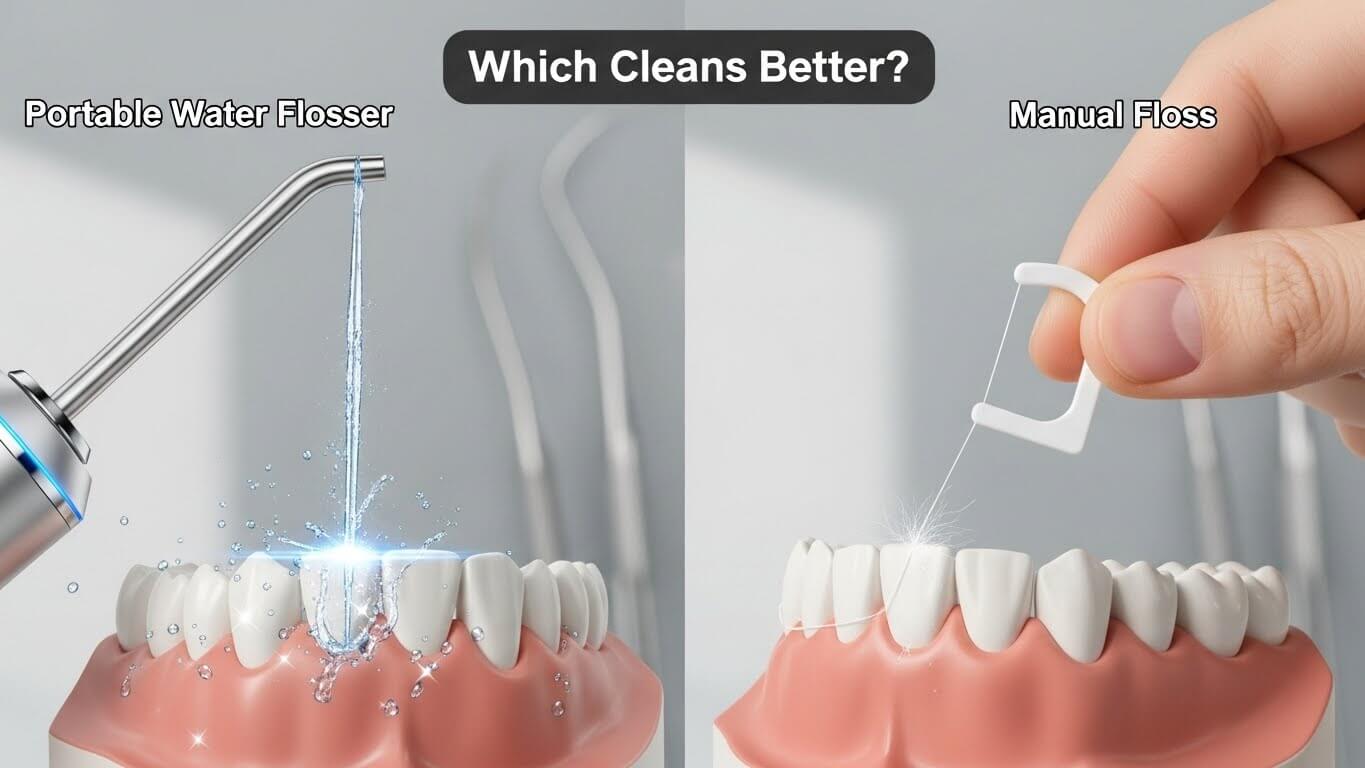
Your choice between portable water flossers and manual floss depends on your specific dental needs, lifestyle, and commitment level.
Choose a portable water flosser if you have braces, bridges, implants, or other dental work that makes flossing difficult. Water flossers excel for people with limited dexterity, sensitive gums, or those who simply won’t floss consistently with string floss. If you travel occasionally but want better oral health, the convenience of water flossing may justify the device investment.
Choose manual floss if you’ve mastered proper technique and floss consistently, prefer the simplicity and zero-maintenance approach, travel frequently, or operate on a minimal budget. String floss remains the most portable and universally accessible option.
Consider using both methods for optimal results. Water floss first to remove large debris, then use string floss for thorough mechanical cleaning of stubborn plaque. This combination provides comprehensive interdental care that exceeds either method alone.
Consult your dentist about your specific situation. They can examine your teeth, assess your current flossing effectiveness, and provide personalized recommendations based on your oral health status and risk factors.