

Neck pain affects millions of people daily, stemming from poor posture, stress, prolonged computer use, or underlying medical conditions. Two popular at-home relief options—electric neck massagers and heated neck wraps; take fundamentally different approaches to addressing neck discomfort. Electric massagers use mechanical manipulation and sometimes heat to relieve tension, while heated wraps rely primarily on therapeutic warmth to relax muscles. This comprehensive comparison examines both solutions to help you choose the most effective relief for your specific neck pain.
Understanding the Technologies
Electric Neck Massagers: Mechanical Relief
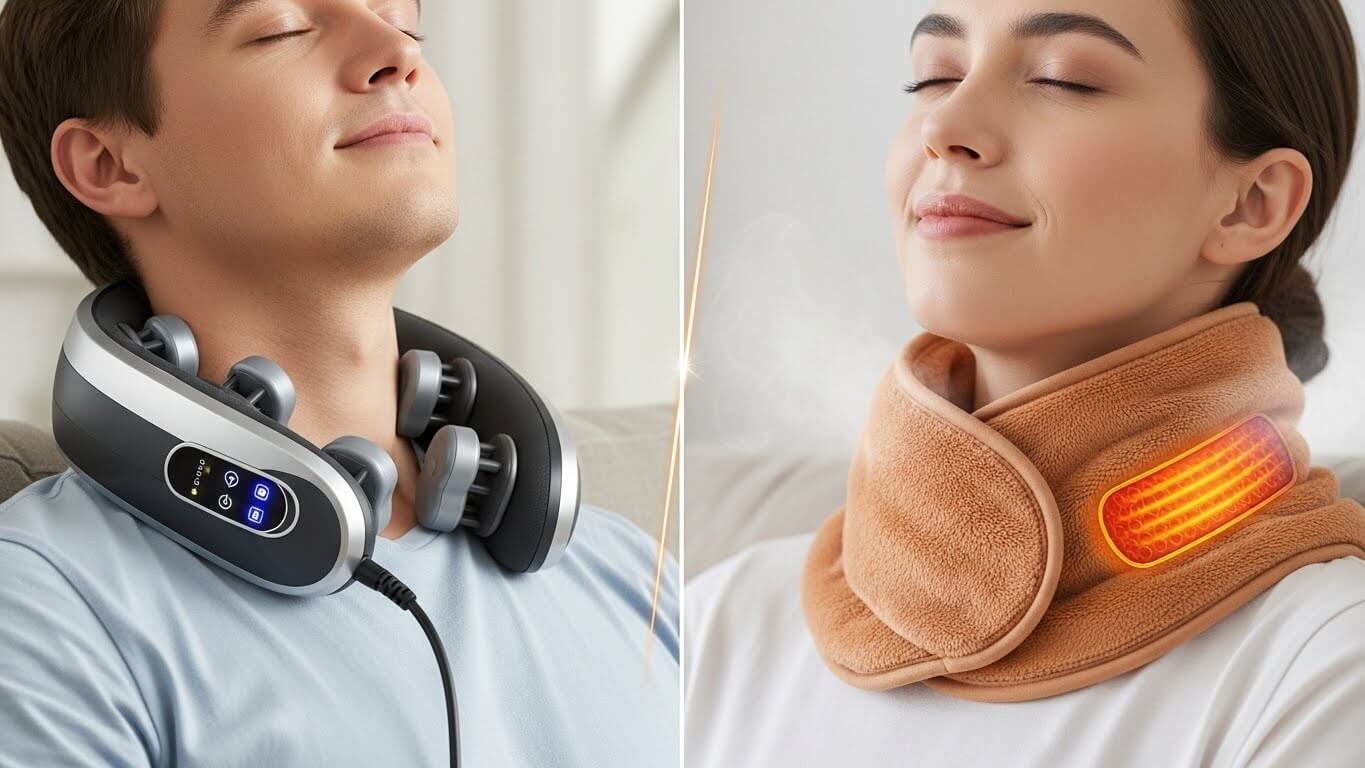
Electric neck massagers use motors to create various massage motions that manipulate neck muscles mechanically. The most common designs include shiatsu massagers with rotating nodes that knead muscles in circular patterns, percussion massagers delivering rapid tapping motions, and combination devices offering multiple massage styles.
Shiatsu-style massagers typically feature 4-8 rotating nodes arranged to mimic the thumb pressure of manual massage. The nodes rotate in opposite directions, creating a kneading effect that works muscle tissue from different angles. The mechanical action physically manipulates muscles, breaking up tension and increasing local blood flow.
Many electric massagers include heating elements that warm the massage nodes or the device surface. This combination of heat and mechanical action provides dual therapy—heat relaxes muscles while massage works out specific knots and tension points. The heat typically reaches 100-115°F, sufficient for therapeutic warmth without burning risk.
Power comes from wall outlets, USB charging, or batteries depending on the model. Corded massagers deliver consistent power without charging concerns, while cordless models offer portability at the cost of limited runtime and eventual battery degradation.
Intensity control allows adjusting massage pressure and speed to personal comfort. Most devices offer 2-4 intensity levels, with some premium models providing variable speed control for precise customization. The ability to control intensity prevents excessive pressure that might cause bruising or discomfort.
Modern electric massagers often include timers (typically 15-20 minutes) that automatically shut off the device, preventing overuse and excessive stimulation that could irritate muscles rather than relieve them.
Heated Neck Wraps: Therapeutic Warmth
Heated neck wraps deliver therapeutic warmth through various heat sources. Electric wraps use embedded heating elements powered by wall outlets or rechargeable batteries. Microwaveable wraps contain materials like rice, flaxseed, or gel that retain heat after microwave warming. Chemical heat packs use exothermic reactions to generate heat.
Electric heated wraps provide consistent, controllable temperature for extended periods. Most offer 2-4 heat settings ranging from approximately 100°F to 140°F. The adjustable temperature allows matching heat intensity to individual tolerance and therapeutic needs. Treatment duration can extend to hours with electric wraps, limited only by safety timers or personal preference.
Microwaveable wraps offer cordless convenience and natural heat. The filling materials distribute warmth evenly and retain heat for 20-45 minutes depending on wrap size and filling material. Aromatherapy options incorporate lavender or other herbs for additional relaxation benefits. The temporary heat makes them ideal for short-term relief sessions.
The heat therapy mechanism works by increasing blood flow to affected muscles, improving oxygen and nutrient delivery while accelerating waste product removal. Warmth also reduces muscle spindle activity, decreasing the signals that keep muscles contracted and tense. Additionally, heat stimulates sensory receptors that reduce pain signal transmission, providing direct pain relief.
The flexibility of heated wraps allows conforming to neck contours, ensuring even heat distribution across the treatment area. Unlike rigid devices, wraps maintain contact with skin even when moving or changing positions.
Some devices blur the lines between categories, offering both massage and heat in integrated designs. These combination units attempt to provide comprehensive relief through multiple therapeutic mechanisms simultaneously. The trade-off is often increased complexity, higher cost, and potential compromise on specialized function compared to dedicated devices.
Pain Relief Effectiveness
Electric Massager Pain Relief Mechanisms
Electric massagers address pain through multiple pathways. The mechanical manipulation physically works muscle tissue, breaking up adhesions and releasing trigger points that contribute to pain. This direct physical intervention can provide relief that passive heating cannot achieve.
The kneading and percussion motions increase local circulation more aggressively than heat alone. The mechanical stimulation forces blood through muscle tissue, carrying fresh oxygen and nutrients while removing inflammatory substances and metabolic waste that sensitize pain receptors.
Gate control theory suggests that the mechanical pressure stimulates sensory nerves that can block pain signal transmission to the brain. This immediate pain reduction occurs during massage and may persist for some time afterward as muscles remain relaxed.
Massage stimulates mechanoreceptors in muscle tissue that signal the nervous system to reduce muscle spindle activity, decreasing the neural drive maintaining muscle tension. This neurological relaxation complements the mechanical muscle manipulation.
Research on mechanical massage shows consistent benefits for muscle tension and pain. A 2015 systematic review in the Journal of Clinical Medicine Research found that mechanical massage devices reduced muscle pain and improved range of motion in neck pain patients. The effects were most pronounced when massage was combined with heat.
However, electric massagers provide localized treatment limited to areas the device can reach effectively. Neck massagers work well for posterior and lateral neck muscles but may miss anterior structures or areas the device cannot conform to adequately.
Heated Wrap Therapeutic Effects
Heat therapy for muscle pain has extensive research support and clinical history. A 2006 review in The Journal of Pain concluded that heat therapy effectively reduces pain and disability in acute and subacute low back pain, with mechanisms extending to neck pain as well.
The increased blood flow from heat therapy accelerates healing in strained or injured muscles. Fresh blood delivers building blocks for tissue repair while removing inflammatory mediators prolonging pain. This makes heat particularly effective during the subacute phase of muscle injuries.
Heat reduces muscle stiffness by decreasing collagen viscosity in connective tissue, allowing easier movement and reducing the mechanical pain from stiff, restricted tissues. This effect is especially beneficial for morning stiffness or pain after prolonged static positions.
The sensory stimulation from heat activates thermoreceptors that can inhibit pain signal transmission, providing direct analgesic effects beyond the muscular benefits. This explains why heat feels good immediately even before physiological changes occur.
Heated wraps offer whole-area treatment, warming the entire neck region simultaneously rather than focusing on specific points. This comprehensive coverage benefits diffuse neck pain or tension affecting large muscle groups.
However, heat provides limited mechanical action on muscle tissue. While it relaxes muscles generally, it doesn’t directly address trigger points, adhesions, or specific areas of concentrated tension the way mechanical massage can.
Convenience and Usability
Electric Massager Practical Considerations
Electric neck massagers require minimal setup—drape the device around your neck, secure any straps or closures, and turn it on. Most sessions last 15-20 minutes, a manageable time investment that fits into breaks, morning routines, or evening relaxation.
The hands-free design of most neck massagers allows using them while watching TV, reading, or working at a desk. This multitasking capability makes treatment feel less like an additional obligation and more like enhanced relaxation during activities you’d do anyway.
Portability varies significantly by model. Corded massagers tether you to outlets, limiting where you can use them. Battery-powered models offer freedom to move around but require charging and have limited runtime, typically 60-120 minutes per charge.
Storage is generally straightforward—most neck massagers are compact enough for bathroom cabinets, bedroom drawers, or desk storage. The rigid structure prevents the device from getting tangled or damaged like flexible items might.
Noise level varies by massage mechanism and quality. Shiatsu massagers with motors produce noticeable humming and mechanical sounds, typically 50-65 decibels—about conversation level. Budget models can be louder and more disruptive, while premium devices operate more quietly.
Cleaning requires wiping down surfaces that contact skin, particularly important for hygiene with regular use. Most massagers include removable, washable fabric covers. The mechanical components shouldn’t get wet, requiring care when cleaning.
Heated Wrap Ease of Use
Microwaveable heated wraps offer ultimate simplicity—heat for the specified time (typically 1-3 minutes), wrap around your neck, and relax. No batteries, no charging, no cords. The entire process from storage to application takes under 5 minutes.
Electric heated wraps require more setup with plugging in or ensuring batteries are charged. Some models include automatic shut-off timers (often 1-2 hours), while others require manual operation. The consistent heat over extended periods suits prolonged treatment sessions.
Portability favors microwaveable wraps, which travel easily anywhere with microwave access. Electric wraps need power sources, though cordless models with rechargeable batteries offer reasonable portability for travel or commuting.
Storage is exceptionally easy for flexible wraps; they fold or roll into compact forms occupying minimal space. You can keep them in desk drawers, nightstands, or bags without the space requirements of rigid massagers.
Maintenance for heated wraps is minimal. Microwaveable wraps with removable covers allow washing the fabric while the inner pouch remains intact. Some users add a few drops of essential oils periodically to refresh aromatherapy wraps.
The comfort level of wraps generally exceeds that of rigid massagers. The soft, conforming material feels gentler and more relaxing than hard massage nodes pressing into muscles, though this gentleness means less intensive muscle manipulation.
Treatment Flexibility and Versatility
Electric Massager Adaptability
Quality electric neck massagers include multiple massage modes—kneading, tapping, rolling, or combination patterns. This variety allows matching massage style to current needs. Gentle kneading for general relaxation, more aggressive modes for stubborn tension.
Adjustable intensity settings let you customize pressure from light touch to deep tissue work. Lower settings suit sensitive areas or acute pain, while higher settings address chronic, deeply embedded tension.
Many neck massagers include heat as an optional feature you can enable or disable. Using massage with heat provides comprehensive therapy, while massage-only offers pure mechanical manipulation for situations where added heat isn’t desired or tolerable.
The directional control on some models allows reversing massage direction, preventing muscle tissue from adapting to repetitive motion patterns. This variation may enhance effectiveness by approaching tension from different angles.
However, electric massagers are purpose-built for necks and typically don’t adapt well to other body areas. The curved design and massage node positioning optimise for neck anatomy, limiting versatility for treating shoulders, back, or legs effectively.
Heated Wrap Flexibility
Heated wraps excel at versatility—the same wrap that treats neck pain works for shoulders, lower back, knees, or anywhere you can secure it. This multi-purpose functionality provides exceptional value since one device addresses pain throughout the body.
Temperature control on electric wraps allows matching heat intensity to different body areas and pain severity. Lower heat for sensitive neck areas, higher heat for thicker back muscles. This adjustability extends the wrap’s usefulness across various conditions.
Microwaveable wraps offer variable heat duration based on microwave time. Short heating provides mild warmth for minor discomfort, extended heating delivers intense heat for severe tension. This flexibility allows customizing treatment without multiple devices.
Many heated wraps include weighted components that provide gentle compression alongside heat. This dual action of warmth plus pressure can enhance relaxation and pain relief beyond heat alone.
The simple heat therapy mechanism means wraps remain effective across many conditions—muscle strains, arthritis pain, menstrual cramps, general soreness. Electric massagers are more specialized, working best for muscle tension specifically.
Target User Profiles
Ideal Candidates for Electric Massagers
People with specific trigger points or localized muscle knots benefit most from mechanical massage. If your neck pain centers on particular spots you can identify by touch, the targeted pressure of massage nodes directly addresses these problem areas.
Those who’ve found relief from professional massage appreciate electric massagers as convenient alternatives. If manual massage from therapists helps your neck pain, mechanical devices can extend those benefits between professional sessions.
Individuals with chronic neck tension from desk work, driving, or stress often prefer massage’s active muscle manipulation. The mechanical action breaks up the persistent tightness that builds from sustained poor posture or repetitive strain.
People who enjoy intense, deep pressure find electric massagers satisfying. If you prefer firm massage that “hurts so good,” electric devices deliver pressure intensity that gentle heat cannot match.
Tech-savvy users who appreciate programmable devices and multiple settings enjoy the control electric massagers offer. The ability to fine-tune massage experience appeals to those who like optimizing therapeutic interventions.
Ideal Candidates for Heated Wraps
Individuals with widespread, diffuse neck pain benefit from heat’s comprehensive coverage. If your entire neck feels tight rather than specific spots being problematic, wraps address the whole area simultaneously.
People sensitive to pressure or recovering from acute injuries prefer gentle heat therapy. The non-invasive warmth provides relief without the aggressive manipulation that might irritate sensitive or inflamed tissues.
Those seeking simplicity and minimalism appreciate microwaveable wraps’ straightforward approach. No batteries, settings, or technology; just reliable, predictable warmth exactly when needed.
Budget-conscious users find excellent value in heated wraps, particularly microwaveable versions costing $15-$30. This accessibility makes therapeutic heat available regardless of financial resources.
Travelers and frequent movers benefit from wrap portability and versatility. One compact, lightweight item addresses neck pain at home, in hotels, or anywhere with heat sources.
People with arthritis or stiffness-dominant pain often respond better to heat than massage. The warmth directly addresses the stiffness and restricted mobility that mechanical manipulation alone may not fully resolve.
Safety and Potential Risks
Electric Massager Safety Considerations
Electric massagers are generally safe when used as directed, but several precautions apply. Excessive pressure or prolonged use can cause bruising or muscle irritation. Respect device timers and avoid using continuously for hours, which can overstimulate muscles.
People with certain medical conditions should consult physicians before using electric massagers. These conditions include osteoporosis (aggressive massage could theoretically cause fractures), severe cervical spine issues, active cancer, or recent neck surgery.
Pregnant women should avoid or use electric neck massagers cautiously, particularly avoiding certain acupressure points that could theoretically trigger contractions. Consult with obstetricians before incorporating massage devices during pregnancy.
Those with skin conditions, open wounds, or recent injuries in the neck area should avoid massage over affected areas. The mechanical manipulation could worsen inflammation or damage healing tissues.
The heating elements in combination devices require caution. While burns are rare with properly functioning devices, users with reduced sensation or those who fall asleep during use face increased burn risk. Monitor skin temperature and never sleep with electric heating devices.
Heated Wrap Safety Profile
Heated wraps carry minimal risks when used appropriately. The primary concern is burns from excessive heat, particularly with electric wraps at high settings or microwaveable wraps heated too long.
People with diabetes, peripheral neuropathy, or reduced sensation should use heated wraps cautiously since they might not detect uncomfortable heat levels before burns occur. Start with low settings and closely monitor skin condition.
Circulatory problems complicate heat therapy. Conditions like deep vein thrombosis could theoretically worsen with heat application increasing blood flow. Consult physicians if you have vascular conditions before using heat therapy.
Pregnancy is generally compatible with heat therapy at moderate temperatures, but avoid excessive heat (above 102°F body temperature) that could theoretically affect fetal development. Warm rather than hot applications are safer during pregnancy.
Acute inflammation benefits from cold therapy rather than heat during the first 24-48 hours. Applying heat to fresh injuries could increase inflammation and swelling. Use ice initially, transitioning to heat after the acute inflammatory phase.
Microwaveable wraps require attention to heating times to prevent overheating. Overfilled or improperly designed wraps might develop hot spots that burn. Follow manufacturer instructions precisely regarding microwave duration.
Cost and Long-Term Value
Electric Massager Investment
Electric neck massagers range from $30 to $200 depending on features and quality. Budget models at $30-$60 provide basic massage functionality but may lack durability or sophisticated features. Mid-range options at $70-$120 balance quality and affordability effectively.
Premium massagers at $150-$200+ offer superior build quality, quieter operation, advanced features like multiple massage modes, and better heat distribution. For daily users, the premium investment often proves worthwhile through improved experience and longevity.
Corded models generally cost less than comparable battery-powered versions. The trade-off between portability and price helps determine appropriate investment level based on how you’ll use the device.
Lifespan varies dramatically by quality. Budget massagers might last 6-12 months of regular use before motors fail or heating elements burn out. Quality devices often function for 3-5 years or longer with proper care.
Operating costs are minimal—electricity usage is negligible for occasional use. Battery-powered models eventually need replacement batteries or have built-in batteries that degrade, potentially necessitating device replacement after 2-3 years.
Replacement parts aren’t typically available for consumer neck massagers. When motors fail or heating elements stop working, you usually replace the entire device rather than repairing components.
Heated Wrap Economics
Heated wraps offer exceptional value, especially microwaveable versions costing $15-$40. These simple devices last for years with proper care since they contain no mechanical or electrical components to fail.
Electric heated wraps cost $25-$80 depending on features and quality. While more expensive than microwaveable options, they still represent modest investments compared to electric massagers.
Operating costs favor microwaveable wraps with essentially zero ongoing expenses beyond negligible electricity for microwave use. Electric wraps consume minimal electricity—a few cents per hour of use.
Durability of microwaveable wraps depends on construction quality. Well-made wraps with reinforced stitching last 3-5 years or longer. Budget wraps might develop leaks or tears within a year, particularly with frequent use.
Electric wrap longevity varies by heating element quality. Cheap heating wires may burn out within a year, while quality models function for 3-5+ years. Battery-powered versions face eventual battery degradation requiring replacement.
The versatility of heated wraps enhances value since one device treats multiple body areas. Unlike specialized neck massagers, wraps address various pain locations, maximizing utility per dollar invested.
Making Your Decision
Choose Electric Neck Massager If:
You experience specific trigger points or localized muscle knots requiring targeted pressure. Mechanical manipulation addresses concentrated tension better than diffuse heat.
Professional massage helps your neck pain and you want convenient at-home replication. Electric devices approximate manual massage techniques between therapist visits.
You prefer active, intensive treatment that works muscles aggressively. The mechanical action provides satisfaction that gentle warmth cannot deliver.
Budget allows $70-$150 investment and you value features like multiple massage modes and adjustable intensity.
You’ll primarily use the device at home or locations with reliable power access. Portability isn’t a priority compared to effective, consistent relief.
Choose Heated Neck Wrap If:
Your neck pain is widespread and diffuse rather than concentrated in specific spots. Comprehensive heat coverage addresses whole-area tension effectively.
You prefer gentle, soothing relief to aggressive manipulation. Heat therapy provides comfort without the discomfort mechanical massage sometimes causes.
Simplicity appeals more than technological features. Microwaveable wraps offer reliable relief without batteries, charging, or settings.
Budget is limited and you want the most economical option. Quality heated wraps cost $15-$40, making relief accessible to everyone.
Portability and versatility matter for travel, work, or treating multiple body areas. One compact wrap addresses various pain locations.
You have sensitive skin, acute injuries, or conditions making pressure-based massage inappropriate. Heat provides therapeutic benefits without mechanical stress.
Consider Both If:
Chronic neck pain requires comprehensive management beyond what one device provides. Combining approaches addresses tension from multiple angles.
Budget allows $100-$200 total investment in pain relief equipment. Dual devices cost less than premium single units while offering greater versatility.
Your neck pain varies—sometimes localized knots, other times general stiffness. Having both tools allows matching treatment to current condition.
Frequently Asked Questions
Can I use an electric massager every day?
Yes, daily use is generally safe when limited to recommended session durations (typically 15-20 minutes). Avoid using multiple times daily or for extended periods, which could irritate muscles. Allow muscles some recovery time between treatments. If you notice increased soreness or bruising, reduce frequency or intensity.
How hot should a neck wrap get?
Therapeutic heat typically ranges from 104-113°F for comfort and effectiveness. Heated wraps shouldn’t exceed 120°F to prevent burns. The sensation should feel warm and soothing, never painful or uncomfortably hot. If using electric wraps, start at low settings and increase gradually to find your comfortable therapeutic temperature.
Do electric massagers help with headaches?
Tension headaches originating from neck muscle tightness often improve with neck massage. The relaxation of neck muscles can reduce headache intensity and frequency. However, massagers won’t help migraine headaches or headaches from other causes. If neck tension contributes to your headaches, massage may provide relief.
Can I sleep with a heated neck wrap?
Never sleep with electric heated wraps due to burn risk. Microwaveable wraps are safer since they cool naturally, but falling asleep wearing them isn’t recommended as they might shift and cool unevenly. Use heated wraps while awake and alert to monitor comfort and remove when treatment is complete.
Which works better for pinched nerves?
Neither electric massagers nor heated wraps treat actual nerve compression requiring medical intervention. However, if muscle tension contributes to nerve irritation, heat therapy is generally safer than aggressive massage. Consult physicians for true pinched nerves before using home devices. Inappropriate massage could worsen nerve compression.
How long does relief last from each method?
Immediate relief from electric massage typically lasts 1-4 hours, varying by individual and pain severity. Regular use may create cumulative benefits extending relief duration. Heat therapy provides relief during and for 30-90 minutes after treatment. Long-term benefits from either method require consistent use over weeks to reduce chronic tension patterns.
Are these devices FSA/HSA eligible?
Many electric massagers and heated wraps qualify for FSA/HSA purchase with proper documentation. Some retailers specifically market devices as FSA/HSA eligible. Check with your plan administrator and keep receipts. Having a physician’s recommendation or prescription may improve reimbursement likelihood, though many items qualify without prescriptions.
Can these devices replace physical therapy?
No, home devices complement but cannot replace professional physical therapy. Physical therapists provide personalized assessment, hands-on techniques, exercise programming, and progress monitoring that home devices cannot replicate. Use massage and heat devices as directed by therapists to extend treatment benefits between sessions, but not as therapy replacements.
Conclusion
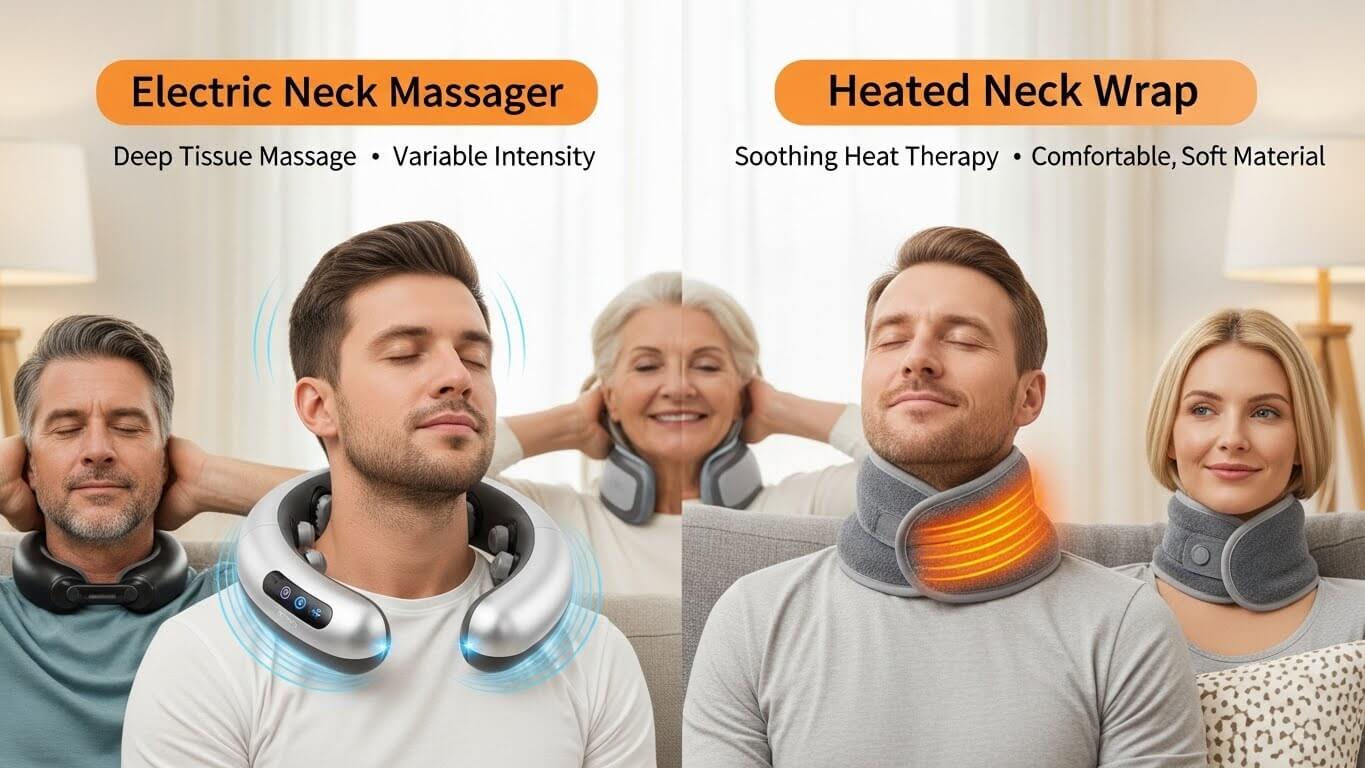
Electric neck massagers and heated wraps serve different therapeutic purposes despite both targeting neck pain. Electric massagers excel at mechanical muscle manipulation, providing targeted pressure to break up trigger points and release concentrated tension. The active manipulation creates relief similar to professional massage, making electric devices ideal for localized muscle knots and chronic tension requiring aggressive treatment.
Heated wraps deliver comprehensive, gentle warmth that relaxes muscles through increased blood flow and direct thermal effects. The soothing heat addresses widespread neck stiffness and provides comfort without mechanical aggression. Wraps offer superior value, portability, and versatility while requiring minimal investment and zero learning curve.
For targeted, intensive relief from specific muscle tension, electric massagers provide superior mechanical action. The ability to focus pressure on problem areas and adjust intensity makes them effective for stubborn knots that heat alone cannot fully resolve. Regular massage users and those requiring deep tissue work benefit most from mechanical devices.
For gentle, whole-area relaxation and budget-conscious relief, heated wraps deliver effective therapy in the simplest possible format. The comprehensive warmth, minimal cost, and multi-purpose versatility make wraps accessible and practical for most neck pain sufferers.
Many people ultimately benefit from owning both, using electric massage for targeted muscle work and heated wraps for overall relaxation and gentle relief. This combination approach costs less than premium single devices while providing complete therapeutic flexibility.
Consider your pain pattern when choosing. Specific trigger points and concentrated tension respond better to mechanical massage. Widespread stiffness and general neck discomfort benefit more from therapeutic heat. Your budget, lifestyle, and treatment preferences should guide the final decision—both technologies effectively address neck pain when matched appropriately to individual needs and conditions.