

Neck tension is one of the most universally reported physical complaints in the modern working population. Remote work, extended screen time, poor ergonomic setups, and chronic postural strain have made the posterior cervical muscles; the suboccipitals, semispinalis, splenius capitis, and upper trapezius; among the most chronically overloaded tissue in the human body. The neck massager market has responded with an overwhelming proliferation of devices, and heat has become a near-universal selling point.
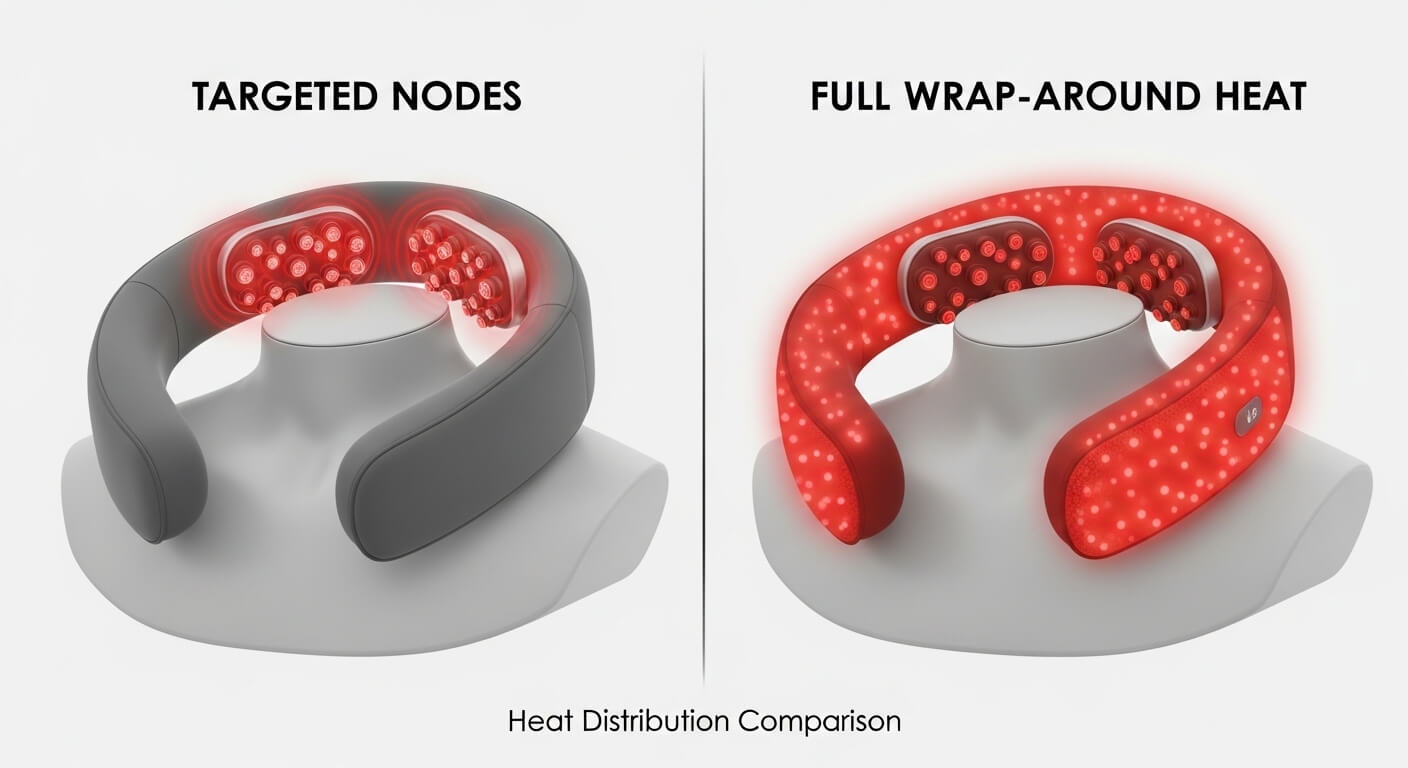
But not all heat is delivered the same way. The two dominant approaches to neck massager thermal design, targeted node heating, where heat is concentrated at the massage head contact points, and full wrap-around heating, whdevice,lexible heating element distributes warmth across the entire contact surface of the device; produce meaningfully different therapeutic outcomes despite being marketed with similar language.
The distinction matters because heat therapy works through specific physiological mechanisms that respond differently to concentrated versus distributed thermal stimulus. Understanding the difference helps buyers choose a device matched to their primary complaint whether that is deep muscle knot relief, broad cervical tension, nerve-related discomfort, or simply soothing warmth for relaxation; rather than defaulting to whatever device photographs best on a product listing.
Targeted Node Heating
Targeted node heating is the dominant design in shiatsu-style neck massagers — devices with rotating or oscillating massage heads (typically 4 or 8 nodes arranged in a horseshoe configuration) where each node head contains or is adjacent to an embedded heating element. The heat source is concentrated at the node tip: the point of deepest mechanical contact with the muscle tissue.
At their best, heated nodes deliver temperatures of 38–42°C at the skin contact point, penetrating 1–2 cm into superficial musculature as the node presses and rotates. The combination of mechanical kneading action and localized heat creates a synergistic effect — the heat softens the tissue being worked by the node, increasing its compliance and allowing deeper mechanical penetration than cold node contact would achieve. This is the closest consumer-device analog to the heated stone massage technique used in professional spa treatments.
The concentrated delivery of heat at specific contact points makes targeted node heating exceptionally effective for deep-set trigger points in the suboccipital muscles (at the base of the skull), the levator scapulae (the muscle connecting the upper shoulder to the cervical spine), and the upper trapezius knots that are the primary complaint of desk workers with forward-head posture. These structures require localized, sustained thermal pressure, not broad warmth, to release effectively.
Because heat is concentrated at node tips rather than distributed across the device’s contact surface, the skin and tissue between nodes receives no direct thermal benefit; only the mechanical contact from adjacent nodes passing over it during rotation. For users whose primary complaint is diffuse cervical tightness rather than discrete knot pain, this creates therapeutic gaps in the heat coverage. Additionally, node tip temperature can vary significantly across speed settings and rotation phases, producing inconsistent thermal delivery that differs from the sustained even heat of wrap-around designs.
Full Wrap-Around Heating
Wrap-around heating designs use a flexible resistive heating element embedded throughout the inner surface of the neck massager‘s contact zone — typically a U-shaped or horseshoe pad that drapes around the posterior and lateral neck. Heat is distributed continuously across the entire skin contact area rather than concentrated at specific points, producing a blanket-like thermal effect that raises tissue temperature broadly and consistently throughout the session.
The physiological advantage of wrap-around heat is its ability to simultaneously elevate temperature across multiple cervical muscle groups: the posterior cervical paraspinals, the upper trapezius, the levator scapulae, and the lateral neck musculature. This broad thermal elevation produces sustained muscle spindle inhibition across the full posterior cervical region, which is more effective than node heating for releasing the global pattern of cervical tension that characterizes postural strain and chronic stress-related neck tightness.
Temperature consistency and safety: well-designed wrap-around heating systems use distributed resistance elements with thermostat regulation to maintain consistent surface temperatures within a safe therapeutic range (typically 40–45°C surface temperature, producing 38–41°C tissue temperature at 1–2 cm depth). This consistency is a significant advantage over node heating, where temperature at the skin surface varies as nodes rotate through contact and release phases. Even distribution also reduces the risk of localized hot spots that can cause skin irritation or superficial burns with prolonged use.
Wrap-around heating limitations: distributed heat without concurrent mechanical pressure has limited ability to address deep-set trigger points in dense musculature. The wrap-around approach elevates tissue temperature and promotes relaxation broadly, but it does not deliver the targeted mechanical-thermal combination needed to deactivate a discrete, well-established trigger point in the suboccipital or levator scapulae. For users whose primary complaint is localized knot pain rather than diffuse tension, wrap-around heat alone is often insufficient — it provides comfort and some relaxation, but does not resolve the structural source of the pain.
Head-to-Head: Targeted Node vs. Wrap-Around Heat Across Key Factors
| Therapeutic Factor | Targeted Node Heating | Wrap-Around Heating | Evidence Advantage |
| Trigger Point Deactivation | Excellent — localized thermal pressure | Poor — no concurrent mechanical focus | Targeted Nodes |
| Diffuse Cervical Muscle Release | Moderate — gaps between nodes | Excellent — full surface coverage | Wrap-Around |
| Muscle Spindle Inhibition | Moderate — localized effect only | Excellent — sustained broad inhibition | Wrap-Around |
| Vasodilation / Blood Flow | Good — localized enhancement | Excellent — broad circulatory benefit | Wrap-Around |
| Gate Control Pain Relief | Good | Very Good — more dermatomes engaged | Wrap-Around (mild advantage) |
| Temperature Consistency | Variable — rotational on/off cycling | Consistent — thermostat-maintained | Wrap-Around |
| Deep Tissue Penetration | Good — mechanical + heat combined | Limited — heat only, no pressure | Targeted Nodes |
| Relaxation / Stress Relief | Good — kneading effect prominent | Excellent — broad warmth is sedating | Wrap-Around |
| User Positioning Flexibility | Moderate — requires node contact | High — drapes naturally | Wrap-Around |
| Safety for Sensitive Necks | Moderate — node pressure varies | Higher — no concentrated pressure | Wrap-Around |
| Effective for Suboccipital Area | Excellent — nodes target base of skull | Poor — typically doesn’t reach this zone | Targeted Nodes |
| Session Duration (recommended) | 15–20 min | 20–30 min | Tie — different duration profiles |
Product Recommendations by Heat Design and Use Case
Best Targeted Node with Heat: Naipo Shiatsu Neck and Shoulder Massager
The Naipo MGS-1502 ($80–$100) is consistently ranked as the best mid-range heated node device for home cervical massage. Its eight bi-directional rotating nodes with embedded infrared heating elements reach the suboccipital zone reliably in most adult anatomies, and its three heat levels allow users to calibrate thermal intensity to tolerance. The 15-minute auto shutoff is standard across the product line. Node pressure is adjustable through user hand pressure on the device handles rather than electronic control, giving direct tactile feedback. Best for: trigger point-focused users, suboccipital and levator scapulae tension, active users who want the kneading-plus-heat combination.
Best Wrap-Around Heat: Thermophore Classic Moist Heating Pad (Neck Wrap)
The Thermophore Classic ($55–$75) is a clinical-grade moist heat wrap that represents the gold standard for distributed cervical heat therapy. Its unique design automatically generates mild moisture from ambient humidity — enhancing thermal penetration depth compared to dry heat by approximately 20–25% as moist heat transfers to tissue more efficiently than dry. Used by physical therapists and recommended for post-treatment home maintenance, it delivers consistent 40–45°C heat across the full posterior and lateral cervical region for 20–30 minute sessions. No massage function — purely thermal. Best for: diffuse cervical tension, chronic stress-related neck pain, pre-sleep relaxation, nerve-sensitive users for whom node pressure is contraindicated.
Best Combination Design: HoMedics Shiatsu Deluxe Neck and Shoulder Massager
The HoMedics NMS-620 ($120–$150) bridges the gap between heating philosophies by combining four deep-kneading shiatsu nodes with a broad heating element that warms the inner surface fabric between and around the nodes. This hybrid approach delivers targeted node-plus-heat at the contact points while providing ambient heat distribution across the broader cervical coverage area. Its figure-8 rotation pattern covers a wider surface than standard horseshoe node arrangements. Best for: users who want both trigger point targeting and diffuse warmth from a single device; the most therapeutically complete single-device option in the consumer market.
Best Budget Safe Option: Comfier Shiatsu Neck Back Massager
The Comfier CF-2601 ($45–$60) is the most safety-conscious budget node device available, with verified automatic shutoff at 20 minutes and three heat levels whose temperature ranges are within therapeutic safety parameters — a distinction from the unsafe heat output of many budget competitors. Node coverage is standard (four nodes, bi-directional rotation) and heat output is moderate rather than aggressive. Best for: cost-conscious buyers who want basic shiatsu-plus-heat functionality without the safety concerns of generic budget imports.
Best for Nerve-Sensitive and Clinical Recommendation Contexts: Beurer HK72 Neck Heat Pad
The Beurer HK72 ($60–$80) is a German-engineered wrap-around heating pad with medical-grade temperature regulation, 9 programmable heat levels up to 60°C, and automatic shutoff. Its flexible design conforms to a wide range of neck anatomies and provides even heat distribution across the full posterior cervical zone. The absence of node pressure makes it appropriate for users with cervical disc pathology, nerve root sensitivity, or physician recommendations for heat-only cervical therapy. Best for: users with diagnosed cervical conditions, physical therapy complementary care, sensitive or elderly users for whom mechanical massage is inadvisable.
Frequently Asked Questions
Q: How long should I use a neck massager with heat in a single session?
A: The therapeutic window for neck heat application is 15–20 minutes for targeted node devices and 20–30 minutes for wrap-around designs. Beyond these durations, additional therapeutic benefit is minimal while the risk of superficial burns, skin irritation, and paradoxical rebound muscle tightening increases. Always use the device’s automatic shutoff feature rather than relying on a manual timer — the suboccipital and posterior cervical skin is less sensitive than other body regions, and thermal damage can occur without adequate pain warning. Allow at least one hour between sessions to let tissue temperature normalize.
Q: Is moist heat better than dry heat for neck massagers?
A: For tissue penetration depth, yes — moist heat transfers thermal energy to tissue approximately 20–25% more efficiently than dry heat at equivalent surface temperatures, allowing the same therapeutic tissue temperature to be achieved at a lower surface temperature (reducing burn risk) or achieving greater depth at equivalent surface temperature. Consumer neck massagers do not typically generate true moist heat; the Thermophore pad line is one of the few consumer devices that produces therapeutic moist heat through humidity conversion. Dry heat from standard heating elements is therapeutically effective within appropriate temperature ranges; moist heat is superior but not essential for meaningful benefit.
Q: Can I use a neck massager every day?
A: Daily use of a heated neck massager is generally safe for healthy adults using devices within appropriate temperature ranges and session durations, provided the skin is inspected before each session for any redness or irritation from previous use. However, daily heat therapy without addressing the underlying postural or ergonomic cause of neck tension will produce diminishing results over time, as the tissue tension returns between sessions without structural modification. Physical therapists typically recommend heat therapy as a complement to corrective exercise and ergonomic adjustment rather than as a standalone daily treatment.
Q: What is the difference between infrared heat and standard resistive heat in neck massagers?
A: Standard resistive heating elements (the most common design) heat the device surface, which then transfers heat to skin through conduction. Infrared heating elements emit radiant heat in the near-infrared spectrum (800–1400nm wavelength) that penetrates 3–5mm into tissue before being absorbed, delivering heat slightly deeper than surface conduction without requiring as high a surface temperature. In practice, the difference for a neck massager is modest rather than transformative — the penetration advantage of infrared is real but measured in millimeters, not centimeters. Both modalities deliver therapeutic tissue temperature within appropriate exposure parameters. Infrared’s primary practical advantage is achieving therapeutic tissue temperature at a lower surface temperature, which marginally reduces burn risk.
Q: Can a neck massager worsen neck pain?
A: Yes, in specific circumstances. Aggressive node pressure in the presence of acute neck strain, herniated cervical discs, nerve root irritation, or active inflammation can worsen symptoms by increasing local tissue pressure and irritating sensitized structures. High heat applied directly over an acute injury — within the first 48–72 hours of a sprain or strain; increases inflammation rather than reducing it; cold therapy is appropriate for acute injury and heat for chronic tension. Users who notice any increase in symptoms, new numbness, tingling, or headache during or after device use should discontinue immediately and consult a healthcare provider.
Q: Should I use the neck massager before or after applying topical pain relief products?
A: Use topical analgesics (menthol-based products like BioFreeze, camphor products, or prescription topicals) either well before massager use or after the session; not simultaneously. Applying a heated device over a menthol product dramatically amplifies the skin sensation and can produce a burning response that masks actual thermal warning signals, increasing burn risk. Arnica gels and anti-inflammatory topicals applied before a session are generally safe with heat devices. When in doubt, apply topicals after the massager session when skin temperature has normalized.
The Verdict
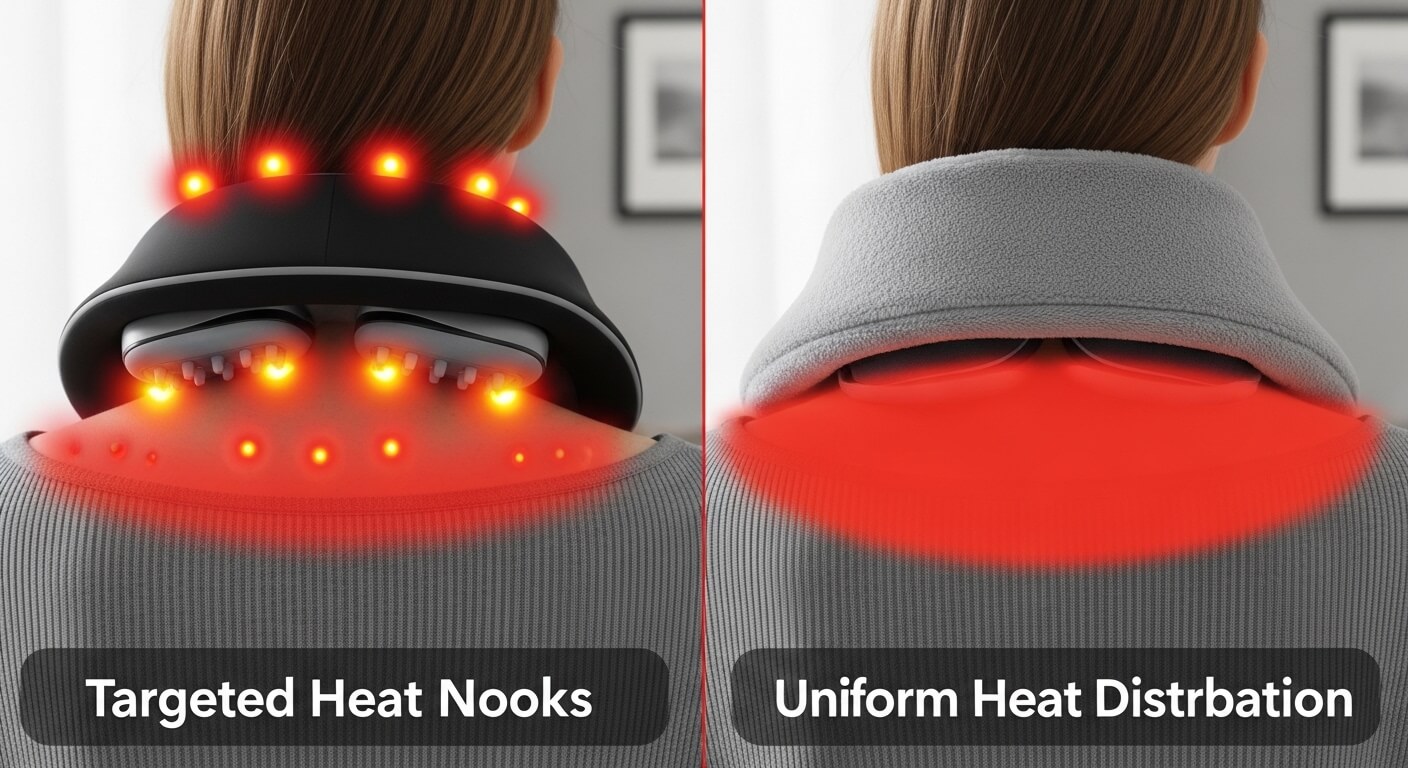
The choice between targeted node heating and wrap-around heat is not a question of better or worse; it is a question of which physiological mechanism your primary complaint requires. Targeted node heating delivers the localized thermal-mechanical pressure combination that deactivates discrete trigger points in deep cervical musculature, making it the appropriate choice for users with specific knot pain, suboccipital headache patterns, and levator scapulae dysfunction. Wrap-around heating delivers sustained, consistent thermal coverage across the full posterior cervical region, making it superior for diffuse tension patterns, stress-related cervical tightness, nerve-sensitive users, and anyone for whom mechanical node pressure is inappropriate.
The combination device; heated nodes within a warm wrap offers the most therapeutically complete solution for users whose complaints do not fit cleanly into one category, at a modest price premium over single-mechanism alternatives. For any device category, temperature regulation quality and automatic shutoff are non-negotiable safety features that should be verified before purchase, particularly in wrap-around designs where the insulating effect of the device against the skin creates higher burn risk with unregulated heating elements. The neck is not a body region that tolerates safety shortcuts.