

It is practically hard to prevent electromagnetic field (EMF) exposure in today’s hyperconnected environment. EMFs are continuously released by modern technology, which surrounds us with invisible waves from smartphones, tablets, Wi-Fi routers, Bluetooth devices, smart toys, and even baby monitors. Our digital lifestyles are powered by these signals, but worries about their effects on health, particularly for children, are growing.
A crucial question that many parents are posing is whether children are more susceptible to electromagnetic fields than adults. There is more to the solution than screen time and gadget use. It goes deeper, into biology, development, and long-term exposure. Making educated choices regarding technology use at home and at school requires an understanding of how electromagnetic fields (EMFs) affect the body and how a child’s developing system reacts differently.
According to a scientific study, a number of variables may cause youngsters to absorb noticeably more electromagnetic field radiation than adults. A child’s nervous system is still developing, their skull is thinner, and their brains contain more water. Due to these biological variations, EMF penetration may be deeper and possibly more disruptive. Furthermore, compared to earlier generations, children today are exposed to wireless gadgets at younger ages, resulting in prolonged lifetime exposure.
Although the research is currently continuing and frequently inconclusive, some studies have connected electromagnetic field (EMF) exposure to sleep disruptions, headaches, focus problems, and behavioural changes. Children are undoubtedly not simply miniature adults; their bodies are growing quickly, which could make them more susceptible to environmental factors like electromagnetic fields.
It’s more crucial than ever to comprehend the possible hazards and learn how to lower exposure as EMF-emitting devices grow more prevalent in daily life. There are practical ways parents can make their children’s environment safer without totally denying them access to technology, such as putting their devices in aeroplane mode or looking into EMF shielding devices.
This article examines the science behind why children may be more vulnerable to electromagnetic fields (EMFs) than adults, as well as strategies for reducing exposure while maintaining a digital lifestyle. Understanding age-specific electromagnetic field vulnerability is essential for safeguarding long-term health, regardless of whether you’re a worried parent, teacher, or health-conscious person.
What Are EMFs and Where Do They Come From?
Electromagnetic fields, or EMFs, are unseen energy fields that are frequently connected to wireless gadgets and the use of electricity. Both natural (like the sun) and artificial (such as cell phones, power lines, Wi-Fi routers, and home appliances) sources can produce these fields. Since electromagnetic fields (EMFs) are ubiquitous in today’s technologically advanced society, it is critical to comprehend their origins and physiological effects.
EMFs come in two primary varieties: high-frequency (ionizing) radiation and low-frequency (non-ionizing) radiation. Commonplace devices such as mobile phones, laptops, smart meters, and microwaves emit low-frequency electromagnetic fields. Although they are thought to be less severe, their possible long-term health implications are still being studied. Although they are more potent and known to harm cells, high-frequency electromagnetic fields (EMFs) like X-rays and gamma rays are less prevalent in daily settings.
The most prevalent sources of EMFs in the house include: Wi-Fi routers and extenders
- Tablets and cell phones
- Wireless headphones and Bluetooth speakers
- Game consoles and smart TVs
- Baby monitors and cordless phones
- Electric stoves and microwave ovens
EMFs are also found outside of homes, close to power lines, cell towers, electrical substations, and in heavily tech-integrated school settings. Monitoring exposure levels is essential because children are exposed to EMF-emitting devices at a much younger age these days.
Even while EMFs are a result of contemporary convenience, not all exposure is created equal. The amount of radiation that the body absorbs depends on the type of EMF, duration, and distance from the source. Because of their smaller stature and better tissue conductivity, children may absorb more than adults.
The first step in controlling exposure, particularly in households with children, is to understand the fundamentals of electromagnetic fields. It is feasible to take proactive measures to minimize needless interaction and establish a more wholesome environment for developing bodies by being aware of the typical sources of electromagnetic fields and their mechanisms.
How EMFs Interact with the Human Body
Depending on the frequency, intensity, and length of exposure, electromagnetic fields (EMFs) can have various effects on the human body. The body can nevertheless be affected by electromagnetic fields (EMFs), even though they are invisible and frequently go unnoticed. Assessing possible health issues requires an understanding of how electromagnetic fields (EMFs) affect biological systems, particularly in youngsters whose developing bodies may react differently than those of adults.
A person’s body can absorb electromagnetic radiation when they are close to an EMF source. Body size, tissue type, and distance from the source are some of the variables that affect this process, which is called electromagnetic absorption. Soft tissues and organs are the main sites where low-frequency electromagnetic fields (EMFs), such as those from cell phones and Wi-Fi routers, are absorbed. There, they may have thermal or non-thermal effects.
The modest rise in body temperature caused by thermal impacts is comparable to the heating of food in a microwave oven. Chronic exposure can still be harmful, even though most consumer electronics emit levels too low to produce perceptible heating, particularly when they are used in close proximity to the skin, such as a laptop on the lap or a phone pushed to the ear.
Though less well known, non-thermal impacts are presently being investigated for their potential to affect hormone levels, brain activity, sleep patterns, and cellular function. According to some experts, extended exposure to electromagnetic fields may disrupt oxidative stress, the body’s natural circadian cycles, and calcium ion signalling in cells.
Because of their smaller heads, thinner skulls, and increased water content in brain tissue, which all allow EMF waves to penetrate deeper, children may receive more EMF radiation than adults. This raises the possibility that the relationship between EMFs and a child’s body is more important and merits greater research.
Despite the fact that international health organisations have established safety criteria for electromagnetic field exposure, many experts think that these rules do not fully account for children’s heightened vulnerability. Understanding how electromagnetic fields (EMFs) affect the body promotes greater awareness and more responsible usage of wireless technology in daily life, particularly for developing children.
Why Children May Be More Vulnerable
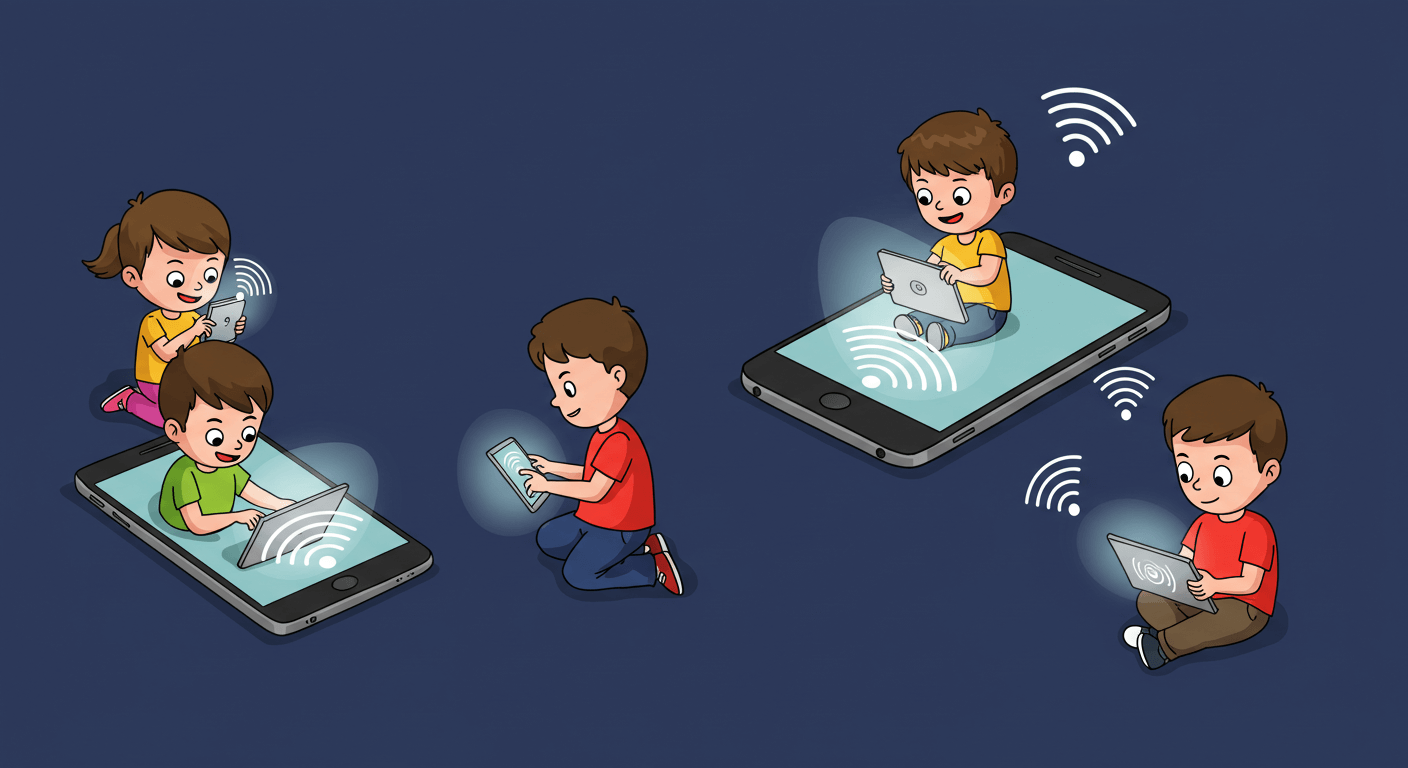
For a variety of biological, developmental, and environmental reasons, children are thought to be more susceptible to electromagnetic field (EMF) exposure than adults. Given the increasing use of digital gadgets in daily life, parents and caregivers who wish to safeguard children’s long-term health must comprehend why they may be more vulnerable.
Children’s physical size and structure may be a major factor in their susceptibility. Since a child’s skull is much thinner than an adult’s, more electromagnetic fields can enter the brain and cause more damage. Furthermore, a child’s brain has a higher proportion of ions and water, both of which are better electrical conductors. This implies that EMF energy might be absorbed and dispersed throughout their bodies more readily.
Another important component is the developing neurological system. Since their brains and neurological systems are still developing, children are more vulnerable to outside factors, such as non-ionizing radiation from electromagnetic fields. More long-term research is still required; however, disruptions at this stage of development may have an impact on behaviour, memory, sleep patterns, or cognitive performance.
Concern over lifetime exposure is also growing. Children will be exposed to electromagnetic fields (EMFs) for many more years than prior generations because they are being exposed to smartphones, tablets, and other wireless gadgets at a much younger age. The potential cumulative effects over time are called into doubt by this prolonged exposure window.
Children frequently utilize gadgets in ways that expose them to more information. People hold their phones near their heads, position tablets directly on their laps, and keep wearable technology like smartwatches in close proximity to their skin.
Public health groups and certain scientific research have recognized these issues. Despite the lack of consensus regarding the magnitude of electromagnetic field hazards, many experts advise using the precautionary principle, particularly with regard to children. Without removing access to technology, safer development can be supported by taking easy measures to limit needless EMF exposure.
Common Sources of EMF Exposure for Children
More wireless technology than ever before surrounds children nowadays. EMF exposure has become commonplace in children’s lives due to smart schools and digital playtime at home. These technologies provide entertainment and convenience, but they also expose users to electromagnetic fields all the time. Reducing needless exposure for children requires identifying the most frequent EMF sources in their daily lives.
- Smartphones and tablets: One of the main sources of electromagnetic field exposure for children is mobile gadgets. These devices, particularly those linked to cellular networks or Wi-Fi, generate low-frequency radio waves. Youngsters frequently hold them near their heads or bodies, which increases EMF absorption.
- Wi-Fi routers and extenders: Even when no devices are utilizing them, Wi-Fi routers continue to create electromagnetic fields (EMFs). Exposure levels can be even greater in homes equipped with range extenders or mesh networks. The risk of extended contact is increased when routers are placed close to play areas or bedrooms.
- Bluetooth Devices: Bluetooth signals, which release low-level electromagnetic fields, are used by fitness trackers, smartwatches, and wireless headphones. Despite their convenience, these devices are in close proximity to the body for prolonged periods of time, which raises concerns for long-term exposure in youngsters.
- Smart toys and connected devices: EMFs are also produced by interactive toys that have cameras, microphones, or app connectivity built in. Many of these gadgets are utilized while playing and are frequently held near the face or body.
- Wireless Baby Monitors: Wi-Fi and DECT (Digital Enhanced Cordless Telecommunications) digital baby monitors constantly send out signals, particularly when they are positioned close to beds or cribs. During the night, infants and toddlers could be exposed.
- School Technology: During school hours, children are exposed to electromagnetic fields (EMFs) from laptops, tablets, smart boards, and classroom Wi-Fi networks. The number of schools using one-to-one device programs has led to a notable rise in daily exposure.
- Household Appliances: Electric blankets, cordless phones, and microwaves can all create electromagnetic fields (EMFs) at close range. The cumulative EMF burden is increased by brief, repetitive exposure.
Parents can make wise decisions if they are aware of the sources of electromagnetic fields (EMFs) in their child’s surroundings. Without completely giving up technology, there are easy strategies to lessen exposure, such as setting boundaries, limiting screen time, and shutting off devices when not in use.
How to Reduce EMF Exposure for Kids
Reducing children’s exposure to electromagnetic fields (EMFs) does not need completely banning technology; rather, it entails employing clever techniques to curtail pointless interaction and establish safer routines. Children’s daily EMF burden can be significantly reduced by making little changes as they spend more time near wireless gadgets.
- Maintain a Distance from Devices: Advise kids not to touch their phones or tablets to their bodies. For calls, use a speakerphone or wired earbuds. Place the tablet on a table instead of your lap when using instructional apps or watching videos.
- Turn on Airplane Mode: Put a device in aeroplane mode when it doesn’t require internet access, like when playing offline games or reading eBooks. This drastically lowers radiation output by blocking wireless signals, including Wi-Fi, Bluetooth, and cellular data.
- Limit Screen Time: EMF exposure naturally decreases when total device use is reduced. Establish age-appropriate daily screen usage limitations and give offline pursuits like board games, reading, and outdoor play top priority.
- When not in use, turn off devices: Turn off Wi-Fi routers, iPads, and cellphones at night or when not in use. This eliminates continuous ambient radiation and encourages healthier sleep, particularly in bedrooms.
- Use Wired Connections: For internet connection, if feasible, use Ethernet cables rather than Wi-Fi. Wired installations provide a low-EMF option for households where children use computers for amusement or homework.
- Create a Low-EMF Sleep Environment: Steer clear of putting wireless monitors, smartwatches, or phones close to a child’s bed. To encourage deep, undisturbed sleep, use analog alarm clocks and keep technology out of sleeping areas.
- Explore EMF Shielding Devices: Products that restrict electromagnetic fields (EMFs) include grounding mats, laptop pads, and phone cases. Some parents chose these products as extra precautions, even if the science is still developing. It is possible to lower EMF exposure without compromising contemporary convenience by being proactive. Early instruction in safe tech practices raises awareness and fosters a lifelong, healthy relationship with digital gadgets.
Conclusion

Knowing the possible health effects of electromagnetic field exposure is more crucial than ever as technology becomes more ingrained in daily life, particularly for young people. Due to their developing brains, smaller bodies, thinner skulls, and longer anticipated lifetime exposure, children may be more susceptible to electromagnetic fields. Many medical professionals concur that taking preventative measures is reasonable, even though the study is still underway.
EMF sources can be found in everything from smart toys and Bluetooth devices to cellphones and Wi-Fi routers. Thankfully, little adjustments can help lower exposure without completely banning technology, such as setting screen time limits, utilizing airplane mode, establishing low-EMF sleeping conditions, and keeping gadgets away from the body.
Promoting safer tech practices can be actively carried out by parents, guardians, and educators. In addition to promoting physical health, teaching children responsible digital device use at a young age promotes thoughtful tech use.
Even though electromagnetic fields (EMFs) are an inevitable aspect of the modern environment, prevention and knowledge can greatly help. By making wise decisions now, developing bodies and minds can be safeguarded for years to come.