

You’ve Packed Everything But Can You Actually Fly With It?
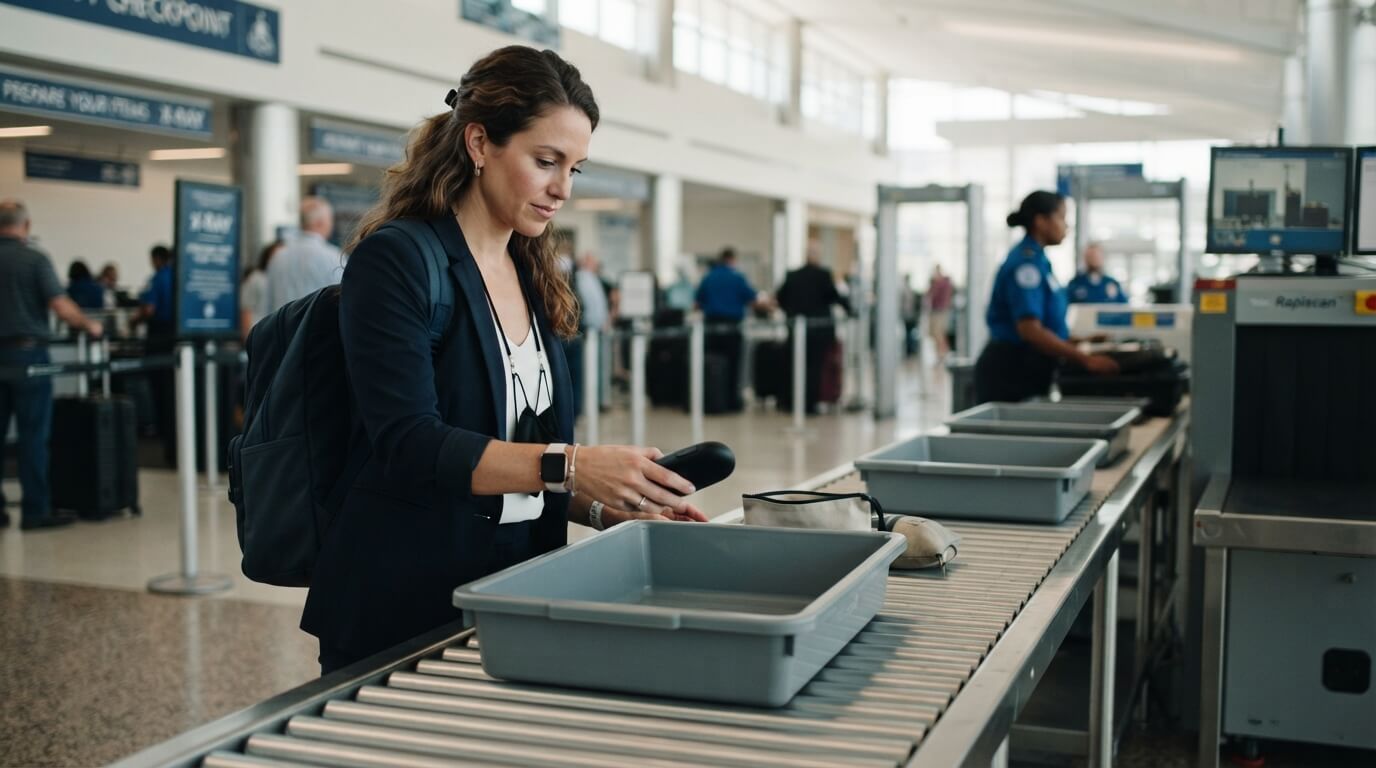
You’ve just finished a tough training block, you’re heading to a destination race, and your massage gun, the one thing keeping your legs from staging a full-on revolt; gets confiscated at the security checkpoint. Not because it’s dangerous, exactly, but because nobody told you the rules.
Traveling with wellness devices has become one of the more confusing parts of modern packing. Between TSA restrictions, airline-specific battery policies, and the sheer variety of gadgets now available: massage guns, TENS units, percussive therapy tools, infrared devices, compression boots; it’s easy to make a costly mistake at the checkpoint.
Planning to travel with your wellness devices? Discover which massage guns, TENS units, and recovery tools are TSA-compliant, battery-safe, and worth packing.
This guide cuts through the noise. We’ll break down exactly which devices make the cut for carry-on travel, how battery watt-hours actually work, which products are worth packing, and what real travelers have learned the hard way so you don’t have to.
Understanding TSA and Airline Battery Rules: The Basics First
Before diving into specific devices, let’s establish the ground rules, because they apply to almost every wellness gadget with a battery.
The TSA itself doesn’t ban most wellness devices outright. What it restricts is lithium-ion battery capacity, and that’s where most travelers get tripped up. Here’s the breakdown:
- Under 100 Wh (watt-hours): Allowed in carry-on without airline approval. This covers the vast majority of personal wellness devices.
- 100–160 Wh: Allowed in carry-on with airline approval, with a limit of 2 per passenger. Many high-end massage guns and portable compression systems fall here.
- Over 160 Wh: Not permitted on passenger aircraft at all period.
To calculate watt-hours from a battery labeled in milliamp-hours (mAh), use this formula: Wh = (mAh × Voltage) ÷ 1000. So a device with a 2,600mAh battery at 14.4V comes out to roughly 37.4Wh — safely under the limit.
Checked baggage rules are actually stricter for lithium batteries. Loose or spare lithium batteries must go in carry-on, not checked bags. Devices with batteries installed can usually be checked, but airlines vary on this, and the risk of damage or confiscation is real.
Always carry the device’s documentation showing battery specs. Airport agents aren’t always familiar with obscure wellness gadgets, and having the watt-hour rating printed or saved on your phone can save you a serious headache at the checkpoint.
Technology Comparison: Which Devices Travel Best?
Not all recovery tech is created equal when it comes to portability. Here’s how the main categories stack up.
Percussive Therapy / Massage Guns
Massage guns have exploded in popularity, but they vary wildly in travel-friendliness. Compact models like the Theragun Mini 2.0 (about 40Wh) and the Hypervolt Go 2 (around 37Wh) were essentially designed with travelers in mind. They’re small, carry-on friendly, and powerful enough for meaningful recovery work.
Full-sized models: the Theragun PRO, Hypervolt Plus, often push into the 90–100Wh range, skirting the threshold. They’re technically legal in most cases but can invite extra scrutiny. The shape of a massage gun can occasionally get it pulled for secondary inspection regardless of battery size, simply because agents aren’t always familiar with the device.
TENS and EMS Units
Transcutaneous electrical nerve stimulation (TENS) and electrical muscle stimulation (EMS) devices are among the most travel-friendly wellness gadgets available. Most run on AA or AAA batteries, or small rechargeable lithium cells well under 10Wh. The Compex Mini Wireless and iReliev TENS + EMS Combination Unit both fall squarely under TSA limits and are small enough to slip into a toiletry bag.
One thing to keep in mind: TENS units with electrode pads and wires can look alarming on X-ray. Keeping them in their original packaging or a clearly labeled pouch is a smart move.
Infrared and Red Light Therapy Devices
Portable red light therapy panels have become a travel staple for biohackers and serious athletes. Most compact versions, like the Mito Red MitoMini, run via USB-C and require no internal battery, making them essentially problem-free from a TSA standpoint. Larger panel devices with built-in batteries require more scrutiny before you pack them.
Portable Compression Systems
Full pneumatic compression boots are generally checked-bag items; too bulky for carry-on and often with higher-capacity batteries in their pumps. But brands have started releasing travel-specific versions. The Therabody RecoveryAir JetBoots use a smaller pump unit with a compliant battery and are designed to fit in overhead bins, making them a genuine option for competing athletes on the road.
Effectiveness for Recovery: Does Compact Mean Compromised?
A fair concern with travel-sized devices is whether they’re actually worth bringing — or whether you’re sacrificing too much performance for the sake of portability. The honest answer is: it depends on what you’re treating.
- Massage guns: The Theragun Mini 2.0 delivers 20 lbs of force at up to 2,400 RPM. The full-size Theragun PRO delivers 60 lbs. For general soreness, flushing out fatigue, and pre-activity activation, the Mini does the job well. For deep tissue work on large muscle groups after a heavy event, the difference becomes more noticeable.
- TENS/EMS units: Compact units are genuinely comparable to clinical-grade versions for pain management and basic muscle recovery. Electrode placement and program selection matter far more than device size. Many physical therapists use portable units in clinical settings.
- Red light therapy: Intensity and treatment area are reduced in portable panels, meaning longer session times are needed for equivalent results. For maintenance during travel, this is acceptable. For therapeutic treatment, home units remain superior.
- Compression systems: Travel versions deliver about 80–90% of the experience of full-sized systems for most users. The pressure output is comparable; what you lose is mostly coverage area and session automation.
The smart move is to treat travel devices as maintenance tools; not replacements for your full recovery setup at home. Going in with that mindset means you’ll get real value out of them rather than feeling disappointed by what they can’t do.
Price Analysis: What Does Travel-Ready Cost You?
Travel-friendly wellness devices typically run 40–60% of the cost of their full-sized counterparts. Here’s a realistic look at what you’ll spend:
- Theragun Mini 2.0 comes in around $179, compared to $599 for the full Theragun PRO.
- Hypervolt Go 2 is available for roughly $129, while the Hypervolt 2 Pro runs about $349.
- iReliev TENS + EMS Combination Unit sits at around $69 — a fraction of what clinical EMS systems cost.
- Compex Mini Wireless is priced at approximately $199, versus $349 for the full Compex Sport Elite.
- Mito Red MitoMini runs about $169, compared to $369 for the larger MitoPRO 300.
- Therabody RecoveryAir JetBoots come in at around $549, compared to $999 for the full NormaTec 3 Legs system.
Given how often you’ll actually use these during travel, and the alternative of skipping recovery altogether, the investment tends to justify itself quickly, especially for frequent travelers and competing athletes.
Head-to-Head: How the Main Categories Compare
When weighing which type of device to pack, a few factors consistently matter most: TSA friction, weight, real-world effectiveness compared to a home unit, and how much setup is involved when you’re already tired from traveling.
Compact massage guns offer the best overall versatility. They’re instant to use, handle a wide range of muscle groups, and travel versions are genuinely effective for 70–80% of what a full-size unit can do. TSA risk is low to medium; they clear security without issue in most cases but occasionally draw a second look.
TENS and EMS units are the clear winner for pure travel friendliness. Tiny batteries, no scrutiny at security, and effectiveness that’s 90–95% on par with larger clinical devices. If you deal with chronic pain, back issues, or muscle fatigue from long flights, a TENS unit is the single best wellness investment for your carry-on.
Portable red light therapy is best suited to dedicated users who already have a red light practice at home. The travel versions work, but treatment times are longer and coverage is limited. Worth packing if it’s a non-negotiable part of your routine, not worth starting with on the road.
Travel compression systems shine for serious athletes heading to competitions. Setup takes 10–15 minutes and they’re the bulkiest option, but for flushing out legs the night before a race or after a long travel day, nothing else comes close to that recovery experience in portable form.
Real User Experiences: What Travelers Actually Say
Frequent travelers and athletes have had plenty of time to field-test these devices, and a few consistent themes emerge from their experiences.
Marathon runners and triathletes traveling to races report that compact massage guns get flagged for additional screening roughly 20% of the time — not confiscated, just inspected. Keeping the device in an easy-access outer pocket of your bag speeds up this process significantly and prevents the security theater from derailing your whole morning.
Business travelers dealing with back pain or repetitive strain from long flights overwhelmingly favor TENS units for their discretion and simplicity. Several report using them in-seat on long-haul flights without any issue; they’re quiet, unobtrusive, and genuinely effective for managing discomfort during hours of sitting.
International travelers flag voltage compatibility as a separate but related concern. Most modern wellness devices use universal 100–240V chargers, but confirming this before traveling internationally can save you from frying a device with the wrong adapter.
The most common cautionary tale involves larger massage guns being placed in checked baggage with the batteries removed and packed separately — which actually violates TSA rules for lithium batteries. Always keep lithium batteries installed in the device or in your carry-on bag. Never pack loose lithium batteries in checked luggage.
Top Product Recommendations for Travel
Best Overall Travel Massage Gun: Theragun Mini 2.0
Quiet, compact, and powerful enough for real recovery work. The well-documented 40Wh battery clears customs worldwide, and the triangular grip design makes it easier to reach the upper back on your own. At $179, it’s the gold standard of travel percussive therapy and the first recommendation for most travelers.
Best Budget Massage Option: Renpho R3 Mini Massage Gun
At around $60, the Renpho R3 delivers surprising performance in an ultra-compact body. Battery sits well under the 100Wh limit. It’s not as refined as the Theragun, but it’s a legitimate option for occasional travelers who don’t want to spend full price on a dedicated travel device.
Best TENS/EMS Device: iReliev ET-5050 TENS + EMS Combination Unit
Covers both pain relief and muscle recovery in one compact unit. Runs on a tiny rechargeable battery, comes with a carry case, and has never been known to raise a single eyebrow at security. At $69, it’s the easiest recommendation in this guide — almost everyone benefits from having one in their bag.
Best for Serious Athletes: Compex Mini Wireless
If EMS technology is part of your serious recovery protocol, the Compex Mini Wireless maintains enough programs and intensity levels to actually matter. The wireless electrode design eliminates the tangled-wires problem. At $199, it’s worth every penny for athletes who know how to use it and need consistent access to muscle stimulation during training camps or competition travel.
Best Red Light Option: Mito Red MitoMini
USB-C powered with no internal battery, and small enough to pack without a second thought. Treatment area is limited, but for facial red light therapy or targeted spot treatment, it delivers results. The USB-C power requirement means you can run it off a laptop or power bank with zero TSA concerns.
Frequently Asked Questions
Can I bring my massage gun in my carry-on bag?
In most cases, yes. The key factor is battery size. If your massage gun has a battery under 100Wh, you can carry it on without airline approval. Check the device’s manual or manufacturer website for the watt-hour rating. If it falls between 100–160Wh, contact your airline in advance for approval.
Do TENS units need to be declared at security?
No declaration is required. TENS units are medical devices and are permitted in both carry-on and checked baggage. They may be swabbed for explosive residue traces during screening — this is routine and not a cause for concern.
Can I use a massage gun on a plane?
There’s no rule against it, but it’s generally considered inconsiderate given the noise and vibration in a confined cabin. Most travelers use TENS units or manual tools like travel foam rollers during flights instead.
What happens if my device is over the battery limit?
Devices over 160Wh will not be permitted in the cabin. Items between 100–160Wh require airline pre-approval. If caught with a non-compliant battery at the gate, you’ll be asked to either check the item or surrender it.
Are there wellness devices I absolutely cannot fly with?
Heating pads with internal battery packs above 160Wh, full-sized pneumatic compression systems with industrial pumps, and devices with non-removable lithium batteries exceeding airline limits can all be problematic. When in doubt, check with both TSA and your specific airline before flying.
Do international flights have different rules?
Most countries follow IATA guidelines, which align closely with TSA rules on lithium batteries. However, certain airlines; particularly in parts of Asia and the Middle East, may have stricter policies on device sizes and battery capacities. Always verify with your carrier before international travel.
Is it better to ship wellness devices to my destination?
For high-value or borderline devices, shipping ahead via FedEx or UPS is a legitimate strategy. This is especially popular among professional athletes travelling to multi-day competitions with significant recovery gear.
The Bottom Line: Pack Smart, Recover Well
Traveling with wellness devices doesn’t have to be a gamble. The rules are actually fairly straightforward once you understand the battery watt-hour framework; and the market has responded with genuinely excellent compact versions of almost every major recovery category.
For most travelers, a compact massage gun and a TENS/EMS unit cover 90% of recovery needs in a package that fits easily in your carry-on and never causes a scene at security. Add a USB-powered red light device if you’re the dedicated type, and you’ve got a travel recovery kit that would have been unthinkable a decade ago.
The goal isn’t to perfectly replicate your home recovery setup in a carry-on. It’s to arrive at your destination feeling functional, perform at your best, and get back home without losing any gear to the security bin. With the right devices and a basic understanding of the rules, that’s entirely achievable.
Do your homework before you pack, always check the battery specs, and when in doubt — go compact.