

If you have shopped for an at-home beauty device in the last couple of years, you have almost certainly run into the word electroporation. It shows up on product pages for facial wands, arm-firming tools, and eye devices, usually stacked next to LED lights and vibration as if everyone already knows what it means. Most people do not. It sounds like something out of a physics lab, and the marketing copy rarely slows down to explain it.
This guide fixes that. By the end, you will understand what electroporation actually is, how it is supposed to help the serums you already own work harder, how it differs from the other technologies it gets confused with, what the science genuinely supports, and where the honest limits are. No hype, no pretending a handheld gadget performs miracles, just a clear explanation you can use to shop smarter.
We will keep the language human throughout. You do not need a background in biology or electronics to follow along, and every technical idea here gets translated into plain terms before we move on.
Electroporation Intro
Electroporation is a method that uses gentle electrical pulses to temporarily loosen the tight outer layer of your skin so that skincare ingredients can slip in more easily instead of mostly sitting on the surface. The effect is brief and reversible, meaning your skin barrier closes back up shortly afterward. In skincare devices, it is almost always paired with a serum, because the whole point is to help that serum penetrate deeper than it would on its own. The underlying science is well established in medical research for drug delivery, though the at-home cosmetic versions are far gentler than the clinical equipment the research is based on, and results depend heavily on the serum, the device, and consistent use.
That is the whole idea in a nutshell. Now let us unpack why it exists in the first place, because the reason is genuinely interesting once you understand what your skin is actually doing all day.
Why Getting Anything Into Your Skin Is So Hard
Here is the thing almost no skincare ad will tell you. Your skin is extraordinarily good at keeping things out. That is literally its job. The outermost layer, called the stratum corneum, is a barrier built to stop the outside world from getting in and to stop the water inside you from getting out.
Dermatologists often describe the stratum corneum using a “brick and mortar” picture. The bricks are flattened, hardened skin cells, and the mortar is a complex arrangement of lipids, essentially skin fats, packed tightly between them. According to DermNet’s overview of skin barrier function, this outer layer controls the diffusion of molecules across the skin in both directions, keeping unwanted substances out while limiting water loss from inside. It is a beautifully engineered wall.
The catch is that this same wall is the reason your expensive serum may not be doing as much as you hoped. When you smooth a product onto your face or arms, a large portion of the active ingredients never make it past that brick-and-mortar layer. Some of it absorbs, some of it evaporates, and some of it simply sits on top until you wash it away. This is not a flaw in the product. It is the skin doing exactly what it evolved to do.
Larger molecules have the hardest time. Many of the ingredients people want most, certain peptides for firmness, for example, are relatively big, and big molecules struggle to squeeze through a barrier designed to block them. That single fact, that the skin barrier resists exactly the ingredients we most want to deliver, is the reason an entire category of “penetration enhancement” methods exists. Electroporation is one of them.
So What Is Electroporation, Really?
Electroporation, in the simplest terms, means using short electrical pulses to create temporary, microscopic pathways through that outer skin barrier, so ingredients can pass through more easily for a short window of time.
The word itself gives it away once you break it down. “Electro” for electricity, and “poration” for pores, as in creating tiny temporary openings. In the scientific literature, electroporation is described as a brief, structural loosening of the skin’s lipid layers caused by applying electrical pulses. A detailed review of transdermal electroporation published in the National Library of Medicine explains that the technique temporarily perturbs the skin after electrical pulses are applied, and that researchers have used it to increase how much of a substance passes through the skin.
The two features that matter most for you as a shopper are these. First, the effect is temporary. The pathways open briefly and then the skin barrier recovers, which is by design and is part of why the approach is considered non-invasive. Second, the effect is about transport. Electroporation does not, by itself, firm your skin or erase a wrinkle. What it does is help move something else, your serum, into the skin. It is a delivery method, not an active treatment on its own. Hold onto that distinction, because it is the single most misunderstood thing about this technology.
The Serum Is Not Optional, It Is the Point
This follows directly from what electroporation does. If the technology’s job is to help ingredients penetrate, then it needs ingredients to penetrate. A device using electroporation with nothing on your skin is a bit like turning on a delivery truck with no cargo in the back. The engine runs, but nothing is being delivered.
That is why devices built around electroporation almost always ship with, or strongly recommend, a companion serum. The device and the serum are meant to function as a system. The serum carries the active ingredients, and the electroporation feature is meant to help those ingredients get past the barrier we just talked about.
This has a practical consequence worth internalizing before you buy anything. When you evaluate a device that uses electroporation, you are really evaluating two things, the device and the serum it is designed to work with. A great delivery method paired with a weak serum will deliver weak ingredients efficiently. The quality, concentration, and suitability of the serum matters just as much as the technology moving it. We will come back to how to judge a serum later in this guide.
How Electroporation Differs From the Technologies It Gets Confused With
Electroporation rarely travels alone. On device spec sheets it sits alongside a cluster of similar-sounding technologies, and they get muddled constantly. Here is how to tell them apart in plain terms.
Electroporation versus iontophoresis. These two are cousins and often appear together. Iontophoresis uses a gentle continuous electrical current to nudge charged ingredients through the skin, essentially using electricity to push molecules along. Electroporation, by contrast, uses brief pulses to momentarily open pathways in the barrier itself. One is more about pushing, the other more about temporarily opening the door. The research literature frequently discusses them side by side because devices sometimes combine them for a stronger effect.
Electroporation versus sonophoresis. Sonophoresis uses ultrasound, sound waves you cannot hear, to increase skin permeability so ingredients can pass through more readily. It reaches a similar goal, better penetration, by a completely different physical route. A device might use one, the other, or a combination.
Electroporation versus microcurrent. This is the mix-up worth clearing up carefully, because microcurrent is everywhere in at-home beauty right now. Microcurrent uses very low-level electrical current that is generally marketed toward the facial muscles and the look of tone and lift, a different goal from pushing serum through the skin barrier. Electroporation is about ingredient delivery. Microcurrent is typically about the appearance of muscle tone. They are different tools aimed at different outcomes, even though both involve small amounts of electricity. If you want the fuller comparison of the current-based facial technologies, our breakdown of LED face masks versus microcurrent facial devices walks through where each one fits.
Electroporation versus microneedling. Microneedling creates actual tiny physical punctures in the skin using fine needles, which is a mechanical approach to the same delivery problem. Electroporation aims for a similar increase in penetration without needles, using electrical pulses instead. For people squeamish about needles, that needle-free quality is a big part of the appeal.
The reason all these keep appearing together is that they are all answers to the same underlying question, how do you get more of a good ingredient past a barrier built to keep it out? Each solves it differently, and modern devices increasingly combine several into one unit to stack the effects.
What the Science Actually Says

This is where honesty matters most, because the gap between what the research shows and what marketing implies can be wide.
On the research side, electroporation is not fringe science. It is a genuinely established method in the field of transdermal delivery, the science of getting substances through the skin. The published literature going back decades documents that applying electrical pulses to skin can increase transdermal delivery substantially in laboratory and clinical settings. The review of transdermal electroporation in the National Library of Medicine describes it as a technique used by multiple research groups to increase how much of a compound crosses the skin, and it discusses the mechanisms and the safety considerations in detail. So the core principle, that electrical pulses can temporarily make skin more permeable, is well supported.
Now the important caveats, stated plainly.
First, much of the foundational research involves medical-grade equipment and drug delivery, not the specific gentle handheld gadgets sold for cosmetic use at home. The clinical devices used in studies often apply higher-voltage pulses than a consumer beauty tool would, precisely because at-home devices are deliberately designed to be mild and comfortable. That gentleness is a safety feature, but it also means you should not assume a home device produces the same magnitude of effect seen in a laboratory drug-delivery study. The principle transfers. The exact numbers do not.
Second, “better ingredient penetration” is not the same claim as “this will firm your arms” or “this will erase your wrinkles.” Even if a device helps a serum absorb more effectively, the visible result still depends entirely on whether that serum’s ingredients actually do something worthwhile once they are inside, and on consistent use over time. Delivery is a means, not an outcome.
Third, cosmetic results from at-home devices are influenced by so many variables, your skin, your starting point, the serum, how consistently you use it, that individual outcomes vary widely. This is true of essentially every at-home beauty technology, and electroporation is no exception.
The fair summary is this. The mechanism is real and well studied. The at-home cosmetic application is a gentler, lower-intensity descendant of that research, and its cosmetic benefits should be viewed as supportive and gradual rather than dramatic or guaranteed. A device using electroporation is a reasonable tool for helping a good serum absorb better. It is not a magic wand, and any brand implying otherwise is overselling.
Which Ingredients Benefit Most From Better Delivery
If the value of electroporation is improved penetration, then it matters most for ingredients that both struggle to get in on their own and actually do something once they are there. A few categories come up repeatedly in the skincare world.
Peptides. These are chains of amino acids used widely in firming and anti-aging formulas. Many peptides are relatively large molecules, which is exactly the kind of thing the skin barrier resists. Better delivery is often discussed specifically in the context of peptides because their size makes surface application less efficient.
Hyaluronic acid. This is one of the most popular hydration ingredients in all of skincare, valued for its ability to hold water and give skin a plumper look. If you want to understand why it appears in nearly every serum on the market, Cleveland Clinic’s plain-English explainer on hyaluronic acid is a solid, non-commercial place to start.
Antioxidants like vitamin C. Vitamin C is a familiar brightening and antioxidant ingredient. Antioxidants are frequently included in serums intended for use with delivery-enhancing devices.
Botanical extracts. Ingredients such as green tea are common for their antioxidant reputation and often round out a serum’s formula.
Notice the pattern. These are the ingredients you already see in premium serums. The promise of a delivery technology is not to introduce exotic new actives, but to help the familiar, proven ones get where they are supposed to go rather than evaporating off the surface. Whether a given device achieves that meaningfully is the open question, but the logic of pairing delivery with these ingredients is sound.
At-Home Versus Professional Electroporation
It helps to place the at-home version in context, because the same word is used for very different levels of equipment.
Professional and clinical electroporation, the kind found in the research literature and in some in-office aesthetic treatments, tends to use more powerful, precisely controlled equipment operated by trained providers. It can apply stronger pulses and is used in settings where that intensity is appropriate and monitored.
At-home devices are the gentle, consumer-friendly branch of the family. They are engineered to be mild, comfortable, and safe for untrained users to operate on themselves in a few minutes. The trade-off is straightforward. You get convenience, a one-time purchase, no appointments, and no downtime, in exchange for a lower intensity than a professional setting would provide. Neither is simply better. They serve different needs. A person wanting a gentle daily supportive routine at home is not looking for the same thing as someone booking a clinical treatment, and vice versa.
Understanding this spectrum protects you from two mistakes. The first is dismissing at-home devices for not matching clinical results they were never designed to match. The second, more common, is expecting clinical-level dramatic change from a deliberately gentle home gadget. Calibrate your expectations to the tier you are actually buying.
Is Electroporation Safe? What to Know
For most healthy adults, gentle at-home electroporation devices are generally designed to be low-risk when used as directed, but there are real, specific groups who should not use them, and the responsible move is always to defer to the device’s own instructions and to a medical professional when in doubt.
The research literature does flag that electroporation, especially at the higher voltages used in clinical and drug-delivery contexts, carries safety considerations that must be respected, which is one reason at-home versions are kept deliberately mild. But mild does not mean appropriate for everyone.
Because these devices involve electrical pulses, manufacturers commonly advise that they are not suitable for certain people. Across this category of devices, the groups frequently advised to avoid use, or to consult a doctor first, include people who are pregnant, people with implanted electronic medical devices such as pacemakers, people with epilepsy or seizure conditions, and people who have had recent cosmetic injections. This is not a complete medical list, and different devices carry different specific warnings, which is exactly why you read the manual and, if you have any medical condition or concern, ask your healthcare provider before starting.
A few general-sense safety habits apply to any electrical skincare device. Use it only as the instructions direct, do not use it on broken, irritated, or infected skin, keep electronic devices away from water unless they are explicitly designed for wet use, and stop if you experience discomfort or an unexpected reaction. None of this is exotic. It is the same care you would apply to any small electronic personal-care tool.
How Electroporation Devices Are Typically Used
While specific routines vary by product, the general shape of using an electroporation-based skincare device is fairly consistent, and understanding it helps set expectations.
You usually start with clean skin. You apply the companion serum, since the device needs something to deliver. You then move the device over the target area for a short session, often just a handful of minutes, following whatever pattern and duration the manufacturer specifies. Many of these devices are designed around short, frequent sessions rather than long occasional ones, because the cosmetic benefits are cumulative, building gradually with consistent use rather than appearing after a single pass.
That word, cumulative, is doing a lot of work, and it deserves emphasis. The people who tend to be happiest with any at-home delivery device are the ones who treat the routine as a small, regular habit and give it weeks to show anything. The people who tend to be disappointed are the ones expecting an overnight transformation. This is not unique to electroporation. It is the defining reality of at-home skincare technology in general, and if you take one behavioral lesson from this guide, let it be that consistency, not intensity, is what separates satisfied users from frustrated ones.
Common Myths About Electroporation, Cleared Up
Let us directly address the misconceptions that lead to disappointed buyers.
Myth: electroporation firms or lifts your skin. It does not, not directly. It is a delivery method. Any firming or lifting effect comes from the serum’s ingredients and from other technologies a device might combine with it, not from electroporation itself. Confusing the delivery method with the active treatment is the root of most unrealistic expectations.
Myth: it works instantly. Cosmetic benefits from these devices are gradual and cumulative. A single session is not going to rewrite your skin. Think in terms of weeks of consistent use, not one dramatic before-and-after.
Myth: the serum does not matter, the device does all the work. The opposite is closer to the truth. The device helps deliver whatever is in the serum. A weak or unsuitable serum delivered efficiently is still a weak result. Serum quality is central, not incidental.
Myth: home devices equal clinical results. At-home devices are intentionally gentler than professional equipment. They offer convenience and no downtime, not laboratory-grade intensity. Expecting clinical outcomes from a mild home tool sets you up to feel let down.
Myth: stronger must be better. Not with skin. The gentleness of at-home devices is a deliberate safety and comfort feature. More intensity is not automatically more benefit, and it can mean more irritation. This is a case where the sensible consumer goal is appropriate, consistent use, not maximum power.
How to Evaluate a Device That Uses Electroporation
If you are weighing a purchase, here is a practical checklist that keeps you grounded.
Look at the whole system, not just the buzzword. Since electroporation delivers a serum, ask what serum it is designed to work with and what is actually in that serum. A device is only as good as what it is delivering.
Check what else the device does. Many modern tools combine electroporation with LED light, gentle warmth, and vibration. That can be a genuine convenience, several functions in one short routine, but make sure you understand what each function is for so you are not paying for features you will not use.
Read the contraindications before you buy, not after. If you fall into one of the groups commonly advised against these devices, or you have a medical condition, that is a conversation to have with your doctor up front. It can save you a purchase you cannot safely use.
Set your expectations to the tier. This is a gentle, at-home, supportive tool. Frame it as something that helps a good serum absorb better with consistent daily use, and you are thinking about it correctly. Frame it as a replacement for clinical treatment, and you are setting yourself up for disappointment.
Be honest about your consistency. Because results are cumulative, the device only pays off if you actually use it regularly. If you know you will not keep up a daily routine, that is worth admitting to yourself before spending the money, not after the device is gathering dust in a drawer.
Where Electroporation Fits in the Bigger Picture of At-Home Beauty Tech
Step back, and electroporation is one piece of a much larger shift. Over the last several years, a whole category of at-home wellness and beauty devices has emerged that packages technologies once confined to clinics into gentle, consumer-friendly gadgets. LED light therapy, microcurrent, sonic vibration, gentle warmth, and delivery methods like electroporation increasingly show up combined in single devices.
The appeal is understandable. These tools offer convenience, privacy, no appointments, no downtime, and a one-time purchase instead of recurring session fees. The trade-off, consistently, is that home versions are milder than their clinical ancestors and ask for your consistency in return for their convenience.
Electroporation specifically earns its place in that lineup as a delivery enhancer, the part of a device meant to help everything else you apply work a little harder. Understanding it as one supportive component of a combined system, rather than as a headline miracle, is the key to being a smart, satisfied buyer in this category rather than a disappointed one.
Frequently Asked Questions
What is electroporation in skincare devices, in one sentence? It is a method that uses gentle electrical pulses to temporarily loosen the skin’s outer barrier so that skincare ingredients can penetrate more easily than they would on their own.
Does electroporation actually work? The underlying principle, that electrical pulses can temporarily increase skin permeability, is well established in transdermal delivery research. The at-home cosmetic versions are gentler than the clinical equipment behind that research, so treat their cosmetic benefits as supportive and gradual rather than dramatic. Results depend heavily on the serum and on consistent use.
Do I have to use a serum with it? Effectively yes. Electroporation is a delivery method, so it needs something to deliver. Using it without the companion serum largely defeats the purpose.
Is electroporation the same as microcurrent? No. Electroporation is about helping ingredients penetrate the skin. Microcurrent is typically marketed toward the appearance of facial muscle tone and lift. Both use small amounts of electricity, but they target different outcomes.
Is it the same as microneedling? No. Microneedling uses tiny physical needles to create channels in the skin. Electroporation aims for improved penetration without needles, using electrical pulses instead.
Does it hurt? At-home devices are designed to be gentle and comfortable, which is part of why they are milder than clinical equipment. If a device causes pain, that is a signal to stop and check the instructions rather than push through.
Who should avoid electroporation devices? Manufacturers commonly advise against use for people who are pregnant, have implanted electronic medical devices such as pacemakers, have epilepsy or seizure conditions, or have had recent cosmetic injections, among others. This is not a complete list. Read your device’s specific warnings and consult a healthcare professional if you have any medical condition.
How soon will I see results? Cosmetic benefits from these devices are cumulative, building gradually over weeks of consistent use rather than appearing after one session. Patience and regular use are the deciding factors.
What Is Actually Happening Under Your Skin During a Session
It helps to picture the process, because a mental image makes the whole concept click and makes you a harder person to mislead.
Imagine that brick-and-mortar barrier again, the hardened cells packed in tight lipid mortar. Under normal conditions, an ingredient you apply has to find its way through the narrow, winding lipid channels between those bricks, and most of the interesting ingredients are either too large or too water-loving to make that trip efficiently. They queue up at the surface, and most never get in.
When a gentle electrical pulse is applied during electroporation, the current briefly rearranges the tightly packed lipids, opening temporary transient pathways, think of them as short-lived shortcuts through the wall. For the brief window those shortcuts exist, ingredients that were stuck at the surface have an easier route inward. The scientific literature describes this as a transient, reversible increase in skin permeability, and the key words there are transient and reversible. The openings are not permanent damage. They are momentary, and the barrier reseals itself afterward as the skin returns to its normal protective state.
Two mechanisms are usually described for how molecules actually move during this window. The first is simple diffusion, ingredients drifting from an area where they are concentrated, the serum on your skin, toward an area where they are not, the deeper layers, now that the path is easier. The second, for ingredients that carry an electrical charge, is a gentle electrical nudge that helps push them along in the same direction as the current. You do not need to memorize the mechanics. The takeaway is that electroporation briefly lowers the barrier and then lets normal physics carry the ingredients inward before the door closes again.
This is also why the effect is inherently time-limited and why consistency matters so much. Each session opens a brief window, delivers what it can, and then the skin closes back up. No single session moves a dramatic quantity, which is precisely why these devices are built around short, regular sessions that add up over time rather than one intense treatment.
How Electroporation Compares to Just Applying Serum the Normal Way
A fair question any sensible shopper asks is, why not just apply my serum with my hands like always? It is worth answering honestly rather than dismissively.
When you apply a serum normally, some of it does absorb. Skin is not a perfect wall, and well-formulated products are designed to penetrate as well as they reasonably can on their own. Plenty of people get real value from good serums with nothing more than clean fingertips. So the baseline, ordinary application, is not useless, and no one should pretend it is.
What a delivery technology like electroporation aims to add is efficiency, helping a greater share of the applied ingredients get past the barrier during the session rather than evaporating or washing away. Whether that added efficiency is large or modest in a given at-home device is genuinely hard to state precisely, because it depends on the device, the pulse characteristics, the serum, and your skin. The intellectually honest position is that the direction of the effect, better penetration, is well supported by the science of the mechanism, while the exact magnitude in any specific consumer gadget is not something a marketing page can credibly promise a number for.
So the reasonable way to think about it is this. If a good serum applied normally is your baseline, a delivery device is an attempt to get more out of that same serum. It is an enhancement to a step you are already doing, not a replacement for good products or a shortcut around consistency. For someone who already uses serums daily and wants to help them work a little harder, that is a coherent reason to consider one. For someone who will not use the routine consistently, no delivery technology will help, because the best-delivered serum in the world does nothing sitting in a cupboard.
The Bottom Line
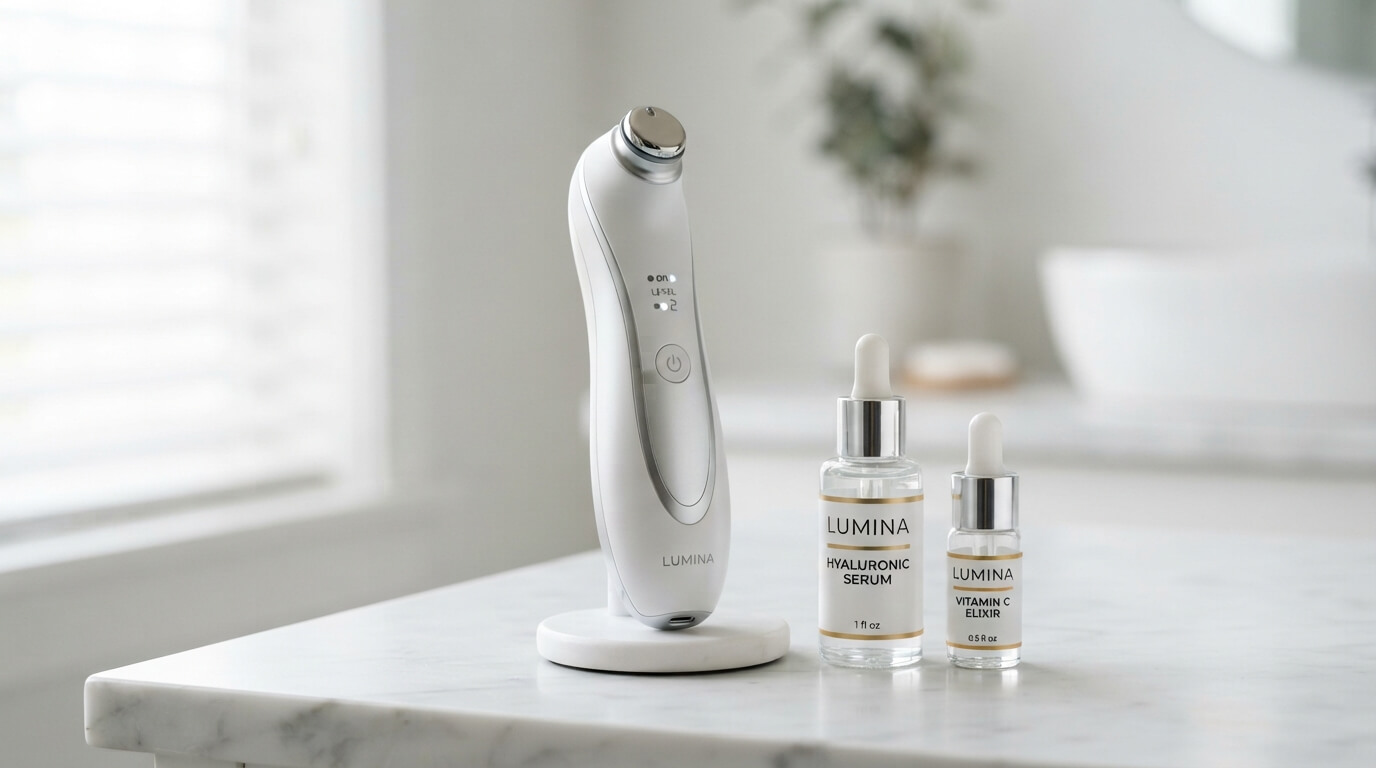
Electroporation is one of the more intimidating-sounding terms in at-home beauty, but the idea behind it is simple and, at its core, honest. Your skin is built to keep things out, and electroporation is a gentle, temporary, needle-free way to help the good ingredients in a serum get past that barrier for a short window. The science of the mechanism is well established. The at-home cosmetic versions are milder descendants of that science, and their benefits are best understood as supportive, gradual, and dependent on both the serum and your own consistency.
Treat it as one helpful component of a combined device rather than a standalone miracle, pair it with a quality serum, respect the safety guidance, and commit to a regular routine, and you will be thinking about electroporation exactly the way an informed buyer should. Understand it this way, and no marketing page will be able to oversell it to you again.
Disclaimer: This article is for informational and educational purposes only and does not constitute medical advice. It is not intended to diagnose, treat, cure, or prevent any disease or condition. Individual results from any skincare device vary. Consult a qualified healthcare professional before beginning use of any electrical skincare device, particularly if you are pregnant, have an implanted medical device such as a pacemaker, have epilepsy, or have had recent cosmetic procedures.